The Science of Life – From Earth to the Stars

Earth from space, its climate regulated by the carbon cycle

The Carbonate-Silicate Cycle: Earth’s Natural Thermostat

The calcium carbonate cycle as a planetary thermostat is a geologic feedback loop that has maintained Earth’s surface temperature within a habitable range for billions of years, acting as a slow but powerful regulator of atmospheric carbon dioxide (CO₂) levels and global climate. Unlike the rapid temperature swings driven by volcanic eruptions or orbital changes, this cycle operates over hundreds of thousands to millions of years, gradually drawing down CO₂ through silicate rock weathering and returning it via volcanic degassing. Understanding this cycle is essential for grasping why Earth has remained persistently habitable while neighboring planets like Venus succumbed to runaway greenhouse effects. How the Carbonate-Silicate Cycle Works as a Read more

bayesian reasoning science — A researcher analyzing statistical data, representing probability and Bayesian reasoning in science.

Bayesian Reasoning: How Scientists Think About Probability

Every day, scientists face the same fundamental challenge: the evidence is never perfect, the measurements are always noisy, and the answer is never fully certain. How do you decide what to believe when certainty is off the table? For most of the 20th century, science answered this question with a statistical framework called frequentism: probability as the long-run frequency of repeated events. But a competing approach, rooted in an 18th-century theorem by an English minister, has become increasingly central to modern science: Bayesian reasoning. Bayesian reasoning is how you rationally update your beliefs when new evidence arrives. It is simultaneously a theorem in probability theory, a philosophy of science, and Read more

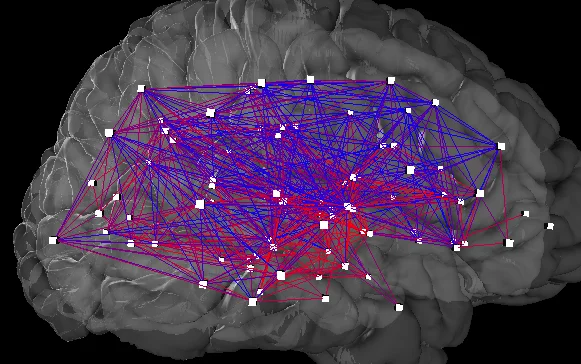
A map of connections in the human brain

Integrated Information Theory: Is Consciousness Just a Number?

Imagine a patient in a vegetative state, unresponsive for months. Her eyes open, she breathes, but no command, no stimulus, elicits recognition. Then, using a technique derived from Integrated Information Theory, doctors find a subtle signature of complex electrical activity in her posterior cortex. She is later shown to have fragments of awareness. What these doctors measured was not a thought, not a feeling, but something more fundamental – a quantity called phi. Consciousness is easy to experience and hard to explain. Most theories describe what consciousness does: how it integrates sensory input, directs attention, generates behavior. Integrated Information Theory does something different. It claims to describe what consciousness is. Read more

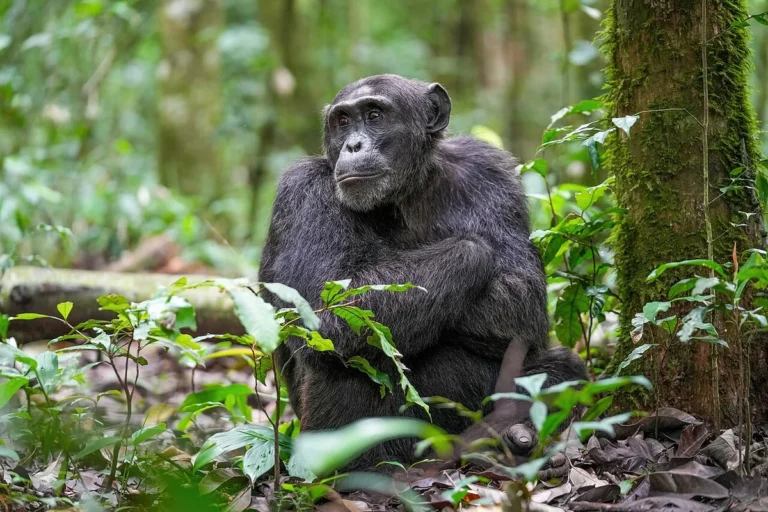
A chimpanzee, among the most intelligent animals

Biological Constraints on the Evolution of Intelligence

The study of intelligence, whether on Earth or beyond, is fundamentally shaped by biological constraints on intelligence that limit how complex a brain can become. These constraints, rooted in energetic trade-offs and physical scaling laws, suggest that the evolution of intelligence may be far rarer in the universe than optimists presume. This article examines peer-reviewed models showing that energy costs and brain size impose limits on intelligence in animals and possible aliens, drawing on research from evolutionary biology, neuroscience, and astrobiology. The Energetic Foundations of Neural Complexity All intelligent behavior requires energy, and the brain is one of the most metabolically expensive organs in the animal kingdom. In humans, the Read more

Psilocybe mushrooms, a source of psychedelic compounds

Psychedelics and Consciousness: What Brain Science Has Learned

For most of the 20th century, psychedelic compounds were effectively off-limits to science. Schedules and stigma made research nearly impossible. The pharmacology was known; what these compounds did in the brain was not. Today, research on psychedelics and consciousness is booming. That changed. Beginning in the early 2000s, a handful of research groups, at Imperial College London, Johns Hopkins University, NYU, and a growing number of other institutions, began running rigorous clinical trials with psilocybin, LSD, DMT, and ketamine. These studies have dramatically expanded our understanding of psychedelic brain effects and their implications for consciousness research. What they found transformed both psychiatry and the science of consciousness. What Psychedelics Do Read more

entropy thermodynamics explained — A physics laboratory setup demonstrating thermodynamic principles of heat transfer and energy.

Entropy and Thermodynamics: Why Things Always Get More Disordered

Drop a cup of hot coffee on a table. It will cool until it reaches room temperature. Pour cream into black coffee. It will mix. Shatter a glass. The pieces won’t reassemble. Burn a log. The ash won’t reconstitute itself into wood. All of these are expressions of the same fundamental law: the second law of thermodynamics. Entropy, roughly, the degree of disorder or dispersal in a system, tends to increase. This one principle underlies why time has a direction, why machines can never be perfectly efficient, and why the universe will eventually reach a cold, featureless equilibrium billions of years from now. Think of a playlist on shuffle. The Read more

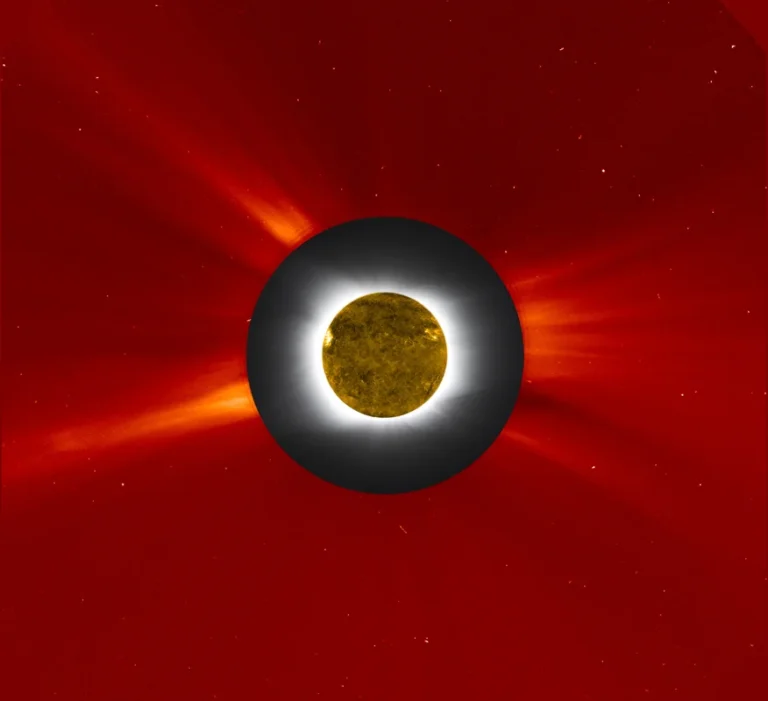
The Sun, where quantum tunneling enables fusion

Quantum Tunneling: How Particles Pass Through Solid Barriers

Quantum tunneling is one of the most counterintuitive phenomena in modern physics. It describes how a particle can pass through a barrier that, according to classical physics, it should never be able to cross. This behavior is not a hypothetical curiosity. It drives nuclear fusion in stars, enables radioactive decay, and powers scanning tunneling microscopes that image individual atoms. Understanding how does quantum tunneling work requires examining the wave nature of matter and the probabilistic foundation of quantum mechanics. Wave-Particle Duality and the Probability Wave To grasp quantum tunneling, one must first accept that particles are not tiny billiard balls with fixed positions and velocities. At the quantum scale, every Read more

A peacock displaying, a classic example of sexual selection

Sexual Selection: Darwin’s Other Big Idea

Charles Darwin had two great ideas. The first, natural selection, is what most people know. The second, sexual selection, is less famous but arguably more responsible for the spectacular diversity of the living world. Why would evolution create a three-foot, rainbow-colored burden that screams “Eat me!” to predators? That’s the puzzle of the peacock’s train of elongated upper tail coverts, the feathers that fan out in the iconic display. These feathers span three feet, shimmer with iridescent blues and greens, and are fantastically expensive to grow and carry. A peacock’s train is terrible for survival, it slows the bird down, makes it more visible to predators, and costs significant metabolic Read more