
Drop a cup of hot coffee on a table. It will cool until it reaches room temperature. Pour cream into black coffee. It will mix. Shatter a glass. The pieces won’t reassemble. Burn a log. The ash won’t reconstitute itself into wood.
All of these are expressions of the same fundamental law: the second law of thermodynamics. Entropy, roughly, the degree of disorder or dispersal in a system, tends to increase. This one principle underlies why time has a direction, why machines can never be perfectly efficient, and why the universe will eventually reach a cold, featureless equilibrium billions of years from now.
Think of a playlist on shuffle. The probability of it returning to the exact same shuffle order twice is essentially zero. That’s entropy, the overwhelming tendency of systems to explore the countless random arrangements that look the same to us.
Understanding entropy is understanding one of the deepest truths about physical reality.
The Four Laws of Thermodynamics

Thermodynamics, the study of heat, energy, and their transformations, is organized around four laws, numbered 0 through 3.
The zeroth law (so fundamental it was formulated after the others but logically precedes them): If two systems are each in thermal equilibrium with a third, they are in thermal equilibrium with each other. This establishes that temperature is a meaningful, consistent quantity.
The first law: Energy is conserved. It can change form, from heat to mechanical work to chemical energy, but the total amount never changes. This is the law of energy conservation.
The second law: The entropy of an isolated system never decreases. In a spontaneous process, entropy either increases or, in an idealized reversible process, stays the same.
The third law: The entropy of a perfect crystalline solid approaches zero as the temperature approaches absolute zero. You cannot reach absolute zero in a finite number of steps.
The second law is the strange one, it’s the only fundamental law of physics that singles out a direction in time.
Simple Definition of Entropy
Entropy is a measure of how many microscopic arrangements can produce what you observe. In plain terms: the more ways there are to arrange something’s parts and still see the same thing, the higher its entropy. A neat pile of leaves has low entropy because only a few arrangements look like that pile. A scattered layer of leaves across a lawn has high entropy because countless arrangements produce the same scattered look. Entropy counts possibilities, and the universe always wanders toward the most probable ones.
What Is Entropy, Exactly?
Entropy is one of the most misunderstood concepts in science, partly because it has multiple related but distinct meanings.
Thermodynamic Entropy (Clausius)
Rudolf Clausius defined entropy in the 1860s as a state function of thermodynamic systems. For a reversible process, the change in entropy equals the heat absorbed divided by the temperature: ΔS = Q/T.
This definition captures the intuition that heat flowing into a system increases its disorder. A hot object has higher entropy than a cold one (at the same composition) because its atoms are more energetically dispersed.
Statistical Entropy (Boltzmann)
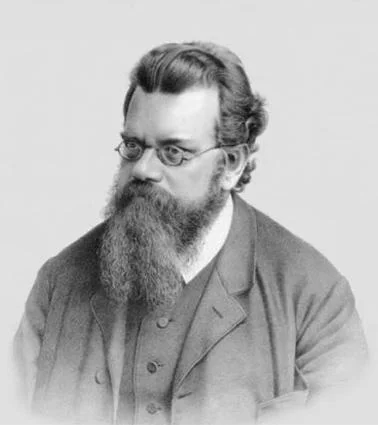
Ludwig Boltzmann gave entropy a deeper meaning in 1877: entropy is proportional to the number of microscopic states (microstates) consistent with the observed macroscopic state.
The famous formula, carved on Boltzmann’s tombstone:
S = k_B ln W
Where:
- S = entropy
- k_B = Boltzmann’s constant
- W = the number of microstates compatible with the macrostate
- ln = natural logarithm
Consider a gas of 10²³ molecules in a box. There are vastly more arrangements of those molecules that are spread throughout the box than arrangements where all molecules are confined to one corner. A gas spontaneously spreads to fill its container not because of any mysterious force, but simply because there are overwhelmingly more ways to be spread out than to be concentrated.
This is why entropy increases: the system explores accessible states randomly (due to thermal motion), and there are simply more high-entropy states than low-entropy states. The system wanders naturally toward higher entropy, not because disorder is “preferred” but because disorder is more probable.
Information Entropy (Shannon)
Claude Shannon in 1948 defined entropy in information theory: a measure of the uncertainty or missing information about a system’s state. Shannon entropy and Boltzmann entropy are mathematically identical in structure, they measure the same underlying concept from different perspectives.
This connection is deep and productive. Information is physical. Erasing information increases entropy (Landauer’s principle). Black hole entropy is counted in bits of information (the Bekenstein-Hawking entropy).
The Second Law and the Direction of Time
Every fundamental law of physics except the second law is time-symmetric: reverse all velocities, and the physics is still valid. A movie of billiard balls colliding looks just as legitimate run backward as forward.
But a movie of a glass shattering, reversed to show shards flying together into an intact glass, is instantly recognizable as fake. The second law is not time-symmetric, it defines a direction of time.
Why does entropy increase rather than decrease? The answer is not in the microscopic laws (which are symmetric) but in the initial conditions of the universe.
The Big Bang started with extraordinarily low entropy: a remarkable, special state of high organization. The universe has been increasing in entropy ever since, as it evolves from that low-entropy initial state toward higher-entropy configurations. For a deeper look at how this initial state fits into the broader picture, see our article on The Big Bang Theory Explained.
The “arrow of time”: the psychological sense of time moving from past to future, the asymmetry of memory and causation – is ultimately a consequence of living in a universe that started in a low-entropy state and has been increasing in entropy ever since.
If you asked why we remember the past but not the future: because entropy was lower in the past. Records (memories, fossils, written history) are lower-entropy arrangements that correspond to past events. The future, being higher entropy, has no analogous records until it becomes the past.
Engines, Efficiency, and the Carnot Limit
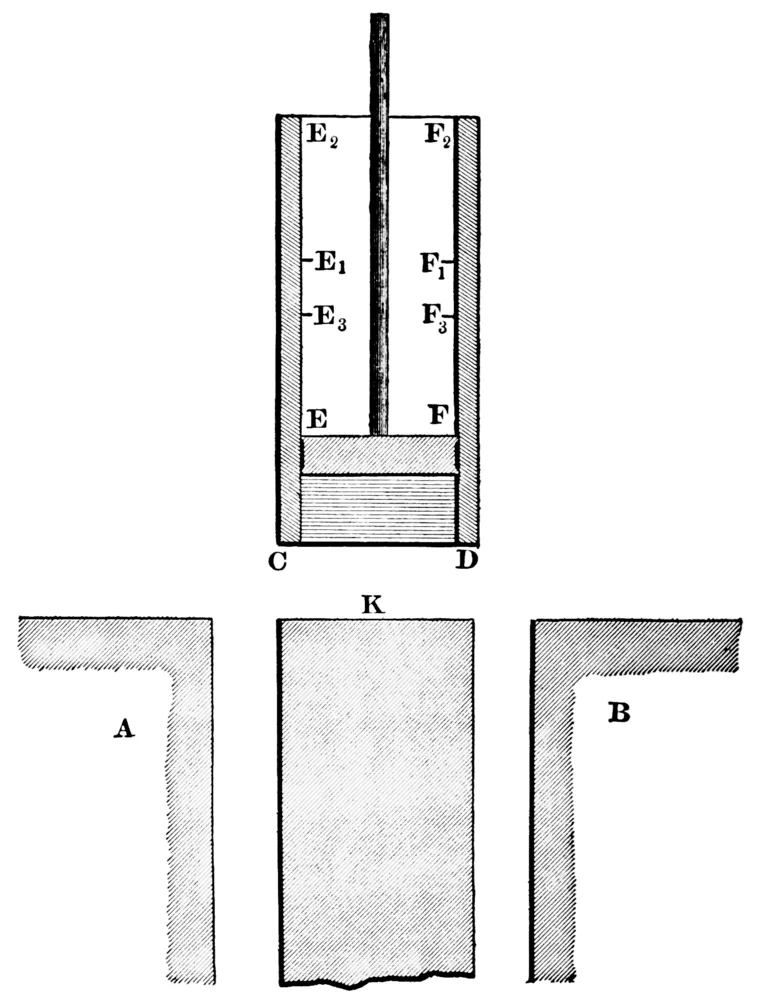
The second law has profound practical implications. It limits how efficiently any heat engine can convert heat into work.
A heat engine operates by taking heat from a hot reservoir, converting some of it into work, and dumping the rest into a cold reservoir. A car engine, a steam turbine, a power plant, all are heat engines.
The maximum possible efficiency of a heat engine operating between a hot reservoir at temperature T_hot and a cold reservoir at T_cold is:
η_max = 1 – T_cold/T_hot (the Carnot efficiency)
This is not a limit set by engineering imperfections: it’s a fundamental limit set by the second law. No matter how perfect the engine, you cannot do better than Carnot efficiency.
Why not 100%? Because increasing entropy requires a minimum amount of waste heat to be rejected to the cold reservoir. You cannot convert heat entirely into work without violating the second law.
Real engines are always less efficient than the Carnot limit, due to friction, heat losses, and other irreversibilities.
Entropy in the Universe: The Long View
The universe began in a remarkably low-entropy state: the Big Bang produced a nearly uniform distribution of matter and energy. As the universe evolves, entropy increases:
Structure formation: Paradoxically, gravity concentrating matter into stars and galaxies is entropy-increasing. Gravitational systems have lower entropy when they’re uniform than when they’re clumped (because gravitational attraction provides a way to disperse energy via radiation and orbital energy). Stars radiate enormous amounts of high-entropy radiation (many low-energy photons) in exchange for the nuclear reactions that build a few higher-entropy heavier nuclei from hydrogen. For more on how stars generate this energy, see our article on Nuclear Fusion Explained.
Black holes: Black holes are the highest-entropy objects known. The Bekenstein-Hawking entropy of a black hole is proportional to its surface area (measured in Planck areas). A stellar-mass black hole has entropy approximately equal to 10⁷⁷k_B: larger than the entropy of the star that formed it by many orders of magnitude. When all matter eventually falls into black holes (over astronomical timescales), entropy will be near its maximum.
Heat death: Eventually, in approximately 10¹⁰⁰ years or more, all black holes will evaporate via Hawking radiation, all protons may decay, and the universe will approach thermodynamic equilibrium: a vast, cold, dark void with occasional thermal fluctuations. No gradients, no usable energy, no work can be done. This is the heat death of the universe, maximum entropy.
Entropy and Life
Life seems to violate the second law. Living organisms are extraordinarily ordered, far more structured than their non-living surroundings. How can evolution build complexity if entropy must increase?
Life Does Not Violate the Second Law
It can because life is not an isolated system. The second law applies to isolated systems (or to the universe as a whole). Living organisms take in ordered energy from outside (sunlight for plants, chemical energy in food for animals) and export disordered energy (heat, entropy) back to the environment.
A plant converts sunlight (relatively high-energy, low-entropy radiation) into chemical energy stored in ordered molecular structures, while radiating waste heat (many low-energy, high-entropy infrared photons) back into space. The total entropy of the plant plus its environment increases: entropy is exported, not destroyed.
The biosphere as a whole is a vast entropy-exporting machine. It maintains its extraordinary organization by continuously increasing entropy in the sun-Earth-space system.
Schrödinger’s “Negative Entropy”
Erwin Schrödinger captured this beautifully in What Is Life?: life “feeds on negative entropy.” It maintains local order by increasing global disorder. This idea is also central to understanding the spontaneity of biological processes through the lens of free energy (ΔG = ΔH – TΔS). A reaction or process is thermodynamically favorable, spontaneous, when the change in Gibbs free energy is negative, meaning the system either releases heat (exothermic) or increases its entropy enough to offset any heat absorbed. Life, in this sense, is a constant balancing act between enthalpy and entropy, always maintaining local order by paying the global entropy tax.
Entropy in Information and Computing
The connection between physical entropy and information is not merely analogical, it is mathematical and physical.
Landauer’s principle (Rolf Landauer, 1961): Erasing a bit of information in a computer must generate at least k_B T ln 2 of heat, the minimum dissipation is thermodynamically required. Information erasure is entropy increase. Computing is not free thermodynamically.
This has practical implications for energy-efficient computing and theoretical implications for the limits of computation. Maxwell’s Demon, a hypothetical entity that could decrease entropy by selecting molecules based on their speed, was shown by Leo Szilard and later by Landauer to require information erasure, which generates exactly enough entropy to preserve the second law.
The deep connection: information is physical, and manipulating information always has thermodynamic consequences. The Royal Society has published extensive work on how these thermodynamic limits shape the future of computing.
Common Misconceptions About Entropy
“Entropy is the same as disorder.” Not exactly. Disorder is an everyday metaphor that captures the idea, but entropy is specifically a measure of the number of microscopic arrangements (microstates) that produce the same macroscopic appearance. A disordered room has higher entropy not because it’s messy, but because far more arrangements of objects look messy than look tidy.
“Life is a violation of the second law.” No. Life maintains local order only by increasing global disorder, it exports entropy to its environment. The total entropy of the universe (including the organism and its surroundings) always increases.
“Entropy always increases, so nothing organized can ever form.” Not true. Local decreases in entropy are allowed as long as the total entropy of the isolated system increases. Snowflakes crystallize, galaxies form, and life evolves, all at the cost of a larger entropy increase elsewhere.
TL;DR: Entropy in Plain Language
- Entropy counts the number of microscopic ways a system can look the same from the outside. More ways = higher entropy.
- The second law says entropy always increases in an isolated system: not because disorder is forced, but because there are overwhelmingly more disordered arrangements.
- Everything from time’s arrow to engine efficiency to the heat death of the universe follows from this simple statistical fact.
Sources
- Clausius, R. (1865). Über verschiedene für die Anwendung bequeme Formen der Hauptgleichungen der mechanischen Wärmetheorie. Annalen der Physik, 125, 353–400.
- Boltzmann, L. (1877). Über die Beziehung zwischen dem zweiten Hauptsatze der mechanischen Wärmetheorie und der Wahrscheinlichkeitsrechnung. Wien. Ber., 76, 373–435.
- Schrödinger, E. (1944). What Is Life? Cambridge University Press.
- Carroll, S. (2010). From Eternity to Here: The Quest for the Ultimate Theory of Time. Dutton.
- Landauer, R. (1961). Irreversibility and heat generation in the computing process. IBM Journal of Research and Development, 5(3), 183–191.
What is entropy in simple terms?
Entropy is a measure of disorder or randomness in a system, reflecting the tendency for energy and matter to spread out or become more mixed over time.
Why does entropy always increase?
Entropy increases because there are vastly more disordered arrangements than ordered ones, making it statistically overwhelming for systems to evolve toward disorder, as stated by the second law of thermodynamics.
How does entropy relate to the arrow of time?
Entropy gives time a direction because processes naturally move from low entropy (ordered) to high entropy (disordered), creating a one-way flow that distinguishes past from future.
What is the second law of thermodynamics?
The second law states that the total entropy of an isolated system always increases over time, never decreases, which explains why heat flows from hot to cold and why perpetual motion machines are impossible.
Will the universe eventually reach maximum entropy?
Yes, billions of years from now, the universe is expected to reach a state of maximum entropy called heat death, where all energy is evenly distributed and no further work or change is possible.