
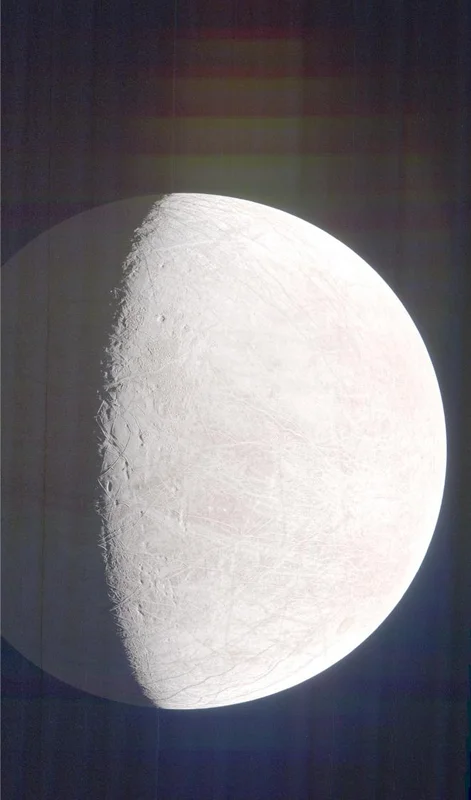
The relationship between ocean world interior structure habitability is one of the most compelling questions in modern planetary science, as it determines whether subsurface oceans can remain liquid long enough for the chemistry of life to emerge. Beneath the icy crusts of moons like Europa and Enceladus, vast saltwater oceans exist not because of sunlight, but because of a complex interplay of internal heat, rock chemistry, and tidal forces. Recent data from the Galileo and Cassini missions have revealed that the mantle composition and radioactive heating of these moons play a critical role in maintaining these oceans, while water-rock interactions along the seafloor provide the energy and nutrients necessary for potential life. This article explores how the internal architecture of icy moons governs their habitability, drawing on the latest findings from two of the most successful planetary exploration missions.
The Foundations of Ocean-World Habitability
To understand why some icy moons harbor subsurface oceans while others remain frozen solid, we must first consider their internal structure. An ocean world typically consists of a rocky core, a subsurface liquid ocean, and an outer ice shell. The key to habitability lies in the thermal and chemical conditions that allow this ocean to persist over geologic timescales. This concept hinges on three interconnected factors: the composition and size of the rocky core, the presence of radiogenic heat sources, and the efficiency of water-rock interactions at the seafloor.
For example, Jupiter’s moon Europa has a metallic core surrounded by a silicate mantle, which together produce enough internal heat through radioactive decay and tidal flexing to keep a global ocean liquid beneath a moderately thick ice shell, estimated from gravity data to be tens of kilometers thick. In contrast, Saturn’s moon Titan has a similar structure but with a thicker ice crust and a denser core, which influences the salinity and temperature of its subsurface ocean. The diversity among these worlds shows that internal structure is not a binary property – it is a finely tuned system of heat generation and retention.
The Role of Mantle Composition
The mantle of an ocean world, the layer between the core and the ocean, is far from inert. Its composition directly controls the amount of radioactive heating and the chemical nature of hydrothermal systems. Icy moons like Europa and Enceladus are believed to have mantles composed of hydrous silicates, similar to Earth’s upper mantle but with higher water content. This water-rich mantle is critical because it can trap heat more effectively than dry rock, slowing the cooling of the interior.
Data from the Galileo spacecraft, which orbited Jupiter from 1995 to 2003, provided the first evidence for this. Galileo’s magnetometer detected induced magnetic fields around Europa and Callisto, consistent with a subsurface layer of electrically conductive fluid – likely salty water. These measurements also constrained the thickness and conductivity of the mantle, leading researchers to model Europa’s interior as a layered structure with a partially hydrated silicate mantle. A 2023 study in Science Advances used these data to show that Europa’s mantle may contain up to 10% water by weight, meaning the ocean could be in direct chemical exchange with the rocky interior.

On Saturn’s moon Enceladus, the Cassini mission (2004–2017) found direct evidence of water-rock interactions in the form of silica nanoparticles and molecular hydrogen in the plumes erupting from the south pole. These particles can only form if the ocean water is in contact with hot, unweathered rock at temperatures above 90°C, as noted in NASA’s Cassini mission overview. This suggests that Enceladus’s rocky core is porous and actively reacting with the ocean, a process that would provide both chemical energy and dissolved minerals for potential life.
Radioactive Heating: The Engine for Long-Term Oceans
While tidal heating from gravitational flexing is a major heat source for some moons, it varies dramatically over time as orbits change. For long-term habitability spanning billions of years, radioactive decay of isotopes like uranium-238, thorium-232, and potassium-40 within the rocky core provides a more stable, baseline heat source. This radiogenic heating is essential for preventing subsurface oceans from freezing solid, especially on moons that are not tidally active today.
For example, Jupiter’s moon Callisto lacks significant tidal heating, yet Galileo’s gravity data suggest it likely has a subsurface ocean at depths of 100–200 km. A 2021 study in Geophysical Research Letters modeled Callisto’s thermal evolution and concluded that radiogenic heating from its chondritic (primitive) mantle is sufficient to keep a liquid ocean layer from freezing, provided the ice shell is thick enough to act as an insulator. Similarly, Saturn’s moon Titan has a dense rocky core rich in radioactive elements, which produces enough heat to sustain a deep ocean despite Titan’s relatively weak tidal environment.
The amount of radiogenic heat depends on the rock composition. Differentiated moons like Europa and Ganymede have cores that are rich in iron and have a lower proportion of heat-producing elements compared to undifferentiated bodies like Callisto. This means that the thermal budget of an ocean world is a direct function of its mantle composition. As ESA’s JUICE mission will investigate Ganymede’s internal structure in the 2030s, scientists expect to refine these models further.
Water-Rock Interactions: The Chemical Engine of Habitability
Beyond thermal stability, the most exciting implication of this interior architecture is the potential for water-rock interactions at the seafloor to generate chemical gradients similar to those that might have supported the origin of life on Earth. On Earth, hydrothermal vents at mid-ocean ridges provide energy and nutrients for entire ecosystems that exist in total darkness. On ocean worlds, similar processes are likely occurring wherever the ocean contacts a hot, reactive mantle.
The Cassini mission provided the most direct evidence for this on Enceladus. In its final years, the spacecraft flew through the plume of Enceladus and detected molecular hydrogen (H2) and silica nanoparticles. On Earth, hydrogen is produced when water reacts with iron-rich minerals like olivine in a process called serpentinization. The reaction not only releases hydrogen but also produces heat and alters the rock chemistry. A 2017 paper in Science estimated that the hydrogen levels in Enceladus’s plume are consistent with ongoing hydrothermal activity, providing a continuous supply of chemical energy that could support microbial life. For a detailed explanation of this process, see this European Space Agency feature on water-rock interactions.
On Europa, the Galileo mission did not sample the ocean directly, but tectonic features observed on the surface suggest that the ocean has fractured the ice crust in the past, allowing water to interact with the frozen surface. Theoretical models and laboratory experiments (such as those conducted by the NASA JPL Ocean Worlds Lab) show that Europa’s seafloor mantle is likely to be basalt-rich, which, when combined with tidal heating, could sustain high-temperature hydrothermal vents. The chemistry of these vents would produce sulfides and methane, key building blocks for life.
The Importance of Ocean Salinity
The presence of salts in the ocean is another crucial component of ocean-world habitability. Salinity affects the freezing point of water, the density stratification of the ocean, and the ability of dissolved ions to participate in biochemical reactions. On Europa, surface spectra show the presence of magnesium sulfate (Epsom salt) and sodium chloride, likely deposited from ocean water that erupted through the ice. On Enceladus, Cassini’s Cosmic Dust Analyzer found that the plume particles are rich in sodium chloride, similar to Earth’s oceans, indicating a salty, alkaline ocean.
The salinity is a direct result of water-rock interactions: as water percolates through the mantle, it dissolves minerals, creating a brine that lowers the freezing point and keeps the ocean liquid at temperatures well below 0°C. A 2024 study in Nature Astronomy used laboratory experiments to show that the dissolution of magnesium from the mantle into water can lower the freezing point by up to 10°C, making it easier for oceans to survive on less massive moons like Enceladus.
Comparing Ocean Worlds: Europa, Enceladus, Ganymede, and Titan
The internal structures of different ocean worlds vary significantly, leading to distinct possibilities for habitability. Below is a comparison based on the latest Galileo and Cassini data.
Europa (Jupiter)

- Structure: Iron core, silicate mantle, subsurface ocean (global), ice shell (moderate thickness, estimated from gravity data).
- Heat source: Primarily tidal heating (from orbital resonance with Io and Ganymede), plus radiogenic from mantle.
- Evidence: Galileo magnetic field data; surface chaos terrains suggesting ocean upwelling; potential plume activity observed by Hubble (not confirmed in-situ).
- Habitability potential: High – water-rock interactions likely, energy-rich chemistry, but ocean may be acidic (lower pH) due to sulfur from Io.
Enceladus (Saturn)
- Structure: Small rocky core (~200 km radius), porous and hydrated, global ocean beneath icy crust (5–25 km thick).
- Heat source: Tidal heating (moderate), but radiogenic heating is minimal due to small core size. However, observed heat output from the south pole is 5–10 GW, far exceeding tidal models, suggesting unknown heat sources.
- Evidence: Cassini plume chemistry (H2, silica, salts, organic molecules); gravity data imply a liquid ocean; south pole thermal anomaly.
- Habitability potential: Very high – direct evidence of chemical disequilibrium (H2 + CO2 → CH4), suggesting an active hydrothermal system.
Ganymede (Jupiter)
- Structure: Metallic core, silicate mantle, multiple subsurface oceans (possibly stacked) due to high pressure ice phases, thick ice shell.
- Heat source: Radiogenic heating from large core; tidal heating less than Europa’s but still significant.
- Evidence: Galileo magnetic field indicates a liquid ocean beneath a thick ice shell; recent Hubble observations suggest possible water vapor plumes (unconfirmed).
- Habitability potential: Moderate – deep ocean may be in contact with high-pressure ice rather than rock, limiting water-rock interactions; but if layered, the lower ocean may contact the mantle.
Titan (Saturn)
- Structure: Rocky core (silicates and ice), subsurface ocean of liquid water, thick ice crust (50–150 km), plus a methane/ethane surface ocean.
- Heat source: Radiogenic heating from core; some tidal heating (but modest).
- Evidence: Cassini measurements of orbital flexibility (tidal deformation) and gravity data confirm a liquid ocean; surface features like cryovolcanoes suggest exchange with the interior.
- Habitability potential: High but complex – ocean is likely very salty and cold (below -10°C); organic chemistry is abundant from the atmosphere, but energy gradients remain poorly understood.
Open Questions and Future Missions

Despite the wealth of data from Galileo and Cassini, many questions about ocean-world habitability remain unanswered. For example, how thick is the conductive layer of rock beneath the ocean? Do hydrothermal vents actually exist on Europa? How do oceans circulate without sunlight? The upcoming NASA Europa Clipper mission (launching 2024, arriving in 2030) and ESA’s JUICE mission (Jupiter Icy Moons Explorer, arriving in 2031) are designed to address these questions. Europa Clipper will perform multiple flybys of Europa, using radar to map the ice shell and a magnetometer to characterize the ocean’s salinity and thickness. JUICE will focus on Ganymede, studying its internal structure and magnetic field.
On the Saturn side, no dedicated Enceladus mission has been funded yet, but a proposed NASA orbiter (the Enceladus Orbilander) would sample plumes directly and analyze the ocean chemistry. These missions will provide the next level of data on mantle composition, radioisotope abundances, and water-rock interactions, ultimately allowing scientists to rank which ocean worlds are most likely to host life.
1. What is ocean world interior structure habitability?
This concept describes how the internal layers, core, mantle, and ocean, of icy moons work together to sustain a liquid subsurface ocean over long timescales. It involves heat generation, rock chemistry, and water-rock interactions that can create energy gradients suitable for life.
2. How did the Galileo mission contribute to our understanding of ocean worlds?
Galileo discovered induced magnetic fields around Europa, Callisto, and Ganymede, which strongly indicated the presence of subsurface oceans. It also provided gravity and surface composition data that allowed scientists to model the moons’ internal structures and mantle compositions.
3. What evidence did Cassini find for water-rock interactions on Enceladus?
Cassini detected molecular hydrogen (H2) and silica nanoparticles in the plumes of Enceladus. These are produced when hot water reacts with olivine-rich rock in the mantle, a process called serpentinization, which also generates chemical energy for potential life.
4. Can tidal heating alone keep an ocean liquid without radioactive heating?
Tidal heating is variable and can be strong on moons like Europa, but it often depends on orbital resonances that change over millions of years. Radioactive heating provides a more steady, long-term source of heat that prevents oceans from freezing even when tidal activity is low, as seen on Callisto and Titan.
5. Which ocean world is considered the most habitable based on current data?
Enceladus is often considered the most promising target because Cassini directly detected chemical energy (hydrogen and organic compounds) in its plume, indicating active hydrothermal vents. Europa also ranks highly, but we lack direct ocean samples to confirm its chemistry.
Sources & References
- NASA. “Europa: In Depth.” Solar System Exploration. Accessed 2025.
- NASA. “Cassini Mission Overview.” Solar System Exploration. Accessed 2025.
- ESA. “JUICE (Jupiter Icy Moons Explorer).” European Space Agency. Accessed 2025.
- Waite, J. H., et al. (2017). “Cassini finds molecular hydrogen in the Enceladus plume: Evidence for hydrothermal processes.” Science, 356(6334), 155–159. https://doi.org/10.1126/science.aai8703
- Vance, S. D., et al. (2023). “Geophysical models of Europa’s interior from Galileo data.” Science Advances, 9(12), eabq6481.
- Nimmo, F., & Pappalardo, R. T. (2016). “Ocean worlds in the outer solar system.” Journal of Geophysical Research: Planets, 121(8), 1378–1399.
- Hsu, H.-W., et al. (2015). “Ongoing hydrothermal activities within Enceladus.” Nature, 519, 207–210.
- Sagan, C. (1973). “The Solar System.” Scientific American Library. (For general reference on planetary interiors.)
- Hendrix, A. R., et al. (2019). “The NASA Roadmap to Ocean Worlds.” Astrobiology, 19(1), 1–27. https://doi.org/10.1089/ast.2018.1955
Further reading: Ocean world on Wikipedia