
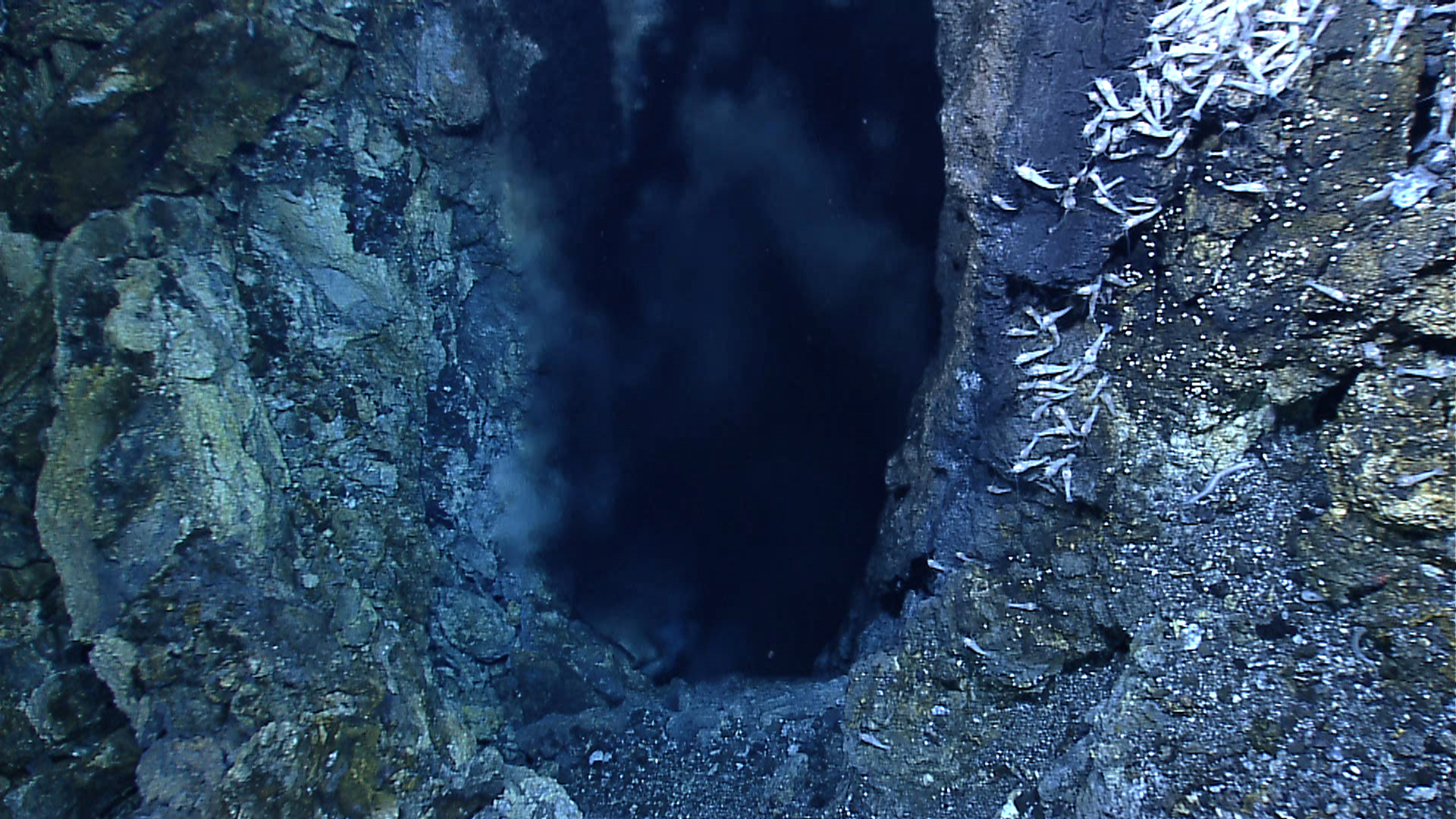
The abiogenesis hydrothermal vents theory proposes that life on Earth began not in a warm little pond, but in the deep, dark cracks of the ocean floor where chemical gradients mimic the mechanisms of cellular energy production. This hypothesis has gained substantial traction over the past two decades, particularly through the work of geochemist Michael Russell and others, who argue that alkaline hydrothermal vents provided the ideal natural reactor for prebiotic chemistry. The abiogenesis hydrothermal vents theory is supported by the mild conditions and sustained chemical disequilibrium found at alkaline vents like the Lost City field, which could have driven the first metabolic cycles without the need for complex enzymes. Unlike the more famous black smokers discovered in the 1970s, alkaline vents generate milder conditions and sustained chemical disequilibrium – a state that could have driven the first metabolic cycles without the need for complex enzymes. This article examines the chemical, geological, and biological evidence that positions alkaline vents as a leading candidate for the origin of life.
Alkaline Vent Chemistry
Alkaline vents form when seawater reacts with mantle rock, particularly olivine, in a process called serpentinization. This reaction produces hydrogen gas and hydroxide ions, making the vent fluids highly alkaline, pH typically 9 to 11, while the surrounding ocean remains acidic at pH 5 to 6. The temperature of these fluids ranges from 40 to 90 degrees Celsius, far cooler than the 350-plus degree water ejected from black smokers.
The key feature is the microporous structure that develops as the vent precipitates. These tiny interconnected pores, just microns wide, form natural compartments separated by thin mineral walls composed of brucite and serpentine. In these confined spaces, the steep pH gradient across the membrane-like walls could have driven the synthesis of organic molecules. According to a 2019 paper in Nature Ecology & Evolution, these inorganic compartments could concentrate organic compounds by several orders of magnitude, creating conditions ripe for polymerization.
Solving the Energy Gradient Problem
One of the greatest puzzles in origin-of-life research is how the first cells harvested energy. Modern organisms use chemiosmosis – a proton gradient across a membrane to drive ATP synthesis. Alkaline vents naturally provide this gradient. The acidic ocean outside the vent and the alkaline fluid inside create a proton motive force across the vent’s mineral walls. Russell and his team at NASA’s Jet Propulsion Laboratory have argued that this natural proton gradient could have been harnessed by early organic molecules to drive carbon fixation, long before enzymes or complex membranes existed.
Recent laboratory experiments support this. In 2021, researchers at the University of Düsseldorf recreated vent-like conditions in the lab and showed that a simple iron-sulfur mineral called mackinawite can catalyze the reduction of carbon dioxide to formate and methanol using only hydrogen and a pH gradient. This work, published in Nature Communications, demonstrates that the fundamental reaction of the Wood–Ljungdahl pathway, one of the most ancient metabolic routes, can occur spontaneously under alkaline vent conditions.
Serpentinization: A Continuous Fuel Source
Serpentinization is not a one-time event. As long as water reaches the upper mantle, the reaction continues, producing a steady supply of hydrogen gas. This hydrogen then reacts with carbon dioxide dissolved in seawater to form organic molecules through processes like the Fischer-Tropsch-type synthesis. The continuous nature of this fuel supply is critical. A prebiotic system that runs out of reactants after a few hours cannot build complex molecules.

The Lake Van Analogy
Lake Van in Turkey provides a natural laboratory for studying serpentinization-driven chemistry. This massive soda lake sits atop an active fault zone where mantle-derived fluids react with the crust. Researchers from the University of Colorado have detected high concentrations of hydrogen, methane, and short-chain hydrocarbons in the lake’s deep waters, all produced by serpentinite reactions. The chemical profile closely matches what models predict for early Earth’s ocean, suggesting that analogous chemistry operated on the Hadean seafloor.
The First Single-Celled Metabolisms
The simplest known metabolic pathway for fixing carbon is the Wood–Ljungdahl pathway, used by acetogens and methanogens. Genetic studies show this pathway is ancient, likely predating the last universal common ancestor (LUCA). Alkaline vents offer a natural template for this pathway. The minerals in the vent walls contain nickel, iron, and sulfur – the same metals found at the active sites of key enzymes in the Wood–Ljungdahl pathway today.
A 2020 study from the University of Strasbourg synthesized nickel-iron sulfide nanoparticles under vent-like conditions and found they could catalyze the conversion of carbon monoxide and water into acetate. The nanoparticles mimicked the active site of acetyl-CoA synthase, one of the central enzymes in carbon fixation. This experiment suggests that inorganic catalysts in early vents could have performed the same reactions that modern enzymes do now. Life, in this view, first inherited these catalytic surfaces and later replaced them with proteins.
From Compartments to Cells
The mineral pores of alkaline vents create natural compartments that concentrate organic molecules. This solves a major problem for origin-of-life models: how to achieve high enough concentrations for reactions to occur. In open water, organic molecules rapidly diffuse away. In the vent’s porous structure, they become trapped and can interact with catalytic mineral surfaces.
In 2018, researchers at the University of California, Santa Cruz, showed that fatty acids spontaneously form stable vesicles in the warm, alkaline conditions of vents. These vesicles, which resemble primitive cell membranes, could encapsulate RNA and other molecules. The study, published in Nature Chemistry, demonstrated that simple lipid bilayers form more readily in vent-like fluids than in freshwater. This suggests that the same environment that drove metabolism also facilitated the formation of the first cellular envelopes.
The Chirality Challenge: How Alkaline Vents Might Select for Homochirality
One of the most persistent puzzles in origin-of-life research is the chirality problem: why do living organisms exclusively use left-handed amino acids and right-handed sugars, when non-biological chemical synthesis produces equal mixtures of both forms? Alkaline vents may offer a partial solution through their mineral surfaces. Certain minerals, such as calcite, which is abundant in the Lost City field, can adsorb molecules in a way that favors one chirality over another through interactions with the mineral’s own chiral crystal faces. Laboratory studies have shown that calcite surfaces can preferentially bind left-handed amino acids, providing a physical mechanism for the initial enrichment of homochiral building blocks. This selective adsorption, combined with the continuous flow of reactants through the vent pores, could have gradually amplified the chiral bias over time, setting the stage for biological homochirality.
Assembling Nucleotides from Scratch: The Synthesis Challenge
For the hydrothermal vent hypothesis to fully explain the origin of life, it must account for the formation of nucleotides, the building blocks of RNA, from simple precursors. This remains an active area of research. Ribose, the sugar component of RNA, is notoriously unstable under alkaline conditions, degrading in hours. However, recent experiments have shown that stabilizing agents such as borate, which is leached from mantle rocks during serpentinization, can hold ribose together long enough for it to react with other compounds. Phosphate, another essential component, is abundant in vent minerals such as apatite. Nitrogenous bases like cytosine and uracil have been synthesized from formamide, a compound that forms readily from hydrogen cyanide in vent-like settings, when passed over iron- and nickel-bearing mineral catalysts. A 2020 paper in Origins of Life and Evolution of Biospheres reported the synthesis of cytosine and uracil from formamide using vent-simulated mineral catalysts. The key step of linking the base, sugar, and phosphate together to form a complete nucleotide is more challenging, but recent work suggests that mineral surfaces in vents can catalyze this phosphorylation reaction under warm, alkaline conditions, especially when the components are concentrated within the porous structure.
Addressing the Dilution and Magnesium Concerns
The abiogenesis hydrothermal vents theory faces legitimate challenges. Skeptics point out that the high salt concentration of primitive seawater may have inhibited the formation of long RNA strands. Additionally, the extremely alkaline conditions inside the vent could degrade certain organic molecules faster than they form.
The Dilution Problem
To test the viability of vent environments, researchers at the Carnegie Institution for Science mimicked the pH and temperature gradient of alkaline vents while introducing nucleotides. They found that RNA monomers can polymerize into short strands, up to 10 bases long, within the mineral pores. This length, while short, could be sufficient for early ribozyme activity. The research, detailed in a 2017 paper in Geochimica et Cosmochimica Acta, suggests that concentration within pores offsets the dilution effect of the open ocean.
The Magnesium Problem and Hadean Seawater
Another challenge concerns magnesium. High concentrations of dissolved magnesium in modern seawater can degrade RNA by accelerating hydrolysis. However, geological evidence suggests that the Hadean ocean may have had significantly lower magnesium levels than today’s ocean, due to interactions with the early Earth’s more extensive crustal rocks. Experiments using simulated Hadean seawater chemistry, lower in magnesium, higher in iron, have produced amino acids and nucleobases when passed through vent-like mineral assemblages, indicating that the chemical conditions were more favorable than often assumed.
The RNA World vs. Metabolism-First Debate
Proponents of the RNA-world hypothesis argue that self-replicating RNA must have come first, before any metabolism. If true, vents would need to support both RNA formation and its replication. Alkaline vents do provide a stable temperature and abundant phosphorus (from the mineral apatite), which is required for RNA synthesis. However, the high magnesium concentrations in seawater can degrade RNA. Some models suggest that early seawater had lower magnesium levels, which would reduce this problem.
The metabolism-first camp, by contrast, sees vents as naturally producing the chemical energy and catalytic surfaces needed for the first metabolic cycles, with RNA evolving later as a genetic molecule. The successful synthesis of formate and acetate in vent-simulating experiments lends weight to this view.
The Metal-Sulfur Connection: How Vent Minerals Catalyzed Early Metabolism

The mineral walls of alkaline vents are rich in iron-sulfur compounds, particularly mackinawite (FeS) and greigite (Fe₃S₄). These minerals bear a striking resemblance to the iron-sulfur clusters found at the active centers of many ancient enzymes, including those involved in the Wood–Ljungdahl pathway. This structural similarity is not accidental. The same geochemical processes that form these minerals in vents today would have been operating on the early Earth, providing a ready-made set of inorganic catalysts that could drive the reduction of carbon dioxide into organic compounds. When hydrogen from serpentinization reacts with carbon dioxide in the presence of these iron-sulfide minerals, the reaction proceeds along pathways that mirror biological carbon fixation. The stepwise reduction of CO₂ to formate, then to formaldehyde, and ultimately to methane or acetate, occurs spontaneously on these mineral surfaces, requiring only the chemical energy inherent in the vent system.
Implications for Life Beyond Earth
If the abiogenesis hydrothermal vents theory is correct, similar chemistry could occur on other worlds. Jupiter’s moon Europa and Saturn’s moon Enceladus both have subsurface oceans in contact with rocky mantles. The conditions for serpentinization likely exist on these moons. NASA’s Europa Clipper, launched in 2024 and currently en route to Jupiter, will investigate whether Europa’s ocean hosts the chemical gradients needed for life.
Data from the Cassini mission already revealed that Enceladus’s plumes contain molecular hydrogen, methane, and silica nanoparticles – products consistent with serpentinization. A 2017 study in Science led by researchers at the University of Arizona calculated that the hydrogen production rate on Enceladus is sufficient to support a simple microbial ecosystem at the seafloor. This finding makes icy moons prime targets in the search for extraterrestrial life.
The Lost City Field as a Template
The Lost City hydrothermal field, discovered in 2000 on the Atlantis Massif in the Atlantic Ocean, remains the best-studied alkaline vent system on Earth. Its chimneys tower up to 60 meters tall, built of carbonate minerals rather than the sulfide and sulfate found at black smokers. The fluid chemistry, pH 9 to 11, hydrogen- and methane-rich, matches the conditions that origin-of-life models require. Lost City also appears to be long-lived; radiometric dating of the oldest chimneys suggests the field has been active for at least 30,000 years, providing the kind of sustained environment needed for prebiotic evolution.
The Lost City and Early Earth Analogy
The Lost City field operates without volcanic heat, driven instead by the exothermic reaction of serpentinization. On early Earth, the mantle was hotter, and plate tectonics may have been more vigorous. This would have created far more opportunities for serpentinization in ocean-floor rocks. Some models estimate that the Hadean ocean floor could have hosted tens of thousands of alkaline vent fields, each effectively a natural chemical reactor.
Critics of the vent hypothesis note that the Hadean ocean was likely more enriched in magnesium and iron, which could have interfered with organic synthesis. However, experiments using simulated Hadean seawater have produced amino acids and nucleobases when passed through vent-like mineral assemblages. As previously noted, a 2020 paper in Origins of Life and Evolution of Biospheres reported the synthesis of cytosine and uracil from formamide and mineral catalysts under these conditions.
1. What is the abiogenesis hydrothermal vents theory?
The theory proposes that life emerged at alkaline hydrothermal vents on the early ocean floor, driven by natural proton gradients and catalytic mineral surfaces that promoted the synthesis of organic molecules.
2. How do alkaline vents differ from black smokers?
Alkaline vents release cooler, highly basic fluids (pH 9–11) rich in hydrogen and methane, whereas black smokers emit extremely hot, acidic fluids (pH 2–3) rich in metal sulfides. The alkaline environment is milder and more stable for prebiotic chemistry.
3. Why are proton gradients important for the origin of life?
All known life uses chemiosmosis, a proton gradient across a membrane, to generate cellular energy (ATP). Alkaline vents naturally produce such gradients between their basic interior and the acidic ocean, offering a ready-made energy source for early metabolism.
4. What experiments support the alkaline vent hypothesis?
Laboratory experiments have shown that iron-nickel-sulfide minerals from vents can catalyze the reduction of CO₂ to formate and methanol, that fatty acids form stable membranes under vent conditions, and that mineral surfaces can concentrate organic molecules and promote polymerization.
5. Could alkaline vents exist on other planets or moons?
Yes. Jupiter’s moon Europa and Saturn’s moon Enceladus both have subsurface oceans over rocky mantles, where serpentinization could occur. Hydrogen detected in Enceladus’s plumes suggests active serpentinization there.
Sources & References
- Russell, M. J., & Hall, A. J. (1997). The emergence of life from iron monosulphide bubbles at a submarine hydrothermal redox and pH front. Journal of the Geological Society, 154(3), 377–402.
- Martin, W., & Russell, M. J. (2003). On the origins of cells: a hypothesis for the evolutionary transitions from abiotic geochemistry to chemoautotrophic prokaryotes, and from prokaryotes to nucleated cells. Philosophical Transactions of the Royal Society B, 358(1429), 59–85.
- Lane, N., & Martin, W. F. (2012). The origin of membrane bioenergetics. Cell, 151(7), 1406–1416.
- Sojo, V., et al. (2016). The origin of life: what we know, what we can know, and what we will never know. Interface Focus, 6(5), 20160041.
- Preiner, M., et al. (2020). A hydrogen-dependent geochemical analogue of primordial carbon and energy metabolism. Nature Ecology & Evolution, 4, 534–542.
- NASA: The Lost City Hydrothermal Field
- University of Duesseldorf: Prebiotic CO₂ reduction under hydrothermal conditions
- Cassini-Huygens mission findings on Enceladus
Further reading: Abiogenesis on Wikipedia