
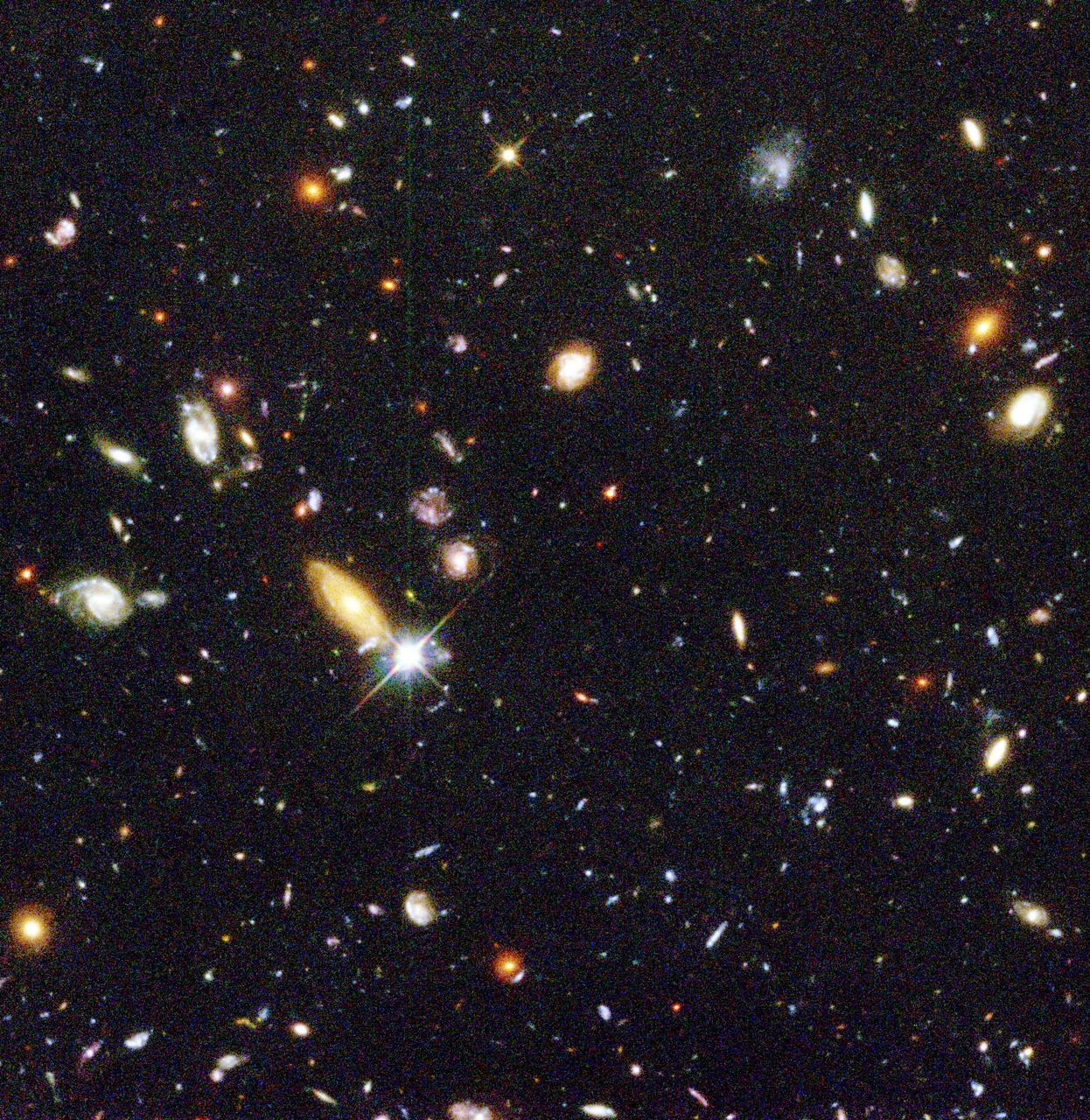
The universe is 13.8 billion years old, 93 billion light-years across, and contains roughly two trillion galaxies. A century ago we did not know any of those numbers. We have learned them by building better instruments, asking harder questions, and accepting answers that sometimes upended everything we thought we understood. This is the largest scale of the structured map of reality — and it is the right place to start.
What makes cosmology distinctive is how directly it confronts the limits of knowledge. We can observe the cosmic microwave background — the afterglow of the Big Bang — but we cannot observe what preceded it. We can measure that 68% of the universe is dark energy, but we do not know what dark energy is. We can detect dark matter’s gravitational effects with precision, but no detector has caught a dark matter particle directly. The universe is not just large. It is mostly unknown.
The core questions at this scale
- What happened in the first fractions of a second after the Big Bang, and what — if anything — came before?
- Why is the expansion of the universe accelerating instead of slowing?
- Is our universe one of many, or genuinely unique?
- What is dark matter, and what is dark energy?
- How did the large-scale structure — galaxy filaments, voids, clusters — assemble from an almost perfectly smooth beginning?
Foundations
These are the core explainers for the Universe layer — the articles that establish the vocabulary and the key results.
- Big Bang Theory Explained — how the universe began and how we know
- Cosmic Inflation Explained — the brief period of exponential expansion that shaped everything
- The Cosmic Microwave Background — the oldest light in the universe
- What Is Dark Energy? — the unknown force driving the accelerating expansion
- Dark Matter Explained — the invisible mass holding galaxies together
- Observable Universe vs Event Horizon — the edges of what we can see
- The Cosmic Web Explained — how galaxies are connected across billions of light-years
Frontier questions
These articles push to the edge of what cosmology currently knows — or speculates about.
- Multiverse Theory — the idea that our universe may not be the only one
- Many-Worlds Interpretation — quantum mechanics and the branching of reality
- The Big Crunch — could the universe end in collapse?
- The Big Rip — could dark energy eventually tear everything apart?
- String Theory Explained — the leading attempt at a theory of everything
→ Layer below: Matter — the particles and forces that fill this universe