
The Big Bang theory is the most tested and well-supported cosmological model in the history of science. It is also the most widely misunderstood. It does not describe an explosion in empty space. It does not say the universe began as a pinpoint of matter. And it does not attempt to explain what came “before” the beginning, not because scientists are afraid of the question, but because the concept of “before” may not apply.
What the Big Bang theory actually says is this: if you extrapolate the observed expansion of the universe backward in time, the universe was once in an extraordinarily hot, dense state. The farther back you go, the hotter and denser it becomes. The model breaks down at a point (the Planck time, about 10⁻⁴³ seconds) where current physics cannot make reliable predictions. Everything the Big Bang describes happened after that point.
The Evidence That Established the Big Bang

The Big Bang model emerged from several converging lines of observational evidence that confirmed it against the major alternative: the steady-state model, which proposed that the universe has no beginning and has always looked roughly the same.
The expanding universe. In the 1920s, Edwin Hubble (building on work by Vesto Slipher and using calculations by Georges Lemaître) demonstrated that galaxies are moving away from us in all directions, with more distant galaxies receding faster. This Hubble-Lemaître law implies that the universe is expanding. Run the expansion backward, and there was once a time when everything was much closer together.
The cosmic microwave background. In 1965, Arno Penzias and Robert Wilson detected a faint microwave glow coming uniformly from all directions in the sky. This was the relic heat of the early universe: photons released 380,000 years after the Big Bang when the universe cooled enough for electrons and protons to combine into neutral hydrogen, allowing light to travel freely for the first time. The CMB temperature today is 2.725 Kelvin. Its existence was predicted by Big Bang theory before it was observed.
Big Bang nucleosynthesis. The Big Bang model predicts that in the first three minutes, when the universe was hot and dense enough for nuclear reactions, protons and neutrons fused into helium, deuterium, and lithium in specific proportions. The predicted ratios (roughly 75% hydrogen to 25% helium by mass) match the observed abundances of these elements in the oldest, least chemically processed regions of the universe with remarkable precision.
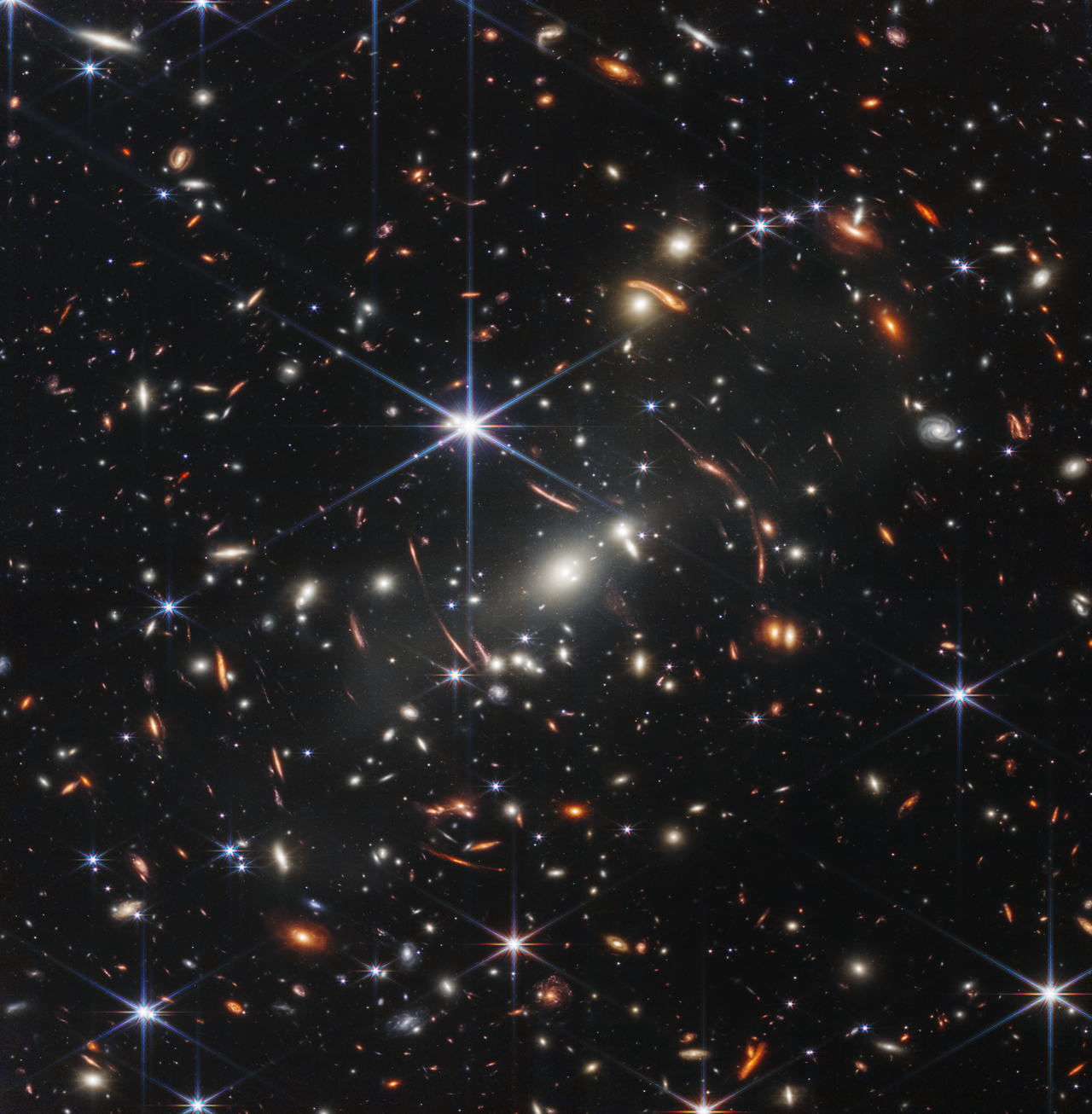
The abundance and evolution of galaxies. Distant galaxies, which we observe as they were billions of years ago due to light travel time, look different from nearby galaxies. The universe was not the same in the past as it is now: it was denser, hotter, and more actively star-forming. This is inconsistent with a steady-state universe and fully consistent with Big Bang evolution.
The First Moments: A Timeline
Following the Big Bang timeline forward from the earliest accessible physics:
10⁻³⁶ to 10⁻³² seconds: Inflation. Cosmic inflation, if it occurred, drove an exponential expansion that set the large-scale homogeneity and flatness of the universe (see our article on cosmic inflation for details).
10⁻¹² seconds: Electroweak transition. The electromagnetic and weak nuclear forces, unified at higher energies, separated into distinct forces. The Higgs field acquired a non-zero value, giving particles their mass.
10⁻⁶ seconds: Quark confinement. The universe cooled enough that free quarks (the building blocks of protons and neutrons) could no longer exist in isolation. They became bound into hadrons, primarily protons and neutrons.
1 second: Neutrino decoupling. Neutrinos stopped interacting with matter and have been traveling freely through the universe ever since, forming a cosmic neutrino background analogous to the CMB.
1 to 3 minutes: Big Bang nucleosynthesis. Protons and neutrons fused into helium-4, helium-3, deuterium, and trace lithium. The universe was a nuclear fusion reactor for about three minutes, then cooled below fusion temperatures.
380,000 years: Recombination. Electrons combined with protons to form neutral hydrogen. The universe became transparent. The light released at this moment is what we detect today as the CMB.
200 million years: First stars. The first generation of stars (called Population III stars) formed from the primordial hydrogen and helium. These were likely far more massive than modern stars and burned through their fuel quickly, seeding the universe with the first heavy elements.
1 billion years: First galaxies. Galaxies began assembling as gravity drew matter into the cosmic web structure seeded by inflation-era density fluctuations.
9.2 billion years: Solar system forms. Our Sun and planets formed from a molecular cloud enriched by previous stellar generations. Earth formed about 4.54 billion years ago.
13.8 billion years: Present. The observable universe contains roughly 2 trillion galaxies. The expansion of the universe is accelerating, driven by dark energy.
What the Big Bang Does Not Say

Several common misconceptions persist:
It was not an explosion in space. An explosion happens in space: energy expands into surrounding volume. The Big Bang was the expansion of space itself. There was no surrounding empty space for it to expand into. Every location in the universe was part of the Big Bang. It happened everywhere simultaneously.
It does not describe the origin of everything. The Big Bang model describes the evolution of the universe from its earliest hot, dense state. It does not address what caused the Big Bang, what (if anything) came before, or why there is something rather than nothing. These are legitimate questions that physics currently cannot answer.
The universe did not begin as a point. This is perhaps the most common mischaracterization. The observable universe may have been extremely dense in its earliest moments, but current physics breaks down before we can say anything definitive about spatial extent at the very beginning. Models that assume infinite spatial extent remain consistent with the Big Bang: the universe could be infinite now and have been infinite then.
The Big Bang is not just a theory in the casual sense of the word. It is the framework supported by the most observational evidence in all of cosmology. Every major competing model (steady-state, bouncing universe, and others) has been tested and found less consistent with available evidence.

Open Questions at the Edges
The Big Bang model is extraordinarily successful, but it has boundaries where physics becomes uncertain.
What is dark energy and why is it a problem for cosmology?
The universe’s expansion is currently accelerating. The simplest explanation is a cosmological constant: a constant energy density of empty space. But physicists do not know what dark energy physically is, or why it has the extraordinarily small but non-zero value it does. This fine-tuning problem is one of the deepest unsolved questions in physics.
Why is there more matter than antimatter in the universe?
The Big Bang should have produced equal amounts of matter and antimatter, which would have annihilated each other completely, leaving a universe of pure radiation. The fact that a matter-dominated universe exists implies some asymmetry in the early universe (called baryogenesis) that produced a slight excess of matter over antimatter. The mechanism responsible remains unknown.
What happened at or before t = 0, the moment of the Big Bang?
General relativity predicts a singularity at the beginning: a point of infinite density where the equations break down. Whether this singularity actually occurred, or is an artifact of applying classical physics in a domain where quantum gravity applies, is unknown. A complete theory of quantum gravity, which does not yet exist, would be required to address what (if anything) preceded the Big Bang.
Sources
Penzias, A.A., & Wilson, R.W. (1965). A Measurement of Excess Antenna Temperature at 4080 Mc/s. The Astrophysical Journal, 142, 419–421. doi:10.1086/148307
Planck Collaboration. (2020). Planck 2018 results. VI. Cosmological parameters. Astronomy & Astrophysics, 641, A6. doi:10.1051/0004-6361/201833910
Cyburt, R.H., Fields, B.D., Olive, K.A., & Yeh, T.-H. (2016). Big Bang nucleosynthesis: Present status. Reviews of Modern Physics, 88(1), 015004. doi:10.1103/RevModPhys.88.015004
Lemaître, G. (1931). The Beginning of the World from the Point of View of Quantum Theory. Nature, 127(3210), 706. doi:10.1038/127706b0
Weinberg, S. (1977). The First Three Minutes: A Modern View of the Origin of the Universe. Basic Books.
Peebles, P.J.E. (1993). Principles of Physical Cosmology. Princeton University Press.
Further reading: Big Bang on Wikipedia