
Mars is the most studied planet in the solar system besides Earth. We have sent more than fifty missions to it. We have driven rovers across its surface for decades. We have drilled into its rocks, sniffed its atmosphere, photographed its ancient river channels, and identified the remnants of a magnetic field that once might have shielded a thicker atmosphere. And yet the question of whether Mars ever hosted life, or could host it today, remains genuinely open.
This is not because we lack data. It is because the evidence is complicated, the detection challenges are enormous, and the science of life detection is harder than it sounds. Here is what the evidence actually shows, and what it does not.
The Early Mars That Could Have Supported Life

The Mars of today is a cold, arid, and radiation-bombarded desert with an atmosphere so thin that liquid water cannot persist at the surface. But Mars was not always this way.
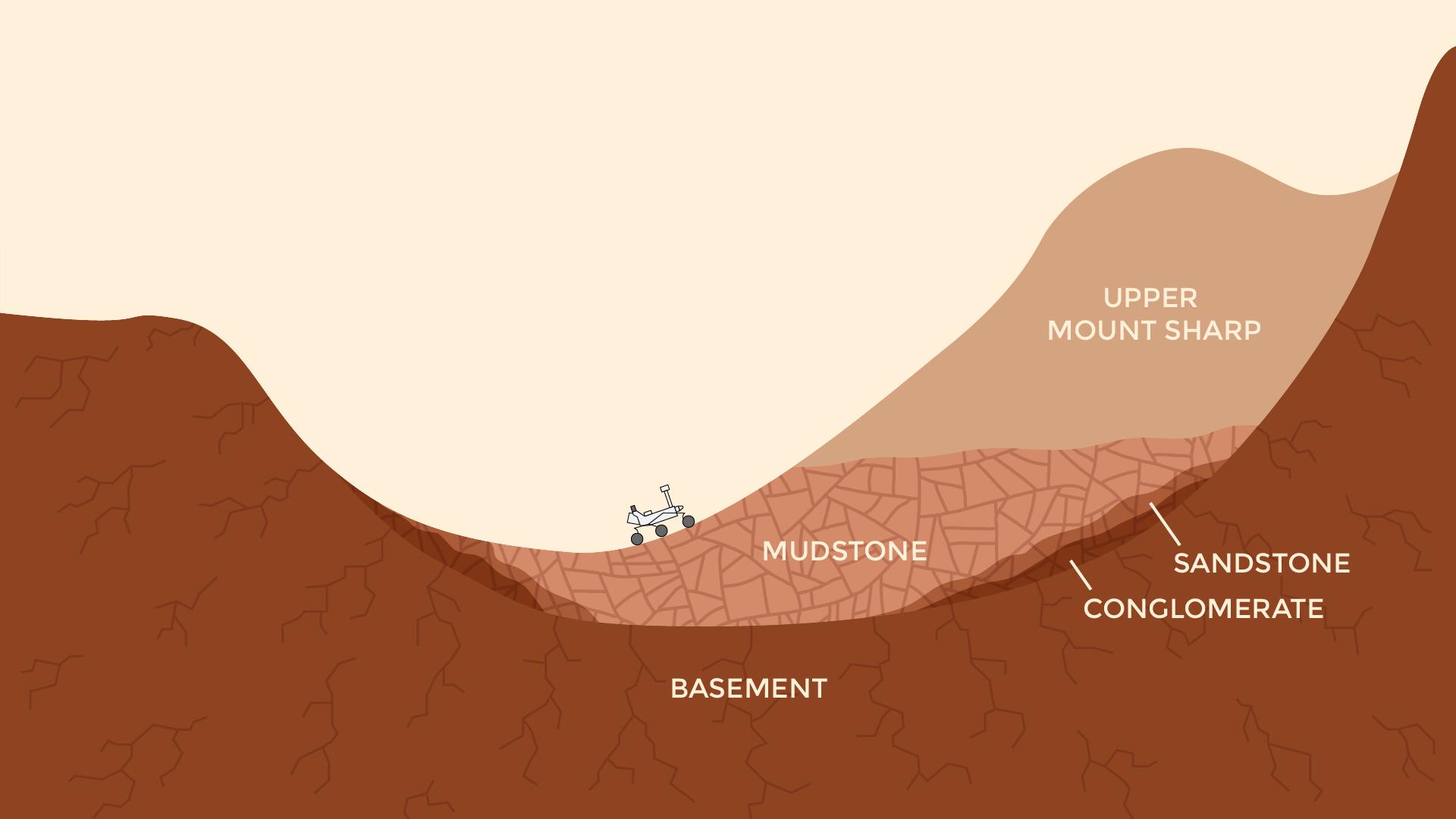
Geological evidence shows that Mars had a dramatically different environment early in its history, roughly 3.5 to 4 billion years ago. Valley networks carved by water flow are visible across much of the ancient southern highlands. The Curiosity rover‘s sampling of Gale Crater has confirmed the presence of ancient lake sediments: siltstones and mudstones deposited in water, containing the organic molecules expected from a once-chemically active lake system. Geochemical analyses indicate the ancient water in Gale Crater was neutral to mildly alkaline, low in salinity, and rich in elements used by life on Earth: carbon, hydrogen, nitrogen, oxygen, phosphorus, and sulfur.
The verdict on early Mars: it was habitable in principle. This does not mean life existed there. Habitability is necessary but not sufficient. What it means is that for hundreds of millions to perhaps a billion years, Mars had conditions that, on Earth, would have sustained microbial life.
Why Mars Changed
Mars lost its thick atmosphere and liquid surface water primarily due to the loss of its global magnetic field. Unlike Earth, whose dynamo continues to generate a protective magnetic field, Mars’s core cooled and solidified early in its history, probably around 4 billion years ago. Without the magnetic field, the solar wind stripped away the atmosphere over hundreds of millions of years, reducing atmospheric pressure until liquid water became unstable at the surface.
This process is not merely modeled; it has been directly measured. NASA’s MAVEN mission, which has been studying Mars’s upper atmosphere since 2014, has measured the current rate of atmospheric escape and traced that rate back through time, confirming that solar wind erosion is sufficient to explain the observed atmospheric thinning.
The implication for life: if life arose on Mars during the habitable early period, it would have faced an increasingly hostile environment as the atmosphere thinned. Any surviving life would have needed to adapt to subsurface environments, protected from radiation and cold, with access to liquid water maintained through geothermal heating or seasonal melting.
The Viking Experiments and Their Contested Results

In 1976, NASA’s Viking landers conducted the first direct life detection experiments on Mars. The landers carried four biology experiments designed to detect signs of metabolic activity in Martian soil.
Three of the four experiments gave negative results. The fourth, the Labeled Release (LR) experiment, gave a surprising positive: when nutrient solution was added to Martian soil, gas was released in a pattern consistent with metabolic activity. The experiment’s principal investigator, Gilbert Levin, maintained for decades that his results were evidence for life. NASA’s official interpretation attributed the gas release to the oxidizing chemistry of the Martian soil (specifically, perchlorates and superoxides) rather than biology.
The debate was never fully resolved. A 2012 analysis of the Viking LR data by Levin and Patricia Ann Straat applied mathematical complexity analysis and argued the pattern was consistent with biology rather than chemistry alone. Most astrobiologists remain skeptical, but the Viking results have never been definitively explained as purely chemical to everyone’s satisfaction.
Methane: A Persistent and Troubling Mystery
One of the most contentious issues in Mars science is the reported detection of methane in the atmosphere. Methane is significant because, on Earth, about 95% of atmospheric methane is produced by biological processes (methanogenesis). On Mars, methane would be broken down by UV radiation in about 300 years, so any detection implies a current, active source.
The Curiosity rover has detected methane multiple times since 2012, including a large spike in June 2019 of about 21 parts per billion, the highest concentration ever measured at the surface. The European Space Agency’s Mars Express orbiter and the Trace Gas Orbiter (TGO) have produced confusing and sometimes contradictory results: some detections, some non-detections, with TGO (the most sensitive instrument) failing to detect significant methane in the same periods that Curiosity detected spikes at the surface.
The source of Martian methane remains unknown. Proposed explanations include:
– Biological production Methanogenic microorganisms in the subsurface producing methane as a metabolic byproduct. Serpentinization A geochemical reaction in which water reacts with iron and magnesium silicate rocks, producing methane abiotically. This process requires liquid water in contact with certain rock types. Degassing of ancient clathrates Methane trapped in ice structures from an earlier period, released by heating. Instrument contamination The possibility that Curiosity’s own onboard chemistry produces some of the detected signal.
None of these has been confirmed or eliminated. The methane question remains one of the most pressing open problems in Mars science.
Organic Molecules at the Surface

Curiosity has confirmed the presence of organic molecules in Mars rocks. In 2018, a study in Science reported the detection of thiophenic compounds (organic molecules containing sulfur) in 3.5-billion-year-old sedimentary rock in Gale Crater. These are the same class of organic molecules found in ancient terrestrial formations known to preserve biological material.
The organic molecules are not proof of life. They could have been delivered by meteorites (which carry organic compounds) or synthesized through abiotic chemistry. But their presence confirms that organic molecules survive on Mars and are accessible for analysis, which is important because it means that if life left organic signatures in ancient rock, those signatures might still be detectable.
The Perseverance rover, exploring Jezero Crater since 2021, is collecting rock cores specifically selected for their potential to preserve biosignatures. These cores are being cached for potential return to Earth by a future Mars Sample Return mission. Earth-based laboratories would be able to analyze them with instruments far more powerful than anything that can currently be flown to Mars.
The Subsurface: Where Life Is Most Likely to Persist
If life exists on Mars today, the most plausible location is the subsurface. Deep below the surface, Mars is protected from ultraviolet radiation and energetic particles that sterilize the surface. Temperatures may be above freezing at depths of several kilometers. Liquid water may exist in pockets maintained by geothermal heat or dissolved salts.
Radar data from the Mars Express MARSIS instrument suggested the presence of subglacial liquid water beneath the south polar ice cap in 2018, a lake roughly 20 kilometers in diameter. Subsequent analyses questioned whether the radar signature truly indicated liquid water, with some arguing it could be explained by a specific type of frozen deposit. As of 2025, the subglacial lake hypothesis remains contested.
On Earth, deep subsurface microbial communities live kilometers underground in similar conditions, isolated from surface photosynthesis, sustained by chemolithotrophy. The deep biosphere on Earth accounts for a substantial fraction of all microbial biomass. A Martian equivalent cannot be ruled out.
What We Still Don’t Know
The fundamental question (did life ever exist on Mars?) cannot be answered with current data. We have confirmed that early Mars was habitable. We have found organic molecules. We have detected methane with no confirmed abiotic explanation. We have evidence of ancient liquid water in potentially life-sustaining conditions.
The detection of organics, seasonal methane, and ancient river deltas keeps the question of life on Mars squarely in the realm of scientific possibility rather than mere speculation. What we do not have is a confirmed biosignature: a chemical, isotopic, or morphological signature that uniquely requires biology to explain. Every signal detected so far has a plausible non-biological explanation, even if that explanation is not proven. The search requires either Mars Sample Return (getting the right rocks to the right instruments) or a future lander with much more capable in-situ chemistry. The search for life on Mars continues to be the central driver of Mars exploration strategy. Whether life on Mars ever arose, and whether it persists today, remains one of the most consequential open questions in science.
Has life been found on Mars?
No. As of 2025, no confirmed biosignature has been found on Mars. Several findings (methane detections, organic molecules, the Viking Labeled Release results) are consistent with life but also consistent with known abiotic chemistry. The question of whether Mars ever hosted life, or hosts it today, remains genuinely open and unresolved.
What did the Viking landers find?
Three of Viking’s four biology experiments gave negative results. The Labeled Release experiment gave a positive response (gas was released when nutrients were added to Martian soil), but NASA’s consensus interpretation attributed this to oxidizing soil chemistry (perchlorates and superoxides) rather than biology. The experiment’s principal investigator, Gilbert Levin, disagreed and maintained until his death that the results were positive for life. The question was never definitively settled.
Why is methane on Mars significant?
On Earth, the vast majority of atmospheric methane is biologically produced by methane-generating microorganisms. Methane on Mars is short-lived (destroyed by UV radiation in about 300 years), so any detected methane implies an active source. Multiple detections have been made by Curiosity, though the source is unknown. Possible explanations include biology, geochemical serpentinization, and other abiotic processes. No explanation has been confirmed.
Where is the most likely place to find life on Mars?
If life exists on Mars today, the subsurface is the most likely location. Underground environments on Mars are shielded from surface radiation, may have liquid water sustained by geothermal heat or dissolved salts, and are analogous to the deep biosphere on Earth where microbial life thrives without sunlight. The south polar region has radar evidence consistent with subglacial liquid water, though this interpretation is contested.
What is Mars Sample Return?
Mars Sample Return is a joint NASA-ESA mission concept that would retrieve rock cores collected by the Perseverance rover and return them to Earth for analysis. Earth-based laboratories can apply analytical techniques far beyond what spacecraft can carry, including isotopic analysis, precise dating, and detection of trace organic biosignatures at parts-per-trillion concentrations. The mission, if funded and executed, represents the most capable near-term search for Mars biosignatures. Budget constraints have created uncertainty about the timeline and scope as of 2025.
Could life have transferred between Earth and Mars?
Possibly. The concept of lithopanspermia (microbial transfer via meteorite impacts) is scientifically plausible. Mars rocks have been found on Earth, and vice versa (Earth rocks likely travel to Mars). If early Mars had life at the same time as early Earth, impact ejecta could have transferred microorganisms between planets. This raises the possibility that Mars and Earth life, if it exists on both, might share a common origin, which would change the significance of finding Martian life dramatically.
Sources
Grotzinger, J.P. et al. (2014). A Habitable Fluvio-Lacustrine Environment at Yellowknife Bay, Gale Crater, Mars. Science, 343(6169), 1242777. doi:10.1126/science.1242777
Webster, C.R. et al. (2015). Mars methane detection and variability at Gale crater. Science, 347(6220), 415–417. doi:10.1126/science.1261713
Eigenbrode, J.L. et al. (2018). Organic matter preserved in 3-billion-year-old mudstones at Gale crater, Mars. Science, 360(6393), 1096–1101. doi:10.1126/science.aas9185
Orosei, R. et al. (2018). Radar evidence of subglacial liquid water on Mars. Science, 361(6401), 490–493. doi:10.1126/science.aar7268
Fonti, S., & Marzo, G.A. (2010). Mapping the methane on Mars. Astronomy & Astrophysics, 512, A51. doi:10.1051/0004-6361/200913178
Levin, G.V., & Straat, P.A. (2016). The case for extant life on Mars and its possible detection by the Viking Labeled Release Experiment. Astrobiology, 16(10), 798–810. doi:10.1089/ast.2015.1464
This article is part of our framework exploring Life: the origin of life, astrobiology, and the search for life beyond Earth.
Further reading: Life on Mars on Wikipedia