The Science of Life – From Earth to the Stars

neanderthals and denisovans — Neanderthal skull fossil showing the characteristic brow ridge and cranial anatomy of Homo neanderthalensis

Neanderthals and Denisovans: What Ancient DNA Reveals About Our Closest Relatives

For most of the twentieth century, Neanderthals and Denisovans were portrayed as brutish dead ends, a failed experiment in human evolution that was swept aside when modern humans arrived from Africa. That picture is now completely overturned. Ancient DNA analysis has revealed that Neanderthals and Denisovans and modern humans interbred, that most people alive today carry a small percentage of Neanderthal ancestry, and that some of those ancient genes are still affecting human biology right now. The story of Neanderthals and Denisovans (our closest extinct relatives) has been completely rewritten by ancient DNA in the last fifteen years. Even more surprising is a second archaic human group (the Denisovans), discovered Read more

The founder effect — a form of genetic drift where a small founding population establishes a new colony with limited genetic diversity

Genetic Drift Explained: The Random Force Shaping Evolution

Evolution is not only driven by survival of the fittest. Much of what happens to genes over time is the result of chance, random fluctuations in which individuals happen to survive and reproduce in any given generation. This process is called genetic drift, and it can be just as powerful as natural selection in shaping the course of evolution, especially in small populations. Understanding genetic drift means understanding that evolution is not always adaptive. Some genes spread because they are beneficial. Others spread (or disappear) for no reason at all. What Is Genetic Drift? In any population, individuals carry different versions of genes (called alleles). Natural selection favors alleles that Read more

kpg extinction — Artist illustration of the Chicxulub asteroid impact that triggered the K-Pg mass extinction 66 million years ago

The K-Pg Extinction: How an Asteroid Ended the Age of Dinosaurs

Sixty-six million years ago, a chunk of rock roughly 10 to 15 kilometers across struck what is now Mexico’s Yucatán Peninsula at roughly 20 kilometers per second. The impact released energy estimated at 100 trillion tons of TNT, more than a billion times the power of the atomic bombs dropped on Hiroshima and Nagasaki, combined. Within hours, the planet’s surface was transformed. Within years, roughly three-quarters of all species on Earth were extinct. This was the Cretaceous-Paleogene (K-Pg) extinction event, the most well-documented mass extinction in Earth’s history, and the one that cleared the stage for the rise of mammals, and eventually, human beings. The Evidence: Iridium and the Alvarez Read more

Diagram illustrating the step-by-step evolution of the eye, from a simple light-sensitive patch to a pinhole eye to a full lens eye

What Use Is 5 Percent of an Eye? The Step-by-Step Evolution of Vision

The creationist argument sounds airtight: What use is half an eye? If vision only works when the whole system is complete (retina, lens, optic nerve, brain), then every intermediate stage is useless. Natural selection has nothing to select for. The eye, therefore, could not have evolved. The evolution of the eye, step by step, is the answer to that argument, and it is more complete than Darwin could have imagined. Charles Darwin worried about this himself. In On the Origin of Species he called the eye “an organ of extreme perfection” and admitted the idea of it evolving by natural selection seemed “absurd in the highest degree.” Then he answered Read more

A vibrant horse lubber grasshopper in close-up, perched on a rock.

Natural Selection: The Engine of Evolution

Life on Earth spans from deep-sea hydrothermal vents to mountain glaciers, from viruses a fraction of a micrometer across to blue whales stretching thirty meters. That staggering diversity emerged from a single process operating across billions of years. Natural selection is not a metaphor or a philosophy. It is a mechanism, one of the most rigorously tested ideas in all of science, and understanding it changes how you see every living thing. What Is Natural Selection? Natural selection is the process by which heritable traits that improve survival and reproduction become more common in a population over successive generations, while traits that reduce fitness become rarer or disappear. Charles Darwin Read more

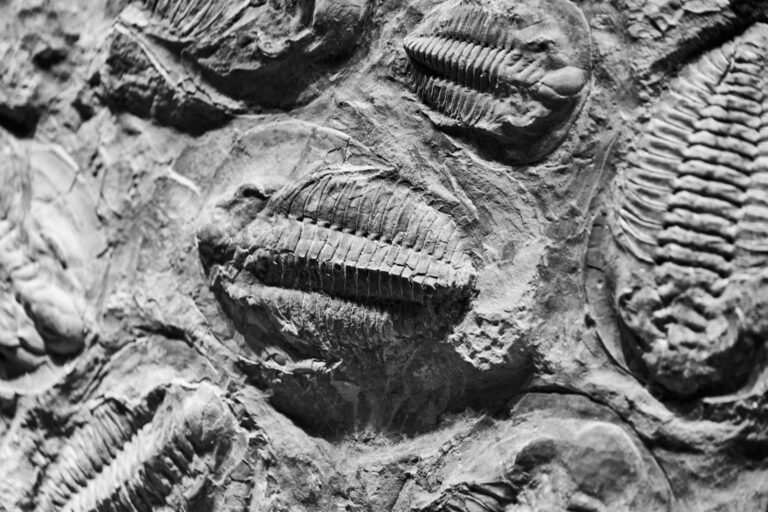
Cambrian Explosion marine ecosystem with trilobites, Anomalocaris, and early animal life.

The Cambrian Explosion: When Life Learned to Draw Edges

Around 541 million years ago, something extraordinary happened. In what amounts to a geological blink of an eye, animal life diversified into forms so strange and inventive that, even today, they look like science fiction. Within roughly 20 million years, the oceans filled with trilobites, armored worms, the first large predators, and the earliest ancestors of vertebrates. Darwin himself, whose work laid the foundation for understanding human evolutionary history and the rise of the genus Homo, worried that such a rapid appearance of complexity might threaten his theory. This was the Cambrian Explosion, a pivotal moment that followed the genesis of life on our planet. What caused it? For the Read more

Satellite view of Africa from space showing the Sahara desert, equatorial rainforests, coastal regions, and cloud formations illustrating human origins and evolution

Where Did Humankind Originate? The Out-of-Africa Theory Explained

The Search for Our Origins Where did humankind originate? It’s more than a scientific puzzle; it’s central to understanding who we are. For centuries, people have looked to religious texts, oral traditions, and, later, archaeology and genetics to uncover the truth. Today, the overwhelming consensus in anthropology and genetics supports one powerful idea: modern humansHomo sapiensoriginated in Africa and spread to populate the rest of the world. This is known as the Out-of-Africa theory, which has reshaped how we view ourselves as a species. The Out-of-Africa Theory: A Scientific Overview Where did humankind originate? The Out-of-Africa theory proposes that anatomically modern humans evolved in Africa around 200,000 to 300,000 years Read more

Digital visualization of glowing DNA double helix structure with data streams

The Shocking Truth About Non-Coding DNA: How It Controls Genes and Disease

Introduction Non-coding DNA comprises approximately 98–99% of the human genome. For decades, scientists dismissed these sequences as “junk DNA” — evolutionary leftovers with no purpose. That view was wrong, and overturning it has reshaped medicine, cancer biology, and our understanding of human evolution. Research from the ENCODE Project and subsequent work has revealed that non-coding DNA is the genome’s control system: it determines when genes switch on, how strongly they express, and which cells develop which identities. The breakthrough research happening in this field connects closely to advances in stem cell research and regenerative medicine. Unlike protein-coding genes — which make up only ~1–2% of the genome and directly produce Read more