
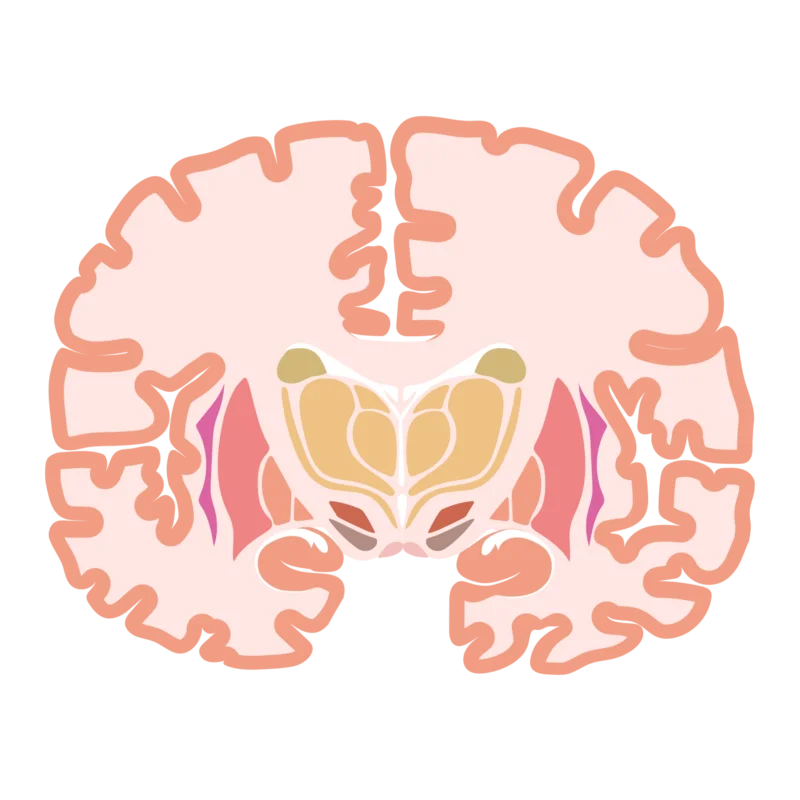
Memory is not a single system but a collection of brain processes, declarative, procedural, emotional, and spatial, that encode, store, and retrieve information via distinct neural circuits and molecular mechanisms. You remember your first day of school. You know how to ride a bicycle. You recall, for some reason, that the capital of France is Paris and that otters sleep holding hands. This is the neuroscience of memory: how the brain encodes, stores, and retrieves experience.
These memories feel different from each other: some vivid and emotional, some purely factual, some embodied as skill. And they are different, in the most literal neurological sense. The brain uses multiple, partially independent mechanisms to store different types of information, in different brain regions, using different molecular machinery.
Understanding how memory works at the neuroscience level, how experiences become neural changes that persist for hours, decades, or an entire lifetime, is one of the most consequential achievements of modern neuroscience.
Types of Memory: Declarative vs. Non-Declarative Memory

The first important distinction is between declarative (explicit) and non-declarative (implicit) memory.
Declarative Memory
Declarative memory is memory you can consciously access and articulate; “declare.” It divides into:
Episodic memory: Memory for personal experiences tied to specific times and places. “I remember my seventh birthday party.” “I saw a red car this morning.” Episodic memories have a narrative quality: they’re memories of specific events in your life story. They tend to be vivid, emotionally colored, and reconstructive.
Semantic memory: Memory for facts and knowledge not tied to specific personal experiences. “Paris is the capital of France.” “Photosynthesis converts sunlight to chemical energy.” “Water is H₂O.” Semantic memories are abstracted from any particular episode of learning.
The distinction is not absolute. Semantic knowledge is often built from accumulated episodic experiences. And severe episodic memory disorders (like the famous patient H.M., who lost the ability to form new episodic memories after hippocampal removal) don’t always abolish semantic memory.
Non-Declarative Memory
Non-declarative memory is expressed through performance rather than conscious recollection. You may not be able to explain how to ride a bicycle, but your body knows.
Procedural memory: Motor skills and habits. Typing, driving, playing piano. These memories are robust: once mastered, they resist forgetting and work best when not consciously attended to (“paralysis by analysis”).
Priming: Exposure to a stimulus makes it easier to perceive or process similar stimuli later, without conscious awareness. Seeing the word “doctor” makes you faster to identify “nurse.”
Conditioning: Classically conditioned responses (Pavlovian conditioning) and fear responses. A neutral stimulus paired with an aversive one comes to elicit a fear response, this is memory expressed through behavior.
Non-associative learning: Habituation (learning to ignore a repeated, irrelevant stimulus) and sensitization (becoming more responsive to a stimulus after a strong or noxious event) represent the simplest forms of memory, present even in primitive organisms.
The Neuroscience of Memory: The Hippocampus and Consolidation

The most important structure for forming new declarative memories is the hippocampus: a seahorse-shaped structure in the medial temporal lobe, present in both hemispheres.
The critical evidence came from the patient H.M. (Henry Molaison), who underwent bilateral hippocampal removal in 1953 to treat severe epilepsy. Afterward, he was completely unable to form new long-term declarative memories (anterograde amnesia). He could remember events and knowledge from before the surgery (retrograde memory was largely intact) but could not retain any new experience for more than a few minutes.
H.M. could still learn new motor skills (procedural learning): he would improve at a mirror-drawing task session after session, even while having no memory of ever doing it before. This dissociation revealed that procedural and declarative memory use different systems.
H.M. remained science’s most studied patient until his death in 2008, and his case established the hippocampus as essential for forming new declarative memories.
The hippocampus receives input from many cortical regions, sensory areas, frontal lobe, amygdala, and binds them together into coherent memories. It acts as a convergence zone that links the disparate neural representations of an experience (the sight, sound, smell, emotional context) into a unified memory trace.
Place Cells and the Cognitive Map
The hippocampus is also the brain’s GPS. In 1971, John O’Keefe discovered place cells in rat hippocampi: neurons that fire specifically when the animal is in a particular location. Together, the population of place cells creates a cognitive map of the environment. Interestingly, this spatial mapping system may share computational principles with how the brain navigates other abstract “spaces” of knowledge.
Subsequent research revealed grid cells in the entorhinal cortex (feeding into the hippocampus): neurons firing in a remarkable hexagonal pattern as the animal moves, creating a coordinate system. O’Keefe, May-Britt Moser, and Edvard Moser shared the 2014 Nobel Prize in Physiology or Medicine for this work.
The connection between spatial memory and episodic memory is profound: episodic memories have a spatial and temporal context. The hippocampal cognitive map may not just navigate space, it may serve as the computational framework for the “mental time travel” of episodic memory.
How Memories Are Made: Synaptic Plasticity

The cellular mechanism for memory storage is synaptic plasticity, changes in the strength of connections between neurons.
Long-term potentiation (LTP) is the most studied form of synaptic plasticity. When two neurons fire together repeatedly, the synapse between them is strengthened: the postsynaptic neuron becomes more responsive to input from the presynaptic one. This is like strengthening a footpath with repeated walking: each passage makes the route more defined and easier to traverse. This is the cellular correlate of learning: “neurons that fire together, wire together” (Hebb’s rule, proposed by Donald Hebb in 1949, later confirmed experimentally).
LTP is mediated primarily by AMPA receptors (which carry the normal synaptic signal) and NMDA receptors (which act as coincidence detectors, they only open when the postsynaptic neuron is already depolarized at the same time the presynaptic neuron fires). The NMDA receptor’s role as a coincidence detector is why the Hebbian rule works: the synapse is only strengthened when pre- and post-synaptic activity coincide.
When NMDA receptors open (during coincident activity), calcium flows into the postsynaptic neuron, activating signaling cascades that:
- Insert more AMPA receptors into the synapse (early LTP, lasting minutes to hours)
- Trigger new protein synthesis and structural changes (late LTP, lasting hours to years)
This molecular cascade is the basis of long-term memory storage.
Memory Consolidation: From Short-Term to Long-Term
Memories don’t arrive in permanent form. They are initially labile, easily disrupted, and must be consolidated to become stable.
Synaptic consolidation happens over hours at the cellular level. The initial LTP depends on existing proteins; late LTP requires new protein synthesis. Block protein synthesis after a training event and long-term memory is impaired, even if short-term memory is intact.
Systems consolidation happens over months to years at the brain systems level. Initially, episodic memories depend on the hippocampus: damage the hippocampus shortly after a learning event and the memory is lost. But with time, memories become less hippocampus-dependent and more distributed across the neocortex.
How? During sleep, particularly slow-wave sleep, the hippocampus appears to “replay” events from the day, reactivating the neural patterns associated with recent experiences. This hippocampal replay seems to drive the gradual transfer of memory traces to the neocortex, where they become integrated with existing knowledge.
Sleep deprivation impairs memory consolidation: a real effect, not just a metaphor. Students who sleep after studying outperform those who stay awake.
The Amygdala: Memory and Emotion

The amygdala, almond-shaped nuclei in the medial temporal lobe, plays a special role in emotional memories.
Emotional arousal enhances memory consolidation. You remember exactly where you were when you heard significant news events. You remember your near-miss car accident more vividly than most of last Tuesday. This is the amygdala modulating hippocampal memory consolidation: stress hormones (adrenaline, cortisol) activate the amygdala, which in turn enhances hippocampal encoding of emotionally significant events.
The amygdala is essential for encoding and expressing fear memories: conditioned fear responses involving threat-associated cues, though the storage itself is distributed across cortico-amygdala circuits. This is the substrate of post-traumatic stress disorder (PTSD): hyperconsolidated fear memories that intrude and persist long after the threat has passed.
H.M. demonstrated intact conditioned fear responses (as measured by skin conductance) despite complete declarative amnesia, further dissociating the two systems.
Memory Retrieval: Pattern Completion and Reconsolidation
How does the brain actually trigger recall? Retrieval is an active process, not a passive one. When you encounter a cue, a smell, a sound, a familiar face, the hippocampus performs a pattern completion process: a partial input reactivates the full neural ensemble associated with the original memory. The prefrontal cortex monitors this retrieval, selecting relevant memories and suppressing irrelevant ones. This is why distraction or multitasking can impair recall, the prefrontal cortex’s monitoring role is compromised.
Reconsolidation: The Labile Window
Once retrieved, the memory is briefly returned to a labile state, requiring reconsolidation to persist. Each time a memory is retrieved, it must be re-stabilized through a new round of protein synthesis. This is both a vulnerability (memories can be altered or disrupted during retrieval) and a potential therapy: reconsolidation blockers are being explored as treatments for PTSD, because disrupting reconsolidation of a reactivated fear memory might reduce its emotional intensity.
Memory Is Reconstructive
The intuitive model of memory is a video recording: you store what happened, and retrieval plays it back. The neuroscience says something completely different.
Memory is reconstructive. Each time you recall a memory, you are not playing back a stored recording: you are rebuilding the experience from fragments of neural representation, filling gaps with inferences, plausible assumptions, and information acquired after the original event.
This reconstruction process means memories are mutable. Research by Elizabeth Loftus and others has demonstrated that memories can be altered by post-event information, misleading questions, and even imagination. In a series of famous experiments, Loftus showed that eyewitness memories of accidents could be altered by the wording of questions, asking “how fast were the cars going when they smashed into each other?” led to higher speed estimates and false memories of broken glass compared to asking “how fast were they going when they hit?”
Forgetting: Not Just Failure
Forgetting is often treated as a failure of memory, something to be remedied. But forgetting is also adaptive.
The brain does not need to remember every detail of every experience. Generalization, learning the category “dog” from encountering many individual dogs, requires extracting common features and discarding irrelevant particulars. Forgetting the details is part of how we build general knowledge.
Sleep-dependent memory processing appears to selectively preserve important memories (emotionally significant, repeatedly retrieved, consistent with prior knowledge) and prune unimportant ones. The new formation of synapses and pruning of others during sleep may be how the brain consolidates what matters and discards what doesn’t.
The rare condition of hyperthymesia (highly superior autobiographical memory), in which individuals remember virtually every day of their lives in vivid detail; illustrates why too much forgetting is a problem: hyperthymestic individuals report that the constant intrusion of memories is exhausting and interferes with normal functioning.
Memory Across the Lifespan
Memory changes dramatically across the human lifespan. Childhood amnesia: the inability of adults to recall events from before roughly age 3; remains incompletely understood. One prominent theory suggests that rapid neurogenesis in the infant hippocampus overwrites early memory traces; alternative explanations involve prefrontal cortex immaturity, the development of language, and changes in the sense of self. Normal aging brings gradual declines in episodic memory, with word-finding and source memory particularly affected. Alzheimer’s disease, by contrast, involves pathological accumulation of amyloid plaques and tau tangles that first attack the entorhinal cortex and hippocampus, explaining why episodic memory loss is its earliest symptom. Other memory disorders include Korsakoff’s syndrome (caused by thiamine deficiency, often in chronic alcoholism), transient global amnesia (a temporary, sudden loss of recent memory), and dissociative amnesia (memory loss tied to psychological trauma).
Practical Implications: How to Improve Memory
The neuroscience of memory offers evidence-based strategies for enhancing learning and retention. Spacing effect: Distributing study sessions over time (rather than cramming) dramatically improves long-term retention, as it engages multiple cycles of consolidation. Sleep hygiene: Prioritizing sufficient sleep, especially after learning, boosts memory consolidation. Emotional arousal: Emotionally charged events are better remembered, but stress impairs retrieval; managing anxiety before tests can help. Elaborative encoding: Connecting new information to existing knowledge (e.g., explaining concepts to yourself) strengthens memory traces. These principles are especially valuable for aging individuals seeking to maintain cognitive function.
Memory’s Future: Optogenetics and Engrams

Modern neuroscience has made remarkable progress in identifying and manipulating the physical substrate of specific memories; engrams.
Using optogenetics: a technique that makes specific neurons sensitive to light so they can be activated or silenced at will, researchers have identified the specific neurons activated during a learning event and reactivated them artificially. In a landmark 2012 paper from the Tonegawa lab, mice were trained to fear a specific context. Optogenetic reactivation of the neurons active during training (in a different context) triggered fear responses, demonstrating that memories are stored in specific neural ensembles.
Going further, the same lab implanted false memories in mice: they activated neurons associated with one context while the mouse experienced a fear event in a different context, creating a fear memory for the first context the mouse had never actually experienced fearfully. Memory manipulation, previously the stuff of science fiction, is now laboratory reality in rodents.
Future directions include using non-invasive brain stimulation to enhance memory consolidation in healthy individuals and Alzheimer’s patients, and developing reconsolidation blockers for treating PTSD in clinical settings. The ethical questions are substantial: if we can manipulate memories in humans, what limits should we place on that power? The next decade will likely bring both scientific breakthroughs and difficult debates about the boundaries of memory intervention.
Sources
- Squire, L.R. & Zola-Morgan, S. (1991). The medial temporal lobe memory system. Science, 253(5026), 1380–1386. Read the study at Science
- Bliss, T.V.P. & Lømo, T. (1973). Long-lasting potentiation of synaptic transmission in the dentate area of the anaesthetized rabbit following stimulation of the perforant path. Journal of Physiology, 232(2), 331–356.
- Loftus, E.F. & Palmer, J.C. (1974). Reconstruction of automobile destruction: An example of the interaction between language and memory. Journal of Verbal Learning and Verbal Behavior, 13(5), 585–589.
- Liu, X. et al. (2012). Optogenetic stimulation of a hippocampal engram activates fear memory recall. Nature, 484, 381–385.
- O’Keefe, J. & Dostrovsky, J. (1971). The hippocampus as a spatial map. Brain Research, 34(1), 171–175.
- National Institutes of Health: Memory and Aging: resource on memory changes across the lifespan.
What are the main types of memory in the brain?
The brain primarily distinguishes between declarative (explicit) memory, which includes episodic and semantic memory, and non-declarative (implicit) memory, which includes procedural, emotional, and spatial memory.
Which part of the brain is critical for forming new memories?
The hippocampus is the brain region critical for forming new declarative memories, such as facts and personal experiences.
How does the brain store different types of memories?
Different types of memories are stored via distinct neural circuits and molecular mechanisms in various brain regions, with declarative memories relying on the hippocampus and non-declarative memories involving structures like the cerebellum and amygdala.
What is the difference between episodic and semantic memory?
Episodic memory involves personal experiences tied to specific times and places, while semantic memory involves general factual knowledge, such as knowing that the capital of France is Paris.
Can memories last a lifetime, and how does the brain achieve this?
Yes, memories can last a lifetime through long-term potentiation and synaptic changes that stabilize neural connections, allowing information to persist for decades or even an entire lifetime.
Further reading: Memory on Wikipedia