
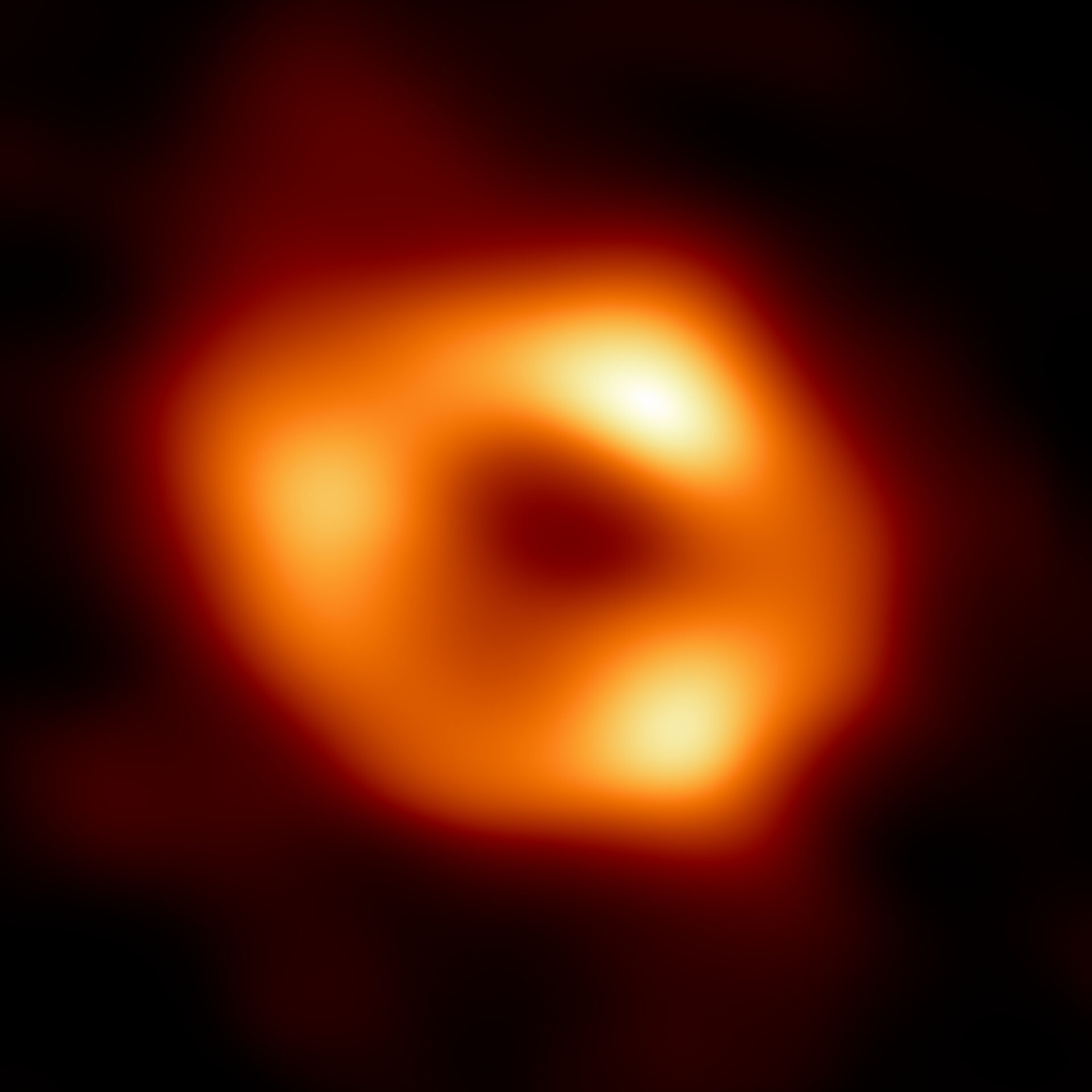
Imagine the history of the universe (the birth of galaxies, stars, planets, life) played in reverse, faster and faster, until everything merges into a single, searing point. This is the Big Crunch.
The universe is currently expanding. Every galaxy beyond our Local Group is moving away from every other, carried apart by the growth of space itself. This is the dominant cosmological fact of our era, confirmed by a century of observation from Edwin Hubble’s first redshift measurements to the Planck satellite’s precise mapping of the cosmic microwave background.
But expansion is not the only possible fate. There is a scenario in which gravity wins, in which the expansion slows, halts, and reverses, pulling all of spacetime back into a single point of infinite density. This is the big crunch universe scenario, the universe ending not with a rip or a freeze, but with everything that ever existed collapsing back into the conditions of the Big Bang itself.
The Bottom Line: Current evidence points to eternal expansion, but if dark energy weakens over time, a gravitational collapse called the Big Crunch remains a physically possible, though speculative, outcome. If it occurred, it would likely be hundreds of billions of years in the future, far beyond the death of all stars.
What the Big Crunch Universe Scenario Predicts
The Big Crunch is the time-reversal of the Big Bang. Where the Big Bang was a rapid expansion from a singularity of infinite density, the Big Crunch is a rapid contraction toward one. Everything (every galaxy, every star, every atom) converges on the same point at the same moment. The universe does not merely end. It returns to its origin.
For most of the twentieth century, the Big Crunch was considered the most likely end-state of the universe. Whether it would occur depended on a single quantity: the average density of matter in the universe relative to a critical threshold.
If the density exceeded the critical value, gravity would eventually overcome the expansion. Space would curve back on itself. The universe would be finite and closed, a four-dimensional sphere that expands to a maximum size and then contracts. General relativity describes this geometry precisely. The outcome, if the density is high enough, is inevitable.
Why It Was the Dominant Theory

Einstein’s original equations of general relativity naturally produced a dynamic universe, one that either expands or contracts. Einstein himself, uncomfortable with a non-static cosmos, introduced the cosmological constant as a fudge factor to balance expansion against gravity and achieve a static result. When Hubble demonstrated in 1929 that the universe is in fact expanding, Einstein called the cosmological constant his greatest blunder.
With the cosmological constant set to zero, the fate of the universe became a straightforward competition between two quantities: the kinetic energy of expansion and the gravitational potential energy of all the matter trying to pull everything back together. If matter wins, the universe recollapses. If expansion wins, it continues forever.
For decades, cosmologists measured the density of matter and found it tantalizingly close to the critical value, close enough that either outcome seemed possible. The Big Crunch remained a live hypothesis.
What Ruled It Out, and What Could Revive It
In 1998, everything changed.
The discovery of the accelerating expansion of the universe (that dark energy is pushing galaxies apart at an increasing rate) effectively ruled out the Big Crunch under the standard cosmological model with a true cosmological constant (Λ). A cosmological constant, once dismissed, turned out to be real. And it acts in the opposite direction from gravity: it accelerates expansion rather than decelerating it.
In a universe dominated by a true cosmological constant (w = −1), the Big Crunch cannot happen. The expansion never slows. Gravity never gets its chance.
But the story does not end there.
The 2024 results from the Dark Energy Spectroscopic Instrument (DESI) raised a possibility that has reintroduced the Big Crunch to serious discussion: dark energy may not be a cosmological constant. It may be time-varying, stronger in the past, weaker in the future, or oscillating. Some models of dynamical dark energy allow for a scenario in which dark energy eventually weakens enough for gravity to reassert dominance. If the equation-of-state parameter w rises above −1 and dark energy fades, the universe could eventually decelerate, halt, and reverse.
This remains speculative. But it is physically consistent, and the DESI data cannot rule it out.
The Cyclic Universe: A Big Crunch That Bounces
Some cosmological models go further than a simple collapse. They propose that the Big Crunch is not an ending but a transition, that the singularity of maximum compression does not terminate spacetime but instead triggers a new Big Bang.
The cyclic or ekpyrotic universe models, developed by Paul Steinhardt and Neil Turok among others, propose that our universe is one of an infinite sequence, each collapsing into a crunch that becomes the bang of the next cycle. Time has no beginning and no end. The universe breathes.
These models are mathematically coherent and make predictions that are in principle testable, particularly through the spectrum of primordial gravitational waves, which differs between cyclic models and standard inflationary cosmology. Current gravitational wave detectors are not sensitive enough to resolve the question, but future observatories may be.
The cyclic model transforms the Big Crunch from a terminus into a reset, the universe not dying but being reborn, carrying forward none of the structure of the previous cycle, only the laws of physics themselves.
What the Contraction Would Look Like

If the Big Crunch were to occur, the sequence of events would mirror the history of the universe in reverse, but not cleanly.
In the early phases of contraction, the universe would look almost indistinguishable from today’s. Galaxies would still exist, stars would still burn, life could persist. The only observable difference would be a progressive blueshift of distant galaxies rather than the redshift we currently see, the cosmological equivalent of an approaching siren rather than a receding one.
As the contraction accelerates, galaxy clusters would merge. The night sky would brighten as the density of galaxies increased. Stars would form faster as gas compressed. Then the collisions would begin, galaxies merging not over billions of years but in increasingly rapid succession.
In the final stages, temperatures would rise across the universe. Stars would be disrupted by the intense radiation field of a collapsing cosmos. Atoms would be stripped of their electrons. Nuclei would dissolve into their component protons and neutrons. In the last fractions of a second, the density and temperature would exceed anything in the current observable universe, and the distinction between separate objects would cease to have meaning. All complex structure, including any conceivable form of life or consciousness, would be destroyed long before this point.
The final singularity would contain the entire observable universe, compressed into a mathematical point of zero volume and infinite density, identical in form to the singularity from which the Big Bang emerged.
Whether it ends there, or rebounds into a new universe, depends on a theory of quantum gravity (e.g., string theory or loop quantum gravity) that we do not yet possess, as classical General Relativity predicts a singular, inescapable endpoint.
The Big Crunch vs The Big Rip vs Heat Death
The three major cosmological end-states differ in mechanism, timeline, and character.
| Fate | Mechanism | Timeline | What survives |
|---|---|---|---|
| Heat Death | Entropy maximization | 10¹⁰⁰+ years | Nothing usable |
| Big Rip | Phantom dark energy (w < −1) | ~22 billion years | Nothing at all |
| Big Crunch | Gravity overcomes expansion | Speculatively >100 billion years | Possibly a new universe |
The Big Crunch is the only end-state that is potentially reversible, or rather, the only one in which something comes after. Heat death is a permanent state of maximum entropy. The Big Rip is an instantaneous destruction of all structure. The Big Crunch is a compression event, and compression can, in some models, rebound.
It is also the only end-state that was once the consensus scientific view, overturned by a single experimental result, the 1998 supernova data. If future observations revise our understanding of dark energy, the Big Crunch could return to the table.
What Current Science Says
The current cosmological standard model (ΛCDM, for Lambda Cold Dark Matter) is explicit: the cosmological constant Λ is real, dark energy is constant, and the universe will expand forever. The Big Crunch is not the expected outcome.
The Planck 2018 parameter estimates give a matter density well below the critical value required for recollapse. Combined with the measured dark energy density, the total energy budget of the universe is consistent with a flat geometry that expands indefinitely.
But ΛCDM is a model, not a law. It fits the data extremely well. It does not explain what dark energy is. And if dark energy is not a cosmological constant, if it has dynamics, if it evolves, then the future of the universe is genuinely uncertain in a way that the standard model does not fully capture.
The Big Crunch remains what it has been since 1998: not the most likely fate, but not an impossibility. The number that separates a universe that expands forever from one that eventually collapses is the equation-of-state parameter w, and that number has not yet been measured precisely enough to close the question entirely.
What is the Big Crunch?
The Big Crunch is a hypothetical end-state of the universe in which the expansion of space eventually halts and reverses, causing all matter and energy to collapse back into a single point of infinite density, the time-reverse of the Big Bang. It requires gravity to overcome dark energy, which is not consistent with current observations but remains physically possible if dark energy weakens over time.
Has the Big Crunch been ruled out?
Not entirely. The 1998 discovery of accelerating expansion ruled out the Big Crunch under a cosmological constant model. However, if dark energy is time-varying (as tentatively suggested by the 2024 DESI results) it could eventually weaken, allowing gravity to slow and reverse the expansion. The Big Crunch remains a live possibility in models of dynamical dark energy.
What is the cyclic universe theory?
The cyclic universe theory proposes that the Big Crunch is not a final end but a transition to a new Big Bang, creating an infinite sequence of universes. Models by Paul Steinhardt, Neil Turok, and others describe a universe that repeatedly expands, contracts, and rebounds. These models are mathematically consistent but have not yet been confirmed observationally.
What is the difference between the Big Crunch and the Big Rip?
The Big Rip occurs if dark energy grows stronger over time, when the equation-of-state parameter w falls below −1, eventually tearing apart all structure including atoms. The Big Crunch occurs if dark energy weakens and gravity wins, collapsing the universe into a singularity. They are opposite outcomes driven by the same unknown quantity: the equation-of-state parameter w of dark energy.
What would the Big Crunch feel like?
For most of the contraction phase, nothing would feel different, the universe would simply show blueshifted rather than redshifted distant galaxies. As contraction accelerated, the sky would brighten, galaxy mergers would become common, and temperatures would rise. In the final stages, atoms would be torn apart by the increasing radiation field. The last moments would be indistinguishable from the conditions of the very early Big Bang.
A big crunch universe would require dark energy to weaken or reverse, exactly what the 2024 DESI data hinted might be happening.
Sources
- Caldwell, R.R., Dave, R. & Steinhardt, P.J. (1998). Cosmological imprint of an energy component with general equation of state. Physical Review Letters, 80(8), 1582–1585.
- Planck Collaboration (2020). Planck 2018 results. VI. Cosmological parameters. Astronomy & Astrophysics, 641, A6.
- DESI Collaboration (2024). DESI 2024 VI: Cosmological Constraints from the Measurements of Baryon Acoustic Oscillations. arXiv, 2404.03002.
- Steinhardt, P.J. & Turok, N. (2002). A cyclic universe. Science, 296(5572), 1436–1439.
- Perlmutter, S. et al. (1999). Measurements of Omega and Lambda from 42 High-Redshift Supernovae. The Astrophysical Journal, 517(2), 565–586.
- Rees, M. (1997). Before the Beginning: Our Universe and Others. Addison-Wesley.
- NASA, Universe 101: Fate of the Cosmos.
- Wikipedia, Big Crunch.