
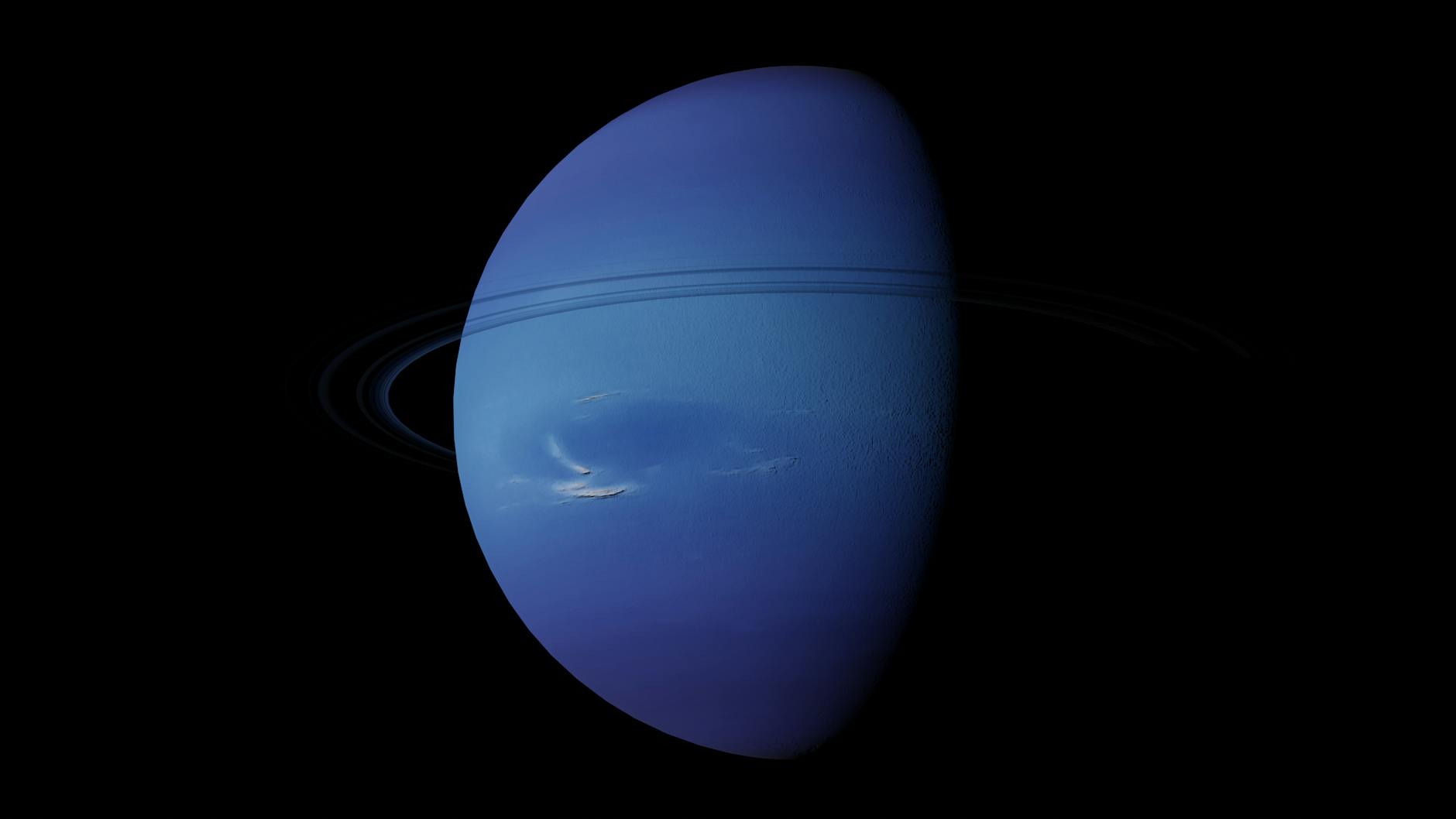
The Kepler-22b vs Earth comparison starts with a striking coincidence: both planets receive nearly identical amounts of starlight. Kepler-22b gets almost the same amount of starlight as Earth. It has a similar year and orbits a near-twin of our Sun. So why aren’t scientists calling it Earth 2.0?
A Kepler-22b vs Earth comparison starts with the remarkable similarities, and ends with one unknown that changes everything.
When NASA confirmed Kepler-22b in December 2011, the announcement came with a carefully chosen phrase: the first planet confirmed in the habitable zone of a Sun-like star. Not the first Earth-like planet. Not a confirmed second Earth. Just: in the habitable zone, around a Sun-like star.
The distinction was deliberate. Scientists understood what the headlines would do with the discovery, and they were right to be cautious. Kepler-22b and Earth share a remarkable set of similarities, and differ in ways that matter enormously.
Here is what we actually know when we put the two worlds side by side.
The Star: Kepler-22 vs The Sun
Everything begins with the star, because the star determines how much energy the planet receives, what wavelengths dominate that energy, and how stable the environment has been over billions of years.
| Property | The Sun | Kepler-22 |
|---|---|---|
| Spectral type | G2V | G5V |
| Mass | 1.00 M☉ | 0.970 M☉ |
| Radius | 1.00 R☉ | 0.979 R☉ |
| Luminosity | 1.00 L☉ | 0.790 L☉ |
| Surface temperature | 5,778 K | 5,518 K |
| Age | ~4.6 billion years | ~4 billion years (estimated) |
Kepler-22 is slightly smaller, cooler, and dimmer than the Sun, but only slightly. Both are G-type stars, the class known for relatively stable, long-lived energy output. The Sun and Kepler-22 are more similar to each other than either is to the M-type red dwarf stars that host the majority of known exoplanets.
The lower luminosity of Kepler-22 is compensated by Kepler-22b’s closer orbital distance, which is why the planet still sits within the habitable zone despite its star’s reduced output.
The Orbit

| Property | Earth | Kepler-22b |
|---|---|---|
| Orbital period | 365.25 days | 289.9 days |
| Semi-major axis | 1.000 AU | 0.849 AU |
| Orbital eccentricity | 0.017 (near-circular) | ~0.016 (near-circular) |
| Distance from star | 1 AU | 0.849 AU |
Kepler-22b orbits its star in 289.9 days, a shorter year than Earth’s, but not dramatically so. The nearly circular orbit is an important similarity: Earth’s low eccentricity means relatively stable seasonal energy input rather than extreme swings between a close and distant approach to the Sun. Kepler-22b appears to share this stability. For a planet with this orbital period around a G-type star, tidal locking is not a concern, reinforcing the picture of a stable environment.
A near-circular orbit in the habitable zone is a positive habitability indicator. Planets with highly eccentric orbits may spend part of their year too hot and part too cold, potentially destabilizing climate and making persistent liquid water less likely.

The Planet: Size and the Unknown Mass
While the star and orbit set the stage, the planet’s own properties determine if the play of life can even begin.
| Property | Earth | Kepler-22b |
|---|---|---|
| Radius | 1.00 R⊕ | ~2.4 R⊕ |
| Mass | 1.00 M⊕ | Unknown (~10–35 M⊕ estimated) |
| Surface gravity | 1.00 g | Unknown (~1.5–2.5 g estimated if rocky) |
| Density | 5.51 g/cm³ | Unknown |
| Composition | Rocky (silicate/iron) | Unknown |
This is where the comparison becomes most uncertain. Kepler-22b is 2.4 times Earth’s radius, a size that places it squarely between Earth and Neptune. That single fact cascades into a fundamental ambiguity: we cannot determine whether it is a larger version of Earth (rocky, with a surface) or a smaller version of Neptune (gaseous, without one).
The statistical tendency, established through analysis of the Kepler planet catalog, is that planets larger than about 1.7 Earth radii are more likely to have thick hydrogen-helium envelopes (mini-Neptunes) than to be dense rocky worlds. This feature in the exoplanet population is known as the radius valley or Fulton gap, as detailed in the seminal California-Kepler Survey. At 2.4 Earth radii, Kepler-22b sits firmly above that threshold.
The Super-Earth Ambiguity: A Pivotal Fork in the Road. If Rocky (a Super-Earth): It would have a surface, with gravity between 1.5–2.5 times Earth’s. Plate tectonics and a geochemical cycle between crust and atmosphere might be possible, setting the stage for long-term climate stability. If Gaseous (a Mini-Neptune): It would have no defined surface, only increasingly dense and hot layers of gas and compressed ices, a high-pressure abyss where Earth-like habitability is impossible.
A rocky Kepler-22b would likely have surface gravity somewhere between 1.5 and 2.5 times Earth’s, depending on its exact mass and interior composition. That is survivable (organisms would be stockier, energy expenditure for vertical movement would be higher), but it would not preclude life. A gaseous Kepler-22b would have no accessible surface at all, and the question of Earth-like habitability would be moot.
Temperature: The Equilibrium and the Greenhouse
| Property | Earth | Kepler-22b |
|---|---|---|
| Equilibrium temperature (no greenhouse) | 255 K (−18°C) | ~262 K (−11°C) |
| Average surface temperature | 288 K (15°C) | Unknown |
| Greenhouse contribution | ~33°C | Unknown |
Earth’s equilibrium temperature (what its temperature would be with no atmosphere) is 255 K, well below freezing. The actual average surface temperature of 288 K reflects about 33°C of greenhouse warming, primarily from water vapor, CO₂, and methane.
Kepler-22b’s equilibrium temperature (262 K) is slightly warmer than Earth’s, which is a reasonable coincidence given its closer orbit compensating for its dimmer star. If Kepler-22b has a greenhouse effect comparable to Earth’s, its surface temperatures could fall in the habitable range. If it has no significant atmosphere, it is frozen. If it has a runaway greenhouse like Venus, it is scorched.
The greenhouse effect is not a detail to be determined later. It is the decisive variable for surface habitability, and it depends entirely on atmospheric composition, which we cannot currently measure for Kepler-22b.
Water

Earth: oceans covering 71% of the surface, with a total water mass of approximately 1.4 × 10²¹ kg (about 0.023% of Earth’s total mass).
Kepler-22b: unknown, but if it is a water-rich world, it may contain dramatically more. Super-Earth models consistent with 2.4 Earth radii and intermediate masses allow for what planetary scientists call ocean planets (worlds covered entirely by a global ocean potentially hundreds of kilometers deep). Such planets have no continental land, no exposed rock, no geochemical cycling between crust and atmosphere of the kind that maintains Earth’s climate stability over geological time, a concept explored in research on ocean planets.
A global ocean is not inhospitable to all life (Earth’s deep oceans demonstrate that). But it may prevent the development of the geochemical systems that have kept Earth habitable for 4 billion years. This concept is part of a broader discussion about life beyond the traditional habitable zone.
Atmosphere
Earth’s atmosphere is 78% nitrogen, 21% oxygen, 1% argon, with trace CO₂ and water vapor. The oxygen is almost entirely biological in origin (before photosynthesis, Earth’s atmosphere was reducing rather than oxidizing). Detecting atmospheric oxygen on an exoplanet would be a significant biosignature precisely because it requires continuous biological replenishment, a key topic in the search for alien biosignatures.
Kepler-22b’s atmosphere, if it has one, is completely uncharacterized. At 620 light-years, it is too distant for current spectroscopic techniques to extract atmospheric composition during transits. The James Webb Space Telescope’s ability to characterize such a distant target is constrained by technical factors like the planet’s angular separation and brightness, not just a choice of target. Future extremely large telescopes may eventually make this measurement, but not for years or decades.
Without atmospheric characterization, we cannot assess: – Whether the greenhouse effect is sufficient, insufficient, or excessive – Whether water vapor is present – Whether oxygen or methane (potential biosignatures) are detectable – Whether the atmosphere is being stripped by stellar radiation
Kepler-22b vs Earth: Key Habitability Factors
Kepler-22b and Earth share an impressive number of large-scale properties: similar stellar type, similar orbital shape, similar equilibrium temperature, orbits within their respective habitable zones.
They differ in the one property that matters most for surface habitability: we know Earth is rocky and Kepler-22b probably isn’t.
| Feature | Earth | Kepler-22b |
|---|---|---|
| In habitable zone | Yes | Yes |
| Sun-like host star | Yes | Yes |
| Near-circular orbit | Yes | Yes |
| Rocky composition | Yes | Uncertain (likely gaseous) |
| Surface liquid water | Yes | Unknown |
| Characterized atmosphere | Yes | No |
| Life | Yes | Unknown |
The comparison is not discouraging; it is honest. Kepler-22b was the right discovery for 2011: proof that habitable zone planets around Sun-like stars exist and are detectable. It opened a door. Whether anything interesting is behind it will require tools we are still building.
The verdict on Kepler-22b awaits a new generation of telescopes. In the meantime, it remains a powerful symbol of how close we can get to finding another Earth, and how much further we have to look. Future missions like the Habitable Worlds Observatory (HWO) or ground-based Extremely Large Telescopes (ELTs) will be needed to resolve its nature, just as the James Webb Space Telescope is doing for closer worlds.
How does Kepler-22b compare to Earth in size?
Kepler-22b has a radius of approximately 2.4 times Earth’s. Its mass is unknown, but estimates range from about 10 to 35 Earth masses. For comparison, Earth has 1 Earth radius and 1 Earth mass. The size difference means Kepler-22b is likely either a super-Earth with much stronger gravity or a mini-Neptune with a thick gas envelope; we cannot yet determine which.
Is Kepler-22b in the habitable zone like Earth?
Yes. Both Earth and Kepler-22b orbit within their respective host star’s habitable zone (the range of distances where liquid water could theoretically exist on a rocky planet’s surface). Kepler-22b’s equilibrium temperature (−11°C without a greenhouse effect) is comparable to Earth’s (−18°C without greenhouse warming). Whether Kepler-22b has an atmosphere that produces a sufficient greenhouse effect is unknown.
Does Kepler-22b have water?
Unknown. If it is a rocky super-Earth with the right atmospheric conditions, liquid water could exist on its surface. If it is a water-rich world, it may have a global ocean hundreds of kilometers deep. If it is a mini-Neptune with a gas envelope, surface liquid water in the Earth-like sense is not applicable.
How does Kepler-22b’s year compare to Earth’s?
Kepler-22b completes one orbit of its host star in 289.9 days (about 75 days shorter than Earth’s 365.25-day year). It orbits at 0.849 AU, slightly closer than Earth’s 1 AU, but receives similar energy because its star is somewhat dimmer than the Sun.
Why can’t we learn more about Kepler-22b?
Kepler-22b is approximately 620 light-years away, too distant for current telescopes to measure its mass precisely via radial velocity or characterize its atmosphere via transmission spectroscopy. The James Webb Space Telescope is focused on much closer planetary systems. Next-generation extremely large telescopes and future space observatories may eventually enable these measurements.
Sources
- Borucki, W.J. et al. (2012). Kepler-22b: A 2.4 Earth-radius Planet in the Habitable Zone of a Sun-like Star. The Astrophysical Journal, 745(2), 120.
- Fulton, B.J. et al. (2017). The California-Kepler Survey. III. A Gap in the Radius Distribution of Small Planets. The Astronomical Journal, 154(3), 109.
- Kasting, J.F., Whitmire, D.P. & Reynolds, R.T. (1993). Habitable Zones around Main Sequence Stars. Icarus, 101(1), 108–128.
- Léger, A. et al. (2004). A new family of planets? Ocean-Planets. Icarus, 169(2), 499–504.
- Kopparapu, R.K. et al. (2013). Habitable Zones around Main-sequence Stars: New Estimates. The Astrophysical Journal, 765(2), 131.
- NASA. (n.d.). Habitable Worlds Observatory. science.nasa.gov/mission/habitable-worlds-observatory/
- Fulton, B.J. et al. (2017). The California-Kepler Survey. iopscience.iop.org
Further reading: Kepler-22b on Wikipedia