
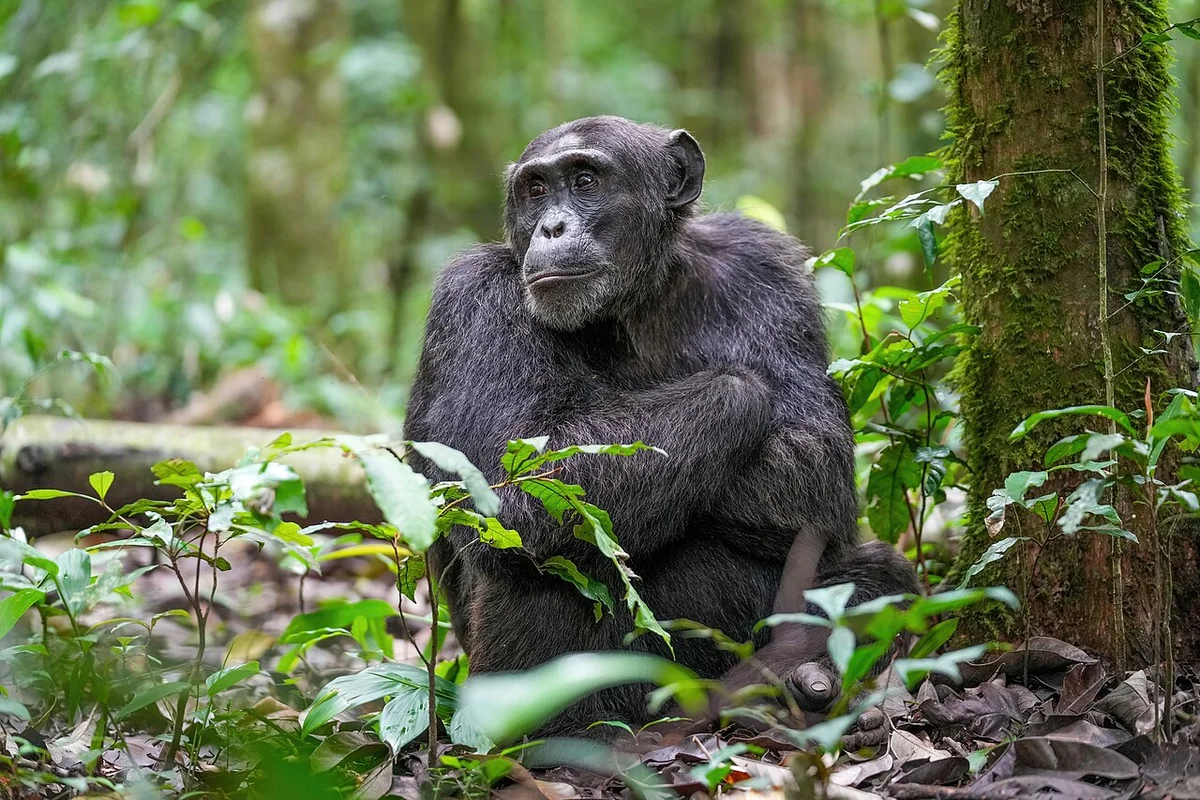
The study of intelligence, whether on Earth or beyond, is fundamentally shaped by biological constraints on intelligence that limit how complex a brain can become. These constraints, rooted in energetic trade-offs and physical scaling laws, suggest that the evolution of intelligence may be far rarer in the universe than optimists presume. This article examines peer-reviewed models showing that energy costs and brain size impose limits on intelligence in animals and possible aliens, drawing on research from evolutionary biology, neuroscience, and astrobiology.
The Energetic Foundations of Neural Complexity
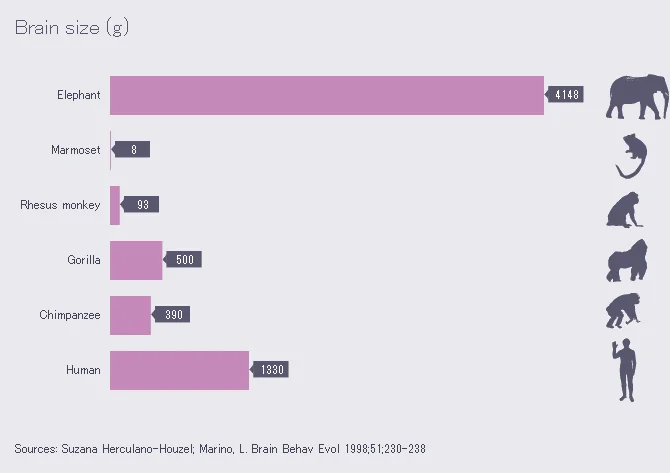
All intelligent behavior requires energy, and the brain is one of the most metabolically expensive organs in the animal kingdom. In humans, the brain consumes roughly 20% of the body’s resting energy despite representing only 2% of body mass. This disproportionate energy demand is not unique to our species – it reflects a fundamental constraint on the evolution of intelligence: neural tissue is costly to build and maintain.
Neurons communicate through electrochemical signals that require constant ion pumping against concentration gradients. A single human neuron may fire hundreds of times per second, each event consuming ATP molecules derived from glucose and oxygen. The Journal of Comparative Neurology has published studies showing that the number of neurons in a brain scales predictably with body size and metabolic rate across mammalian species. For example, a 2014 study by Herculano-Houzel found that primate brains pack neurons more densely than rodent brains of similar size, partially offsetting the energy burden. However, this packing has limits – beyond a certain density, heat dissipation becomes problematic, and oxygen delivery through capillaries becomes inefficient.
The Glucose-Glutamate Trade-Off
A critical mechanistic constraint involves the neurotransmitter glutamate. Glutamate is the primary excitatory neurotransmitter in the mammalian brain, and its recycling after release consumes substantial ATP. Research published in Nature Reviews Neuroscience indicates that up to 80% of the brain’s energy budget may be devoted to glutamate cycling and associated maintenance of ion gradients. This creates a direct trade-off: increasing the number of synapses (for greater computational power) inevitably raises energy demands, forcing the brain to either increase blood flow, reduce other neural activities, or evolve more efficient signaling.
Herculano-Houzel’s work, detailed in her book The Human Advantage (2016), demonstrates that the human brain’s 86 billion neurons are energetically feasible only because our species has exceptionally high metabolic turnover. A gorilla-sized brain with human neuron density would require a diet of fruits and leaves so energy-poor that the animal would need to forage 8–10 hours daily just to sustain resting brain function. This illustrates a central constraint on the evolution of intelligence: intelligence cannot evolve without a corresponding energy subsidy, typically from meat-eating, cooking, or other high-calorie food sources.
Brain Size Scaling and Allometric Limits
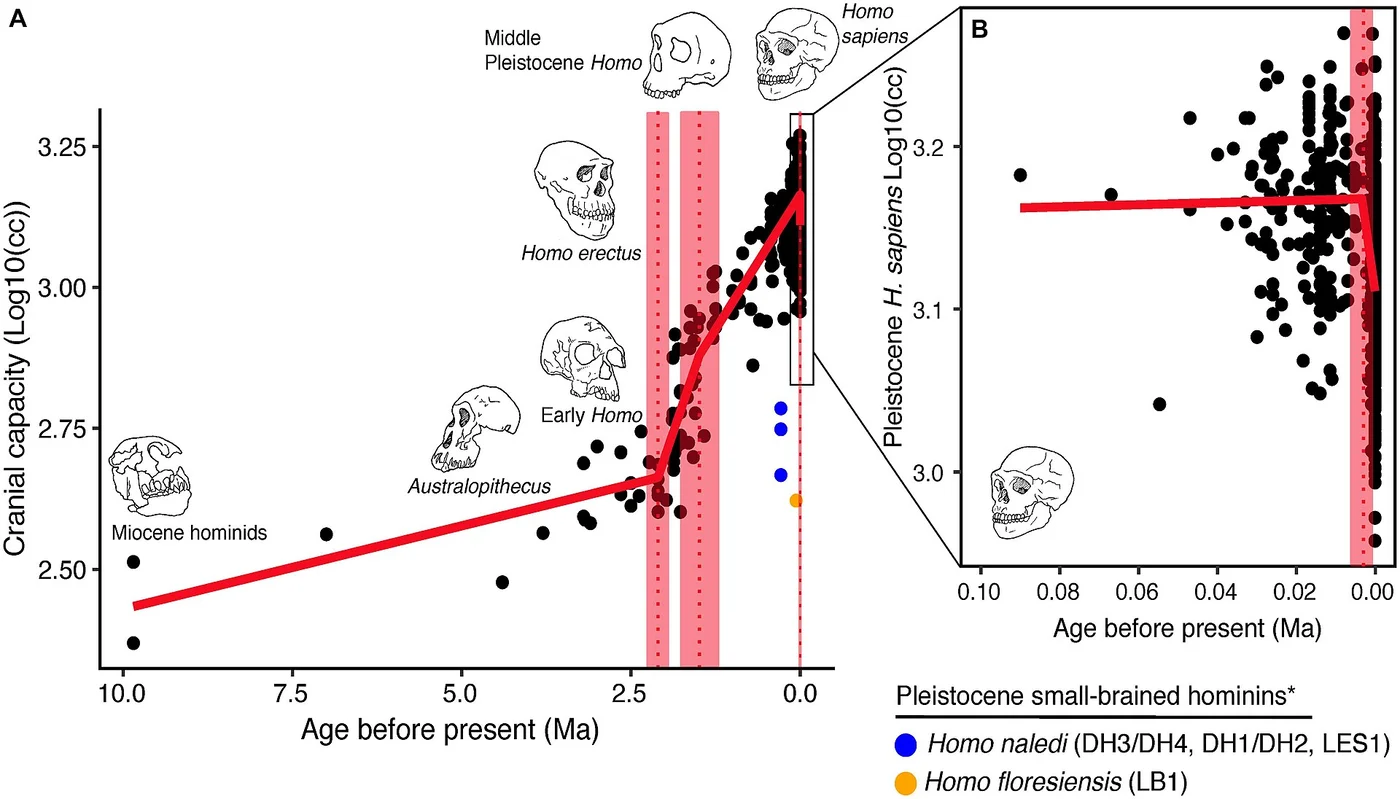
Brain size does not scale linearly with body size across species. The relationship follows a power law known as allometric scaling: brain mass = k × (body mass)^α, where α is typically around 0.75 for mammals. This means larger animals have relatively smaller brains than smaller animals, but the absolute number of neurons increases more slowly than body mass. For intelligence, what matters is not gross brain size but the number of neurons in the cerebral cortex and their connectivity.
The Cortical Neuron Density Ceiling
Comparative neuroanatomy reveals a striking pattern: across mammals, cortical neuron density varies by species but approaches an upper limit near 100,000 neurons per cubic millimeter of cortical tissue. Beyond this density, wiring becomes tangled, synapses compete for space, and the blood-brain barrier cannot efficiently deliver oxygen. Comparative neuroanatomy indicates that increasing brain size beyond human proportions (e.g., an elephant-sized brain) would require either a dramatic increase in folding (gyrification) or a change in neuron size – both with trade-offs. Larger neurons would transmit signals more slowly, while deeper folds could compress blood vessels.
The blue whale, for example, has a brain weighing about 7 kg, roughly five times the human brain’s mass, but its neuron count is estimated at only 20–30 billion, less than a third of the human total. This is because cetacean neurons are larger and less densely packed, likely an adaptation to their aquatic environment where thermoregulation and buoyancy impose additional constraints.
The Metabolic Scaling Law
Biologist Brian McNab’s work on metabolic rates established that an animal’s basal metabolic rate scales with body mass to the 0.75 power. Since brain metabolism scales with neuron number, and neuron number scales with brain size, the energy available to the brain is ultimately limited by body size and diet. A 2020 review in Frontiers in Ecology and Evolution argued that this metabolic scaling law is the primary biological constraint on evolution of intelligence across all carbon-based life forms. The authors noted that for an alien species to evolve human-like intelligence, it would need both a high-calorie diet and a circulatory system capable of delivering oxygen to a brain with billions of densely packed neurons – conditions that may be rare even on Earth.
Biological Constraints on Intelligence in the Cosmos
The search for extraterrestrial intelligence (SETI) often assumes that intelligence is a convergent evolutionary outcome – that any planet with liquid water and stable conditions will eventually produce clever beings. However, the biological constraints on evolution of intelligence challenge this assumption. If energy costs and brain size are universal constraints, then intelligent aliens likely face the same metabolic trade-offs as Earth animals.
The Energy Density Argument
Peer-reviewed astrobiological models, including those published in Astrobiology journal, suggest that the evolution of complex nervous systems requires a stable, energy-rich environment. Planets with low primary productivity (e.g., those with dim stars or frequent asteroid impacts) may never generate enough biomass to support large brains. Even on Earth, intelligence emerged only once (in hominins) after 3.5 billion years of life, and it required a series of improbable events: upright posture freeing hands, meat-eating, cooking, and tool use. C. S. Cockell’s 2020 book Astrobiology and the Search for Life emphasizes that technological intelligence, the kind capable of building radios, requires not just a big brain but also manual dexterity, social cooperation, and a symbolic language ability. These may be exceptionally rare.
Thermal and Mechanical Constraints in Alien Biospheres
Beyond energy, physical constraints also matter. Nervous systems operate within narrow temperature ranges because membrane fluidity and ion channel kinetics are temperature-sensitive. An organism on a world with extreme diurnal temperature swings (e.g., tidally locked exoplanets) might have difficulty maintaining stable neural activity. Similarly, the mechanical strength of biological materials limits brain size: a brain must be supported by a skeleton or hydrostatic skeleton, and its weight increases with the cube of its linear dimensions while structural support scales with the square (the square-cube law). This sets an upper bound on brain size for any body plan – a elephant-sized brain would need extraordinarily thick neck vertebrae to avoid compression injury. These physical limits are universal, applying to any carbon- or silicon-based life.

Energy Efficiency Innovations Throughout Evolution
Evolution has found partial workarounds to the biological constraints on intelligence, but each innovation carries its own costs. Three major strategies stand out:
1. Gyrification (cortical folding): By folding the cortex, species can pack more surface area into a given volume, increasing neuron count without proportionally increasing brain mass. Humans have a gyrification index of about 1.7 (cortical surface area is 1.7 times the area of the outer brain surface). However, excessive folding can kink blood vessels and disrupt white matter tracts, as seen in some pathological conditions.
2. Glial support cells: Astrocytes and oligodendrocytes support neurons by recycling neurotransmitters and insulating axons with myelin. Glial cells outnumber neurons in many large brains, but they themselves require energy – suggesting there is a limit to how much support can be provided. A study in Journal of Cerebral Blood Flow & Metabolism modeled the costs of glial support and found that increasing glial density beyond current mammalian levels would require cooling mechanisms, such as the carotid rete present in some ungulates.
3. Regional specialization: Rather than enlarging the entire brain, many animals have evolved specialized modules (e.g., the primate visual cortex, the corvid hyperpallium) that excel at specific tasks. However, general intelligence, the ability to solve novel problems across domains, appears to require integration across these modules, which in turn demands large associative areas like the human prefrontal cortex. This integration may be the hardest constraint to overcome.
The Fermi Paradox in Light of Biological Constraints
The apparent absence of extraterrestrial signals, known as the Fermi Paradox, has many proposed solutions. The biological constraints on the evolution of intelligence add a compelling explanation: technological intelligence may be so constrained by energy costs and brain size that it arises only under a narrow set of planetary conditions. A 2021 Bayesian analysis in Astrobiology (Snyder-Beattie et al.) argued that the long chain of improbable evolutionary transitions required to reach intelligence implies that such life is likely rare in the universe, a conclusion consistent with the metabolic and allometric limits on brain size discussed above.
This “bottleneck” hypothesis suggests that even if simple life is common, as many exoplanet statistics imply, complex multicellular life with large brains may be rare. The University of Oxford’s Future of Humanity Institute has explored similar ideas, noting that the evolution of human-like cognition required a cascade of improbable events, including the extinction of dinosaurs and the advent of bipedalism. If biological constraints universally restrict intelligence, then the silence of the skies may simply reflect the fact that most planets cannot support the metabolic cost of a thinking brain.
Q1: Could an alien species evolve a brain that uses less energy than a human brain?
In theory, yes, but energy efficiency in neural computing is bounded by physical laws. Neurons require energy for ion pumping regardless of biology. Even hypothetical silicon-based brains would face heat dissipation limits – silicon computers generate waste heat, and biological brains are already near the thermodynamic efficiency limit for computation.
Q2: Does brain size directly correlate with intelligence in animals?
No. Brain size relative to body size (encephalization quotient, or EQ) is a better predictor than absolute size. Humans have the highest EQ among mammals, but corvids and cephalopods, which have smaller brains, show remarkable cognitive abilities, suggesting that neuron density and wiring efficiency matter more than raw size.
Q3: Are there any animals that have overcome the energy constraints on intelligence?
Cetaceans (dolphins and whales) have large brains but relatively low neuron density. They evolved in an energy-rich marine environment with a high-fat diet, yet their intelligence appears mostly social rather than technological. No non-human animal has developed tool use, language, and cumulative culture, the hallmarks of human intelligence, due likely to the combined constraints of energy, biomechanics, and social structure.
Q4: Could artificial intelligence (AI) surpass biological intelligence by avoiding these constraints?
AI systems are not bound by metabolic or allometric limits – they can scale computation through hardware improvements. However, they face their own constraints (power consumption, heat dissipation, and algorithmic complexity). A 2022 study in Nature estimated that training a large language model like GPT-3 emitted as much CO₂ as a transatlantic flight; this suggests even non-biological intelligence has energy constraints, though different from biological ones.
Q5: How would astrobiologists test whether biological constraints limit alien intelligence?
One approach is to study exoplanet atmospheres for biosignatures that indicate high primary productivity (e.g., oxygen and methane), which would be necessary to fuel large brains. Another is to model the probability of complex nervous systems developing across planetary conditions using Bayesian methods. The James Webb Space Telescope’s observations of exoplanet atmospheres may offer indirect clues, though direct detection of alien intelligence remains speculative.
Sources & References
- Herculano-Houzel, S. (2016). The Human Advantage: A New Understanding of How Our Brain Became Remarkable. MIT Press. Overview at PNAS
- McNab, B. K. (2002). The Physiological Ecology of Vertebrates. Cornell University Press.
- Niven, J. E., & Laughlin, S. B. (2008). Energy limitation as a selective pressure on the evolution of sensory systems. Journal of Experimental Biology, 211(11), 1792–1804. https://doi.org/10.1242/jeb.017574
- Herculano-Houzel, S. (2014). The glia/neuron ratio: how it varies uniformly across brain structures and species. Glia, 62(9), 1377–1391. https://doi.org/10.1002/glia.22683
- Cockell, C. S. (2020). Astrobiology and the Search for Life. Cambridge University Press.
- Snyder-Beattie, A. E., Sandberg, A., Drexler, K. E., & Bonsall, M. B. (2021). The timing of evolutionary transitions suggests intelligent life is rare. Astrobiology, 21(3), 265–278. https://doi.org/10.1089/ast.2019.2149
- NASA’s James Webb Space Telescope page – overview of exoplanet atmosphere studies.
- Mota, B., & Herculano-Houzel, S. (2015). Cortical folding scales universally with surface area and thickness, not number of neurons. Science, 349(6243), 74–77. https://doi.org/10.1126/science.aaa9101
Further reading: Evolution of human intelligence on Wikipedia