The Science of Life – From Earth to the Stars

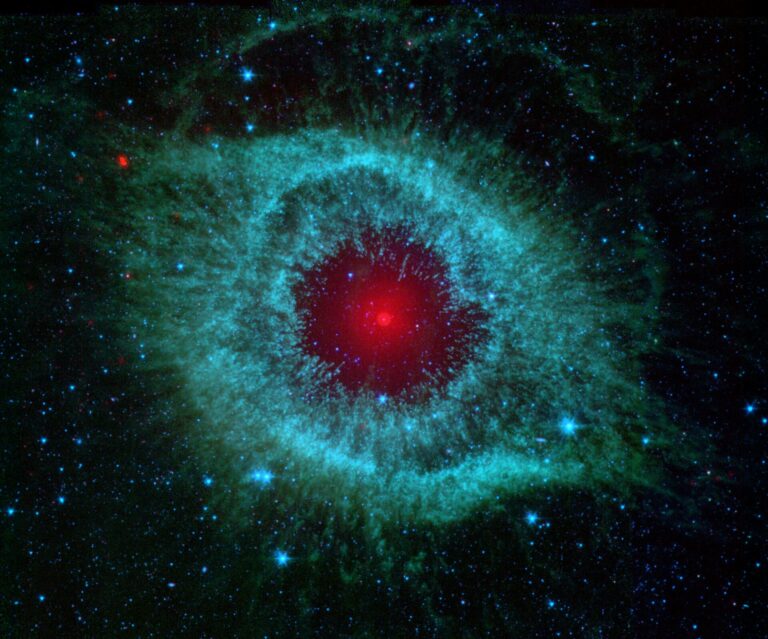
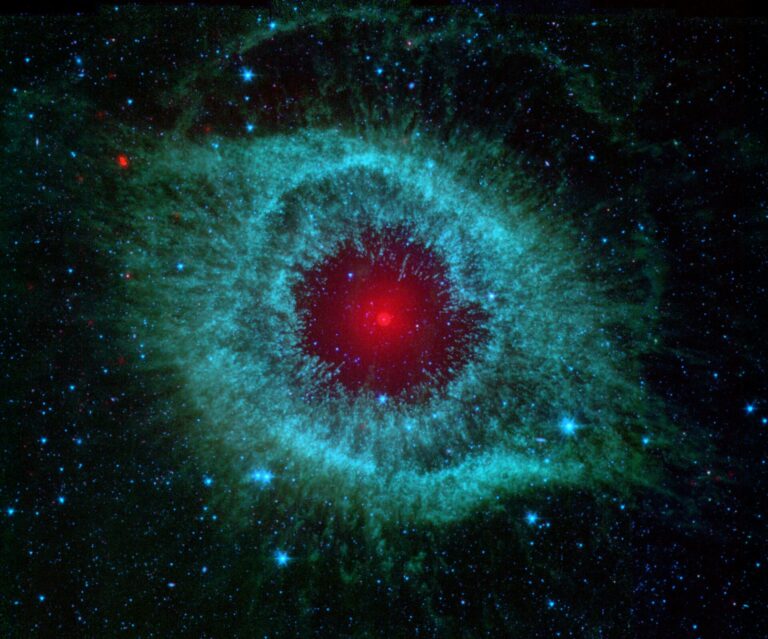
white dwarf stars — NASA Hubble image of a planetary nebula surrounding a white dwarf star, the remnant exposed after a solar-mass star died

White Dwarf Stars: The Stellar Remnants That Outlast Everything

When a star like our Sun exhausts its fuel, it does not go out with a bang. It sheds its outer layers as a colorful planetary nebula, and what remains is something extraordinary: a white dwarf star, a stellar corpse the size of Earth but with a mass comparable to the Sun, radiating heat as it slowly cools over billions to trillions of years. These are white dwarf stars, the most common stellar remnant in the universe, the end state of roughly 97% of all stars, and objects whose extreme physics illuminates some of the most important concepts in astrophysics. Understanding white dwarf stars means understanding quantum mechanics, thermodynamics, the Read more

magnetar — Artist illustration of a magnetar — an extremely magnetized neutron star emitting intense X-ray and gamma-ray radiation from magnetic field decay

Magnetars: The Most Magnetic Objects in the Known Universe

Imagine an object the size of a city with the mass of the Sun, spinning several times per second, wrapped in a magnetic field a million billion times stronger than a refrigerator magnet. At the surface, the magnetic field would be strong enough to distort the electron clouds around atoms, fundamentally changing the chemistry of matter. From 1,000 kilometers away (roughly the distance between New York and Chicago), the field would be powerful enough to destroy the iron in your blood. This is a magnetar: the most extreme form of neutron star known, and one of the most powerful objects in the universe. In the 1998 event known as the Read more

cosmic microwave background — ESA Planck satellite full-sky map of the cosmic microwave background, showing temperature variations of one part in 100,000

The Cosmic Microwave Background: Light from the Edge of the Observable Universe

Look out into space far enough, and you will hit a wall. Not a physical barrier, but an epoch, a moment in the universe‘s history when it was so hot and dense that it was opaque. But we can detect the glow of that wall itself. The cosmic microwave background (CMB) is the oldest light in the universe, photons released 380,000 years after the Big Bang when the universe first became transparent. It fills the entire sky at a temperature of 2.725 Kelvin (about −270°C), redshifted to microwave wavelengths by 13.8 billion years of cosmic expansion. It is so uniform that the temperature varies by only one part in 100,000 Read more

gravitational waves — Aerial view of the LIGO gravitational wave detector, showing the two perpendicular 4-kilometer arms used to detect spacetime ripples

Gravitational Waves: How Ripples in Spacetime Changed Astronomy

On September 14, 2015, at 5:51 a.m. Eastern time, two black holes collided 1.3 billion light-years away. Seven milliseconds later, a signal arrived at the LIGO detector in Livingston, Louisiana, and then at the Hanford, Washington detector: a pattern of stretching and squeezing in spacetime so tiny that it displaced the detectors’ mirrors by a fraction of a proton’s diameter. It lasted one-fifth of a second. That event, GW150914, was the first direct detection of gravitational waves. It confirmed a prediction of Einstein’s general relativity that had waited a century for experimental verification. It demonstrated that black holes merge. It opened an entirely new window on the universe: a window Read more

big crunch universe — Event Horizon Telescope image of Sagittarius A*, the supermassive black hole at the center of the Milky Way, showing an orange ring of light around a singularity

The Big Crunch: What Happens If Gravity Wins the Universe

Imagine the history of the universe (the birth of galaxies, stars, planets, life) played in reverse, faster and faster, until everything merges into a single, searing point. This is the Big Crunch. The universe is currently expanding. Every galaxy beyond our Local Group is moving away from every other, carried apart by the growth of space itself. This is the dominant cosmological fact of our era, confirmed by a century of observation from Edwin Hubble’s first redshift measurements to the Planck satellite’s precise mapping of the cosmic microwave background. But expansion is not the only possible fate. There is a scenario in which gravity wins, in which the expansion slows, Read more

Tycho's supernova remnant — expanding shell of a Type Ia supernova explosion captured in X-ray

Dark Energy and the Cosmic Event Horizon: The Boundary Already Cutting Us Off

There is a number that cosmologists rarely lead with, because it is quietly devastating. It is 16 billion light-years. Beyond that distance, every galaxy (every trillion stars, every possible civilization, every structure in the universe) has already sent us its last message. We simply have not received it yet. That number is the dark energy cosmic event horizon, the boundary beyond which dark energy has already severed our connection to the rest of the universe. Dark energy is winning. It has been winning since the universe was roughly 7 billion years old. And the margin of victory grows every second. What Dark Energy Actually Is (And Why That Is the Read more

Tycho's supernova remnant — expanding shell of a Type Ia supernova explosion captured in X-ray

The Big Rip: If Dark Energy Keeps Strengthening, How the Universe Would End

The universe has survived for 13.8 billion years. It has weathered the Big Bang, the formation of the first stars, the death of trillions of suns, and the slow gravitational assembly of a cosmic web spanning hundreds of millions of light-years. It is, by any reasonable measure, robust. The Big Rip is the scenario in which dark energy wins that battle permanently, not just slowing the universe but eventually tearing it apart at every scale. But there is a scenario in which it all ends, not with a whimper, not with a freeze, but with a literal tearing apart of everything that exists, down to the last subatomic particle. The Read more

observable universe vs cosmic event horizon — The Hubble Ultra Deep Field — ancient light from galaxies near the edge of the observable universe

Observable Universe vs Cosmic Event Horizon: Two Boundaries, Two Different Futures

The observable universe vs event horizon distinction is one of cosmology’s most misunderstood boundaries. Most people use “observable universe” and “cosmic event horizon” interchangeably. Even some science communicators blur the line. They are not the same thing. They are not even close to the same thing. And once you understand the difference, the universe becomes a significantly stranger and lonelier place than you imagined. The key difference: The observable universe is what we have seen. The cosmic event horizon is what we will ever see. And the second is much smaller. Imagine a bubble of light from the past, inside a smaller, shrinking bubble of possible future contact. This is Read more