The Science of Life – From Earth to the Stars

JWST first deep field — thousands of distant galaxies including high-redshift little red dots visible in SMACS 0723

JWST’s Little Red Dots: The Galaxies That Shouldn’t Exist

The James Webb Space Telescope was designed to detect the first galaxies. It found them, and discovered something entirely unexpected beside them. Among those anomalies, the ones astronomers now call the JWST little red dots are the most difficult to explain. Scattered across JWST’s deep field images are hundreds of compact, intensely red objects that defy the standard cosmological model. Astronomers call them “little red dots” (LRDs). These appear in the first two billion years of the universe‘s history. They are far more massive than models predict for their age. Many also seem to harbor supermassive black holes that grew impossibly fast. How did they get so big so fast? Read more

How Far is the Cosmic Event Horizon? The Current Distance in Light Years

How the edges of the observable universe define, limit, and shape our understanding of the cosmos What Is the Cosmic Horizon? When you stand at the ocean’s edge and gaze toward the distant line where sky meets water, you are looking at a horizon, a boundary set not by a physical wall, but by the geometry of your vantage point. The cosmic horizon works in much the same way, only on a scale so vast it staggers the imagination. In cosmology, the cosmic horizon refers to the ultimate boundary of the observable universe, the farthest distance from which light has had time to travel to Earth since the Big Bang Read more

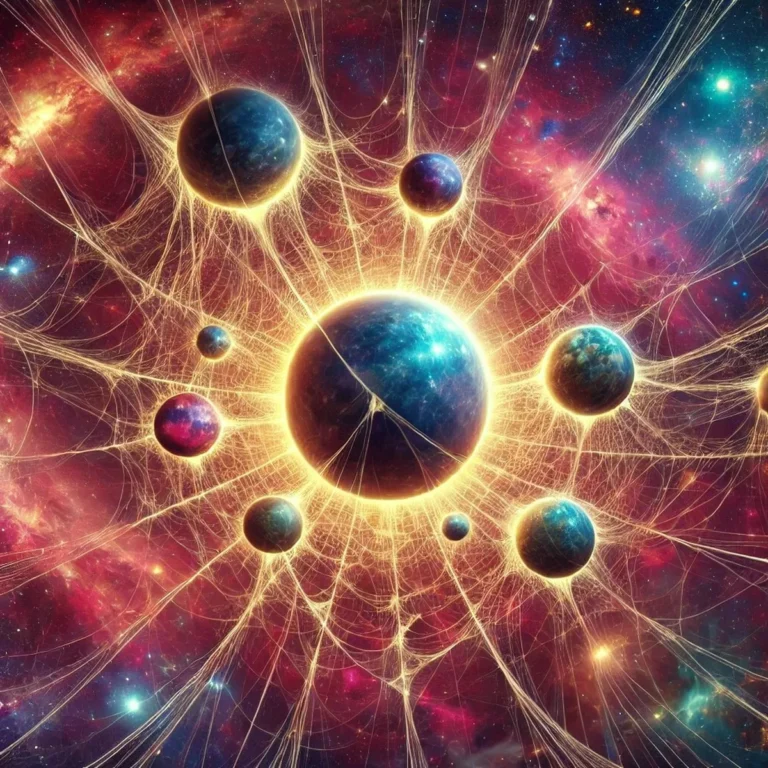
Artistic visualization of cosmic web structure with planets connected by golden filaments

The Cosmic Web Explained: The Universe’s Grand Tapestry of Matter and Mystery

The cosmic web, in simple terms, is our universe‘s most expansive and intricate framework, the largest structure in the universe; it originates from tiny quantum fluctuations in the early cosmos. Studying how galaxies form within it reveals the fundamental nature of dark matter, dark energy, and even constraints on neutrino mass. The same telescopes studying the cosmic web also detect CO₂ in distant exoplanet atmospheres, bridging cosmological and planetary science. By integrating dark matter basics, understanding cosmic voids explained, and presenting a beginner’s guide to cosmology, researchers continue to uncover the gravitational tapestry that shapes galaxy clusters and the formation of galaxy clusters across cosmic time (Sunseri et al., 2025). Read more

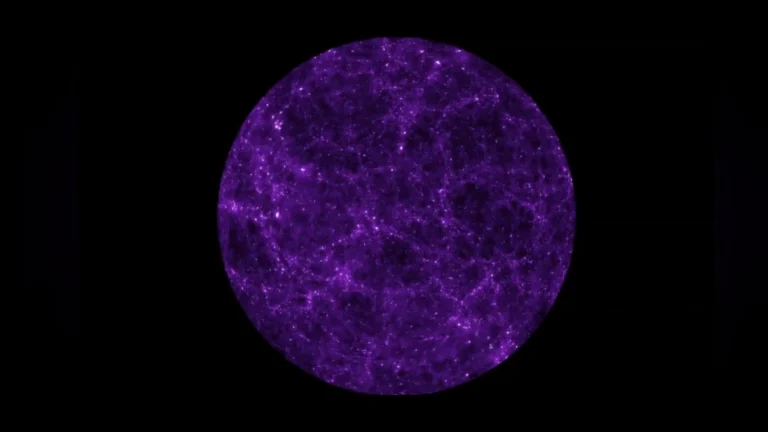
Purple cosmic web filament structure visualization from space telescope data

Do Cosmic Filaments Rotate? New Research Reveals the Truth

📌 Quick Facts About Cosmic Filament Rotation Introduction The universe’s large-scale structure resembles a web of galaxies, but do cosmic filaments rotate as part of this cosmic web? These filaments, stretching hundreds of millions of light-years, act as conduits for matter flowing into galaxy clusters. A groundbreaking study in 2025 suggests that these filaments may exhibit rotational motion. By analyzing galaxy velocity patterns across four detection algorithms, the team identified tentative spin signals. However, they caution that current results are methodology-dependent and require further confirmation. This article breaks down how filaments are mapped, why “rotation” signals matter, and what’s next for cosmology. What Are Cosmic Filaments and How Do They Read more