The Science of Life – From Earth to the Stars

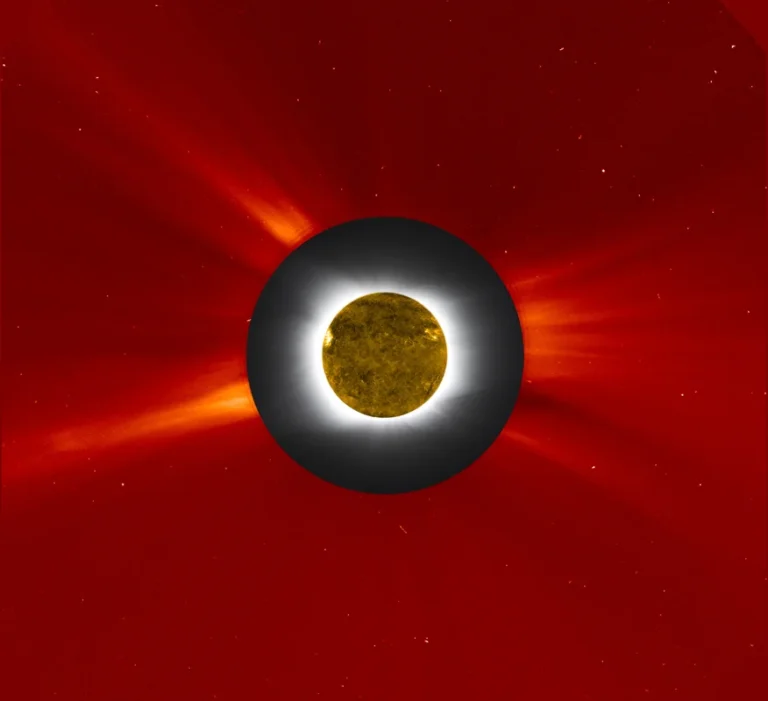
The Sun, where quantum tunneling enables fusion

Quantum Tunneling: How Particles Pass Through Solid Barriers

Quantum tunneling is one of the most counterintuitive phenomena in modern physics. It describes how a particle can pass through a barrier that, according to classical physics, it should never be able to cross. This behavior is not a hypothetical curiosity. It drives nuclear fusion in stars, enables radioactive decay, and powers scanning tunneling microscopes that image individual atoms. Understanding how does quantum tunneling work requires examining the wave nature of matter and the probabilistic foundation of quantum mechanics. Wave-Particle Duality and the Probability Wave To grasp quantum tunneling, one must first accept that particles are not tiny billiard balls with fixed positions and velocities. At the quantum scale, every Read more

A peacock displaying, a classic example of sexual selection

Sexual Selection: Darwin’s Other Big Idea

Charles Darwin had two great ideas. The first, natural selection, is what most people know. The second, sexual selection, is less famous but arguably more responsible for the spectacular diversity of the living world. Why would evolution create a three-foot, rainbow-colored burden that screams “Eat me!” to predators? That’s the puzzle of the peacock’s train of elongated upper tail coverts, the feathers that fan out in the iconic display. These feathers span three feet, shimmer with iridescent blues and greens, and are fantastically expensive to grow and carry. A peacock’s train is terrible for survival, it slows the bird down, makes it more visible to predators, and costs significant metabolic Read more

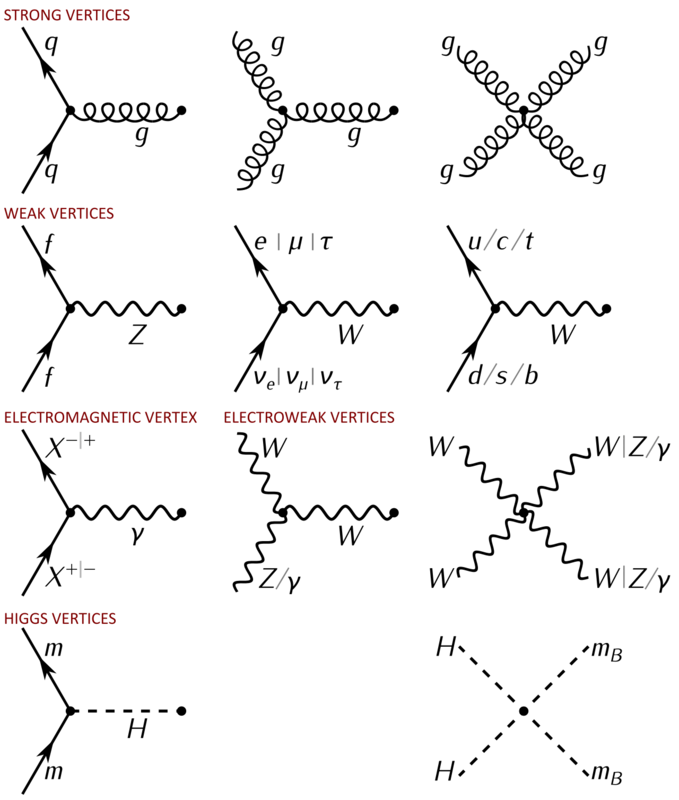
A Feynman diagram of particle interactions

Quantum Field Theory: Why Particles Are Really Just Ripples

Every time you turn on a light, you are watching trillions of electron field ripples dance through a wire. The glow that reaches your eyes is made of photon field excitations traveling from a filament to your retina. This isn’t poetry, it’s the deepest description of reality we have. Ask a physicist what an electron is, and if they’re being precise, they won’t say “a tiny ball.” They’ll say something stranger: an electron is a localized excitation of the electron quantum field, a field that permeates all of spacetime. What Is a Field? A field is simply a quantity that has a value at every point in space and time. Read more

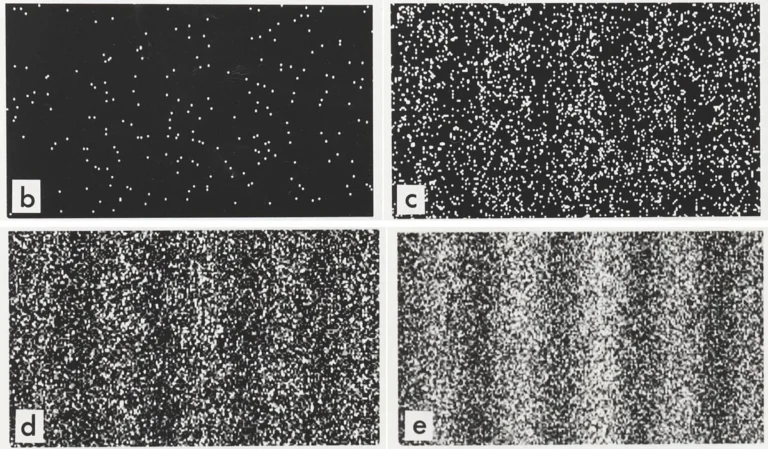
The double-slit experiment, central to quantum measurement

The Quantum Measurement Problem: Why Observation Changes Reality

The quantum measurement problem is the paradox that quantum particles exist in multiple states simultaneously until measured, yet always appear in a single definite state upon observation. This transition from indefinite superposition to definite outcome has no satisfactory explanation within standard quantum mechanics, making it the deepest unresolved conceptual puzzle in physics. Bottom line: Quantum mechanics gives two different rules (unitary evolution via the Schrödinger equation vs. wave function collapse) for the same system, with no agreed-upon boundary between them. The measurement problem is not about disturbance, it’s about why a system in a superposition of states ever appears in only one state. (The “observer effect,” where measuring a particle Read more

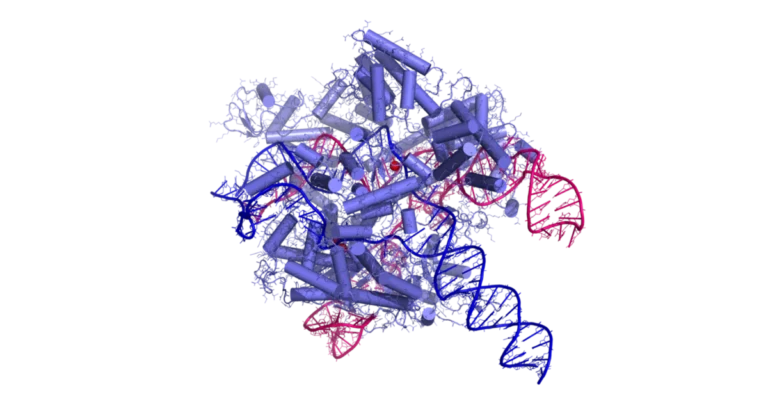
The CRISPR-Cas9 gene-editing system

CRISPR Explained: The Gene-Editing Revolution That Changed Biology

In 2012, a discovery changed biology forever: a molecular machine borrowed from bacteria could be reprogrammed to cut DNA at any precise location in any genome. It was faster, cheaper, and more accurate than anything that had come before. Within years, it had triggered a revolution in medicine, agriculture, basic research, and bioethics. CRISPR is a gene-editing tool derived from a bacterial immune system that allows scientists to cut and modify DNA at precise locations. This is CRISPR; Clustered Regularly Interspaced Short Palindromic Repeats – and it has earned its founders a Nobel Prize and its technology a place among the most transformative scientific advances of the 21st century. What Read more

occam's razor science — A razor blade representing the principle of parsimony — cutting away unnecessary complexity in scientific reasoning.

Occam’s Razor: The Principle That Guides Scientific Thinking

“Entities should not be multiplied beyond necessity.” When you have two explanations for a mystery, which one should you trust first? This 14th-century maxim, attributed to the English friar William of Ockham, became one of the most influential principles in the history of science. Known as Occam’s razor: the principle that simpler explanations are preferred over more complex ones – it is a rule of parsimony: when multiple explanations fit the evidence equally well, prefer the simplest one. Occam’s razor doesn’t guarantee truth. It doesn’t tell you which explanation is correct. It tells you which one to try first: and in centuries of scientific practice, that has turned out to Read more

black hole information paradox — An artistic visualization of a black hole with its event horizon, the boundary from which not even light can escape.

The Black Hole Information Paradox: What Happens When Data Disappears?

Imagine dropping an encyclopedia into a black hole. Every fact, every word, every bit of information encoded in its pages falls past the event horizon and is, apparently, lost forever. Not just inaccessible, erased from reality. If that’s true, then one of the most fundamental principles of physics is wrong. The black hole information paradox is one of the deepest unsolved problems in theoretical physics. It pits general relativity, Einstein’s description of gravity and spacetime, against quantum mechanics, the theory governing the behavior of particles. Both theories have been confirmed to extraordinary precision. Both can’t be entirely right. The black hole information paradox is the conflict between quantum mechanics’ principle Read more

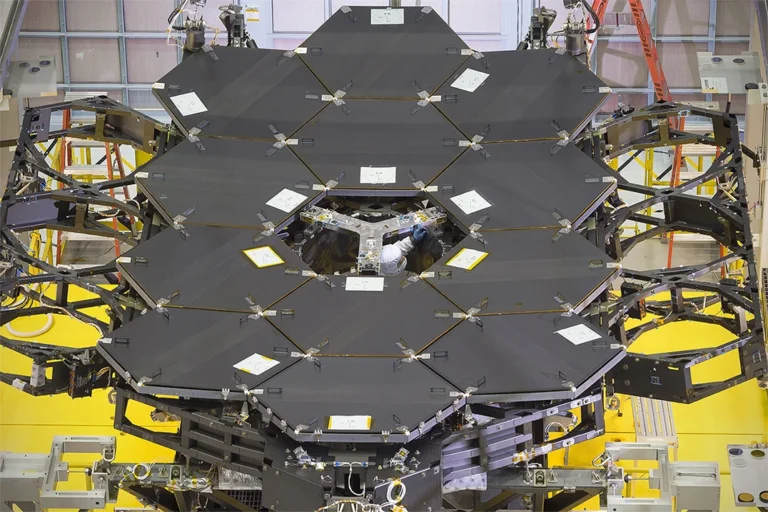
The James Webb Space Telescope

How JWST Detects Biosignatures: What the Telescope Can and Cannot Confirm

The JWST biosignature detection capability represents a monumental leap in humanity’s ability to search for life beyond Earth, yet the telescope operates within strict physical and observational limits that prevent definitive confirmation of life on exoplanets. Since its launch in December 2021, the James Webb Space Telescope has transformed exoplanet science by observing the chemical composition of distant worlds with unprecedented precision. However, understanding what JWST can actually detect, and what it cannot confirm, requires a grounded look at its observational methods, the gases it can identify, and the persistent problem of false positives that plague all biosignature science. The Three Pillars of JWST Biosignature Detection JWST does not take Read more