

“Entities should not be multiplied beyond necessity.”
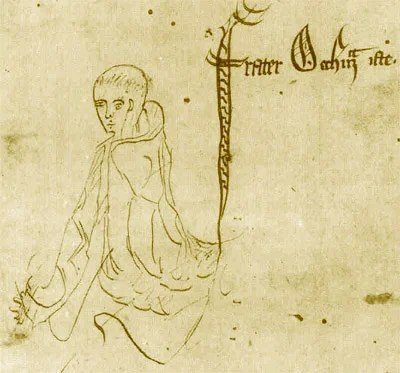
When you have two explanations for a mystery, which one should you trust first? This 14th-century maxim, attributed to the English friar William of Ockham, became one of the most influential principles in the history of science. Known as Occam’s razor: the principle that simpler explanations are preferred over more complex ones – it is a rule of parsimony: when multiple explanations fit the evidence equally well, prefer the simplest one.
Occam’s razor doesn’t guarantee truth. It doesn’t tell you which explanation is correct. It tells you which one to try first: and in centuries of scientific practice, that has turned out to be profoundly useful guidance.
What Occam’s Razor Doesn’t Mean
Before diving deeper, it’s essential to clear up a common misunderstanding. Occam’s razor does not say the simplest explanation is always correct. It’s a heuristic, a practical guide, not a law of nature. The universe is perfectly free to be complicated. What the razor suggests is that, all else being equal, we should start with the simpler hypothesis and only add complexity when the evidence demands it.
What Does “Simpler” Mean? (Fewer Assumptions, Entities, or Description Length)
Occam’s razor sounds straightforward, but applying it requires defining what “simpler” means. This is less obvious than it appears.
Fewer Assumptions

The most common interpretation: prefer the explanation that requires the fewest unproven assumptions. If Hypothesis A explains the data while assuming just three things, and Hypothesis B explains the same data while assuming seven things, Hypothesis A is preferred.
This is the version most relevant to science. Newton’s law of universal gravitation was preferred over Ptolemy’s epicycles partly because it required far fewer free parameters (adjustable constants) to describe planetary motion with the same or better accuracy.
Fewer Entities
Ockham’s original formulation was about not multiplying entities, not postulating the existence of new things unless necessary. If you can explain an observation using only things we know exist, don’t invoke new unknown things. In Ockham’s theological context, “entities” meant proposed objects or causes, such as angels, invisible mechanisms, or hypothetical forces.
This version has powerful applications: we should not invoke God, hidden variables, invisible forces, or exotic new particles unless the evidence genuinely requires them.
Shorter Description Length
A more mathematical formulation comes from algorithmic information theory: a simpler hypothesis is one that requires a shorter description (in terms of information content) to specify completely. This is the foundation of Minimum Description Length and Kolmogorov complexity, formal mathematical approaches to parsimony used in machine learning and statistics.
Why Simpler Explanations Are Preferred: The Statistical Argument
Beyond the practical arguments for simplicity, there is a deeper statistical reason to prefer parsimonious explanations.
Complex models with many free parameters can fit virtually any dataset, including noise. A polynomial of degree n can be fit perfectly to any n+1 data points. A model with enough parameters can describe random data.
But a model that fits perfectly because it has been tuned to every quirk of the available data performs terribly on new data, it has overfit. The complex model has memorized the dataset rather than learned the underlying pattern.
Simpler models, constrained to fewer parameters, trade fitting accuracy for generalization. A model that fits 90% of the training data but generalizes well to new data is far more scientifically valuable than one that fits 100% of the training data and generalizes poorly.
This statistical argument for parsimony is formalized in the Akaike Information Criterion (AIC) and Bayesian Information Criterion (BIC), measures used to compare statistical models that explicitly penalize complexity. Both criteria reward models that explain the data well with few parameters.
Occam’s Razor in the History of Science
Copernicus vs. Ptolemy
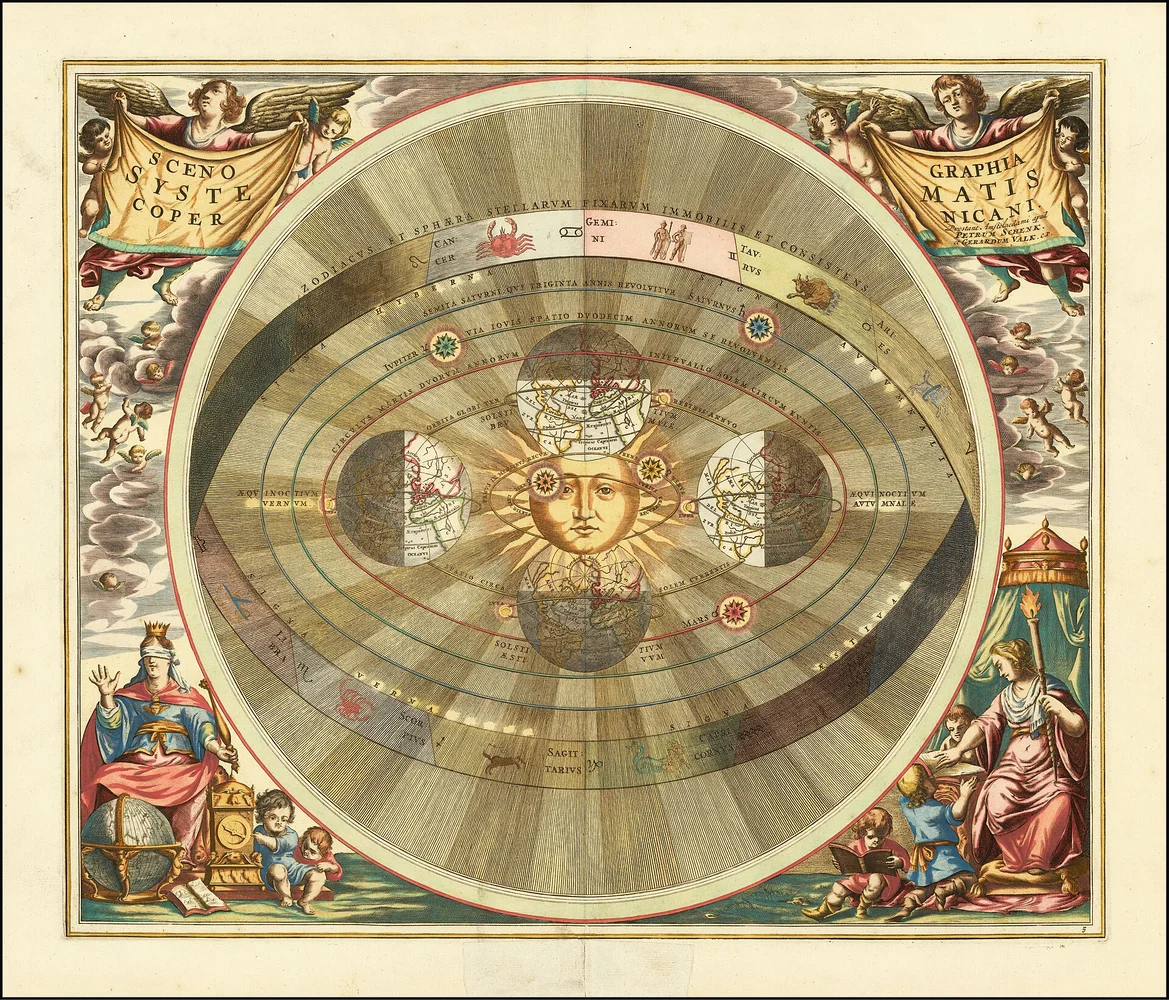
The geocentric model of the solar system, by the time Copernicus arrived in the 16th century, had accumulated dozens of epicycles, circular motions added on top of circular motions, to account for the observed movements of planets. It still worked as a predictive tool, but it was baroque.
Copernicus’s heliocentric model was not immediately more accurate. But it offered something the geocentric model couldn’t: a reason why certain patterns existed. The inferior planets (Mercury and Venus) never appeared far from the Sun because they orbit inside Earth’s orbit. The outer planets had their own patterns for the same geometric reason. The heliocentric model needed fewer postulates because the geometry itself explained what the geocentric model could only describe.
This historical shift connects directly to broader questions about scientific reasoning, much like the falsifiability explained principle that defines the boundary of science.
Occam’s razor favored heliocentrism: not because it was simpler in every sense, but because it replaced arbitrary added complexity with geometric necessity.
Newton and Action at a Distance
Newton’s theory of gravity was famously criticized for postulating action at a distance: one body influencing another across empty space with no mechanism. Newton himself acknowledged this: “Hypotheses non fingo” (I feign no hypotheses). He declined to speculate about how gravity worked, describing only what it did.
Critics proposed elaborate theories of gravity involving vortices, subtle fluids, and mechanical mechanisms. Newton’s response, implicitly, was Occam’s razor: his formula made accurate predictions with minimal assumptions. The vortex theories required far more complex assumptions and made worse predictions.
Darwin and the Tree of Life
Darwin’s theory of evolution by natural selection is a masterpiece of Ockham-style reasoning. Before Darwin, explaining the diversity of life required invoking separate creation events for each species: thousands of independent miracles. Darwin’s mechanism needed only three uncontroversial premises (heritable variation exists, not all offspring survive, traits that improve survival are more likely to be inherited) to generate the entire tree of life from a common ancestor.
One mechanism explaining millions of observations versus thousands of separate explanations; Occam’s razor decisively favored the single mechanism.
Einstein and the Ether
In the 19th century, physicists postulated a medium called the ether to carry electromagnetic waves, just as sound requires air to propagate. The Michelson-Morley experiment showed no evidence for the ether, and physicists invented increasingly complex modifications to ether theory to save it.
Einstein’s special relativity simply eliminated the ether entirely. Light doesn’t need a medium; it is a self-sustaining electromagnetic oscillation that propagates through empty space. Special relativity replaced a complicated explanation (ether with special properties) with a simpler one (no ether needed, just different rules for how space and time work).
Where Occam’s Razor Fails (or Misleads)
Occam’s razor is a heuristic: a useful rule of thumb, not a law of nature. The universe is not obligated to be simple.
Reality Is Sometimes Complicated
The simplest explanation for a pattern in the data is not always the correct one. The true explanation of a complex phenomenon can genuinely involve many interacting factors, and trying to force a simpler model leads to wrong conclusions.
Nutrition science is full of examples where the “simple” explanation, one nutrient causes one disease, turned out to be drastically oversimplified. The relationship between diet and health involves hundreds of nutrients, gut microbiome interactions, genetic variation, and lifestyle factors that resist simple parsimony.
Simplicity Is Relative to Framework
What counts as “simple” depends on your conceptual framework. The heliocentric model looks simpler if you already think in terms of Newtonian mechanics. Within Aristotelian physics, the geocentric model was simpler.
Quantum mechanics is mathematically complicated compared to classical physics. But it is simpler at a deeper level because it explains phenomena (blackbody radiation, photoelectric effect, spectral lines) that classical physics couldn’t explain at any level of complexity.
The Multiple Hypotheses Problem
Occam’s razor becomes ambiguous when there are many possible explanations that can be ordered in multiple different ways by “simplicity.” Which dimensions of simplicity matter most: number of parameters, number of entities, length of description, predictive scope?
Philosophy of science has never produced a single agreed-upon definition of theoretical simplicity.
Related Razors: Hanlon’s and Hitchens’s
Occam’s razor is part of a family of intellectual heuristics. Two closely related principles are worth knowing:
- Hanlon’s razor: “Never attribute to malice that which is adequately explained by stupidity.” This applies Occam’s frugality to human behavior: the simpler explanation (incompetence, ignorance, accident) should be preferred over deliberate malice unless evidence points otherwise.
- Hitchens’s razor: “What can be asserted without evidence can be dismissed without evidence.” This extends parsimony to the burden of proof: explanations that make claims without supporting evidence can be dismissed without requiring counter-evidence.
Together, these razors form a toolkit for critical thinking that extends well beyond science.
Occam’s Razor in Modern Science and AI
Despite its medieval origins, Occam’s razor is more influential than ever in quantitative science and machine learning.
Regularization in machine learning is a direct implementation of parsimony: penalizing model complexity to prevent overfitting. LASSO regression adds a penalty proportional to the sum of absolute parameter values, forcing the model to use fewer parameters and zero out irrelevant ones. Ridge regression penalizes the sum of squared parameters. Both are mathematical implementations of Occam’s razor.
Bayesian model comparison formally incorporates parsimony via the Occam factor: models with more parameters automatically pay a price in marginal likelihood, because their prior probability is spread over a larger space of possible parameter values. Simpler models are automatically favored unless the data strongly support the additional complexity.
In phylogenetics, the reconstruction of evolutionary trees from genetic data – the principle of maximum parsimony selects the evolutionary tree that requires the fewest mutations to explain the observed genetic differences between species.
This principle also applies to broader questions about the universe, such as why the universe may be silent, where Occam’s razor suggests we shouldn’t multiply civilizations without good evidence.
Using Occam’s Razor in Daily Decision-Making
Occam’s razor isn’t just for scientists. It’s a practical tool for everyday reasoning:
- Medical diagnosis: When you have a headache, the simplest explanation is probably dehydration, lack of sleep, or stress, not a brain tumor. Doctors are trained to apply this principle (called “diagnostic parsimony”).
- Debugging code: If a program crashes, check for a typo or missing bracket before postulating a compiler bug. The simplest cause is vastly more likely.
- Interpreting behavior: If a friend doesn’t reply to your text, the simplest explanation is they’re busy or forgot, not a conspiracy of silent resentment.
Of course, if evidence accumulates against the simple explanation, you should consider more complex alternatives. That’s what makes Occam’s razor a guide, not a dogma.
The Deeper Question: Why Should Nature Be Simple?
Occam’s razor works as a practical guide in science. But why?
One answer is epistemic: given finite data, simpler hypotheses are less likely to be overfitted and more likely to generalize. This is true regardless of whether nature is actually simple.
A deeper answer involves the structure of mathematics: the most useful physical theories happen to be those expressible in compact mathematical forms: differential equations, symmetry groups, variational principles. The laws of physics, as currently known, are astoundingly compact. This may reflect a deep feature of physical reality, or it may be a selection effect: we find the laws that are compact and expressible, and call them the laws of physics.
Physicist Eugene Wigner called this the unreasonable effectiveness of mathematics in the natural sciences. The fact that simple mathematical structures describe physical reality so well remains, in his word, mysterious.
Occam’s razor codifies a practical truth about the scientific method without fully explaining why it works. That it does work, that reality, for whatever reason, tends to yield to the simplest correct hypothesis rather than an arbitrarily complex one, remains one of the most remarkable and underappreciated facts about the universe we inhabit.
Sources
- Sober, E. (2015). Ockham’s Razors: A User’s Manual. Cambridge University Press.
- Jefferys, W.H. & Berger, J.O. (1992). Ockham’s Razor and Bayesian Analysis. American Scientist, 80(1), 64–72.
- Burnham, K.P. & Anderson, D.R. (2002). Model Selection and Multimodel Inference. Springer.
- Wigner, E. (1960). The Unreasonable Effectiveness of Mathematics in the Natural Sciences. Communications in Pure and Applied Mathematics, 13(1).
What is Occam’s razor in simple terms?
Occam’s razor is a principle that suggests when choosing between competing explanations that fit the evidence equally well, the simplest one is usually the best to try first.
Does Occam’s razor mean the simplest explanation is always correct?
No, Occam’s razor does not claim the simplest explanation is always correct; it is a heuristic or practical guide, not a law of nature, and the universe can be complex.
Who created Occam’s razor?
Occam’s razor is attributed to the 14th-century English friar and philosopher William of Ockham, who stated, ‘Entities should not be multiplied beyond necessity.’
How is Occam’s razor used in science?
In science, Occam’s razor is used as a rule of parsimony to prefer simpler hypotheses over more complex ones when both explain the data equally well, guiding researchers to test simpler ideas first.
What does ‘simpler’ mean in Occam’s razor?
In Occam’s razor, ‘simpler’ typically means making fewer assumptions or positing fewer entities, though it can also refer to shorter description length or fewer theoretical constructs.