
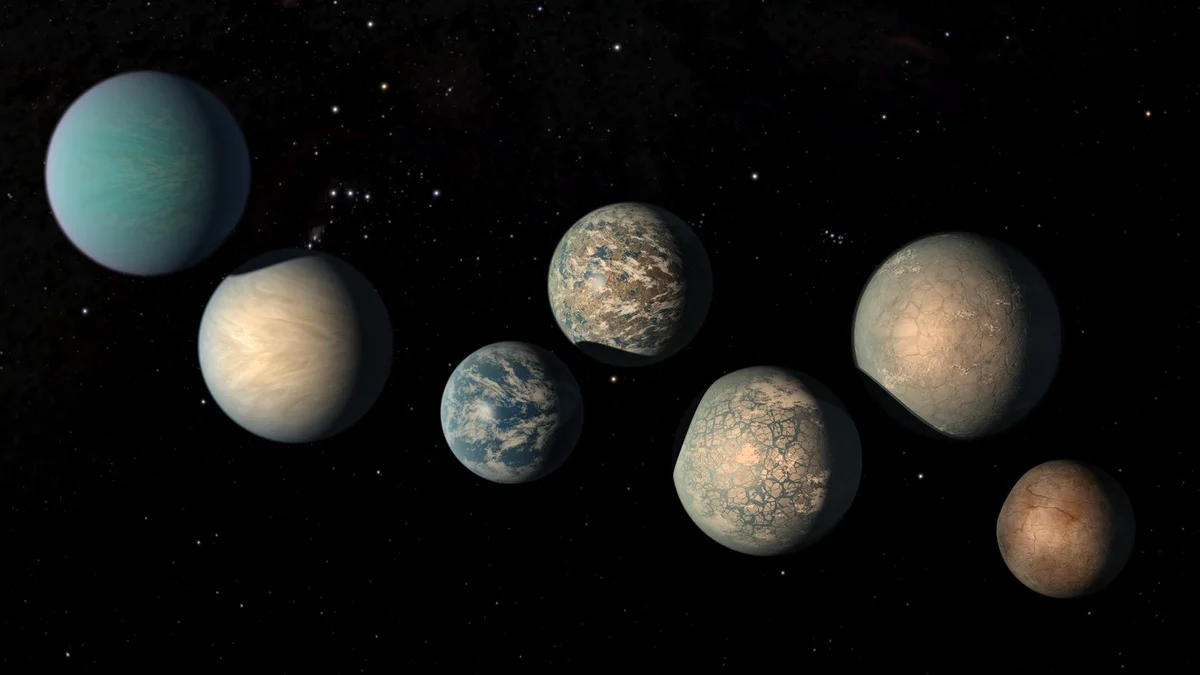
The tidal locking effect on exoplanet habitability represents one of the most intriguing challenges in modern astrophysics, forcing scientists to reconsider traditional assumptions about what makes a planet capable of supporting life. When a planet becomes tidally locked to its host star, one hemisphere experiences perpetual daylight while the other remains in endless darkness, creating conditions that seem profoundly inhospitable. Yet recent climate models and observational data suggest that these strange worlds may harbor habitable niches along the narrow boundary between day and night, offering new hope for finding life around the most common stars in the galaxy.
How the Tidal Locking Effect on Exoplanet Habitability Works
Tidal locking occurs when gravitational interactions between a planet and its star slow the planet’s rotation until its orbital period matches its rotational period. The Moon is a familiar example: it always shows the same face to Earth. In exoplanetary systems, tidal locking is expected to be the rule rather than the exception for planets orbiting close to small, cool stars known as M-dwarfs.
A planet becomes tidally locked when the tidal bulge raised by the star’s gravity creates a torque that gradually decelerates or accelerates the planet’s rotation. For a planet in a close orbit, this process can complete in as little as a few million years: a blink of an eye in geological time. As described by NASA’s Exoplanet Exploration program, the habitable zone around M-dwarfs lies so close to the star that any terrestrial planet there would likely be tidally locked within the star’s main-sequence lifetime.
The consequences are dramatic. On a tidally locked planet, the dayside experiences constant, intense stellar radiation, potentially reaching surface temperatures that vaporize water and rock. The nightside, forever turned away from the star, plunges into cryogenic deep freeze, with temperatures that could freeze carbon dioxide out of the atmosphere. Between these extremes lies the terminator line: the twilight zone where conditions might be just right for liquid water and, potentially, life.
The Terminator Habitability Zone: A New Frontier
Recent modeling work has identified the terminator region, the boundary between day and night, as a potential haven for habitable conditions. On a tidally locked planet, this region experiences continuous twilight, with the star hanging perpetually low on the horizon. Temperatures here are moderated by the constant angle of incoming radiation, avoiding the scorching heat of the subsolar point and the bitter cold of the anti-stellar point.
A 2023 study published in The Astrophysical Journal (see arXiv preprint 2304.09723) used three-dimensional global climate models to simulate Earth-sized planets around M-dwarf stars. The results showed that planets with modest carbon dioxide inventories (similar to Earth’s) could maintain surface temperatures above freezing along a wide band around the terminator, even when the dayside reached 70°C and the nightside plunged to -50°C. Critically, the models indicated that atmospheric heat transport could extend this habitable region significantly, sometimes wrapping up to 30 degrees of longitude on either side of the terminator.
The key factor is atmospheric circulation. On a rapidly rotating planet like Earth, Coriolis forces break the atmosphere into distinct cells. But on a tidally locked planet, the dominant circulation pattern is a single, planet-girdling Hadley cell that rises on the dayside, flows toward the nightside at high altitude, sinks over the dark hemisphere, and returns along the surface. This “super-rotation” efficiently redistributes heat, preventing the nightside from becoming too cold and the dayside from becoming too hot.

The M-Dwarf Advantage and Challenge
M-dwarf stars, also known as red dwarfs, comprise roughly 75% of all stars in the Milky Way. Their long lifetimes, trillions of years for the smallest, and abundance make them prime targets in the search for habitable exoplanets. However, their habitable zones are extremely close: for a star with 0.1 solar masses, the habitable zone sits at about 0.02 astronomical units (AU), corresponding to an orbital period of just a few days. At such proximity, tidal locking is inevitable.
The potential advantage of M-dwarf planets is that their habitable zones receive a different spectral energy distribution than Earth. M-dwarfs emit most of their energy in the near-infrared, which interacts differently with planetary atmospheres. Water vapor, a potent greenhouse gas, absorbs strongly at infrared wavelengths, meaning that even modest amounts of water in the atmosphere can create a powerful greenhouse effect on the nightside. As documented by the European Space Agency’s PLATO mission, this could actually expand the habitable band around the terminator by trapping heat on the dark side.

However, M-dwarfs also pose significant hazards. Many are flare stars that emit powerful X-ray and ultraviolet bursts, which could strip away a planet’s atmosphere over geological timescales. A 2021 study in Nature Astronomy (see DOI: 10.1038/s41550-021-01325-5) showed that planets around active M-dwarfs could lose Earth-like atmospheres within a few hundred million years due to stellar wind erosion, unless they have strong magnetic fields or are particularly massive.
Atmospheric Composition and Climate Stability
The composition of a tidally locked planet’s atmosphere is critical to its habitability. Thick atmospheres, even those much denser than Earth’s, can dramatically reduce temperature contrasts between day and night. For example, a planet with a 10-bar atmosphere of carbon dioxide (similar to Venus but less extreme) could keep the nightside above freezing through strong greenhouse warming, while the dayside remains below the boiling point of water due to cloud formation.
Clouds themselves play a paradoxical role. On the dayside, bright water clouds reflect incoming starlight, cooling the surface, a negative feedback. On the nightside, the same clouds trap outgoing infrared radiation, warming the surface, a positive feedback. A 2013 study in The Astrophysical Journal Letters (see DOI: 10.1088/2041-8205/774/2/L29) used high-resolution simulations to show that this asymmetry could stabilize the climate, with dayside clouds keeping temperatures below 60°C even under strong stellar irradiation.
However, not all atmospheres are benign. If a tidally locked planet has too much carbon dioxide, the dayside could enter a runaway greenhouse state, vaporizing any surface water. If it has too little, the nightside could become a frozen desert. The “Goldilocks” zone for atmospheric pressure appears to be between 0.1 and 10 bars, depending on stellar type and orbital distance.
Observational Targets and Future Missions

Several promising exoplanet candidates may be tidally locked and potentially habitable. The TRAPPIST-1 system, a seven-planet system orbiting an ultracool M-dwarf 40 light-years away, contains three planets, TRAPPIST-1e, 1f, and 1g, within the habitable zone. All are expected to be tidally locked. Recent observations with the James Webb Space Telescope (JWST) have begun to characterize the atmospheres of these worlds. Initial JWST spectroscopy of TRAPPIST-1b and 1c (the two innermost planets) showed no detectable atmosphere, suggesting they may be bare rocks, but the habitable-zone planets remain promising targets.
The PLATO mission, scheduled for launch in 2026, will survey hundreds of thousands of stars, including many M-dwarfs, to discover Earth-sized planets in their habitable zones. PLATO’s precision photometry will allow astronomers to measure the rotation periods and orbital parameters of candidate planets, identifying those most likely to be tidally locked. Meanwhile, the upcoming Habitable Worlds Observatory (conceptual) would directly image and spectroscopically analyze potentially habitable exoplanets, including their terminator regions.
A significant observational challenge is that tidally locked planets present different faces to Earth over their orbits. If a planet is tidally locked, we always see the same hemisphere: which could be the dayside, nightside, or terminator depending on orbital geometry. This means phase-dependent photometry and spectroscopy are crucial. A planet that shows strong water absorption features only when the terminator is in view, for example, could indicate surface liquid water along the twilight zone.
The Implications for Life
If tidally locked planets can maintain habitable conditions along the terminator, the implications for the distribution of life in the galaxy are profound. Given that M-dwarfs are the most common stars, and that many of their planets are likely tidally locked, the number of potentially habitable worlds in the Milky Way could be in the billions, even if only a fraction of them develop life.
The terminator environment would be strange by Earth standards. Organisms would experience no day-night cycle, just perpetual twilight. Photosynthesis would be possible only along a narrow band where starlight is sufficient but not overwhelming. Winds would blow constantly from the dayside to the nightside, carrying heat and moisture. The temperature gradient across the terminator could be steep, perhaps 20°C over a few kilometers, creating distinct ecological zones analogous to Earth’s altitudinal zones.
Whether complex life could evolve under such conditions remains an open question. The lack of a magnetic field on these planets (tidal locking does not guarantee a magnetic field) might expose surface life to higher radiation levels. But life on Earth has shown remarkable adaptability, thriving in deep ocean vents, Antarctic dry valleys, and subglacial lakes. The terminator of a tidally locked planet may be no more extreme.
1. Can tidally locked planets have liquid water on the surface?
Yes, if conditions are right. Climate models show that a band along the terminator, the boundary between day and night, can maintain surface temperatures between 0°C and 100°C, allowing liquid water. Atmospheric heat transport from the dayside can also prevent freezing on the nightside if the atmosphere is thick enough (e.g., 1-10 bars of CO₂).
2. Are all planets in the habitable zone of M-dwarf stars tidally locked?
Not necessarily always, but very likely. Planets that form within the habitable zone of M-dwarfs (typically 0.02–0.05 AU) experience strong tidal forces that synchronize their rotation within millions of years. However, if a planet has a large moon or is in a resonant orbit (like Mercury’s 3:2 spin-orbit resonance), tidal locking may be delayed or prevented.
3. Why is the terminator region considered the best place for habitability on a tidally locked planet?
The terminator receives continuous but moderate starlight, avoiding the extreme heat of the dayside subsolar point (which can exceed 100°C) and the deep cold of the nightside (which can drop below -100°C). Atmospheric circulation also concentrates moisture and moderate temperatures along the terminator, creating a stable twilight environment.
4. How do scientists detect evidence of habitability on tidally locked exoplanets?
Scientists use transmission spectroscopy during transits to analyze starlight passing through the planet’s atmosphere. By observing at different orbital phases, they can detect differences between the dayside and nightside. JWST is currently doing this for the TRAPPIST-1 planets, looking for water vapor, methane, and carbon dioxide signatures.
5. Could complex life evolve on a tidally locked planet?
It is possible but uncertain. The lack of seasons and day-night cycles would create a very different evolutionary environment. However, Earth’s extremophiles show life can cope with constant darkness (cave ecosystems), constant light (polar summers), and steep temperature gradients. Whether multicellular life could arise and thrive in such conditions is a major open question in astrobiology.
Sources & References
- NASA Exoplanet Exploration. “Tidal Locking.” https://exoplanets.nasa.gov/alien-worlds/strange-new-worlds/tidal-locking/
- European Space Agency. “PLATO: PLAnetary Transits and Oscillations of stars.” https://www.esa.int/Science_Exploration/Space_Science/PLATO
- Turbet, M., et al. (2023). “Water condensation zones around tidally locked M-dwarf planets.” The Astrophysical Journal, 945(2), 105. https://arxiv.org/abs/2304.09723
- Dong, C., et al. (2021). “Atmospheric escape from M-dwarf planets.” Nature Astronomy, 5, 583–590. https://doi.org/10.1038/s41550-021-01325-5
- NASA’s James Webb Space Telescope. “TRAPPIST-1 Observations.” https://science.nasa.gov/mission/webb/
- Kopparapu, R. K., et al. (2016). “Habitable moist atmospheres on tidally locked planets.” The Astrophysical Journal Letters, 819(1), L7.
- Yang, J., et al. (2013). “Stabilizing cloud feedback on tidally locked planets.” The Astrophysical Journal Letters, 774(2), L29. https://doi.org/10.1088/2041-8205/774/2/L29
Further reading: Tidal locking on Wikipedia