
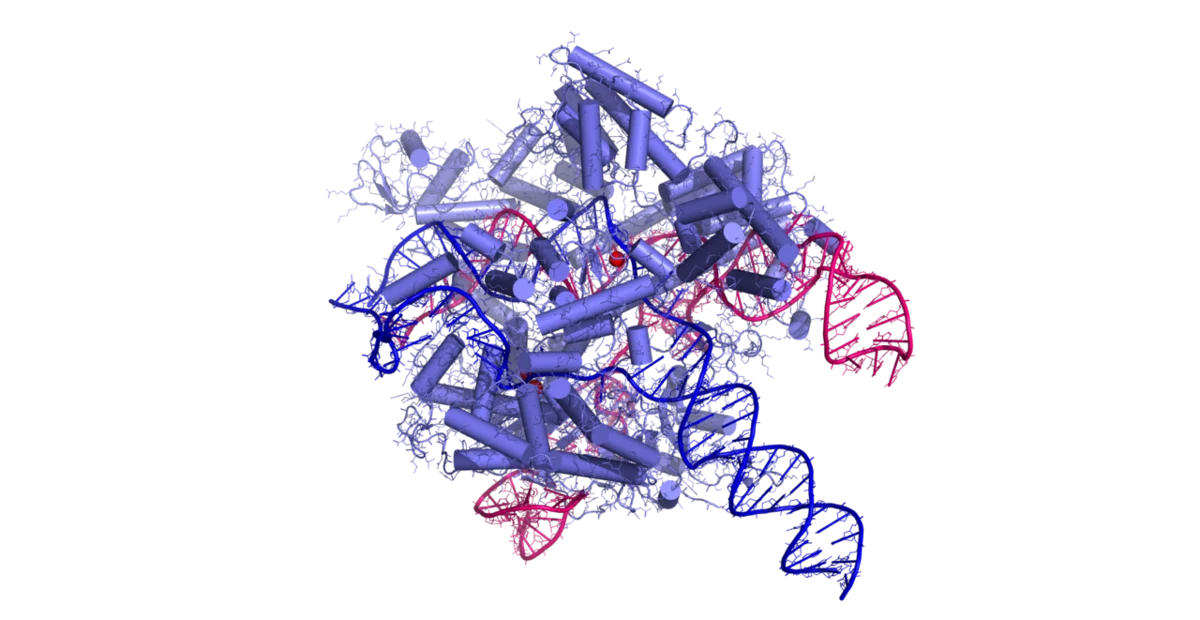
In 2012, a discovery changed biology forever: a molecular machine borrowed from bacteria could be reprogrammed to cut DNA at any precise location in any genome. It was faster, cheaper, and more accurate than anything that had come before. Within years, it had triggered a revolution in medicine, agriculture, basic research, and bioethics.
CRISPR is a gene-editing tool derived from a bacterial immune system that allows scientists to cut and modify DNA at precise locations.
This is CRISPR; Clustered Regularly Interspaced Short Palindromic Repeats – and it has earned its founders a Nobel Prize and its technology a place among the most transformative scientific advances of the 21st century.
What CRISPR Is: A Bacterial Immune System

CRISPR was not invented. It was discovered: in bacteria, where it has existed for hundreds of millions of years.
Bacteria face a constant threat from bacteriophages, viruses that infect bacterial cells and hijack their machinery for viral replication. CRISPR is part of bacteria’s adaptive immune system against these viruses.
When a bacterium survives a viral attack, it can capture short snippets of the viral DNA and store them between repetitive sequences in its own genome, the “clustered regularly interspaced short palindromic repeats” that give CRISPR its name. These stored snippets are the bacterial equivalent of a “wanted poster” for the virus.
When the same virus attacks again, the bacterium transcribes these stored snippets into short RNA molecules (crRNA: CRISPR RNA). These RNA guides bind to a protein called Cas (CRISPR-associated). The guide RNA directs the Cas protein to the matching viral DNA sequence. When found, Cas cuts the viral DNA, destroying the virus.
It’s a precise, programmable DNA-cutting system: and researchers realized almost immediately that it could be reprogrammed to cut any DNA sequence, not just viral ones.
The CRISPR-Cas9 System: How It Works
The version of CRISPR most widely used in research and medicine is the CRISPR-Cas9 system, drawn from the bacterium Streptococcus pyogenes.
The system has two core components:
- Cas9: A protein that acts as molecular scissors; it can cut double-stranded DNA.
- Guide RNA (gRNA): A short RNA sequence, about 20 nucleotides long, that is complementary to the DNA sequence you want to edit. The guide RNA directs Cas9 to the right location.
To edit a gene, you design a guide RNA that matches your target sequence, attach it to Cas9, and deliver the complex into the cell. The guide RNA scans the genome, finds its matching sequence, and Cas9 makes a precise cut. Cas9 also requires a short PAM sequence (protospacer adjacent motif, typically “NGG” for S. pyogenes) next to the target, a built‑in safety lock that prevents it from cutting the bacterium’s own genome.
Once the DNA is cut, the cell’s own repair machinery takes over. There are two main repair pathways:
Non-homologous end joining (NHEJ): The cell joins the cut ends back together, but imprecisely. Small insertions or deletions (indels) are introduced at the cut site. This typically disrupts the gene, useful for knocking out a gene to study its function or to eliminate a disease-causing gene.
Homology-directed repair (HDR): If you supply a DNA template along with the CRISPR components, the cell can use that template to repair the cut precisely. This allows you to replace a mutant sequence with a corrected one, or to insert a new sequence at a specific location.
CRISPR-Cas9 can edit genes with a precision that previous tools, older gene-editing approaches like zinc finger nucleases and TALENs, could not match in terms of speed, cost, and ease of use.
From Curiosity to Nobel Prize
The story of CRISPR’s application to gene editing involves a cast of researchers at multiple institutions.
Rodolphe Barrangou and colleagues showed in 2007 that CRISPR actually functions as a bacterial immune system.
Virginijus Šikšnys at Vilnius University showed in 2012 that the Cas9 protein could be reprogrammed with different guide RNAs to cut different DNA sequences.
Jennifer Doudna (UC Berkeley) and Emmanuelle Charpentier (now at the Max Planck Institute for Infection Biology) published a landmark paper in Science in 2012 showing that a simplified, two-component CRISPR-Cas9 system could precisely cut DNA at specified sites. They showed it worked in a test tube with purified components. Doudna and Charpentier were awarded the Nobel Prize in Chemistry in 2020 for this work.
Feng Zhang at the Broad Institute demonstrated in 2013 that CRISPR-Cas9 could edit genes in human and mouse cells, taking the technology from biochemical demonstration to actual gene editing in living cells.
A bitter patent dispute between the Broad Institute and UC Berkeley over rights to the technology has produced years of litigation and hundreds of millions of dollars in licensing agreements.
What CRISPR Can Do: Applications
Treating Genetic Diseases
The most immediate medical application is correcting mutations that cause genetic diseases.
Sickle cell disease is caused by a single point mutation in the hemoglobin gene. In 2023, the FDA approved Casgevy: a CRISPR-based treatment for sickle cell disease and beta-thalassemia. It works by editing patients’ own stem cells to re-activate a fetal form of hemoglobin that is suppressed after birth. Treated patients in clinical trials have been functionally cured, though long‑term follow‑up is still ongoing and the treatment is not a guaranteed cure for all.
This was the first CRISPR-based therapy approved for human use, a landmark moment for gene medicine.
Other genetic diseases in CRISPR trials or development include:
- Transthyretin amyloidosis (a protein misfolding disease)
- Duchenne muscular dystrophy (trials in progress)
- Certain cancers (using CRISPR to engineer immune cells to attack tumors)
- High cholesterol (editing the PCSK9 gene to reduce LDL production)
- HIV (attempting to cut the virus out of infected cells)
Cancer Immunotherapy
CRISPR can be used to engineer T cells, immune cells that fight cancer, to be more effective. By knocking out genes that limit T cell activity and inserting genes that direct them to recognize tumor antigens, researchers are creating next-generation cancer immunotherapies.
Agricultural Applications
CRISPR is transforming agriculture. Plants and animals can be edited more precisely than was possible with previous genetic techniques, and often without introducing foreign DNA, potentially avoiding some of the regulatory obstacles faced by traditional GMOs.
Applications include:
- Disease-resistant crops (editing genes that pathogens exploit)
- Drought-tolerant plants
- Mushrooms that don’t brown (disabling the browning enzyme)
- Hornless cattle (avoiding a painful dehorning procedure)
- More nutritious foods (enhancing levels of healthy fats, vitamins, etc.)
Basic Research
CRISPR has transformed basic biological research. Gene knockout screens, in which thousands of genes are disabled one by one to discover their functions, can now be done at genome-wide scale, accelerating understanding of biology at a pace impossible before.
The technology has enabled construction of animal models of human diseases, precise manipulation of regulatory sequences, and mapping of gene regulatory networks with unprecedented resolution.
“Gene Drive” Technology
One of the most powerful and controversial CRISPR applications is the gene drive, a genetic system that causes a desired mutation to spread through an entire population far faster than normal inheritance would allow.
A CRISPR gene drive can be designed to copy itself to both chromosomes of every offspring (instead of just one, as ordinary inheritance dictates), so nearly all offspring inherit the drive. Within a few generations, the entire population carries the modification.
Potential applications: eliminating malaria by making mosquitoes resistant to the parasite, or suppressing populations of invasive species. Also profound potential risks: unintended ecological consequences if a gene drive spreads beyond its intended target, or deliberate misuse. Gene drives remain experimental and heavily debated.
The Ethical Landscape
Germline Editing: The Heritable Frontier
In 2018, Chinese scientist He Jiankui announced that he had implanted CRISPR-edited human embryos, resulting in the birth of twins: the first children whose germline (heritable DNA) had been edited with CRISPR. He edited a gene called CCR5, attempting to confer resistance to HIV.

The announcement was met with near-universal condemnation from the scientific community. The scientific rationale was flawed (effective HIV prevention exists), the safety risks were unknown and potentially heritable by future generations, no ethical oversight had approved the work, and the edited children could not consent. He Jiankui was sentenced to three years in prison by Chinese authorities.
The episode highlighted the urgency of establishing international governance for germline editing. A major international commission concluded in 2020 that germline editing was not ready for clinical application until safety and efficacy could be established and broad societal consensus achieved. It is crucial to distinguish between somatic editing (non-heritable, affecting only the individual being treated): which is ethically accepted and already used in approved therapies, and germline editing (heritable, affecting future generations), which remains ethically contentious and not yet permitted for clinical use.
The fundamental ethical tension: germline editing could potentially eliminate heritable diseases that have caused enormous suffering. It could also be misused for enhancement: editing traits like height, intelligence, or athletic ability. And the children who result from germline edits could not consent to being permanently changed at the most fundamental level.
Equity and Access
If CRISPR-based therapies for genetic diseases become available, who will have access to them? The first approved therapy (Casgevy) costs approximately $2.2 million per patient. Ensuring equitable access to these treatments, particularly in low-income countries where diseases like sickle cell are most prevalent, is a major challenge.
Ecological Risk
Gene drives and agricultural applications raise concerns about unintended ecological consequences. A gene drive that spreads beyond its intended target population could have cascading effects in ecosystems. International governance frameworks for open-release gene drives are still being developed.
Challenges and Limitations
Despite its remarkable precision, CRISPR is not perfect. Off-target editing remains a concern: Cas9 can sometimes cut DNA sequences similar but not identical to the intended target, potentially disrupting other genes. Researchers are developing improved Cas variants and guide RNA designs to minimize these errors.
Another major hurdle is delivery. Getting the CRISPR components into enough target cells in a patient’s body, without triggering an immune reaction to the bacterial Cas9 protein, is a significant challenge. For many diseases, especially those affecting neurons or non-dividing cells, effective delivery remains elusive. Additionally, editing a single cell can sometimes cause larger chromosomal rearrangements: deletions, inversions, or translocations – that may have unintended consequences.
These limitations explain why, aside from the landmark Casgevy approval, most CRISPR therapies remain in clinical trials. The typical pipeline from laboratory discovery to approved treatment takes five to ten years or more.
The Future of CRISPR
The CRISPR field is evolving rapidly, with new tools extending the original technology:
Base editing: Developed by David Liu’s lab, base editing allows changing individual DNA letters without making double-strand cuts, reducing the risk of unintended mutations.
Prime editing: An even more precise approach, also from Liu’s lab, described as a “search and replace” for DNA. It can make all 12 possible point mutations, small insertions, and deletions without double-strand breaks.
CRISPRi and CRISPRa: Using a disabled Cas9 (dCas9) that binds but doesn’t cut, researchers can turn genes on (CRISPRa) or off (CRISPRi) without permanently altering the DNA sequence, epigenetic editing.
CRISPR diagnostics: CRISPR-based diagnostic tools (like SHERLOCK and DETECTR) can rapidly detect specific DNA or RNA sequences with high sensitivity. They were deployed for COVID-19 testing and are being developed for infectious disease diagnostics.
CRISPR is not a single tool but a growing family of molecular technologies. Its trajectory suggests that the 2012 discovery was not a peak but a beginning, the opening of a biological engineering capability that we are only beginning to understand how to use wisely.
For more on how CRISPR fits into the broader story of modern genetics, see our article on natural selection and how evolutionary forces shape genomes. The precision of CRISPR also invites comparison with other molecular tools; the RNA world hypothesis explores how RNA-based systems may have predated DNA editing in early life.
Sources
- Doudna, J.A. & Charpentier, E. (2012). A programmable dual-RNA–guided DNA endonuclease in adaptive bacterial immunity. Science, 337(6096), 816–821.
- Cong, L. et al. (2013). Multiplex genome engineering using CRISPR/Cas systems. Science, 339(6121), 819–823.
- National Academies of Sciences, Engineering, and Medicine. (2020). Heritable Human Genome Editing. National Academies Press.
- FDA. (2023). FDA Approves First Gene Therapies to Treat Patients with Sickle Cell Disease. FDA.
- Nobel Prize in Chemistry 2020, awarded to Emmanuelle Charpentier and Jennifer A. Doudna “for the development of a method for genome editing.”
- The Royal Society: Genetic technologies, overview of the science, ethics, and regulation of CRISPR.
What does CRISPR stand for?
CRISPR stands for Clustered Regularly Interspaced Short Palindromic Repeats.
How does CRISPR gene editing work?
CRISPR uses a molecular machine called Cas9, guided by RNA, to cut DNA at a precise location, allowing scientists to add, remove, or alter genetic material.
Who discovered CRISPR?
CRISPR was discovered in bacteria as an adaptive immune system, and its development into a gene-editing tool earned Emmanuelle Charpentier and Jennifer Doudna the Nobel Prize in Chemistry in 2020.
What is CRISPR used for?
CRISPR is used in medicine to treat genetic disorders, in agriculture to create disease-resistant crops, and in basic research to study gene function.
Is CRISPR safe for humans?
CRISPR is being tested in clinical trials for safety and efficacy, but off-target effects and ethical concerns remain under active investigation.
Further reading: CRISPR gene editing on Wikipedia