
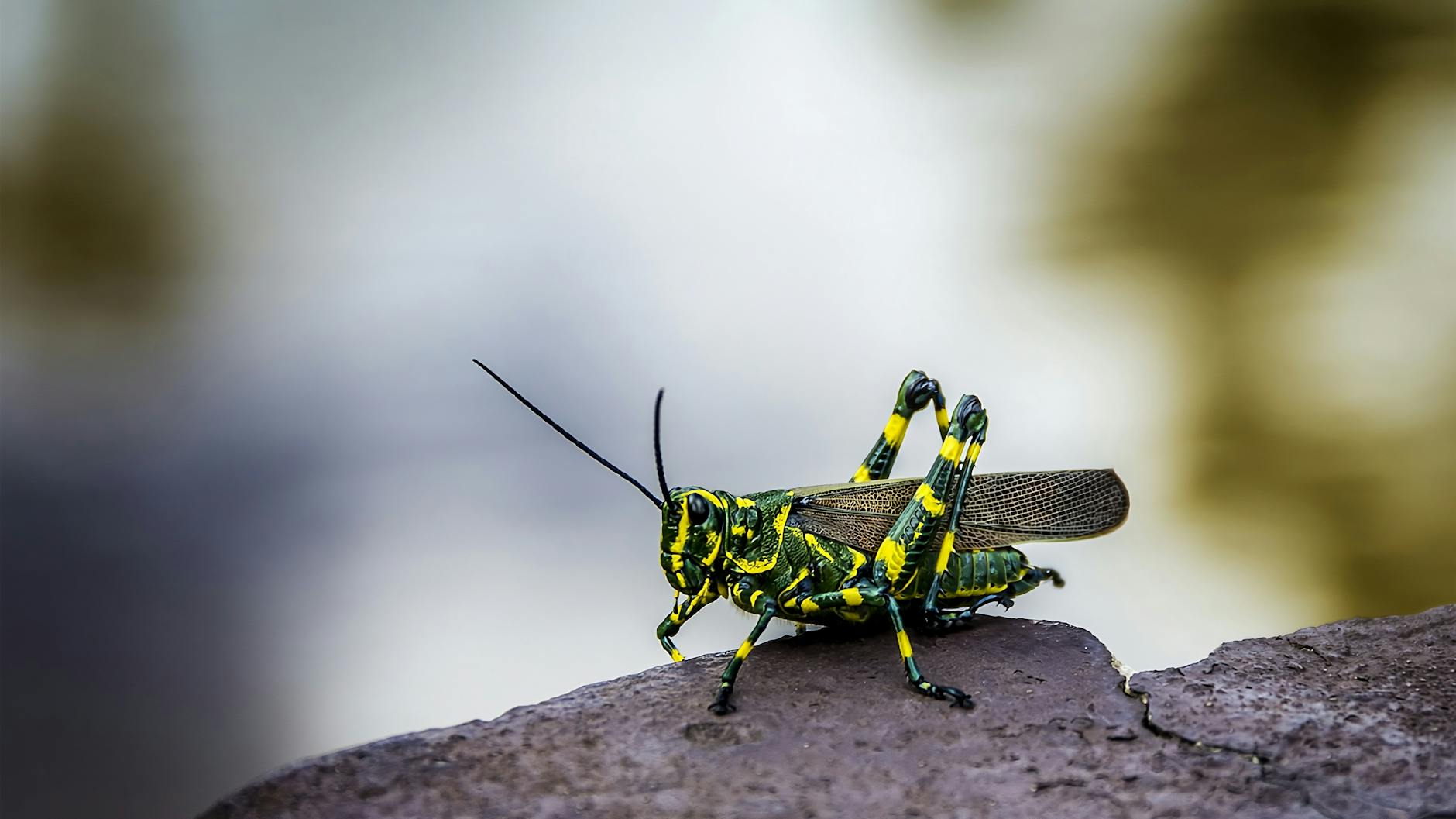
Life on Earth spans from deep-sea hydrothermal vents to mountain glaciers, from viruses a fraction of a micrometer across to blue whales stretching thirty meters. That staggering diversity emerged from a single process operating across billions of years. Natural selection is not a metaphor or a philosophy. It is a mechanism, one of the most rigorously tested ideas in all of science, and understanding it changes how you see every living thing.
What Is Natural Selection?
Natural selection is the process by which heritable traits that improve survival and reproduction become more common in a population over successive generations, while traits that reduce fitness become rarer or disappear.
Charles Darwin and Alfred Russel Wallace independently developed the theory in the mid-nineteenth century. Darwin published On the Origin of Species in 1859, presenting the idea alongside a mountain of supporting evidence drawn from years of observation. Wallace reached the same conclusion through his fieldwork in the Amazon and the Malay Archipelago, and a joint presentation of both men’s work to the Linnean Society in 1858 established the theory’s scientific priority. Neither man knew of Gregor Mendel’s contemporary experiments on heredity in pea plants, the work that would later explain the genetic mechanism underlying everything they described.
The core logic is elegantly simple. If individuals in a population vary in some heritable trait, and if that variation affects how well they survive and reproduce, then the trait variants that help most will appear more often in the next generation. Repeat across enough generations, and the population changes. That change is evolution. You may have heard this described as “survival of the fittest”, a phrase coined not by Darwin but by the philosopher Herbert Spencer. Fitness here has a precise biological meaning: reproductive success, not strength or intelligence.
The Four Requirements

Natural selection operates wherever four conditions are met simultaneously.
Variation must exist within the population. Individuals cannot be identical: there must be differences in traits that matter to survival or reproduction. In practice, genetic mutation and sexual recombination ensure that individuals in a sexually reproducing species are rarely genetically identical (identical twins, arising from a single fertilized egg, are a well-known exception). Consider a population of rabbits: some have slightly thicker fur, some slightly thinner.
Heritability means the variation must be passed from parent to offspring. A scar from an injury is not heritable. The tendency toward thicker fur can be. Traits with a genetic basis are heritable; traits acquired purely through environment are not. Our thick-furred rabbit passes that tendency to its offspring.
Differential reproduction is the engine. Some variants must leave more descendants than others. In a harsh winter, the thick-furred rabbits survive predation and cold better, reproduce more, and pass their genes forward. An individual that survives longer, attracts more mates, or raises offspring more successfully passes more copies of its genes to the next generation.
Time allows small advantages to compound. A trait that increases reproductive success by two percent seems negligible in a single generation. Across ten thousand generations it can become dominant, or give rise to an entirely new species.
Types of Natural Selection
Biologists distinguish several modes depending on which end of the trait distribution is favored. Each of these modes is visible in real populations; the examples in the next section illustrate them directly.
Directional selection shifts the population toward one extreme. If larger body size consistently improves survival in a cold climate, average body size will increase generation by generation. The peppered moth (Biston betularia) during the Industrial Revolution is a widely cited example: as tree bark darkened with soot, dark-colored moths survived bird predation better than pale ones, and the dark variant went from rare to dominant within decades. The original experimental methodology has been subject to debate, but subsequent research has broadly confirmed the selective role of bird predation on camouflage.
Stabilizing selection favors the middle of the distribution and eliminates extremes. Human birth weight is the classic case: very small and very large babies both have reduced survival rates, so birth weight clusters around an intermediate optimum. Stabilizing selection is often considered the most common mode in stable environments and may explain why many traits change slowly over long periods.
Disruptive selection favors both extremes and penalizes the middle. In some bird populations, both very large and very small individuals outcompete medium-sized ones when competing for different food sources. Disruptive selection can, over time, split a single population into two distinct forms, a potential driver of speciation.
Sexual selection is a form of natural selection in which the trait being selected affects mating success rather than survival directly. Darwin recognized it as a distinct mechanism within the broader process. The peacock’s tail is energetically costly and makes its bearer more visible to predators, yet it persists because females prefer it. Traits that help attract mates can spread even if they reduce survival, as long as the reproductive benefit outweighs the survival cost.
Natural Selection in Action
The strongest evidence for natural selection comes not from the fossil record alone but from watching it operate in real time.
Antibiotic resistance is natural selection running at bacterial timescales. A population of bacteria exposed to an antibiotic contains rare individuals with mutations that let them survive. Those individuals reproduce. The next generation is dominated by the resistant strain. Misuse of antibiotics: stopping a course early, using them for viral infections, provides exactly the selection pressure needed to accelerate resistance. The result is the rise of multi-drug-resistant “superbugs” in hospital settings, a major public health challenge the World Health Organization considers among the most urgent threats facing global medicine.
Darwin’s finches on the Galápagos Islands have been monitored continuously since 1973 by Peter and Rosemary Grant. Their work showed that beak shape in Geospiza fortis shifted measurably following a drought in 1977 that eliminated small soft seeds. Birds with larger, stronger beaks survived by cracking tough seeds; smaller-beaked birds died. The population’s average beak depth increased by half a millimeter over one generational cycle, a statistically detectable shift confirmed by thirty years of continuous data (Grant & Grant, 2002).
Sickle cell anemia illustrates selection maintaining two alleles (alternative versions of a gene) simultaneously. Carrying one copy of the sickle cell mutation provides significant protection against Plasmodium falciparum, the parasite responsible for the deadliest form of malaria. Carrying two copies causes the severe and often fatal blood disease. In malaria-endemic regions, natural selection maintains the mutation at intermediate frequency because the single-copy benefit outweighs the cost of double-copy disease in the population as a whole.
What Natural Selection Is Not

Natural selection is reactive, not forward-looking. It acts on variation that exists right now, in the current environment. There is no foresight and no endpoint, a trait spreads because it helps now, not because it will help in the future. There is no plan, no progress toward complexity, no drive toward “higher” forms of life.
Natural selection does not act on individuals. An individual cannot evolve during its lifetime. Selection acts on the variation within a population by determining which individuals reproduce. The population changes; the individual does not.
Natural selection is not the only mechanism of evolution. Genetic drift, random changes in allele frequency due to chance rather than fitness, can fix or eliminate traits regardless of their survival value, especially in small populations. Gene flow, sexual selection, and mutation are also evolutionary forces. Natural selection is the most directional of them, but it operates alongside the others.
Fitness has a precise definition. In evolutionary biology, fitness means reproductive contribution to the next generation, not strength, intelligence, or any human notion of superiority.
Natural selection differs from artificial selection. When humans selectively breed dogs, crops, or livestock for desired traits, that is artificial selection; the same mechanism, but with human preference rather than the environment determining which individuals reproduce.
Natural Selection and the Modern Synthesis
Darwin knew nothing of genetics. He understood that traits were heritable but had no mechanism for how. The modern evolutionary synthesis, developed in the 1930s and 1940s, merged Darwin’s natural selection with Mendelian genetics and population genetics to produce the framework biologists use today. The discovery of DNA‘s double-helix structure by Watson and Crick in 1953 revealed the molecule that carries genetic information from parent to offspring, providing a physical basis for heredity and bridging the synthesis to molecular biology.
The synthesis showed that mutation generates the variation Darwin required, that genes are the units of heredity, and that changes in gene frequency within populations are the measurable currency of evolution. Subsequent decades have added genomics and developmental biology to the picture. The core logic: heritable variation plus differential reproduction plus time equals change, remains intact and has been confirmed at every level of biological organization from molecules to ecosystems.
Natural Selection Beyond Earth
One of the most consequential implications of natural selection is that it is not inherently tied to Earth. The process requires only three things: a system capable of reproducing with heritable variation, differential reproductive success, and time. If life exists elsewhere in the universe, a question astrobiologists consider increasingly plausible given the prevalence of habitable-zone planets, then natural selection, or something functionally identical to it, would shape that life too. The same logic that explains a finch’s beak and a bacterium’s resistance to antibiotics would apply to whatever biochemistry an alien biosphere might use. Natural selection may be the universe’s most universal law of biology.
What is natural selection in simple terms?
Natural selection is the process by which individuals with traits better suited to their environment survive and reproduce more than others, causing those traits to become more common in the population over time. It is the primary mechanism by which evolution occurs.
Did Darwin invent natural selection?
Charles Darwin and Alfred Russel Wallace independently discovered natural selection around the same time. Both presented their ideas jointly to the Linnean Society in 1858. Darwin published the full theory with extensive evidence in On the Origin of Species in 1859. Earlier thinkers had hinted at related ideas, but Darwin and Wallace developed the first rigorous, evidence-based formulation.
What is the difference between natural selection and evolution?
Evolution is change in the heritable characteristics of a population over successive generations. Natural selection is one mechanism that drives that change; the most directional one. Other mechanisms include genetic drift (random shifts in gene frequencies), gene flow, and mutation. Natural selection causes populations to become better adapted to their environments; evolution is the broader process of which natural selection is a part.
What are the best real-world examples of natural selection?
Antibiotic resistance in bacteria is among the clearest: selection operating visibly within days or weeks. The beak size changes in Galápagos finches documented by the Grants show measurable selection within a single generation. The peppered moth color shift during the Industrial Revolution demonstrates rapid directional selection driven by environmental change. Sickle cell anemia frequency in malaria-endemic regions illustrates balancing selection maintaining two alleles simultaneously.
Does natural selection have a direction or goal?
No. Natural selection is entirely reactive: it acts on existing variation in the current environment. There is no foresight, no target state, and no direction other than “whatever works now.” Traits that were advantageous in one environment can become liabilities if the environment changes, and selection will then work against them.
How fast does natural selection work?
It depends entirely on generation time, population size, and the strength of the selective pressure. In bacteria with twenty-minute generation times, resistance can evolve within days. In large mammals with long generations, measurable change takes thousands of years. The Grants’ finch study showed detectable beak shifts within a single generation under strong drought conditions, evidence that selection can be surprisingly rapid even in vertebrates.
Sources & References
Darwin, C. (1859). On the Origin of Species by Means of Natural Selection. John Murray. doi:10.5962/bhl.title.82303
Grant, P.R., & Grant, B.R. (2002). Unpredictable evolution in a 30-year study of Darwin’s finches. Science, 296(5568), 707–711. doi:10.1126/science.1070315
Kettlewell, H.B.D. (1955). Selection experiments on industrial melanism in the Lepidoptera. Heredity, 9, 323–342. doi:10.1038/hdy.1955.36
Cook, L.M., & Saccheri, I.J. (2013). The peppered moth and industrial melanism: evolution of a natural experiment. Heredity, 110, 207–212. doi:10.1038/hdy.2012.92
Lederberg, J., & Lederberg, E.M. (1952). Replica plating and indirect selection of bacterial mutants. Journal of Bacteriology, 63(3), 399–406. doi:10.1128/jb.63.3.399-406.1952
Allison, A.C. (1954). Protection afforded by sickle-cell trait against subtertian malarial infection. British Medical Journal, 1(4857), 290–294. doi:10.1136/bmj.1.4857.290
Mayr, E. (1982). The Growth of Biological Thought: Diversity, Evolution, and Inheritance. Harvard University Press.
Further reading: Natural selection on Wikipedia