
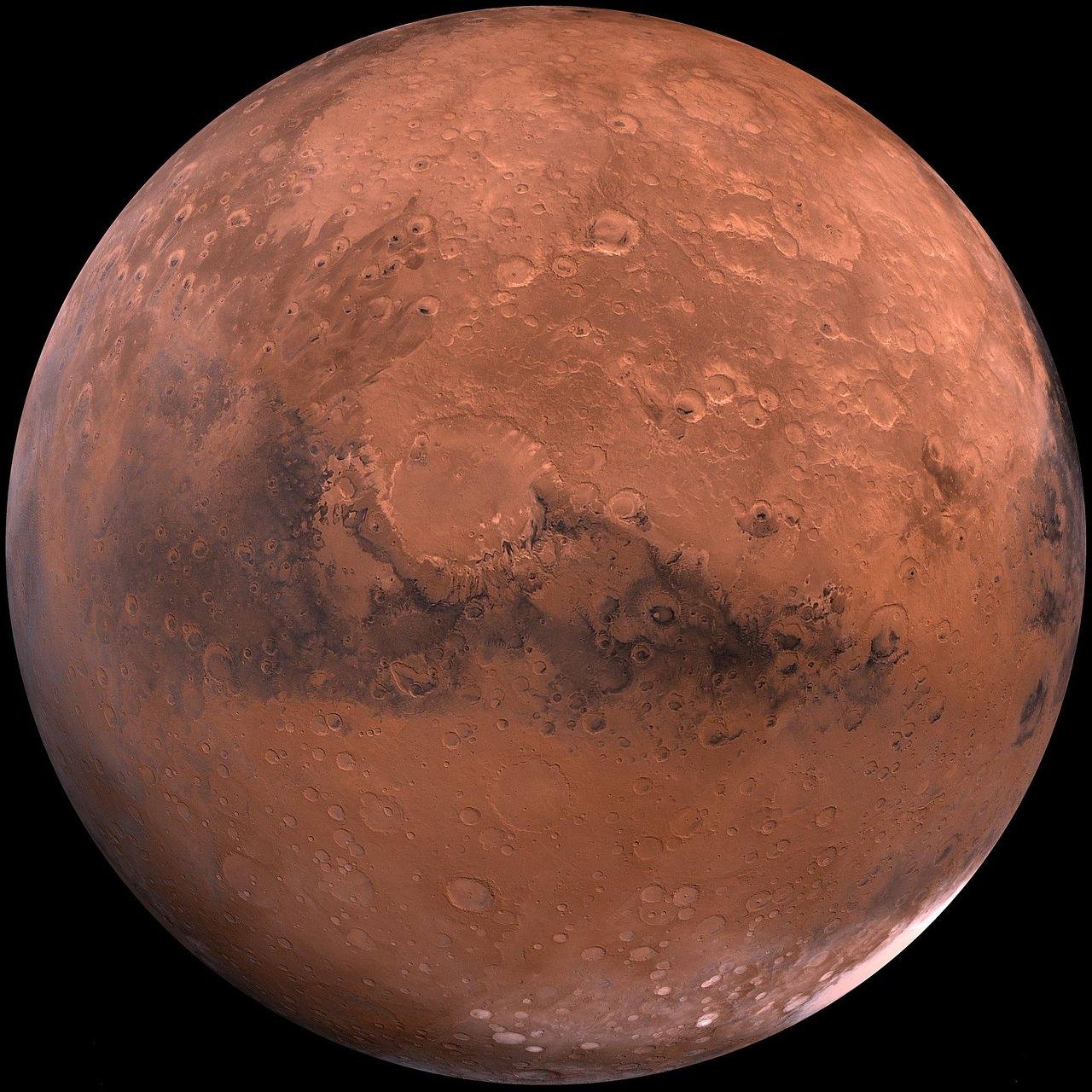
Every spacecraft sent to Mars carries more than instruments and cameras. It also carries microscopic hitchhikers. Bacteria, fungal spores, and other terrestrial microorganisms can survive inside spacecraft components. If these organisms reach Mars, they could contaminate the planet and ruin the search for native life. This is why space agencies follow a strict planetary protection protocol for Mars missions.
The protocol prevents two types of contamination. Forward contamination occurs when Earth organisms travel to Mars. Backward contamination occurs when Martian material returns to Earth. Both scenarios require different strategies. This article explains how NASA and the European Space Agency (ESA) implement these rules.
Planetary Protection: A Historical Overview
Planetary protection began long before Mars rovers existed. In 1958, the International Council of Scientific Unions established a committee to study contamination risks. The committee recognized that early space probes could accidentally seed other worlds with Earth life.
The United Nations Outer Space Treaty of 1967 formalized these concerns. Article IX states that nations must avoid harmful contamination of celestial bodies. NASA created its first planetary protection policy in 1967. The policy has evolved with each new mission.
The Committee on Space Research (COSPAR) now sets the international standards. COSPAR classifies missions based on their target and purpose. Mars missions fall into categories IV (landers and rovers) and V (sample return). Each category has specific requirements.
Why Mars Demands Special Care
Mars is the most promising place to search for past or present life in the solar system. Liquid water once flowed on its surface. Underground water ice still exists. If life ever emerged on Mars, it likely left traces in the soil or rocks.
Terrestrial bacteria could confuse these results. A rover might detect organic molecules from Earth and mistake them for Martian life. Worse, Earth microbes could outcompete any native organisms, destroying a fragile ecosystem before scientists even know it existed.
The same risk applies to backward contamination. If samples return to Earth, they might contain unknown pathogens. While the risk is low, the consequences could be severe. The planetary protection protocol for Mars missions ensures that samples stay contained until proven safe.
NASA’s Approach: Sterilization and Clean Rooms
Clean-Room Assembly
Every Mars spacecraft starts its journey in a Class 100,000 clean room. This room filters air to remove 99.97% of particles larger than 0.3 microns. Workers wear full bunny suits, hoods, and masks. They enter through airlocks and sticky mats.
The Mars 2020 Perseverance rover required even stricter conditions. Engineers assembled it in a Class 10,000 clean room. They cleaned every surface with alcohol and sterile wipes. They used only heat-tolerant materials that could survive baking.
Dry Heat Microbial Reduction
The most critical step is sterilization. NASA bakes spacecraft components at high temperatures. The heat kills almost all microbial life. The process is called dry heat microbial reduction (DHMR).
For Mars missions, NASA heats parts to 110°C to 125°C for 50 to 100 hours. The temperature depends on the material. Electronics can tolerate 110°C. Metal parts can go to 125°C. Any component that cannot survive baking must be sealed in sterile enclosures.
This process reduces the microbial load to fewer than 300 bacterial spores per square meter. That is about 100,000 times cleaner than a typical hospital room. The Perseverance rover carried an estimated 30 spores total, far below the legal limit.
Bioburden Tracking
NASA does not just clean once and forget. Engineers swab every surface before launch. They culture the samples to count spores. They also use molecular methods to detect DNA.

The results create a bioburden inventory. Mission managers can track where each microbe came from. If a part fails inspection, they reclean it or replace it. The entire process is documented in a report submitted to NASA’s Planetary Protection Officer.
ESA’s Approach: Similar Standards, Different Methods
ESA follows the same COSPAR guidelines as NASA. However, the agency uses some different techniques. The ExoMars rover, Rosalind Franklin, was built with its own sterilization plan.
Vaporized Hydrogen Peroxide Sterilization
ESA uses vaporized hydrogen peroxide (VHP) as a supplement to heat. The gas penetrates narrow gaps and crevices. It kills spores and viruses without damaging sensitive electronics. The process takes about four hours at room temperature.
VHP sterilization is gentler than dry heat. It works on materials that cannot withstand high temperatures. ESA has tested VHP on cameras, drills, and sample containers. The method achieved a 99.99% reduction in spores.
Bioburden Modeling
ESA relies heavily on computational models. Engineers calculate how many microbes enter the spacecraft during assembly. They estimate how many survive sterilization. They also predict how many will die during transit due to radiation.
Radiation from cosmic rays and solar particles is actually helpful for sterilization. Much of the remaining bioburden dies during the six-month journey to Mars. ESA’s models account for this. The final bioburden at landing is lower than the initial count.

Sterilization of the Drill
The ExoMars drill poses a special challenge. The drill collects soil samples from up to two meters deep. If it carries Earth bacteria, those organisms could be deposited deep underground. Martian subsurface environments are more likely to harbor life because they are shielded from radiation.
ESA addressed this by sterilizing the drill tip at 200°C. The drill mechanism operates in sealed casings. The sample handling system is completely isolated from the rover body. This design prevents any accidental contamination of the Martian soil.
COSPAR Categories: A Framework for All Missions
COSPAR assigns each mission a category from I to V. Category I applies to bodies with no interest for life (like the Moon). Category II applies to bodies with low risk (like comets). Category III applies to flybys and orbiters around potentially habitable worlds.
Mars landers and rovers fall into Category IV. The subcategories are IVa (landers without life-detection instruments), IVb (landers with life-detection instruments), and IVc (missions that visit special regions). Special regions are locations where liquid water could exist, such as subsurface aquifers or polar ice.
The planetary protection protocol for Mars missions gets stricter with each subcategory. A Category IVc mission cannot touch a special region at all. If it does, the entire spacecraft must be sterilized to the same level as a Category IVb mission. No mission has yet visited a special region, though Perseverance landed near the Jezero delta, an ancient river delta that may once have been habitable.
Category V applies to sample return missions. These require the highest level of protection. The samples must be sealed in multiple layers of containment. They cannot be opened until they reach a Biosafety Level 4 facility on Earth.
Backward Contamination: The Mars Sample Return Challenge
NASA and ESA are planning the Mars Sample Return campaign. The Perseverance rover is currently collecting samples. A future mission will retrieve them and launch them back to Earth.
The backward contamination protocol is strict. The sample container must be certified as leak-proof. It must survive launch, landing, and impact tests. The samples will be returned directly to a sealed containment facility.

On Earth, scientists will open the samples in a Biosafety Level 4 (BSL-4) lab. BSL-4 labs are designed for the most dangerous pathogens. Air flows inward, never out. Workers wear positive-pressure suits with separate air supplies. The facility is isolated from the rest of the building.
The samples will be tested for Martian life before any material leaves the containment. If the tests are negative, the samples can be distributed to other labs. If the tests are positive, the entire sample set must be studied inside the BSL-4 facility.
Challenges and Controversies
The “Clean Enough” Debate
Some scientists argue that current sterilization methods are too strict. The chance of Earth microbes surviving on Mars is very low. Mars is cold, dry, and bathed in radiation. Most terrestrial bacteria would die within hours.
Others say the opposite. They point out that some extremophiles can survive harsh conditions. Deinococcus radiodurans can withstand high radiation. Some bacteria form spores that can live for centuries. The risk, though small, is real.
NASA and ESA take the conservative approach. The cost of false contamination is too high. One mistake could set back astrobiology by decades.
Special Regions and the Mars 2020 Landing Site
Perseverance landed in Jezero Crater. This was once a river delta. It might have hosted liquid water in the past. However, it is not considered a special region because the water is no longer present.
Some scientists argued that deep subsurface water could still exist. If the rover drills too deep, it could reach it. NASA responded by setting a depth limit of five centimeters for drilling. The rover also avoids areas with visible ice.
The Human Exploration Problem
Human missions to Mars will create a much larger contamination risk. A habitat full of people will release thousands of microbial species into the environment. This could swamp any Martian life.
NASA is already working on a protocol for human missions. The current plan involves preliminary robotic surveys. Humans would only land in locations that are deemed safe. They would also use quarantine procedures for any samples.
The Future of Planetary Protection
New technologies are emerging. Plasma sterilization uses ionized gas to kill microbes. Ultraviolet LEDs can disinfect surfaces without heat. Bioburden sensors can detect contamination in real time.
NASA and ESA are also exploring “molecular cleanliness.” This measures organic molecules instead of live cells. If a spacecraft has very low organic residue, the risk of contamination drops even if a few cells survive.
The field is evolving with each mission. The planetary protection protocol for Mars missions will continue to adapt. As human exploration gets closer, the rules will become even more important. For now, the goal remains simple: send our machines to Mars, but leave our microbes at home.
1. What is the purpose of the planetary protection protocol for Mars missions?
The protocol prevents Earth microbes from contaminating Mars and protects Earth from potential Martian organisms. It ensures that scientific experiments can detect native life without interference from terrestrial contamination.
2. How does NASA sterilize its Mars spacecraft?
NASA uses dry heat microbial reduction. Components are baked at 110°C to 125°C for 50 to 100 hours. This kills over 99.9% of microbial spores. Sensitive parts are sealed in sterile enclosures.
3. What happens if a Mars sample is found to contain life?
The sample would remain locked in a Biosafety Level 4 facility. Scientists would study it under the highest containment conditions. No material would leave the facility until it is proven safe or the organisms are fully characterized.
4. Can Earth microbes survive on Mars?
Most cannot. Mars has low pressure, cold temperatures, and high radiation. However, some extremophiles could survive in protected environments like subsurface ice or rock interiors. The protocol assumes the worst case.
5. Will human missions to Mars have different planetary protection rules?
Yes. Human missions will release many more microbes. NASA plans to survey landing sites with robots first. Humans would only land in safe zones. Quarantine procedures would apply to any samples collected by crew members.
Sources & References
- Committee on Space Research (COSPAR). “COSPAR Policy on Planetary Protection.” 2021. https://cosparhq.cnes.fr/scientific-structure/planetary-protection/
- NASA. “Planetary Protection: Overview.” https://science.nasa.gov/planetary-protection/
- European Space Agency. “Planetary Protection.” https://www.esa.int/Safety_Security/Planetary_Protection
- National Academies of Sciences, Engineering, and Medicine. “Review and Assessment of Planetary Protection Policy Development Processes.” The National Academies Press, 2018. https://doi.org/10.17226/25172
- Rummel, J.D., et al. “Ethical Considerations for Planetary Protection in Space Exploration.” Astrobiology, vol. 16, no. 7, 2016, pp. 537–542. https://doi.org/10.1089/ast.2016.1491
Further reading: NASA Office of Planetary Protection, and Planetary protection on Wikipedia.