
We can sequence a genome, synthesize a cell membrane, and build molecules that replicate themselves. We can detect metabolism in distant ocean worlds and observe amino acids forming in meteorites. We can edit the DNA of living organisms with molecular scissors. And yet we still cannot fully answer what is life.
But we still cannot answer a deceptively simple question: what is life?
The failure isn’t for lack of trying. Physicists, chemists, biologists, and philosophers have proposed dozens of definitions. Each one either excludes things we would clearly call alive, includes things we clearly wouldn’t, or is so vague it’s not useful.
Quick Definition: Life is a self-sustaining chemical system capable of Darwinian evolution; but this famous NASA definition, like all others, has edge cases that fail to capture everything we call “alive” while sometimes including things we don’t.
The problem matters enormously. If we don’t know what life is, how will we recognize it when we find it on another world?

What Is Life? The Classic Criteria
Introductory biology textbooks usually list criteria that living organisms must meet. A common list:
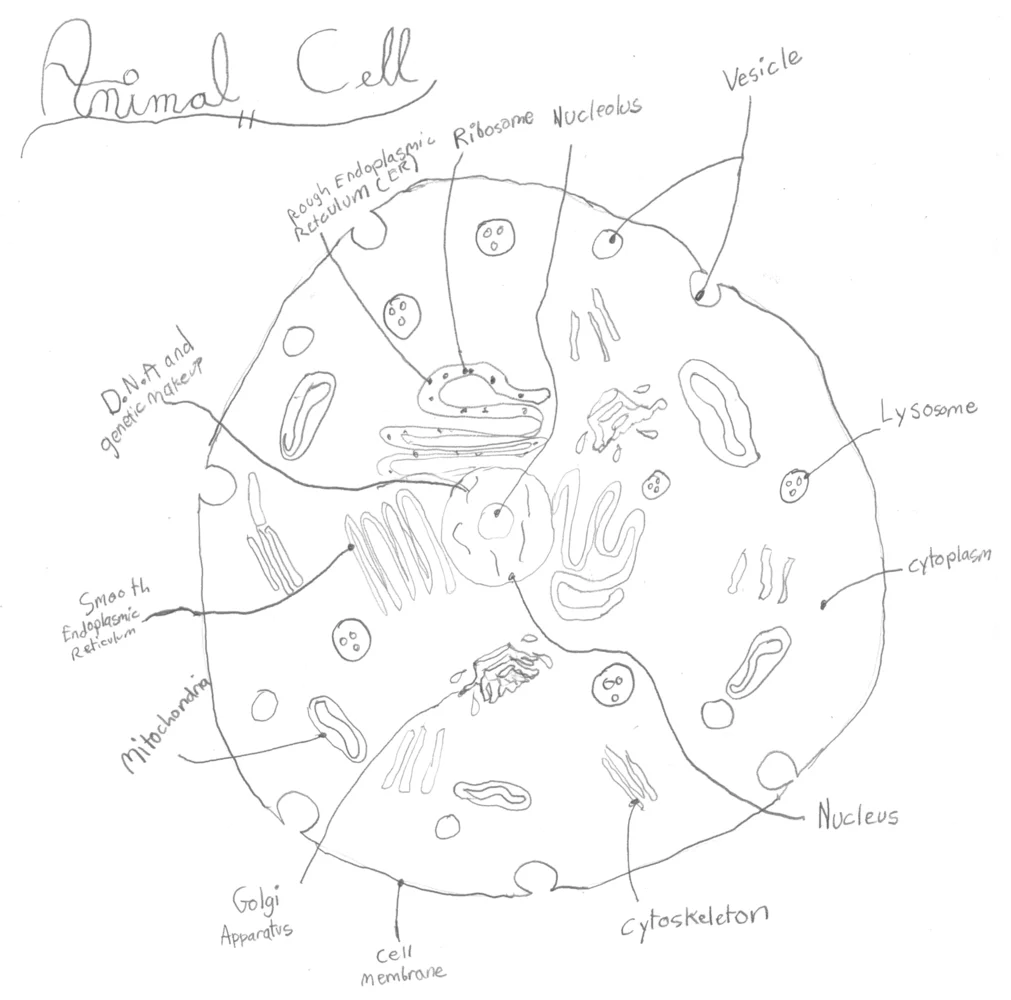
- Organization: made of cells, with complex internal structure
- Metabolism: the ability to harness energy from the environment
- Growth: the ability to increase in complexity or size
- Reproduction: the ability to produce copies of themselves
- Response to stimuli: reaction to environmental changes
- Homeostasis: maintenance of internal conditions within defined limits
- Evolution: the capacity to change heritably over generations
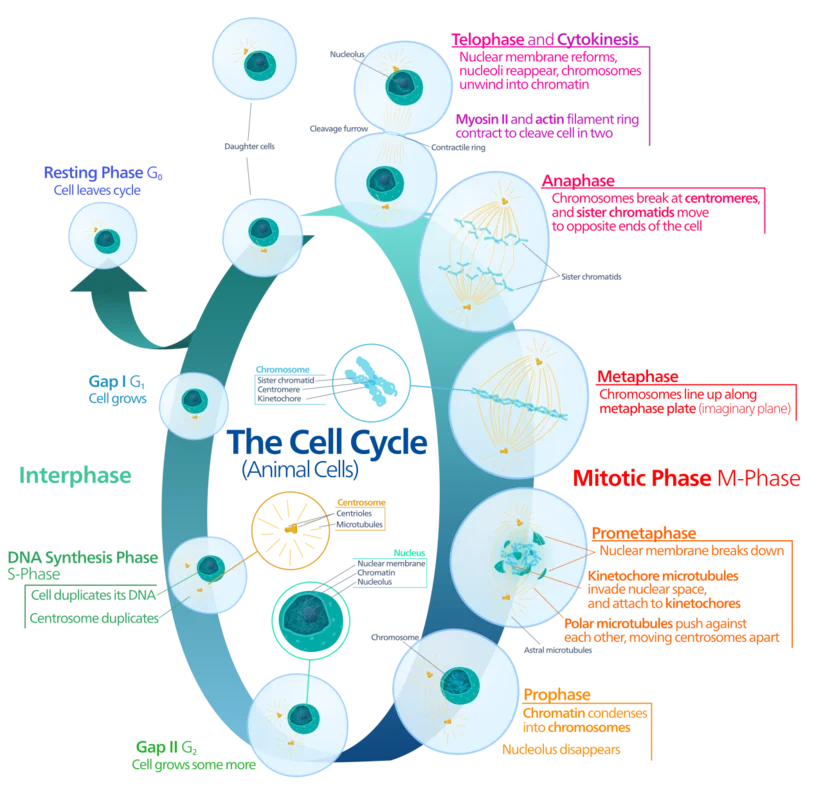
This list works well for familiar organisms. A bacterium, a tree, and a human all satisfy all criteria. They’re alive.
But apply the criteria rigorously, and problems emerge immediately.
The Edge Cases That Blur Every Definition
Why Viruses Are Not Alive
Viruses are the classic problem case. They contain genetic information (DNA or RNA), they reproduce, they evolve, and they have complex molecular structure. But they have no metabolism of their own, they cannot convert energy without hijacking a host cell. They have no cellular organization. They are essentially inert outside a host.
Are viruses alive? Most biologists say no: they’re biological molecules, sophisticated molecular parasites, but not living organisms. Yet viruses evolve rapidly, drive evolution in their hosts, and have arguably shaped the biosphere as profoundly as any other entity.
If viruses aren’t alive, what are they?
Prions
Prions are misfolded proteins that catalyze the misfolding of other proteins of the same type. They propagate, once introduced into a host, they spread, and they display conformational variation that can be selected for different transmission characteristics. However, prions lack nucleic acid-based heredity, so most biologists do not consider this true Darwinian evolution in the same sense as viruses or cellular life. “Evolution” here is strictly at the protein conformation level and remains highly controversial.
Are prions alive? They reproduce (in a chemical sense) and show some capacity for selection. By some definitions, they could qualify, but only if you accept an expanded view of evolution that omits genetic information.
Crystals
Crystals grow (by adding material from solution), have regular organization, and can template the growth of new crystals of the same type. By some loose definitions of “reproduction” and “growth,” they qualify. But no serious biologist calls crystals alive.
The difference between crystal “growth” and cellular growth is real but surprisingly hard to articulate precisely.
Synthetic Biology Constructs
Scientists have created RNA molecules that replicate faster in some conditions than others and exhibit Darwinian evolution in a test tube. They’ve built artificial cells with membranes that grow and divide. They’ve synthesized an entire bacterium genome from scratch and used it to replace a natural one.
Are these constructs alive? Some seem to satisfy most criteria. Yet many researchers say no: “a self-replicating RNA in a test tube lacks metabolism and cellular containment: it cannot harvest energy or maintain itself.” It’s a sophisticated chemical system, not a living one. The question becomes a matter of where to draw the line.
Fire
Fire consumes fuel, produces byproducts, grows, and can spread (reproduce). It was seriously proposed as alive by some early naturalists. However, saying fire “responds to its environment” by moving toward fuel is misleading, this conflates purely physical/chemical tropisms (like a magnet moving toward iron) with biological stimulus-response requiring sensory and regulatory systems. Fire fails the test of complex molecular organization and heritable information, but articulating precisely why fire isn’t alive while bacteria are is more challenging than it seems.
Major Attempts at a Definition
The NASA Definition
The most widely cited scientific definition of life comes from NASA: “Life is a self-sustaining chemical system capable of Darwinian evolution.”
This definition has several appealing features:
- It focuses on process rather than substance: life is defined by what it does (evolve) rather than what it’s made of (carbon, water)
- It’s substrate-independent: silicon-based life or life with exotic chemistries would qualify
- Darwinian evolution implies both heredity (information transmission) and variation
Problems: The definition includes viruses (they evolve), but it also creates a paradox by potentially excluding sterile organisms or the last member of a species: entities that cannot evolve in isolation but are clearly alive. This is a more standard critique than the in vitro evolution problem. The definition also uses “chemical system,” which might exclude hypothetical non-chemical life.
Defining Life in Astrobiology
In 1960s-era experiments, NASA’s Viking landers tested Martian soil for signs of metabolism. The Labeled Release experiment produced puzzling results: a nutrient solution was broken down, suggesting biological activity: but then heating the soil to sterilization temperatures didn’t fully stop the reaction. However, critics note that the 160 °C heat may have failed to sterilize certain non-biological oxidants, such as hydrogen peroxide or superoxides, which could mimic metabolism chemically. Decades later, scientists still debate whether Viking detected life or an unexpected chemical reaction. This ambiguity shows why mission designers need operational definitions of life, not just philosophical ones.
Erwin Schrödinger’s Physical Approach
In his 1944 book What Is Life?, one of the most influential science books of the 20th century – physicist Schrödinger approached the question from thermodynamics.
Schrödinger noted that living systems seem to violate the second law of thermodynamics locally: they become more organized, not less, over time. He argued that life maintains its organization by feeding on negative entropy (order) from the environment. An organism takes in ordered energy (food, sunlight) and excretes disorder (heat, waste), maintaining its internal order at the expense of environmental disorder.
What Schrödinger Got Right and Wrong: His thermodynamic insight was crucial: it pointed toward metabolism and energy flow as central to life. But it’s not sufficient as a definition: many non-living systems, from hurricanes to Bénard convection cells, also maintain local order by dissipating energy. A simple whirlpool in a draining bathtub maintains its structure through energy flow, yet no one calls it alive.
Autopoiesis
Chilean biologists Humberto Maturana and Francisco Varela proposed autopoiesis in the 1970s: life is characterized by systems that continuously produce and maintain themselves, that regenerate their own components. An autopoietic system is a network of processes that produces the components making up the network.
A cell is autopoietic: it produces enzymes, membranes, and other components that make up the cell, using processes that are themselves products of the cell. Remove the cell from its component processes and it dies; remove the components from their cellular context and they stop working.
Autopoiesis captures something important: the self-producing, self-maintaining quality of living systems that distinguishes them from machines (which are made by outside agents) and crystals (which grow but don’t produce their own machinery).
But autopoiesis is technically demanding to apply and may be too narrow: it seems to require cellular organization, which might exclude some hypothetical forms of life, including digital or artificial life.
Information-Based Definitions
A class of definitions focuses on information: life is a system that stores and processes heritable information.
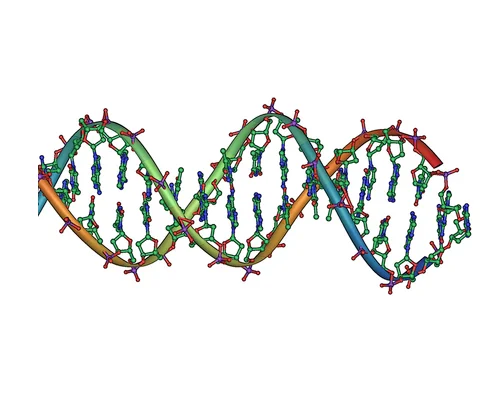
The appeal: genetic information (DNA) is what distinguishes living things at the molecular level. Information is substrate-independent: it could be stored in silicon, RNA, XNA (synthetic nucleic acids), or other molecules.
The problem: information alone isn’t enough. A crystal stores structural information in its lattice. A CD stores digital information. Information plus something more defines life.
That something more is often specified as the capacity for Darwinian evolution, information that can be inherited with variation and that drives differential reproduction. This aligns with what makes a theory scientific, the requirement for testable, falsifiable explanations of natural phenomena.
The Systems Biology View and the Continuum of Life
Modern systems biologists increasingly emphasize that life is not a property of individual molecules but of organized systems. No single molecule is alive. Life is a phenomenon that emerges from the organization of molecules into systems with specific dynamical properties.
Key properties of living systems from this perspective:
- Closure of constraints: living systems are organized so that constraints on molecular processes are produced by the system itself (not imposed from outside)
- Far-from-equilibrium dynamics: life exists in thermodynamic states far from equilibrium, maintained by continuous energy input
- Recursive self-production: the system produces what it needs to continue producing
This view has been developed by philosophers like Stuart Kauffman and Terrence Deacon. It suggests life has no sharp boundary: it’s a spectrum, from simple chemical systems with proto-life properties to the extraordinarily complex biospheres of inhabited planets. Many astrobiologists now argue that life is not binary but a continuum from prebiotic chemistry to complex cells. This “continuum of life” perspective directly addresses the frustration of finding hard boundaries: rather than asking if something is alive, we ask how much like life it is.
Why the Definition Matters for Astrobiology
The practical importance of defining life is clearest in astrobiology, the search for life beyond Earth.
If we send instruments to Mars, Europa, or Titan to look for life, we need to know what to look for. If our definition focuses on DNA or RNA, we might miss life based on different informational polymers. If our definition requires cell membranes, we might miss life with different forms of compartmentalization. If our definition requires metabolism, we might mistake dormant life for no life.
Current astrobiology missions focus on biosignatures: chemical, physical, or spectroscopic signs that life is present, even if we don’t directly observe the organisms. Methane in an atmosphere, complex organic molecules with specific isotope ratios, chiral molecules enriched in one handedness – all can indicate life without requiring us to observe or define individual organisms. NASA uses a “level of confidence” scale for biosignature claims, requiring multiple independent lines of evidence before declaring a positive detection.
The Mars Perseverance rover is collecting samples for a potential future return mission partly because definitive evidence for ancient life may require careful chemical analysis impossible with remote instruments.
The Deep Uncertainty
Perhaps the most honest answer to “what is life?” is that life is a human concept, a way of categorizing continuous natural reality that is inherently fuzzy at the boundaries.
The question isn’t “what is the true definition of life” but “what definition is most useful for our current purposes?” For astrobiology, an operational definition focused on detectable signatures of self-sustaining, evolving chemistry is practical. For origin-of-life research, a focus on the transition from chemistry to the first self-sustaining systems is most relevant. For medicine, cellular organization and metabolism dominate: affecting ethical decisions around brain death, organoid research, and end-of-life care. For law and ethics, the definition affects decisions like whether we should sterilize Mars to avoid contaminating a native biosphere, or whether a synthesized minimal cell is alive enough for patent protection.
The category “life” may be no different from other natural categories like “mountain” or “species” or “forest”: real in their prototypical instances, but defined by gradients and edge cases at their boundaries.
So what do we look for on Mars, Europa, or Enceladus? We look for systems that harness energy, maintain internal order, store and transmit heritable information, and produce their own molecular machinery. And we remain humble enough to recognize that if we find something ambiguous, something that seems half-alive, or alive but different from anything on Earth, we may need to revise our definitions once again.
Here’s one concrete challenge to leave you with: If we found a self-replicating silicon crystal on Titan that maintained structure by harvesting methane from the atmosphere, would we call it alive? The answer depends on where we draw that fuzzy line, and that’s exactly why this question matters.
That doesn’t make the question unimportant. It makes it exactly the kind of question worth sustained scientific and philosophical attention: the kind of question that, in being answered imperfectly and repeatedly, advances our understanding of the universe and our place in it.
Sources
- Schrödinger, E. (1944). What Is Life? Cambridge University Press.
- Maturana, H. & Varela, F. (1980). Autopoiesis and Cognition: The Realization of the Living. D. Reidel Publishing.
- Trifonov, E.N. (2011). Vocabulary of Definitions of Life Suggests a Definition. Journal of Biomolecular Structure & Dynamics, 29(2), 259–266.
- Cleland, C.E. & Chyba, C.F. (2002). Defining ‘Life’. Origins of Life and Evolution of Biospheres, 32(4), 387–393.
- NASA Astrobiology. (2023). What is Life?
- Levin, G.V. & Straat, P.A. (2016). The Case for Extant Life on Mars and Its Possible Detection by the Viking Labeled Release Experiment. Astrobiology, 16(10), 798–810.
Why is it so hard to define life?
It is difficult because any proposed definition either excludes things we consider alive, includes non-living things, or is too vague to be useful, as seen with edge cases like viruses.
What is the NASA definition of life?
NASA defines life as a self-sustaining chemical system capable of Darwinian evolution, but this definition still has edge cases that fail to capture all living things.
What are the classic criteria for life?
Classic criteria include organization (made of cells), metabolism (harnessing energy), growth (increasing in size or complexity), and reproduction (producing copies).
Are viruses considered alive?
Viruses challenge the definition of life because they can reproduce and evolve but lack metabolism and cellular structure, so they are often considered not alive.
Why does defining life matter for space exploration?
Without a clear definition, we cannot reliably recognize alien life if we find it on other worlds, such as detecting metabolism on distant ocean moons.