
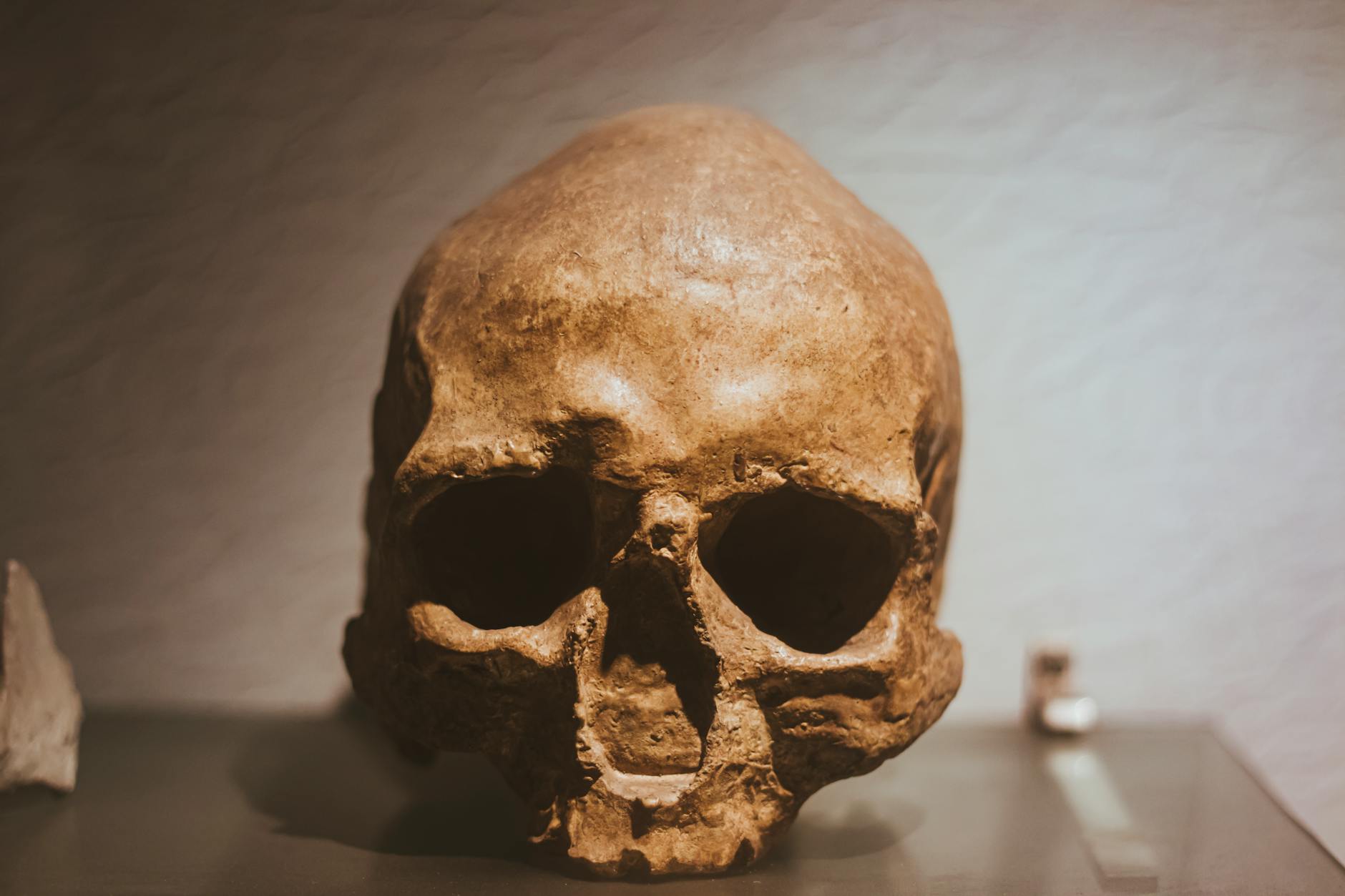
For most of the twentieth century, Neanderthals and Denisovans were portrayed as brutish dead ends, a failed experiment in human evolution that was swept aside when modern humans arrived from Africa. That picture is now completely overturned. Ancient DNA analysis has revealed that Neanderthals, Denisovans, and modern humans interbred, that most people alive today carry a small percentage of Neanderthal ancestry, and that some of those ancient genes are still affecting human biology right now. The story of Neanderthals and Denisovans (our closest extinct relatives) has been completely rewritten by ancient DNA in the last fifteen years.
Even more surprising is a second archaic human group (the Denisovans), discovered not from fossils but from a finger bone fragment in a Siberian cave. The Denisovans were genetically distinct from both Neanderthals and modern humans, and their DNA too persists in living human populations, particularly in people of Melanesian and Southeast Asian ancestry.
Who Were the Neanderthals?

Neanderthals (Homo neanderthalensis) lived in Europe, western Asia, and central Asia from approximately 400,000 to 40,000 years ago. They were physically robust: stocky builds, large brow ridges, prominent noses adapted for warming cold air, and brains at least as large as those of modern humans. Their skeletal anatomy reflects cold-climate adaptation accumulated over hundreds of thousands of years.
Neanderthals were not cognitively simple. Archaeological evidence shows they buried their dead (with some debate about how intentional this was), used ochre and other pigments, made tools of substantial sophistication (Mousterian stone technology), controlled fire, and cared for injured individuals who could not have survived without assistance. A Neanderthal from Shanidar Cave in Iraq had healed injuries that would have required long-term care, indicating social support for the wounded or disabled.
The timing of Neanderthal extinction roughly coincides with the arrival of modern humans in Europe around 45,000 years ago, but the relationship between the two events is not simple displacement. Neanderthal populations were already declining and geographically fragmented before modern humans arrived. Climate fluctuations, disease, and resource competition may all have contributed. And as genetics has confirmed, the interaction was not purely competitive; there was also interbreeding.
Who Were the Denisovans?
The Denisovans were identified in 2010 from a fragment of a juvenile finger bone found in Denisova Cave in the Altai Mountains of Siberia. The bone was too small and too fragmentary to assign to a known species based on anatomy alone. But DNA extracted from it revealed a distinct hominin lineage (genetically separate from both Neanderthals and modern humans) that had diverged from the Neanderthal lineage approximately 400,000 years ago.
The physical appearance of Denisovans is almost entirely unknown. A 2019 study reconstructed aspects of Denisovan anatomy using patterns of DNA methylation (a system that controls gene expression without changing the DNA sequence) and suggested features including a wider skull and dental characteristics different from Neanderthals. But the only confirmed Denisovan fossil material consists of a handful of teeth, two finger bones, and a jaw fragment from the Tibetan Plateau. In terms of the fossil record, Denisovans are arguably the most scientifically significant group identified almost entirely from their genome rather than their bones.
The Ancient DNA Revolution

The ability to extract, sequence, and analyze ancient DNA has transformed paleoanthropology. The critical work was led by Svante Pääbo and his team at the Max Planck Institute for Evolutionary Anthropology in Leipzig. In 2010, Pääbo’s team published the first draft sequence of the Neanderthal genome, revealing for the first time that modern humans outside Africa carry approximately 1 to 4% Neanderthal DNA. Pääbo received the Nobel Prize in Physiology or Medicine in 2022 for this body of work.
Ancient DNA degrades over time, breaking into short fragments that must be sequenced and computationally reassembled. The cold, stable conditions of Denisova Cave preserved DNA exceptionally well; the Denisovan finger bone yielded higher-quality sequences than most ancient human DNA, enabling a nearly complete genome reconstruction.
The technology has continued to improve. Researchers can now extract DNA from sediment in archaeological sites where no bones are visible, identifying which species were present from trace environmental DNA. Proteomics (the analysis of ancient proteins, which survive longer than DNA) has extended hominin identification back more than 1.5 million years, well beyond the range of ancient DNA.
Interbreeding: The Evidence
The evidence for interbreeding between modern humans and archaic hominins comes from comparing modern human genomes with the reconstructed Neanderthal and Denisovan genomes. The pattern is consistent and has been replicated across multiple studies.
Modern humans outside sub-Saharan Africa carry on average 1 to 4% Neanderthal DNA. African populations carry little or none, consistent with the interbreeding occurring after the out-of-Africa dispersal, most likely in the Middle East or western Asia, where modern humans first encountered Neanderthal populations as they expanded northward and westward.
Denisovan DNA is present at different levels in different populations. Melanesians (Papua New Guinea, Aboriginal Australians) carry approximately 4 to 6% Denisovan ancestry, the highest known. Populations in East and Southeast Asia carry smaller but significant proportions. South Asian populations carry traces. People of sub-Saharan African and western Eurasian ancestry carry almost none. This pattern suggests the main Denisovan interbreeding event occurred in eastern or southeastern Asia, or in the region between.
A partial Denisovan-Neanderthal hybrid individual, named Denny, was identified from a single bone fragment from Denisova Cave in 2018. Genome analysis showed her mother was a Neanderthal (from a western population) and her father was a Denisovan. This individual was the first known first-generation hybrid of two distinct archaic human groups.
What Archaic Genes Do in Living Humans

The archaic DNA in modern humans is not neutral archaeological baggage; some of it affects biology. Several findings have established functional roles for inherited Neanderthal and Denisovan variants:
Immune system genes: Many of the strongest Neanderthal gene sequences in living humans relate to immune function, particularly genes in the HLA complex (human leukocyte antigen), which governs how the immune system recognizes pathogens. Inheriting Neanderthal immune variants likely helped modern humans adapt rapidly to Eurasian pathogens they had not previously encountered.
COVID-19 severity: A 2020 study in Nature by Hugo Zeberg and Svante Pääbo identified a cluster of Neanderthal-derived genes on chromosome 3 that strongly increases the risk of severe COVID-19 illness. The same cluster provides some protection against HIV. About 16% of Europeans and 50% of South Asians carry this Neanderthal haplotype.
Tibetan high-altitude adaptation: Denisovan DNA provided Tibetan populations with the EPAS1 gene variant, sometimes called the “superathlete gene.” This variant enables efficient oxygen use at high altitudes and is largely responsible for Tibetans’ ability to live and work above 4,000 meters. The variant is rare outside Tibetan populations and appears to have been directly inherited from Denisovans.
Skin and hair: Some Neanderthal-derived variants affect keratin production, influencing skin and hair characteristics. These likely helped modern humans adapt to different UV environments as they spread across Eurasia.
Not all archaic DNA is neutral or beneficial. Natural selection appears to have purged Neanderthal variants from functionally important gene regions over time; coding regions central to development and brain function show lower Neanderthal ancestry than the genome average, suggesting many archaic variants were mildly deleterious and were selected against over subsequent generations.
When and Where the Groups Overlapped
Neanderthals and modern humans overlapped in Europe and the Middle East for at least a few thousand years, and possibly longer. Denisova Cave appears to have been occupied by Denisovans, Neanderthals, and possibly modern humans at different times and, given Denny, by Neanderthal-Denisovan hybrids. The cave sits at a geographic crossroads where multiple hominin groups moved through over hundreds of thousands of years.
Neanderthals survived in isolated refugia in Iberia and perhaps in the Caucasus until approximately 40,000 years ago. The last Neanderthal populations may have been living alongside modern humans for thousands of years before finally disappearing. Whether they were actively outcompeted, absorbed into modern human populations through continued interbreeding, or simply declined due to small population sizes and accumulated genetic problems (inbreeding depression) is an active research area. Research into Neanderthals and Denisovans continues to rewrite the story of human evolution.
Do modern humans have Neanderthal DNA?
Yes. Modern humans outside sub-Saharan Africa carry approximately 1 to 4% Neanderthal DNA on average. This ancestry entered the modern human gene pool through interbreeding after the out-of-Africa dispersal, most likely in the Middle East or western Asia. African populations carry little or no Neanderthal ancestry because the interbreeding occurred after their ancestral populations had already separated from the groups that left Africa.
What happened to the Neanderthals?
Neanderthals went extinct approximately 40,000 years ago. The cause was likely a combination of factors including climate fluctuations, competition with modern humans for resources, small and fragmented population sizes, and possibly disease exposure. Genetic evidence suggests Neanderthal populations were already declining before modern humans arrived in Europe. They did not simply disappear; some of their DNA was absorbed into modern human populations through interbreeding.
Who were the Denisovans?
The Denisovans were a group of archaic humans closely related to Neanderthals, identified almost entirely through ancient DNA from a few fragments found in Denisova Cave, Siberia. They diverged from Neanderthals roughly 400,000 years ago and lived across Asia. Their DNA persists most strongly in Melanesian and Aboriginal Australian populations (4–6% ancestry) and is also found in East and Southeast Asian populations.
What is the significance of Svante Pääbo’s Nobel Prize?
Svante Pääbo received the 2022 Nobel Prize in Physiology or Medicine for his work sequencing ancient DNA from Neanderthals and Denisovans. His research demonstrated that interbreeding between archaic and modern humans occurred, that archaic DNA persists in living humans, and that some inherited variants affect health today. The work fundamentally changed our understanding of human evolution from a simple linear progression to a complex web of migrations, encounters, and genetic exchanges.
What is Denisovan DNA doing in modern humans?
The most studied functional example is the EPAS1 variant in Tibetans, which enables efficient oxygen metabolism at high altitude and was inherited from Denisovans. Denisovan ancestry also includes immune-related variants similar to those contributed by Neanderthals. In Melanesian and Aboriginal Australian populations, Denisovan ancestry may have contributed to local adaptations, though these are less characterized than the Tibetan altitude variant.
Were Neanderthals intelligent?
Yes. Archaeological evidence shows Neanderthals made sophisticated stone tools, used fire, buried their dead, cared for injured group members, used pigments, and possibly made symbolic objects. Their brain size was comparable to or slightly larger than modern humans. The traditional portrayal of Neanderthals as brutish and simple-minded is inconsistent with the evidence. Their cognitive abilities may have differed from modern humans in specific ways, but they were not primitive.
Sources
Green, R.E. et al. (2010). A Draft Sequence of the Neandertal Genome. Science, 328(5979), 710–722. doi:10.1126/science.1188021
Reich, D. et al. (2010). Genetic history of an archaic hominin group from Denisova Cave in Siberia. Nature, 468(7327), 1053–1060. doi:10.1038/nature09710
Slon, V. et al. (2018). The genome of the offspring of a Neanderthal mother and a Denisovan father. Nature, 561(7721), 113–116. doi:10.1038/s41586-018-0455-x
Zeberg, H., & Pääbo, S. (2020). The major genetic risk factor for severe COVID-19 is inherited from Neanderthals. Nature, 587(7835), 610–612. doi:10.1038/s41586-020-2818-3
Huerta-Sánchez, E. et al. (2014). Altitude adaptation in Tibetans caused by introgression of Denisovan-like DNA. Nature, 512(7513), 194–197. doi:10.1038/nature13408
Pääbo, S. (2014). Neanderthal Man: In Search of Lost Genomes. Basic Books.
This article is part of our framework exploring Evolution, the journey from single cells to civilizations.
Further reading: Denisovan on Wikipedia