
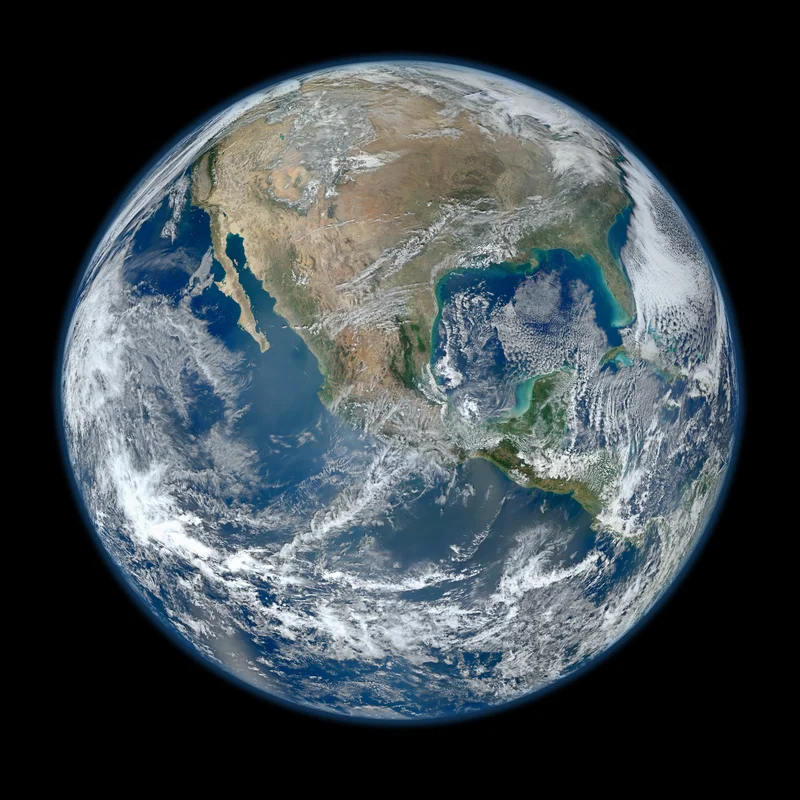
The rare earth hypothesis proposes that complex, multicellular life, and particularly intelligent, technological life, may be exceedingly uncommon in the universe because Earth itself may be an anomaly, benefiting from an extraordinary and unlikely combination of geological, astronomical, and biological factors. First articulated in detail by paleontologist Peter Ward and astronomer Donald Brownlee in their 2000 book Rare Earth: Why Complex Life Is Uncommon in the Universe, this hypothesis stands in contrast to the more optimistic Copernican principle, which assumes that Earth is a typical planet in a typical solar system. Instead, the rare earth hypothesis argues that while simple microbial life may be common in the cosmos, the emergence of complex, animal-like organisms requires a series of rare and precarious conditions that few planets are likely to satisfy simultaneously. This article examines the key factors, from galactic location to plate tectonics to the presence of a large moon, that may make Earth unusually suited for complex life, and explores the scientific evidence and counterarguments for each.
The Galactic Habitable Zone: Location Matters
One of the foundational arguments of the rare earth hypothesis is that Earth occupies a privileged position within the Milky Way galaxy: a region often called the Galactic Habitable Zone (GHZ). This concept, developed by astronomers Guillermo Gonzalez, Donald Brownlee, and Peter Ward, suggests that a planet must be located at just the right distance from the galactic center to sustain complex life.
Too close to the galactic core, and a planet would be bathed in intense radiation from supernovae, gamma-ray bursts, and the supermassive black hole Sagittarius A*. These energetic events could sterilize entire planetary surfaces or trigger mass extinctions. Too far from the core, however, and the interstellar medium becomes deficient in the heavy elements, carbon, oxygen, silicon, iron, necessary to build rocky planets and complex organic molecules. Earth sits roughly 26,000 light-years from the galactic center, in a relatively quiet region between major spiral arms, where the supernova rate is low but the metallicity is high enough to form terrestrial planets. According to a 2004 study published in Science, the GHZ may contain only about 10% of all stars in the galaxy. If this estimate is correct, billions of potential planetary systems are excluded from the habitable zone before any other factors are considered.
Furthermore, the Sun’s nearly circular orbit around the galactic center minimizes the risk of crossing spiral arms, where dense gas clouds and high radiation levels could disrupt planetary climates. Combined, these galactic-scale parameters already narrow the search space for complex life dramatically.
The Right Kind of Star: The Goldilocks Sun
Not all stars are created equal when it comes to hosting complex life. The rare earth hypothesis emphasizes that the Sun is an unusually stable and long-lived main-sequence star of spectral type G2V, a yellow dwarf that strikes a critical balance between luminosity and lifespan.
Massive O-type and B-type stars burn hot and fast, with lifetimes of only a few million to tens of millions of years: far too short for biological evolution to produce complex multicellular organisms. On Earth, it took nearly 4 billion years for intelligent life (humans) to emerge. Even M-dwarf stars (red dwarfs), which are the most common type in the galaxy and can burn for trillions of years, present severe challenges. Their frequent and powerful stellar flares, tidal locking of planets in the habitable zone, and a spectrum rich in infrared but poor in photosynthetically useful visible light may all hinder the development of complex life. NASA’s Exoplanet Exploration page summarizes the trade-offs between stellar type and habitability.

The Sun’s relatively stable energy output, with luminosity variations of only about 0.1% over the 11-year solar cycle, has allowed Earth’s climate to remain within the narrow temperature window needed for liquid water over billions of years. A more variable star could have triggered runaway ice ages or greenhouse phases before complex life had a chance to evolve.
Planetary Size and Composition: The Right Mass for Life
Earth’s size and internal composition are often overlooked but may be just as critical as its orbital position. The rare earth hypothesis argues that a planet must be large enough to retain a substantial atmosphere and a protective magnetic field, but not so large that it retains a crushing, hydrogen-helium envelope like a gas giant.
Earth’s radius of about 6,371 kilometers and mass of 5.97 × 10²⁴ kilograms provide a surface gravity that keeps a nitrogen-oxygen atmosphere from escaping into space, yet is not so strong that it would compress the atmosphere into a thick, toxic blanket. The presence of a liquid outer core, driven by convection in the solid inner core, generates a planetary magnetic field that deflects the solar wind and cosmic rays: protecting the atmosphere from stripping and shielding life from harmful high-energy particles. Earth’s magnetic field is the strongest of any terrestrial planet in the solar system: Venus and Mars have no global field today, and Mercury’s is a small fraction of Earth’s. A Space Science Reviews review of magnetic field generation in terrestrial planets traces these differences to how each body’s interior cooled. Mars, at about half Earth’s diameter, cooled too quickly, lost its global magnetic field, and subsequently had much of its atmosphere eroded by the solar wind, turning it into a cold desert.
A planet much larger than Earth (a “super-Earth”) might have even more serious challenges. Its higher gravity could lead to a thicker, more reducing atmosphere, potentially trapping heat in a runaway greenhouse effect or creating surface pressures that prevent the development of land-dwelling organisms. The rare earth hypothesis suggests that Earth is near the optimal size for complex life.
Plate Tectonics: The Engine of a Habitable Planet
Perhaps one of the most distinctive features of Earth is its active plate tectonics system. The slow movement of lithospheric plates is responsible for the long-term carbon cycle that regulates atmospheric CO₂ levels and stabilizes global temperatures over hundreds of millions of years. Without subduction zones and volcanic outgassing, carbon dioxide would be permanently locked up in carbonate rocks, leading to a planet-wide ice age: the so-called “Snowball Earth” scenario, which has occurred at least twice in Earth’s history but ended thanks to volcanic emissions.
Plate tectonics also drives continental formation, mountain building, and nutrient cycling, which are essential for the evolution of complex ecosystems. The exposure of fresh silicate rock through uplift and erosion consumes atmospheric CO₂ (a key part of the silicate weathering feedback), preventing a runaway greenhouse effect. A 2020 review in Nature Reviews Earth & Environment emphasizes that plate tectonics may be rare among rocky planets, requiring a precise balance of internal heat, crustal thickness, and water content. Venus, Earth’s near twin in size, lacks plate tectonics: instead, it has a stagnant, single-plate lid that traps heat and leads to a runaway greenhouse with a surface temperature of 462°C, far too hot for complex life.
The rare earth hypothesis posits that plate tectonics may be an unusual state for a terrestrial planet, requiring just the right amount of internal water to act as a lubricant, a core that is not too hot or too cold, and a surface that is neither too dry nor too wet.

The Large Moon: A Stabilizing Influence
One of the most striking features of Earth is its unusually large moon, thought to have formed when a Mars-sized protoplanet (Theia) collided with the early Earth about 4.5 billion years ago. This event not only gave Earth its large metallic core and high iron abundance but also resulted in a Moon that is about 1/81 of Earth’s mass, far larger relative to its planet than any other moon in the inner solar system.
The Moon’s gravitational pull stabilizes Earth’s axial tilt (obliquity) to within about 1–2 degrees over long timescales, preventing the wild swings (from 0 to 85 degrees) that Mars and other planets without large moons experience. Changes in obliquity cause dramatic shifts in climate, triggering extreme ice ages or tropical episodes that could disrupt the evolution of complex life. A 2012 study in Nature Geoscience modeled the effect of a moonless Earth and found that surface temperatures could vary by tens of degrees over a few million years, making long-term climate stability far less likely.
Additionally, the Moon generates tides, which may have been critical for the development of life on land by creating intertidal zones: environments where organisms could adapt to periodic exposure to air and sunlight, eventually leading to terrestrial colonization. The rare earth hypothesis contends that a large stabilizing moon is an infrequent occurrence in planetary systems, yet it may be essential for complex life to evolve beyond the simple microbial stage.
The Geologic and Biologic Timeline: The Great Filter

The rare earth hypothesis also incorporates the idea of a “great filter”: a step in the evolution of life that is extremely difficult to cross. On Earth, the timeline from the first simple cells (around 3.8 billion years ago) to complex multicellular life (the Cambrian explosion, about 541 million years ago) took over 3 billion years. Even then, complex life did not appear until oxygen levels in the atmosphere had risen sufficiently (the Great Oxidation Event, about 2.4 billion years ago), which itself required the evolution of oxygenic photosynthesis – a biochemical innovation that may be rare.
Furthermore, the emergence of intelligent, technological life (humans) happened only in the last few hundred thousand years, a tiny fraction of Earth’s history. Ward and Brownlee argue that the odds of all these conditions, galactic location, stable star, plate tectonics, large moon, oxygen-rich atmosphere, and a long uninterrupted evolutionary history, occurring together on a single planet are extremely low. While precise statistical estimates are difficult, some calculations based on the assumed rarity of each factor suggest that fewer than 1 in 10,000 rocky planets in the habitable zone of their stars might satisfy the full set of rare earth criteria.
Counterarguments to the rare earth hypothesis are diverse and merit careful consideration. One of the strongest opposing points is the principle of mediocrity, which holds that Earth’s properties are likely typical for a planet in a solar system like ours. The discovery of thousands of exoplanets, many of which are rocky and orbit in the habitable zones of their stars, suggests that the raw materials for potentially life-bearing planets are abundant. For example, data from the Kepler mission indicates that between 20% and 50% of Sun-like stars may host rocky planets in their habitable zones. Additionally, recent simulations of planetary dynamics suggest that plate tectonics may be more common than once thought: a 2019 study in Icarus by researchers including Stamenković and colleagues found that a significant fraction of super-Earths could sustain plate tectonics over geological timescales, especially if they have sufficient water content (Stamenković, V., et al., 2019, “Plate tectonics on super-Earths,” Icarus, 329, 220–234). Another rebuttal involves the possibility of non-Earth-like biochemistries; complex life might not require oxygenic photosynthesis or a nitrogen-oxygen atmosphere, instead evolving in methane-rich or sulfuric-acid environments that would be toxic to terrestrial organisms. Finally, the emergence of intelligence may not be as improbable as the timeline suggests – evolution is opportunistic, and if given enough time and ecological niches, some observers argue that intelligence is a convergent trait, as seen in the independent evolution of advanced cognitive abilities in cephalopods, corvids, and cetaceans on Earth. These arguments do not disprove the rare earth hypothesis, but they underscore that the assumptions about the rarity of Earth-like conditions remain uncertain. As of 2025, we have no direct evidence of complex life elsewhere, and the rarity of Earth’s properties remains a plausible explanation for the silence so far – a possibility famously captured by Enrico Fermi’s paradox.
1. What is the rare earth hypothesis in simple terms?
The rare earth hypothesis is the idea that while simple microbial life may be common in the universe, complex, animal-like life and intelligent civilizations are extremely rare because Earth is the product of many unusually favorable conditions, such as a stable star, plate tectonics, a large moon, and a safe galactic location, that rarely occur together on other planets.
2. How does the rare earth hypothesis differ from the Copernican principle?
The Copernican principle assumes that Earth is not special and that life should be common in the universe. The rare earth hypothesis argues the opposite: Earth is an extraordinary exception, and the combination of conditions needed for complex life is so unlikely that Earth-like planets may be vanishingly rare.
3. What role does the Moon play in the rare earth hypothesis?
The Moon stabilizes Earth’s axial tilt, preventing extreme climate swings that would disrupt evolution. Its gravitational pull also creates tides, which may have helped life move from oceans onto land. A moon of this size relative to its planet is rare in planetary systems, making this factor a key rare-earth condition.
4. Could complex life exist on planets without plate tectonics?
It is possible in theory, but plate tectonics appears crucial for Earth’s long-term climate stability through the carbon cycle. Without it, planets like Venus experience runaway greenhouse effects, while others might become frozen. Plate tectonics is considered a likely, but not absolutely required, factor for complex life.
5. Has the rare earth hypothesis been proven or disproven?
Neither. It remains a plausible hypothesis, supported by indirect evidence but not directly testable with current technology. As astronomers discover more exoplanets and study their atmospheres, the hypothesis may be validated or challenged. So far, the absence of detectable complex life elsewhere keeps it a serious scientific possibility.
Sources & References
- Ward, P. D., & Brownlee, D. (2000). Rare Earth: Why Complex Life Is Uncommon in the Universe. Copernicus Books.
- Lineweaver, C. H., Fenner, Y., & Gibson, B. K. (2004). The Galactic Habitable Zone and the Age Distribution of Complex Life in the Milky Way. Science, 303(5654), 59–62. https://doi.org/10.1126/science.1092322
- NASA Exoplanet Exploration. “Life in the Universe: What Are the Odds?” https://exoplanets.nasa.gov/news/1630/life-in-the-universe-what-are-the-odds/
- Lichtenberg, T., et al. (2020). Plate tectonics and planetary habitability. Nature Reviews Earth & Environment, 1, 562–574. https://www.nature.com/articles/s43017-020-0079-8
- Lissauer, J. J., & Barnes, R. (2012). The long-term stability of a moonless Earth. Nature Geoscience. https://www.nature.com/articles/ngeo1460
- Bryson, S., et al. (2021). The Occurrence of Rocky Habitable-zone Planets around Solar-like Stars from Kepler Data. The Astronomical Journal, 161(1), 36. https://doi.org/10.3847/1538-3881/abc418
- Breuer, D., Labrosse, S., & Spohn, T. (2010). Thermal Evolution and Magnetic Field Generation in Terrestrial Planets and Satellites. Space Science Reviews, 152, 449–500. https://doi.org/10.1007/s11214-009-9587-5
- Stamenković, V., et al. (2019). Plate tectonics on super-Earths. Icarus, 329, 220–234. (Referenced in the counterarguments section)
Further reading: Rare Earth hypothesis on Wikipedia