
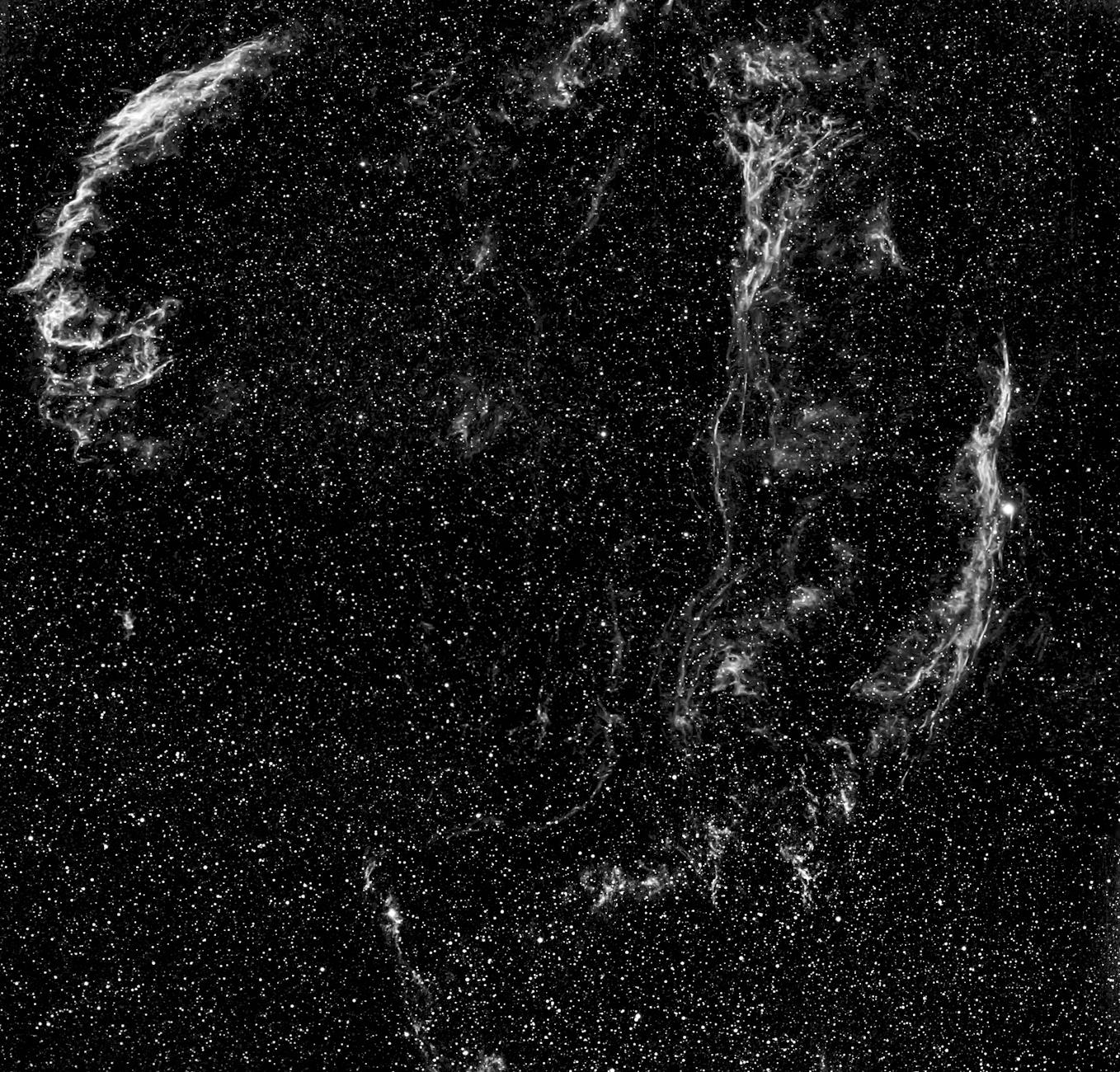
Every atom of carbon in your body was forged inside a star that died before the Sun was born. The calcium in your bones, the iron in your blood, the oxygen in every breath you take: all of it was assembled in stellar interiors and scattered across the galaxy by stellar explosions over billions of years. You are, in a very literal sense, made of star stuff.
The process by which stars create the chemical elements is called stellar nucleosynthesis, and it is one of the foundational discoveries of 20th-century astrophysics. Understanding it requires understanding both nuclear physics and the life cycles of stars: from hydrogen-burning main sequence stars to red giants, white dwarfs, neutron stars, and the cataclysmic explosions that mark their deaths.
The Big Bang Gave Us Hydrogen, Helium, and Lithium

Before stars, the universe had only three elements in significant quantities: hydrogen, helium, and trace amounts of lithium. In the first three minutes after the Big Bang, the universe was hot and dense enough for nuclear reactions: Big Bang nucleosynthesis. The result was approximately 75% hydrogen, 25% helium by mass, and a small residue of deuterium, helium-3, and lithium-7.
Everything heavier than lithium (carbon, oxygen, iron, gold, uranium) was made later, in stars. The Big Bang was not a one-time nucleosynthesis event; it was just the starting point. Stars have been running their own nuclear reactors for billions of years, building the periodic table element by element.
Hydrogen Burning: The Main Sequence
A star spends most of its life fusing hydrogen into helium in its core. For a star like the Sun, this is the proton-proton chain:
4 ¹H → ⁴He + 2 e⁺ + 2 νₑ + energy
Four protons fuse, releasing two positrons, two neutrinos, and 26.7 MeV of energy. The energy comes from the fact that helium-4 has slightly less mass than four protons: the mass difference converts to energy via E = mc².
More massive stars use the CNO cycle instead: carbon, nitrogen, and oxygen act as catalysts that help convert hydrogen to helium more efficiently at the higher temperatures of massive stellar cores. The CNO cycle dominates in stars more than about 1.3 times the Sun’s mass.
Hydrogen fusion on the main sequence produces no new heavy elements: it only builds helium from hydrogen. The chemical enrichment of the universe happens in the later stages of stellar evolution.
Helium Burning: Making Carbon and Oxygen

When a star exhausts hydrogen in its core, fusion stops, and gravity causes the core to contract and heat up. The outer layers expand, and the star becomes a red giant. When the core temperature reaches about 100 million Kelvin, helium fusion ignites via the triple-alpha process:
3 ⁴He → ¹²C + energy
Three helium-4 nuclei fuse to form one carbon-12 nucleus. This is not straightforward: a carbon-12 nucleus must be produced in a single three-body collision or (as Fred Hoyle realized in 1954) it requires a specific energy resonance in carbon-12 that makes the reaction efficient at stellar temperatures. Hoyle predicted this resonance before it was measured: one of the most remarkable predictions in nuclear astrophysics, later confirmed in laboratory experiments.
Once carbon is present, a fourth helium-4 can fuse with it to form oxygen-16:
¹²C + ⁴He → ¹⁶O + energy
The relative rates of the triple-alpha process and alpha capture onto carbon determine the ratio of carbon to oxygen in stellar cores: a ratio with profound implications for the chemistry of the universe and the prevalence of carbon-based life.
Advanced Burning Stages in Massive Stars
Low-mass stars like the Sun never develop cores hot enough to fuse elements heavier than carbon and oxygen. They end their lives as white dwarfs, having scattered some carbon and oxygen into space via stellar winds and planetary nebulae.
Massive stars (those above about eight solar masses) have much more energetic cores. After helium fusion exhausts the helium supply, the core contracts further. Each successive fuel lasts a shorter time and generates less energy per unit mass:
– Carbon burning (~600 million K): ¹²C + ¹²C → ²⁴Mg, ²³Na, ²⁰Ne + particles. Lasts ~1,000 years.
– Neon burning (~1.2 billion K): ²⁰Ne + γ → ¹⁶O + ⁴He, then ²⁰Ne + ⁴He → ²⁴Mg. Lasts ~1 year.
– Oxygen burning (~2 billion K): ¹⁶O + ¹⁶O → ³²S, ³¹P, ²⁸Si, ³¹S + particles. Lasts ~6 months.
– Silicon burning (~3 billion K): A network of nuclear reactions involving silicon-28 and its daughters, building elements up to iron and nickel. Lasts ~1 day.
Silicon burning terminates at the iron peak (iron-56 and nickel-56) because iron has the highest binding energy per nucleon of any nucleus. Fusing elements lighter than iron releases energy (exothermic). Fusing iron requires energy (endothermic). A massive star’s silicon-burning core cannot release fusion energy past iron, so when silicon is exhausted, the core loses energy support and collapses catastrophically.
The Iron Core Collapse: Core-Collapse Supernovae

When a massive star’s iron core exceeds the Chandrasekhar mass (about 1.4 solar masses), electron degeneracy pressure can no longer support it. The core collapses in fractions of a second, compressing to nuclear density. The collapse releases an enormous amount of gravitational energy (more than the Sun will radiate in its entire lifetime) in less than a second.
The collapse produces a neutron star (or, for the most massive cores, a black hole). A shockwave propagates outward through the star’s outer layers, and neutrinos from the newly formed neutron star deposit energy into the shock, ultimately blowing off most of the star’s mass in a core-collapse supernova.
The expanding supernova ejecta contains all the elements synthesized during the star’s lifetime and released back into the interstellar medium. The explosion itself also drives stellar nucleosynthesis in the shock: r-process (rapid neutron capture) stellar nucleosynthesis occurs in the neutrino-driven wind and may occur in neutron star mergers, producing the heaviest elements: gold, platinum, uranium, lead, and others heavier than iron.
The r-Process and Neutron Star Mergers
Elements heavier than iron cannot be built by fusion (which is endothermic for heavy nuclei). They are built by neutron capture: adding neutrons to existing nuclei, which then beta-decay to produce higher atomic numbers.
The slow neutron capture process (s-process) occurs in the outer layers of evolved stars. It builds elements up to bismuth over thousands to millions of years.
The rapid neutron capture process (r-process) requires an extremely high flux of neutrons (far more than can be achieved in a normal stellar environment). It was long theorized to occur in core-collapse supernovae, but the 2017 detection of a neutron star merger (gravitational wave event GW170817) and its associated “kilonova” strongly confirmed that neutron star mergers are a major (and possibly dominant) site of r-process stellar nucleosynthesis. The kilonova’s characteristic infrared emission and spectroscopic signatures were consistent with freshly synthesized heavy r-process elements, likely including gold and strontium. This was a landmark result in multi-messenger astrophysics.
The Fate of the Elements: Returning to Space
A star is not just a nuclear reactor: it is also a vehicle for distributing elements through the galaxy. Elements made in stellar interiors reach space through:
– Stellar winds: Low-mass stars on the asymptotic giant branch shed enormous amounts of mass through winds, enriching the interstellar medium with carbon, nitrogen, and s-process elements. – Planetary nebulae: When a low-mass red giant sheds its outer layers entirely, the result is a planetary nebula: a shell of gas surrounding a white dwarf, rich in the products of helium burning and the s-process. – Core-collapse supernovae: Massive stars return the majority of their mass to the interstellar medium in a few seconds. The ejecta seed the galaxy with oxygen, silicon, magnesium, and iron-peak elements. – Type Ia supernovae: White dwarfs in binary systems can accrete matter from a companion and explode as Type Ia supernovae. These explosions are particularly rich in iron-peak elements and are a major source of iron in the galaxy.
Over the history of the universe, successive generations of star formation, nucleosynthesis, and death have gradually enriched the interstellar medium with heavy elements. The Sun is a third-generation star: it formed from gas already enriched by at least two generations of previous stellar cycles. The elements in your body reflect this cumulative history. Stellar nucleosynthesis is the engine that built the periodic table from near-nothing.
What is stellar nucleosynthesis?
Stellar nucleosynthesis is the process by which atomic nuclei are created inside stars through nuclear fusion. Starting from hydrogen and helium left by the Big Bang, successive generations of stars have built the heavier elements through a series of fusion reactions in their cores. Different elements are produced by different stages of stellar evolution: helium by main-sequence fusion, carbon and oxygen by red giant helium burning, and elements from carbon through iron by the successive burning stages of massive stars. Elements heavier than iron are built by neutron capture processes in dying stars and neutron star mergers.
What elements do stars make?
Stars can fuse elements from hydrogen (the lightest) up to iron and nickel (the most tightly bound) through successive stages of nuclear burning. Hydrogen fusion produces helium. Helium burning produces carbon and oxygen. Advanced burning in massive stars produces neon, sodium, magnesium, silicon, sulfur, calcium, titanium, chromium, and iron. Elements heavier than iron (including copper, zinc, gold, platinum, lead, and uranium) are made primarily by neutron capture processes (s-process in evolved stars, r-process in supernovae and neutron star mergers).
Where does the iron in our blood come from?
The iron in hemoglobin was synthesized in the cores of massive stars through silicon burning: the final nuclear burning stage before core collapse. When these stars exploded as supernovae, they scattered their iron into the interstellar medium. Over billions of years, this material was incorporated into new generations of stars, planets, and eventually, life. The specific iron atoms in your body likely passed through several supernovae before being incorporated into the molecular cloud that formed the solar system about 4.6 billion years ago.
What is the triple-alpha process?
The triple-alpha process is the nuclear reaction by which three helium-4 nuclei (alpha particles) fuse to form one carbon-12 nucleus in the cores of red giant stars. It is the primary source of carbon in the universe. The reaction proceeds through an intermediate step: two helium-4 nuclei briefly form beryllium-8 (which is unstable and decays in 10⁻¹⁶ seconds) before a third alpha particle fuses with the beryllium to form carbon. Physicist Fred Hoyle predicted in 1954 that a specific nuclear resonance in carbon-12 must exist to make this reaction proceed efficiently: a prediction later confirmed by laboratory measurements.
How were gold and platinum formed?
Gold and platinum are r-process elements: too heavy to be built by stellar fusion, they are created by rapid neutron capture in extreme astrophysical environments. The strongest current evidence points to neutron star mergers (collisions of two neutron stars) as the dominant source. The 2017 gravitational wave event GW170817 was accompanied by a kilonova (a bright optical and infrared transient) whose spectral signatures were consistent with freshly synthesized r-process elements including strontium, and possibly gold. Core-collapse supernovae may also contribute r-process elements, though the relative contributions are still debated.
What is a kilonova?
A kilonova is the transient electromagnetic event produced when two neutron stars (or a neutron star and a black hole) merge. The collision ejects neutron-rich material at high velocities, and the intense neutron flux in this ejecta drives r-process nucleosynthesis: building the heaviest elements in the periodic table in seconds. The kilonova emits at optical and near-infrared wavelengths as the freshly synthesized radioactive r-process nuclei decay. The first confirmed kilonova was detected in 2017 (AT2017gfo, associated with gravitational wave event GW170817) and provided the first direct evidence that neutron star mergers produce heavy r-process elements including gold, strontium, and europium.
Sources
Burbidge, E.M., Burbidge, G.R., Fowler, W.A., & Hoyle, F. (1957). Synthesis of the elements in stars. Reviews of Modern Physics, 29(4), 547–650. doi:10.1103/RevModPhys.29.547
Hoyle, F. (1954). On nuclear reactions occurring in very hot stars. I. The synthesis of elements from carbon to nickel. The Astrophysical Journal Supplement Series, 1, 121–146. doi:10.1086/190005
Abbott, B.P. et al. (LIGO/Virgo Collaboration). (2017). GW170817: Observation of gravitational waves from a binary neutron star inspiral. Physical Review Letters, 119(16), 161101. doi:10.1103/PhysRevLett.119.161101
Pian, E. et al. (2017). Spectroscopic identification of r-process nucleosynthesis in a double neutron-star merger. Nature, 551(7678), 67–70. doi:10.1038/nature24298
Woosley, S.E., & Weaver, T.A. (1995). The evolution and explosion of massive stars. II. Explosive hydrodynamics and nucleosynthesis. The Astrophysical Journal Supplement Series, 101, 181–235. doi:10.1086/192237
Kasen, D. et al. (2017). Origin of the heavy elements in binary neutron-star mergers from a gravitational-wave event. Nature, 551(7678), 80–84. doi:10.1038/nature24453
Further reading: Stellar nucleosynthesis on Wikipedia