
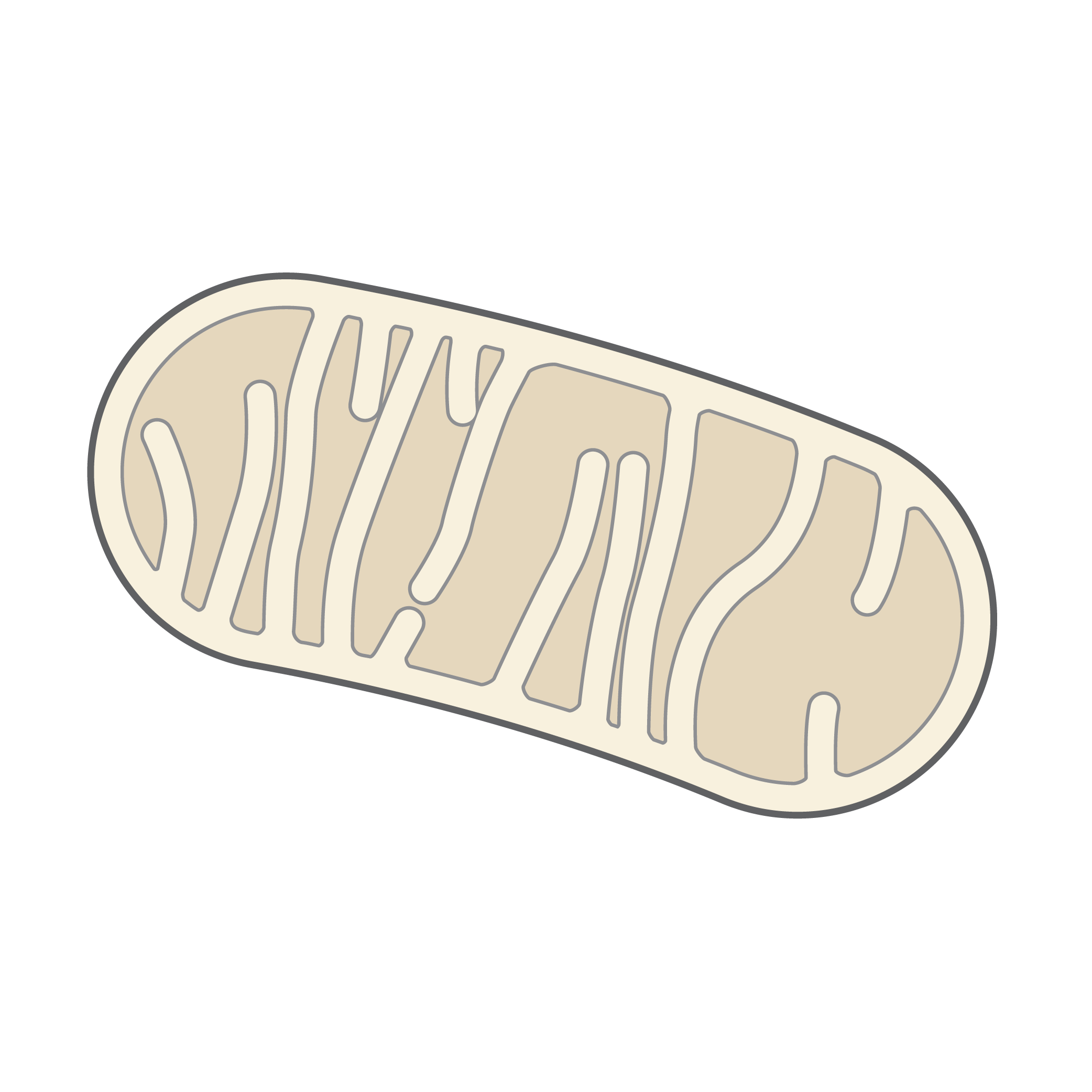
The origin of complex life on Earth is one of biology’s most profound puzzles. For billions of years, simple prokaryotic cells dominated the planet. Then, roughly 2 billion years ago, a transformative event occurred: one bacterium engulfed another, and instead of digesting it, the host kept it alive. This symbiotic relationship gave rise to the first eukaryotic cell, the building block of all plants, animals, fungi, and protists. The scientific framework that explains this process is the endosymbiosis theory explained through decades of molecular and cellular evidence. It is a story of cooperation, conflict, and evolutionary innovation that reshaped life on Earth.
Endosymbiosis Theory Explained: Lynn Margulis and a Scientific Revolution
Endosymbiosis is not a new idea. In the late 19th century, botanists noted that chloroplasts in plant cells resembled free-living cyanobacteria. However, the modern endosymbiotic theory is credited largely to biologist Lynn Margulis. In 1967, Margulis published a landmark paper in the Journal of Theoretical Biology titled “On the Origin of Mitosing Cells.” She proposed that mitochondria and chloroplasts evolved from free-living bacteria that were engulfed by a host cell.
Margulis’s proposal was met with fierce skepticism. Most biologists believed that eukaryotic organelles evolved gradually from infoldings of the cell membrane. Her theory was considered radical and poorly supported. Yet Margulis persisted. She gathered evidence from cell biology, genetics, and biochemistry. Over the next two decades, advances in DNA sequencing and electron microscopy vindicated her claims. Today, the endosymbiosis theory explained by Margulis is a cornerstone of evolutionary biology, and the endosymbiosis theory explained here further clarifies how this revolutionary idea transformed our understanding of cell evolution.
Endosymbiosis Theory Explained: Evidence from Mitochondrial and Chloroplast DNA
The strongest evidence for endosymbiosis comes from the genomes of mitochondria and chloroplasts. Both organelles contain their own circular DNA, similar to bacterial chromosomes. They replicate independently of the host nucleus through a process that resembles bacterial binary fission. The genetic code used by these organelles also differs slightly from the nuclear genome, matching bacterial translation machinery.
For example, human mitochondrial DNA (mtDNA) is 16,569 base pairs long and encodes 37 genes. It lacks introns, a feature common in bacteria but rare in eukaryotes. The ribosomes inside mitochondria are 70S in size, identical to bacterial ribosomes, whereas eukaryotic cytoplasmic ribosomes are 80S. These molecular signatures are hard to explain by internal membrane folding but fit perfectly with bacterial ancestry.
Endosymbiosis Theory Explained: Double Membranes and Transport Systems
Both mitochondria and chloroplasts are enclosed by two membranes. The inner membrane is derived from the original bacterium’s plasma membrane. The outer membrane came from the host cell’s vesicle that engulfed the bacterium. This double-membrane architecture is a direct fossil of the engulfment event. Modern bacteria that live inside other cells (endosymbionts) also acquire a host-derived membrane, confirming the pattern.
The transport proteins embedded in these membranes also betray their dual origins. The inner membrane contains proteins homologous to bacterial transporters. The outer membrane contains porins that resemble those of Gram-negative bacteria. No known internal membrane folding event can produce this precise arrangement.
How Chloroplasts Were Also Captured Bacteria

Chloroplasts, the sites of photosynthesis in plants and algae, originated from a separate endosymbiotic event. Around 1.5 billion years ago, a eukaryotic host already containing mitochondria engulfed a cyanobacterium. This photosynthetic endosymbiont eventually became the chloroplast. The evidence mirrors that for mitochondria: chloroplasts have circular DNA, 70S ribosomes, double membranes, and photosynthetic proteins that match modern cyanobacteria.
Different groups of algae demonstrate that this process happened multiple times. For instance, red algae have primary chloroplasts derived directly from cyanobacteria. Green algae and plants share this primary event. However, some algae, like dinoflagellates, have secondary chloroplasts acquired by engulfing a red or green alga. These secondary chloroplasts have three or four membranes, reflecting multiple engulfment steps. This phenomenon is called secondary endosymbiosis.
The capture of chloroplasts allowed eukaryotes to harness sunlight for energy. It transformed the ocean’s carbon cycle and eventually led to the evolution of land plants. Without this second endosymbiotic event, the green world above ground would not exist.
Why Endosymbiosis Made Complex Life Possible
The endosymbiotic acquisition of mitochondria was a turning point in evolutionary history. Prokaryotes generate energy through glycolysis, fermentation, or simple respiration. These processes yield only 2 to 4 ATP molecules per glucose molecule. Mitochondria, by contrast, can produce up to 36 ATP per glucose through oxidative phosphorylation. This 10-fold increase in energy efficiency gave early eukaryotes the power to grow larger, develop complex structures, and eventually evolve multicellularity.
Energy is a constraint on genome size and cell complexity. Prokaryotic genomes are limited by the need to maintain a high surface-to-volume ratio for diffusion. Eukaryotes, with their energy-rich mitochondria, could support genomes thousands of times larger. The nucleus, endoplasmic reticulum, Golgi apparatus, and cytoskeleton all require substantial ATP. Without mitochondria, these structures are impossible.
The endosymbiosis theory explained here also accounts for the origin of eukaryotic cell division. Mitochondria and chloroplasts replicate and are inherited through the cytoplasm, often from only one parent. This uniparental inheritance reduces conflict between organelle genomes and the nuclear genome. Over time, many genes from the organelles transferred to the nucleus, creating a complex regulatory network.
The Time Frame: A Single Event ~2 Billion Years Ago
Molecular clock estimates place the first endosymbiotic event at approximately 2.0 to 2.2 billion years ago. This coincides with the Great Oxidation Event, when atmospheric oxygen rose significantly. The host cell was likely an archaeon, not a true eukaryote. Recent genomic analyses suggest that the host belonged to the Asgard archaea, a group that possesses some eukaryotic-like genes. The engulfed bacterium was an alphaproteobacterium, the group that includes modern Rickettsia and Caulobacter.
The merger was not instant. It required millions of years of coevolution. The host had to lose its cell wall to allow phagocytosis. The endosymbiont had to transfer most of its genes to the host nucleus. The host had to develop protein import machinery to return products to the organelle. These adaptations were so successful that every known eukaryote carries at least one endosymbiont-derived organelle.
The Impact on Evolution and Ecology

The consequences of endosymbiosis extend far beyond cell biology. The energy boost from mitochondria enabled the evolution of large, complex organisms. It allowed cells to differentiate into tissues and organs. It made possible active movement, sensory systems, and brains.
Chloroplasts, in turn, fueled the rise of oxygenic photosynthesis in eukaryotes. The first land plants colonized continents, changing the atmosphere and climate. Herbivores evolved to consume plants, and predators evolved to consume herbivores. The entire terrestrial food web rests on the foundation of endosymbiotic events.
In addition, endosymbiosis is not a closed chapter. Examples of ongoing endosymbiosis exist today. The pea aphid (Acyrthosiphon pisum) hosts the bacterium Buchnera aphidicola, which supplies essential amino acids. The protist Paulinella chromatophora recently (geologically speaking) acquired a cyanobacterium that functions as a photosynthetic organelle. These modern cases provide real-time laboratories for studying how symbiotic relationships become permanent.
Debates and Remaining Questions
Despite the overwhelming evidence, some aspects of the endosymbiosis theory remain under investigation. How did the host cell initially engulf the bacterium without digesting it? What prevented the endosymbiont from being expelled? Models suggest that the host first lost its peptidoglycan cell wall, enabling phagocytosis. The endosymbiont may have evaded digestion by resisting lysosomal fusion. Genomic studies continue to reveal how gene transfer and protein targeting evolved. Explore our guide to Evolution for more context.
Another active area is the origin of mitochondria themselves. Some modern protists, such as Monocercomonoides, lack mitochondria entirely. These cases show that eukaryotes can survive without them, but they are rare and specialized. The last eukaryotic common ancestor (LECA) definitely possessed mitochondria. Whether the first eukaryotes had a mitochondrial endosymbiont from the start remains a point of debate.
1. What is the endosymbiotic theory in simple terms?
The endosymbiotic theory states that mitochondria and chloroplasts were once free-living bacteria that were engulfed by a host cell. Instead of being digested, they were kept as permanent residents and eventually became organelles.
2. Who proposed the endosymbiotic theory?
Biologist Lynn Margulis proposed the modern endosymbiotic theory in her 1967 paper. However, the idea was first suggested in the late 19th century by botanists like Andreas Schimper and Konstantin Mereschkowski.
3. What is the main evidence for endosymbiosis?
Key evidence includes: mitochondrial and chloroplast DNA, which is circular like bacterial DNA; double membranes; 70S ribosomes (bacterial size); independent replication; and protein sequencing that shows bacterial ancestry.
4. Did endosymbiosis happen only once?
Mitochondria originated from a single endosymbiotic event in the ancestor of all eukaryotes. Chloroplasts originated from a separate event in the ancestor of plants and algae, but secondary endosymbiosis has occurred multiple times.
5. Why is endosymbiosis important for complex life?
Mitochondria provided a massive boost in ATP production, allowing cells to grow larger, carry larger genomes, and evolve complex structures. Without this energy, the evolution of multicellular animals and plants would not have been possible.
Sources & References
- Margulis, L. (1967). “On the Origin of Mitosing Cells.” Journal of Theoretical Biology, 14(3), 225-274. https://doi.org/10.1016/0022-5193(67)90079-3
- Gray, M. W., Burger, G., & Lang, B. F. (2001). “The origin and early evolution of mitochondria.” Genome Biology, 2(6), reviews1018.1. https://doi.org/10.1186/gb-2001-2-6-reviews1018
- Archibald, J. M. (2015). “Endosymbiosis and Eukaryotic Cell Evolution.” Current Biology, 25(19), R911-R921. https://doi.org/10.1016/j.cub.2015.07.055
- Zimorski, V., Ku, C., Martin, W. F., & Gould, S. B. (2014). “Endosymbiotic theory: from the origin of eukaryotes to the origin of organelles.” Philosophical Transactions of the Royal Society B, 369(1638), 20130357. https://doi.org/10.1098/rstb.2013.0357
Further reading: NCBI review on endosymbiosis, and Symbiogenesis on Wikipedia.