
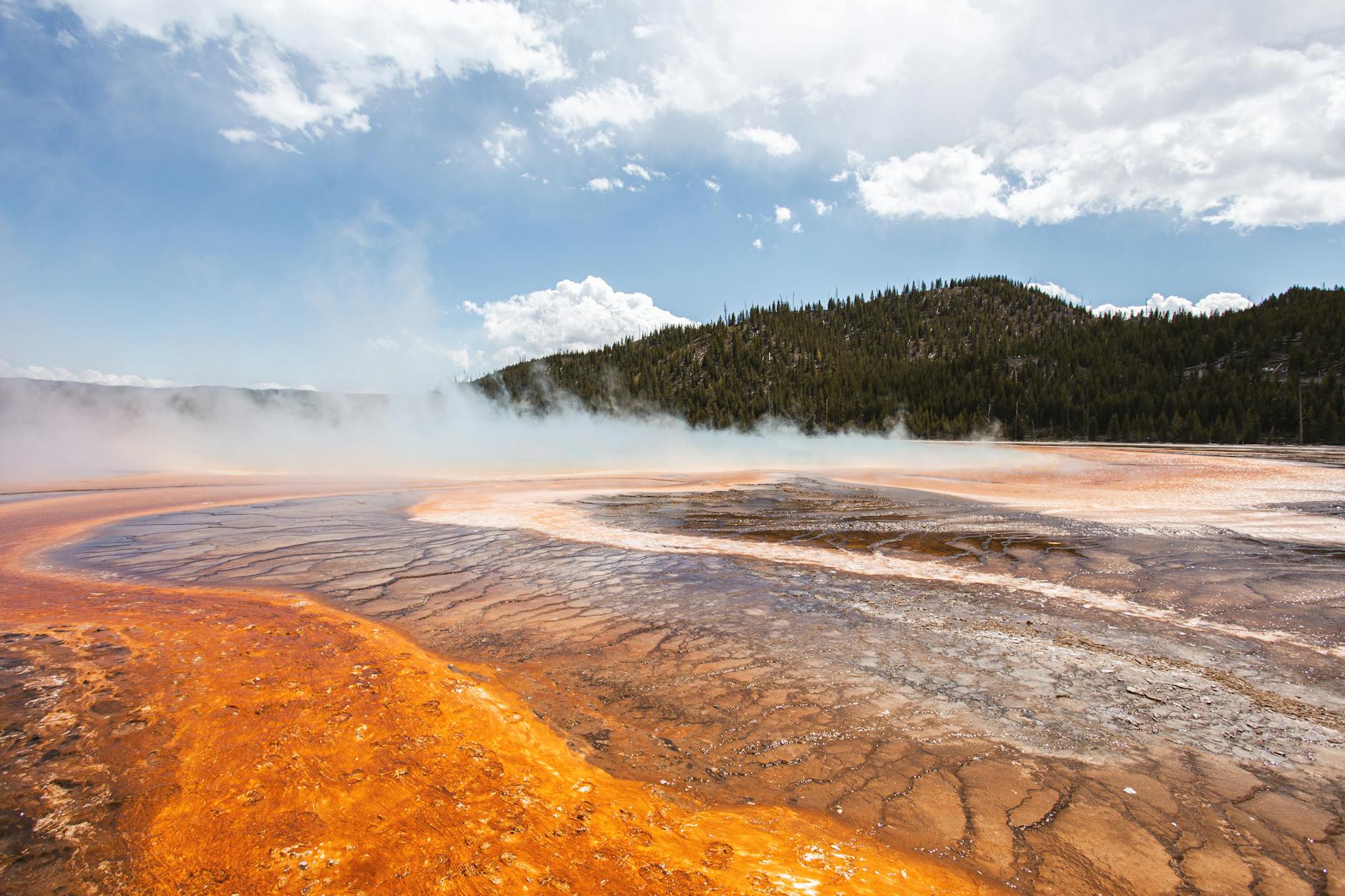
Extremophiles and the limits of life reveal how resilient biology can be. These organisms survive conditions that would instantly kill humans, plants, or most animals. They live in boiling hot springs, acidic lakes, deep ocean trenches, and radioactive waste. Studying them reshapes our understanding of where life can exist: not just on Earth, but across the universe.
Scientists have found extremophiles in nearly every extreme environment on Earth. Each discovery pushes the boundary of habitability further. This article surveys their key adaptations, heat, cold, pressure, radiation, acidity, and dryness, and explores what they mean for the search for life beyond our planet.
The Discovery of Extremophiles
The term “extremophile” comes from the Greek words for “love of extreme.” It emerged in the 1970s when microbiologist Thomas Brock discovered microorganisms thriving in the hot springs of Yellowstone National Park. He found Thermus aquaticus in waters above 70°C (158°F). This bacterium later provided the heat-stable enzyme Taq polymerase, a tool essential for polymerase chain reaction (PCR), a technique used in DNA testing and medical diagnostics.
Before these discoveries, scientists assumed life required moderate temperatures, neutral pH, and low pressure. Extremophiles shattered that assumption.
Surviving Boiling Heat
Thermophiles and Hyperthermophiles
Thermophiles thrive at temperatures between 45°C and 80°C (113°F–176°F). Hyperthermophiles live above 80°C. The current record holder is Methanopyrus kandleri, a microbe that grows at 122°C (252°F). It lives near deep-sea hydrothermal vents.
These organisms survive because their proteins and cell membranes are unusually stable. Their proteins contain more ionic bonds and hydrophobic interactions, which resist unfolding at high temperatures. Their membranes use ether-linked lipids instead of ester-linked ones. Ether bonds are more chemically stable than ester bonds.
DNA also faces challenges at high heat. Hyperthermophiles use a protein called reverse gyrase. It introduces positive supercoils into DNA, preventing the strands from separating. They also produce solutes like di-myo-inositol phosphate that stabilize cellular components.
Their Natural Habitats
Thermophiles inhabit hot springs, geysers, and volcanic soils. Hyperthermophiles dominate hydrothermal vents on the ocean floor. These vents release superheated water rich in minerals. Scientists have found them in the Pacific Ocean’s “Lost City” hydrothermal field and along the Mid-Atlantic Ridge.
Cold Adaptation in Ice
Psychrophiles
Psychrophiles are cold-loving microorganisms. They grow at temperatures as low as -15°C (5°F). Some remain metabolically active in ice at -20°C (-4°F). They live in polar sea ice, permafrost, glaciers, and deep ocean waters.
Cold adaptation requires special strategies. Psychrophiles produce ice-binding proteins that prevent ice crystals from forming inside cells. Ice crystals would puncture cell membranes and kill the organism. They also have membrane lipids with more unsaturated fatty acids, which keep the membrane fluid at low temperatures.
Enzymes in psychrophiles are flexible. They function efficiently at cold temperatures but denature easily at moderate warmth. This trade-off allows them to catalyze reactions in near-freezing environments.
Cold-Adapted Examples
Colwellia psychrerythraea lives in Arctic sea ice. Psychromonas ingrahamii grows at -12°C (10°F) and has been found in Alaskan permafrost. Scientists have even retrieved viable bacteria from Siberian permafrost that is 3 million years old.
Surviving Deep-Ocean Pressure

Piezophiles (Barophiles)
Piezophiles thrive under high pressure. The deepest ocean trenches exert pressures over 1,000 atmospheres (100 megapascals). Humans cannot survive beyond a few tens of atmospheres without specialized equipment.
Piezophiles have adapted to these crushing conditions. Their cell membranes contain more unsaturated and shorter-chain fatty acids, which prevent the membrane from collapsing. Their proteins are more compact and resistant to compression. They also accumulate small organic molecules called piezolytes that protect protein structure.
Deep-Sea Discoveries
The Mariana Trench, at nearly 11,000 meters (36,000 feet) deep, hosts thriving microbial communities. Shewanella benthica and Moritella species have been isolated from sediment samples. These bacteria grow optimally at pressures exceeding 800 atmospheres.
Hydrothermal vents in the deep sea combine high pressure with high temperature. Organisms there must adapt to both extremes simultaneously. This dual stress challenges the very definition of habitable environments.
Radiation Resistance: Surviving a Fatal Dose
Deinococcus radiodurans
Deinococcus radiodurans is one of the most radiation-resistant organisms known. It can survive doses of ionizing radiation up to 15,000 grays. A dose of 5 grays is lethal to humans. This bacterium also tolerates ultraviolet radiation, desiccation, and extreme cold.
Its secret lies in its DNA repair mechanisms. D. radiodurans carries multiple copies of its genome: up to 10 copies per cell. When radiation shatters its DNA into hundreds of fragments, the bacterium uses homologous recombination to reassemble intact copies. It does so within hours.
This resilience has practical applications. Scientists are studying D. radiodurans for bioremediation of radioactive waste. It could also serve as a model for surviving cosmic radiation in space.
Implications for Space
Cosmic radiation on Mars and other planetary surfaces can reach levels hundreds of times higher than on Earth. Organisms similar to D. radiodurans might survive in subsurface Martian environments. The bacterium Chroococcidiopsis, a photosynthetic extremophile, also withstands intense radiation and desiccation. It has been proposed as a candidate for Mars colonization.
Acidity and Alkalinity: Surviving pH Extremes
Acidophiles and Alkaliphiles
Acidophiles thrive at pH values below 3. Some, like Picrophilus oshimae, grow at pH 0. That’s as acidic as battery acid. They live in sulfuric acid-rich environments like volcanic hot springs and acid mine drainage.
These organisms maintain a neutral internal pH. They pump protons out of their cells using special transport proteins. Their external surface proteins are resilient to acid degradation and repair damage quickly.
Alkaliphiles live at pH values above 10. They inhabit soda lakes, alkaline soils, and concrete runoff. They maintain an acidic interior by pumping protons inward. Bacillus halodurans and Natronobacterium species are well-studied examples.
Real-World Locations
Yellowstone National Park’s “Mammoth Hot Springs” have pH values near 2. The Rio Tinto river in Spain has pH 2–3 and is rich in iron-oxidizing bacteria. Kenya’s Lake Magadi has pH above 10 and hosts thriving communities of alkaliphilic cyanobacteria.

Dryness and Desiccation: Surviving Without Water
Xerophiles
Xerophiles survive extreme dryness. Desiccation-tolerant organisms can lose up to 99% of their water content and still revive when rehydrated.
Tardigrades, also called water bears, are famous examples. These microscopic animals enter a state called cryptobiosis. They curl up, dry out, and can remain inert for decades. When exposed to water, they rehydrate and resume activity.
Desiccation tolerance relies on the production of trehalose and other sugars. These molecules form a glass-like matrix that protects proteins and membranes from damage. Tardigrades also contain unique proteins called tardigrade-specific intrinsically disordered proteins (TDPs) that stabilize cellular structures during drying.
Survival in Space
Tardigrades have survived exposure to the vacuum and radiation of low Earth orbit. In 2007, the European Space Agency’s BIOPAN experiment exposed tardigrades to space for 10 days. Some survived and reproduced afterward. This suggests that life could potentially survive interplanetary travel inside meteorites or spacecraft debris.
Redefining the Limits of Life
Defining Habitability
Historically, scientists defined “habitable” as the region around a star where liquid water could exist. Extremophiles expand this definition. They show that life can survive far beyond the “Goldilocks zone.” Research into extremophiles and the limits of life continues to push those boundaries further.
Key constraints for life include:
- Temperature: -20°C to 122°C (currently)
- Pressure: up to 1,100 atmospheres
- pH: 0 to 12
- Radiation: up to 15,000 grays
- Water activity: above 0.6
These boundaries are not fixed. New discoveries regularly extend them.
Implications for Astrobiology
The search for extraterrestrial life focuses on environments that resemble Earth’s extremophile habitats. Jupiter’s moon Europa likely has a subsurface ocean under kilometers of ice. Saturn’s moon Enceladus sprays water vapor into space from a warm, salty ocean. Mars has subsurface permafrost and brines that could support microbial life.
The NASA-funded research on extremophiles directly informs missions to these worlds. The Europa Clipper mission, launching in 2024, will study Europa’s ice shell and ocean. Instruments designed to detect biosignatures rely on knowledge gained from Earth’s extremophiles.
The Concept of “Limit”
The term limits of life evolves as discoveries accumulate. What seemed impossible 50 years ago, life at 100°C inside a hydrothermal vent, is now textbook biology. Each new extremophile resets the boundary.
Some scientists propose that life could survive in environments beyond Earth’s extremes. For example, life might exist in the clouds of Venus, where temperatures are 30°C at 50 km altitude but pH is extremely acidic. It might survive in subsurface oceans on gas giant moons. The physical limits remain unknown.
What is an extremophile?
An extremophile is an organism that thrives in conditions considered extreme for most life. These conditions include high temperature, low temperature, high pressure, high radiation, extreme acidity, or extreme dryness.
Where are extremophiles found on Earth?
Extremophiles inhabit hot springs, deep-sea hydrothermal vents, polar ice, permafrost, acid mine drainage, soda lakes, and deep ocean trenches. They have also been found in the Atacama Desert, one of the driest places on Earth.
How do extremophiles survive high radiation?
Deinococcus radiodurans and similar organisms carry multiple copies of their genome. They have efficient DNA repair mechanisms that reconstruct shattered chromosomes within hours. They also produce protective antioxidants.
Could extremophiles survive on Mars?
Possibly. Some extremophiles tolerate conditions similar to Mars: low temperature, low pressure, high radiation, and dryness. Subsurface Mars might harbor liquid brine aquifers that could support microbial life similar to Earth’s halophiles or psychrophiles.
What does the study of extremophiles teach us about the search for alien life?
Extremophiles expand the range of environments considered habitable. They show that life does not require moderate conditions. This broadens the targets for astrobiological exploration to include moons like Europa and Enceladus, as well as the subsurface of Mars.
Sources & References
- NASA Astrobiology Institute. “Extremophiles and the Limits of Life.” https://astrobiology.nasa.gov/
- European Space Agency. “Extremophiles: Life in Extreme Environments.” https://www.esa.int/Science_Exploration/Human_and_Robotic_Exploration/Extremophiles
- Brock, T.D. “Life at High Temperatures.” Science, 1985. Peer-reviewed journal summary available via PubMed.
- Merino, N. et al. “Living at the Extremes: Extremophiles and the Limits of Life in a Planetary Context.” Frontiers in Microbiology, 2019. https://www.frontiersin.org/articles/10.3389/fmicb.2019.00780/full
- Rampelotto, P.H. “Extremophiles and Extreme Environments.” Life, 2013. https://www.mdpi.com/1424-8220/13/3/482
Further reading: NASA Astrobiology Program, and Extremophile on Wikipedia.