
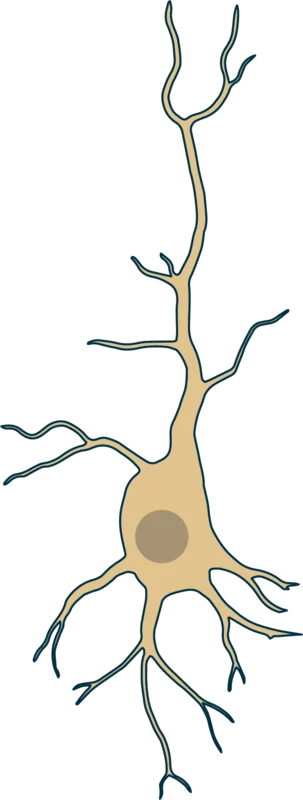
The human brain contains billions of neurons that communicate through electrical and chemical signals. Among these cells, a specific class called mirror neurons has attracted extraordinary attention from scientists and the public alike. First discovered in the early 1990s, these neurons fire both when an individual performs an action and when they observe someone else performing the same action. Understanding what are mirror neurons requires careful examination of the original research, the proposed functions, and the significant limitations of current evidence.
What Are Mirror Neurons? Discovery in Macaque Monkeys
The story of mirror neurons began in Parma, Italy, at the University of Parma in the lab of neurophysiologist Giacomo Rizzolatti. In 1992, Rizzolatti and his colleagues were studying the premotor cortex of macaque monkeys. They recorded neural activity while the monkeys reached for objects.
The researchers noticed something unexpected. A neuron that fired when the monkey grasped a peanut also fired when the monkey simply watched the experimenter grasp the peanut. This was not a sensory response to the mere sight of the object. The neuron responded specifically to the observed action.
Rizzolatti’s team published their initial findings in 1992 and followed with a more detailed paper in 1996 in the journal Brain. They documented neurons in the ventral premotor cortex (area F5) that discharged during both action execution and action observation. The discovery introduced a new category of visuomotor neurons.
Subsequent studies in macaques identified mirror neurons in other brain regions. The inferior parietal lobule also contained cells with similar properties. These neurons responded to goal-directed actions such as grasping, holding, and manipulating objects. They did not respond to mere movements without a clear purpose.
what are mirror neurons and how do they fire
A mirror neuron does not fire for just any visual stimulus. It requires a specific action. For example, a mirror neuron that fires when the monkey breaks a peanut will also fire when the monkey watches another monkey break a peanut. The same neuron remains silent when the monkey sees the peanut alone or sees a hand making a different motion.
The response depends on the goal, not the precise movement. A neuron that fires for hand-to-mouth action will fire whether the monkey uses its right hand or its left hand. It will also fire when watching a human perform the same hand-to-mouth motion.
This property led researchers to propose that mirror neurons encode the intention behind actions. The brain does not simply copy visual input. It extracts meaning from observed behavior.
What Are Mirror Neurons and Their Proposed Functions in Humans
The discovery in monkeys generated immediate excitement about potential human applications. Researchers hypothesized that mirror neurons form the neural basis for several core human abilities.
What Are Mirror Neurons Explaining Imitation and Motor Learning
Human infants learn by imitating adults. Tongue protrusion, mouth opening, and hand gestures appear in newborns who watch their parents. Imitation requires the brain to translate a visual observation into a motor command. Mirror neurons seem ideally suited for this task.
A 1999 study by Marco Iacoboni and colleagues used functional magnetic resonance imaging (fMRI) to show that the human premotor cortex activates during both observation and execution of finger movements. This activation overlapped significantly. The researchers argued that a mirror neuron system supports imitation in humans.
Empathy and Emotion Sharing
The idea that mirror neurons allow us to feel what others feel gained enormous popular appeal. If observing pain activates the same neural circuits as experiencing pain, then empathy becomes a direct bodily experience rather than a cognitive calculation. When exploring what are mirror neurons, many people first encounter this emotional interpretation, even though the evidence is more nuanced.

Studies have shown overlapping brain activity for observed and experienced emotions. Viewing disgusted facial expressions activates the anterior insula. Experiencing disgust also activates the anterior insula. A 2003 study in Neuron by Bruno Wicker and colleagues demonstrated this overlap for disgust.
For pain, a 2004 study by Tania Singer and colleagues showed that feeling pain and watching a loved one receive pain both activate the anterior cingulate cortex and the anterior insula. These findings suggested that shared neural representations underpin emotional empathy.
Language Evolution
Some theorists proposed that mirror neurons played a crucial role in the evolution of language. Speech requires precise motor control of the vocal apparatus. It also requires the listener to decode sounds into meaningful actions.
Arbib and Rizzolatti (1997) argued that mirror neurons provided a bridge between action and communication. The ability to recognize and imitate hand gestures could have formed the basis for protolanguage. Over time, this system expanded to include vocalizations and eventually speech.
This hypothesis remains speculative. No direct evidence links mirror neurons to the emergence of language in human evolutionary history. The proposal relies on logical inference rather than empirical data.
The Debate and Overhyped Claims
The popular narrative about mirror neurons has outpaced the scientific evidence. Many claims made in media, TED talks, and self-help books go far beyond what the data support.
Direct Recording in Humans Is Rare
In macaques, researchers can record from single neurons using implanted electrodes. This method provides clear evidence of mirror properties. In humans, such invasive recording is only possible in rare clinical circumstances.
Human studies rely almost entirely on fMRI, EEG, and transcranial magnetic stimulation. These methods measure large-scale brain activity, not individual neurons. fMRI shows that certain brain regions activate during both action observation and execution. This does not mean that single cells in those regions have mirror properties.
A 2014 book by Gregory Hickok titled The Myth of Mirror Neurons challenged many popular claims. Hickok argued that the evidence for a human mirror neuron system is weak. Lesion studies show that damage to the premotor cortex does not abolish imitation ability. This contradicts the prediction that mirror neurons are necessary for imitation.
Imitation and Autism
One prominent claim suggested that mirror neuron dysfunction causes autism. If mirror neurons enable empathy, then their impairment could explain social difficulties in autism spectrum disorder.
The “broken mirror” theory of autism gained traction after a 2005 study by Dapretto and colleagues showed reduced mu wave suppression in children with autism during action observation. Mu wave suppression is an EEG marker associated with mirror neuron activity.
However, subsequent research failed to replicate these findings consistently. A meta-analysis of multiple studies found no robust difference in mirror neuron activity between autistic and neurotypical individuals . The broken mirror theory has largely been abandoned.
Overclaiming in Popular Culture

Self-help books and articles have described mirror neurons as the basis for charisma, persuasion, and even crowd behavior. Some claimed that watching sports will improve your own athletic ability. Others promised that conscious activation of mirror neurons could transform relationships.
These claims lack scientific support. Athletes do not improve by merely watching other athletes. Empathy involves multiple brain systems, not a single cell type. The mirror neuron concept has been stretched well beyond its empirical foundation.
What the Science Actually Shows
The legitimate science of mirror neurons is more constrained but still valuable. Here is what researchers have established with reasonable confidence.
The Existence in Monkeys
Recordings from macaque monkeys confirm that specific neurons in area F5 and the inferior parietal lobule have mirror properties. These cells are most responsive to transitive actions where a hand interacts with an object. The proportion of mirror neurons in these areas varies by study but is estimated at 10 to 20 percent of recorded neurons.
Indirect Evidence in Humans
Human brain imaging consistently shows overlapping activation in the premotor cortex, inferior parietal lobule, and posterior superior temporal sulcus during action observation and execution. This network is often called the mirror neuron system, though this term overstates the certainty.
EEG studies show mu wave suppression during both action and observation. This is consistent with a mirror mechanism but not definitive proof.
Action Understanding Is More Complex
Mirror neurons may contribute to action understanding, but they are not the only mechanism. Humans can understand actions through pure visual processing without any motor involvement. Patients with motor cortex damage can still recognize actions and intentions. For deeper context, explore our guide to Mind and Consciousness.
The role of mirror neurons must be understood as part of a distributed neural system. They are one piece of a larger puzzle, not the master key to social cognition.
What are mirror neurons?
Mirror neurons are brain cells that fire both when an individual performs an action and when they observe someone else performing the same action. They were first discovered in the premotor cortex of macaque monkeys by Giacomo Rizzolatti's lab in the 1990s.
Do humans have mirror neurons?
Direct evidence for mirror neurons in humans is limited because invasive single-cell recording is rarely possible. Brain imaging studies show overlapping activity for action observation and execution, which is consistent with a mirror system. However, the existence of true mirror neurons in humans remains debated.
Can mirror neurons improve athletic performance?
No. Watching sports does not directly improve your own performance through mirror neurons. While observational learning can help with strategy and technique, actual physical practice is required for motor skill development.
Are mirror neurons responsible for empathy?
Mirror neurons may contribute to empathy, but they are not the sole or primary mechanism. Empathy involves multiple brain regions, including the anterior insula, anterior cingulate cortex, and prefrontal cortex. Claims that mirror neurons alone explain empathy are overhyped.
What happened to the broken mirror theory of autism?
The theory that mirror neuron dysfunction causes autism was popular in the mid-2000s but has since been largely abandoned. A meta-analysis found no consistent evidence for differences in mirror neuron activity between autistic and neurotypical individuals .
Sources & References
- di Pellegrino, G., Fadiga, L., Fogassi, L., Gallese, V., & Rizzolatti, G. (1992). Understanding motor events: a neurophysiological study. Experimental Brain Research, 91(1), 176-180.
- Rizzolatti, G., Fadiga, L., Gallese, V., & Fogassi, L. (1996). Premotor cortex and the recognition of motor actions. Cognitive Brain Research, 3(2), 131-141.
- Hickok, G. (2014). The Myth of Mirror Neurons: The Real Neuroscience of Communication and Cognition. W.W. Norton & Company. https://mitpress.mit.edu/books/myth-mirror-neurons
- Wicker, B., Keysers, C., Plailly, J., Royet, J.P., Gallese, V., & Rizzolatti, G. (2003). Both of us disgusted in my insula: the common neural basis of seeing and feeling disgust. Neuron, 40(3), 655-664.
- Hamilton, A.F. (2016). The evolution of the mirror system and the role of imitation in language evolution. Neuroscience and Biobehavioral Reviews, 65, 69-78. https://www.sciencedirect.com/science/article/pii/S0149763416300033
Further reading: Mirror neuron on Wikipedia