
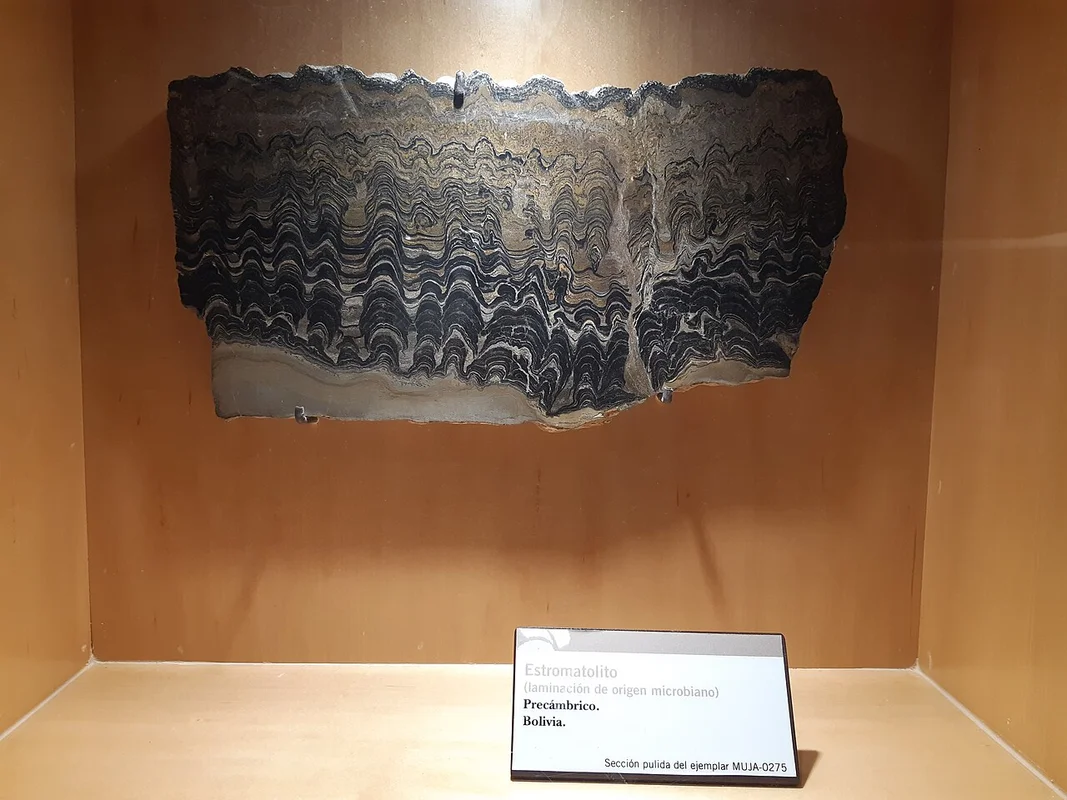
Understanding the great oxidation event causes and effects requires examining microbial metabolism, geological feedback loops, and the long-term reshaping of Earth’s surface environment. Around 2.4 billion years ago, Earth underwent a dramatic and irreversible shift. The atmosphere, once rich in methane and nearly devoid of free oxygen, suddenly began to accumulate O₂. This transition, known as the Great Oxidation Event (GOE), ranks as one of the most consequential changes in planetary history. It was not a sudden catastrophe but a slow, relentless transformation driven by a microscopic organism: cyanobacteria.
Earth Before the Great Oxidation Event
Before the GOE, Earth looked nothing like it does today. The early atmosphere contained high levels of carbon dioxide, nitrogen, and methane. Free oxygen was virtually absent. What little O₂ was produced by photochemical reactions quickly reacted with dissolved iron in the oceans or with volcanic gases.
The oceans were rich in dissolved ferrous iron (Fe²⁺). This iron acted as a massive chemical sink. Any oxygen released into the water would immediately bind to the iron and form insoluble iron oxides, which settled onto the seafloor. These deposits later became the banded iron formations (BIFs) that geologists mine today. Without this iron sink, oxygen could never have accumulated.
Life existed only as simple single-celled organisms. They were anaerobes, meaning they thrived without oxygen. Many were poisoned even by trace amounts of O₂. This set the stage for a biological revolution.
Oxygenic Photosynthesis: The Key Innovation
The key player in the GOE was cyanobacteria. These microorganisms evolved a novel form of photosynthesis that split water molecules (H₂O) to extract electrons. This reaction releases oxygen as a byproduct. The overall equation is simple: 6 CO₂ + 6 H₂O + light energy → C₆H₁₂O₆ + 6 O₂.
This process, called oxygenic photosynthesis, was a breakthrough. Water was abundant. Sunlight was constant. Cyanobacteria had an almost unlimited energy source. They multiplied and spread across the world’s shallow seas.
For hundreds of millions of years, the oxygen they produced was consumed by the iron sink and by reducing gases from volcanoes. But as cyanobacteria populations grew, their waste product began to overwhelm these buffers. Oxygen started to accumulate in the atmosphere.
The Causes and Effects of the GOE
The great oxidation event causes and effects are central to understanding how Earth transitioned from an anoxic world to one with free oxygen.
Causes
The causes of the GOE are complex and debated among scientists. However, several key factors are widely accepted.
1. The rise of oxygenic photosynthesis. This is the fundamental cause. Without cyanobacteria producing oxygen, no GOE could have occurred. Geochemical evidence, including carbon isotope ratios in organic matter and changes in trace metal concentrations, suggests that this innovation emerged by at least 2.7 billion years ago. It took several hundred million years before the rate of oxygen production exceeded the rate of consumption.
2. Depletion of the iron buffer. For millions of years, dissolved iron in the oceans consumed oxygen as fast as cyanobacteria released it. Over time, the iron was gradually precipitated out as banded iron formations. Once the oceanic iron was exhausted, oxygen could finally escape into the atmosphere.
3. Decline of volcanic reducing gases. Early Earth had intense volcanic activity. These volcanoes released hydrogen, hydrogen sulfide, and methane. These gases reacted with and consumed oxygen. As Earth’s interior cooled, volcanic gas output decreased. This allowed oxygen to accumulate.
4. Changes in tectonic activity. The formation of continents and the growth of stable continental crust altered the chemical weathering cycle. Increased weathering of silicate rocks consumed CO₂, which in turn reduced the greenhouse effect and triggered global glaciations. These glaciations may have temporarily paused cyanobacterial activity, but they also reset the chemical balance.
Effects
The effects of the GOE were global and permanent. They affected life, climate, and geology. Examining the great oxidation event causes and effects reveals how a single biological innovation can reshape an entire planet.
1. Atmospheric transformation. The oxygen concentration rose from less than 0.001% of modern levels to perhaps 1–2% of present-day levels. This was still low, but it was a monumental shift. The methane-rich reducing atmosphere became an oxidizing one.

2. Mass extinction of anaerobes. Oxygen was toxic to most early life forms. The rise of O₂ likely caused a massive die-off. Only organisms that could tolerate or exploit oxygen survived. This event is sometimes called the “oxygen catastrophe” or “oxygen holocaust.”
3. Banded iron formations ceased. Once the oceans lost their dissolved iron, the formation of BIFs stopped. These geological deposits are a direct record of the GOE. After the event, iron in the ocean was present as insoluble ferric oxides, which were no longer transported by water.
4. Global glaciations. The rise of oxygen may have triggered several Snowball Earth glaciations. Oxygen reacted with methane, removing a powerful greenhouse gas. This cooled the planet. Ice sheets expanded, covering most of the Earth’s surface. These glaciations lasted millions of years.
5. The rise of aerobic metabolism. Oxygen is a highly energetic electron acceptor. Organisms that evolved to use oxygen for respiration gained a huge energy advantage. This enabled the evolution of larger, more complex cells. The endosymbiotic theory proposes that one cell engulfed a cyanobacterium, which became the first chloroplast. This gave rise to algae and eventually all plants.
6. Ozone layer formation. Oxygen in the upper atmosphere reacts with ultraviolet light to form ozone (O₃). The ozone layer absorbs harmful UV radiation. Before the GOE, life was forced into the oceans or underground to avoid UV damage. The ozone layer allowed life to colonize land surfaces for the first time.
Geological Evidence for the GOE

Geologists have found several lines of evidence for the GOE.
Banded iron formations (BIFs). These massive iron-rich rock layers formed only before the GOE. After oxygen accumulated, iron could no longer be transported in dissolved form. BIFs are therefore a marker of an anoxic ocean.
Red beds. After the GOE, continental sediments turned red due to the oxidation of iron in the soil. These red beds first appear in the rock record around 2.3 billion years ago.
Mass-independent fractionation of sulfur isotopes. This is a powerful geochemical signature. In an oxygen-poor atmosphere, sulfur isotopes show different patterns than in an oxygen-rich one. Analysis of ancient pyrite crystals shows that the atmosphere became oxygenated around 2.4 billion years ago. Research published in Science by Farquhar et al. (2000) provided key evidence for this transition. The researchers demonstrated that mass-independent sulfur isotope fractionation, which requires an anoxic atmosphere, disappeared around this time, indicating the onset of oxygenation.
Loss of detrital pyrite and uraninite. In an oxidizing atmosphere, minerals like pyrite (fool’s gold) and uraninite are chemically unstable. After the GOE, these minerals no longer appear in sediments. Their disappearance marks the transition.
The Timeline of the GOE
The GOE is not a single point in time. It was a process that unfolded over hundreds of millions of years.
- 3.8–2.7 billion years ago: Anoxic Earth. Oxygenic photosynthesis evolves.
- 2.7–2.4 billion years ago: Oxygen production begins to exceed consumption. The iron sink is depleted.
- 2.4–2.3 billion years ago: The GOE occurs. Atmospheric oxygen rises rapidly.
- 2.3–2.2 billion years ago: The Huronian glaciation, a global ice age, takes place.
- 2.0 billion years ago: Oxygen levels stabilize at about 1–2% of modern values.
- 1.0 billion years ago: Oxygen levels begin a second rise, eventually leading to the modern atmosphere.
This timeline is still being refined by new research. The exact timing and duration of the GOE remain active areas of study.
The GOE as a Planetary Innovation
The Great Oxidation Event can be viewed as a planetary-scale evolutionary innovation. A single metabolic innovation, oxygenic photosynthesis, reshaped the entire Earth system. It altered atmospheric chemistry, ocean composition, climate, and the course of life’s evolution.
This event underscores a key principle in Earth system science: life does not simply adapt to its environment. It actively reshapes that environment. The GOE shows that microbial life, invisible and tiny, can drive global change on a scale that rivals plate tectonics or asteroid impacts.
Today, humans are engineering another planetary transformation through the release of fossil fuels. The GOE offers a cautionary tale. When a biological process overwhelms planetary buffers, the consequences can be irreversible and last for eons.
Frequently Asked Questions
When did the Great Oxidation Event occur?
The Great Oxidation Event occurred approximately 2.4 to 2.1 billion years ago, during the Paleoproterozoic era. This marks the transition from an anoxic to an oxygenated atmosphere, one of the most transformative events in Earth’s history.
What caused the Great Oxidation Event?
Cyanobacteria evolved the ability to perform oxygenic photosynthesis, splitting water molecules to release oxygen as a byproduct. For millions of years, this oxygen was absorbed by dissolved iron and other minerals. Once those sinks saturated, oxygen began accumulating in the atmosphere.
How did the Great Oxidation Event affect life on Earth?
For most anaerobic microbes that had dominated early Earth, the rising oxygen was toxic, causing a massive extinction event. But oxygen also enabled aerobic metabolism, which is far more energetically efficient, paving the way for complex multicellular life billions of years later.
What is the connection between the Great Oxidation Event and Snowball Earth?
The oxygen released during the Great Oxidation Event reacted with atmospheric methane, a potent greenhouse gas, breaking it down and triggering a dramatic cooling of the climate. This contributed to the Huronian glaciation, one of the most severe ice ages in Earth’s history, sometimes called an early Snowball Earth episode.
Why is the Great Oxidation Event considered one of Earth’s most important transitions?
It fundamentally changed the chemistry of the atmosphere, oceans, and crust. Oxygen enabled new forms of metabolism, new minerals, and ultimately the evolution of complex eukaryotic cells with mitochondria. Without the Great Oxidation Event, complex life as we know it would not exist.
Sources & References
- Farquhar, J., Bao, H., & Thiemens, M. (2000). Atmospheric influence of Earth’s earliest sulfur cycle. Science, 289(5480), 756–759. https://science.sciencemag.org/content/289/5480/756
- Lyons, T. W., Reinhard, C. T., & Planavsky, N. J. (2014). The rise of oxygen in Earth’s early ocean and atmosphere. Nature, 506(7488), 307–315. https://www.nature.com/articles/nature13068
- Bekker, A., Holland, H. D., Wang, P. L., Rumble III, D., Stein, H. J., Hannah, J. L., … & Coetzee, L. L. (2004). Dating the rise of atmospheric oxygen. Nature, 427(6970), 117–120. https://www.nature.com/articles/nature02260
- Holland, H. D. (2006). The oxygenation of the atmosphere and oceans. Philosophical Transactions of the Royal Society B, 361(1470), 903–915. https://royalsocietypublishing.org/doi/10.1098/rstb.2006.1838
- Canfield, D. E. (2005). The early history of atmospheric oxygen: Homage to Robert A. Garrels. Annual Review of Earth and Planetary Sciences, 33, 1–36. https://www.annualreviews.org/doi/10.1146/annurev.earth.33.092203.122626
Further reading: NCBI review on the Great Oxidation Event, and Great Oxidation Event on Wikipedia.