
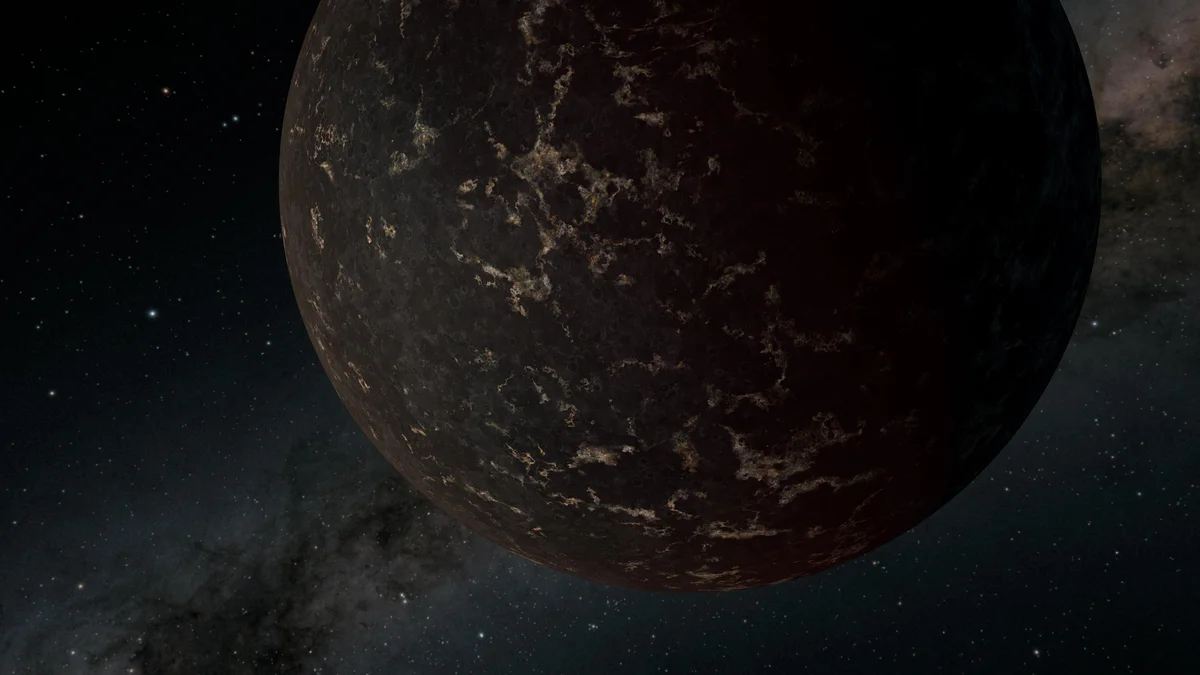
The search for life beyond Earth hinges on identifying biosignatures – chemical markers in a planet’s atmosphere that are best explained by biological processes. Among the most compelling candidates is methane biosignature exoplanets, a topic that has gained urgency with the launch of the James Webb Space Telescope (JWST). Methane alone is not proof of life, but when detected alongside other gases like oxygen or carbon dioxide, it can become a powerful indicator of a living world. This article explores why methane is such a promising biosignature, how JWST can detect it, and what caveats scientists must consider.
Methane Biosignature Exoplanets: Why Methane Matters
Methane (CH₄) is a simple organic molecule that, in Earth’s atmosphere, is produced overwhelmingly by living organisms, primarily microbes in wetlands, livestock digestion, and rice paddies. Geologically, methane can also form through hydrothermal reactions or volcanic outgassing, but these abiotic sources tend to be less significant on Earth. On a lifeless world, atmospheric methane would be expected to break down quickly due to photochemical reactions with ultraviolet (UV) light. Without a continuous source, its concentration would drop to negligible levels within a few hundred years. Therefore, detecting substantial methane in an exoplanet’s atmosphere implies a continuous source that must be replenished, and life is one plausible explanation.
However, the catch is that methane alone is not a definitive biosignature. On Titan, Saturn’s largest moon, methane in the atmosphere is maintained by geological processes, not biology. Similarly, on early Mars, methane detections have been linked to geological sources. To distinguish life from geology, astrobiologists look for methane in combination with other gases – especially those that are thermodynamically incompatible.
The Need for Atmospheric Disequilibrium
A key concept in biosignature science is atmospheric chemical disequilibrium. On a world with life, organisms often produce gases that should react with one another in the presence of sunlight, yet they coexist because life continuously replenishes them. The classic example is Earth’s atmosphere: oxygen (O₂) and methane coexist at levels that would normally be consumed by reactions within decades, were it not for biological production.
Similarly, methane and carbon dioxide (CO₂) can indicate life if present together in certain proportions. On Earth, microbes generate methane by breaking down organic matter in anaerobic environments, while photosynthesis produces oxygen. The coexistence of O₂ and CH₄ in the same atmosphere is particularly hard to explain without biology. Thus, when JWST detects methane on an exoplanet, scientists will immediately look for signs of oxygen or ozone (a proxy for O₂) to assess whether the methane is likely biological.
The Target Candidates
The most promising candidates for observing methane biosignatures are rocky planets orbiting within the habitable zone of their stars – the region where liquid water could exist on the surface. Several exoplanets have already been identified as high-priority targets for JWST, including:
- TRAPPIST-1 system: This ultra-cool dwarf star hosts seven Earth-sized planets, three of which (e, f, and g) lie within the habitable zone. Because the star is relatively small and dim, the planets’ atmospheres may be easier to study in transit.
- LHS 1140 b: A rocky super-Earth in the habitable zone of a red dwarf star, with a thick atmosphere that makes it an excellent candidate for transmission spectroscopy.
- GJ 486 b: A rocky world slightly larger than Earth, but very close to its star; its thick atmosphere could hold methane if present.
All of these planets are being observed by JWST in its first cycle of science operations. Early results from JWST observations of TRAPPIST-1b and TRAPPIST-1c, for instance, have already ruled out hydrogen-rich atmospheres, narrowing the search for biosignatures.

How JWST Detects Methane in Exoplanet Atmospheres
JWST’s ability to detect methane relies on transmission spectroscopy, a technique that analyzes starlight filtering through a planet’s atmosphere during a transit. When a planet crosses in front of its host star, a tiny fraction of the star’s light passes through the planet’s upper atmosphere. Gases in that atmosphere absorb specific wavelengths of light, leaving a fingerprint in the observed spectrum. Methane has strong absorption features in the near-infrared, particularly around 1.6, 2.3, and 3.3 micrometers – wavelengths that JWST’s instruments are optimized to observe.

Instruments That Can Spot Methane
JWST carries three instruments relevant to exoplanet atmosphere studies:
- NIRSpec (Near-Infrared Spectrograph): Capable of capturing high-resolution spectra from 0.6 to 5.0 micrometers. It is the primary tool for detecting methane, as its spectral coverage includes key methane absorption bands.
- NIRCam (Near-Infrared Camera): While primarily an imager, NIRCam can also perform low-resolution spectroscopy, useful for initial surveys.
- MIRI (Mid-Infrared Instrument): Extends coverage to 5–28 micrometers, which can help confirm methane detections and also probe for CO₂ and water.
A single transit observation with NIRSpec can yield enough signal to detect methane if the planet has a thick atmosphere. However, because the signal is tiny, the planet’s atmosphere blocks only ~0.01% of the star’s light, multiple transits are often needed to confirm a detection. For a system like TRAPPIST-1, JWST can observe multiple transits over several months to build a statistically robust spectrum.
Challenges: Clouds, X-Rays, and Stellar Activity
Methane detection is not straightforward. Clouds or hazes in the upper atmosphere can obscure the spectral features of gases below, making methane invisible even if present. For example, a global haze layer like Titan’s could block any signal from deeper methane. Additionally, red dwarf stars (the most common type in the galaxy) emit intense UV and X-ray radiation that can destroy methane rapidly. Even if a planet produces methane biologically, stellar activity might keep its concentration too low to detect. For this reason, planets around quiet stars like our Sun are theoretically more favorable, but such stars are rarer.
What Methane Detections Have We Seen So Far?
As of early 2025, JWST has reported methane detections in several exoplanet atmospheres, though none on a rocky habitable-zone world. Notable examples include:
- WASP-39b: A hot Saturn-sized planet, where JWST confirmed the presence of methane, CO₂, and water in its bloated atmosphere. Although uninhabitable, this detection demonstrated JWST’s capability to identify methane in a gas giant’s atmosphere – validating the technique.
- K2-18b: A sub-Neptune planet (about 8.6 Earth masses) in the habitable zone of a red dwarf. In 2023, JWST detected methane, CO₂, and dimethyl sulfide (DMS) – a compound associated with microbial life on Earth – in its hydrogen-rich atmosphere. While some researchers suggested DMS could be a biosignature, others cautioned that K2-18b’s thick hydrogen envelope would make it uninhabitable by Earth-like life. The result remains debated, but it highlights how methane is often one part of a broader puzzle.

These findings show that methane detection is technically feasible, but context is everything. To claim a biosignature, scientists must rule out abiotic sources and demonstrate that the planetary environment could support life.
Rules of Evidence: When Methane Indicates Life
Astrobiologists have developed a framework for assessing whether methane is a biosignature. The key criteria include:
- Atmospheric disequilibrium: Methane and oxygen (or ozone) coexist at levels that cannot be maintained by geological or photochemical processes alone.
- Planetary context: The planet must be temperate enough for liquid water – too hot or too cold, and life is unlikely.
- Stellar environment: The star must be stable enough to allow an atmosphere to persist. Flaring stars that strip away a planet’s atmosphere would make life improbable.
- Geochemical evidence: If methane coexists with CO₂ but lacks oxygen, it could still be biological – Earth’s Archean eon (2.5–4 billion years ago) had abundant methane but no free oxygen. In such cases, methane might be the only biosignature detectable, but it requires ruling out serpentinization (a geological process that produces methane from water and rock).
In practice, no single observation will confirm life. Instead, a combination of spectral features, modeling, and consistency checks will build a case. The NASA Exoplanet Exploration Program has outlined a “roadmap” for biosignature detection that emphasizes multiple lines of evidence.
The Future: What to Expect in the Next Decade
JWST’s primary mission runs through the mid-2020s, but its fuel supply could sustain operations into the 2030s. During that time, astronomers plan to observe a dozen or more temperate rocky planets for methane and other gases. Already, the JWST Cycle 2 and 3 programs include several large surveys targeting TRAPPIST-1 and similar systems.
Following JWST, the next generation of observatories, such as the proposed Habitable Worlds Observatory (HWO), will aim to directly image Earth-like planets and take spectra of their atmospheres, potentially detecting methane, oxygen, and water simultaneously. But for now, JWST remains our best tool for testing whether methane biosignature exoplanets are a reality or a scientific red herring.
1. Can methane alone prove there is life on an exoplanet?
No. Methane can be produced by geological processes (e.g., serpentinization, volcanic activity). It is considered a potential biosignature only when found in conjunction with other gases like oxygen or CO₂, and when geological sources can be ruled out.
2. How does JWST distinguish between biological and geological methane?
JWST looks at the spectrum of methane and other gases simultaneously. If methane is accompanied by oxygen, ozone, or an unexpected amount of CO₂, that points toward biology. Scientists also model the planet’s energy balance to see if abiotic methane would require implausible heat sources.
3. Has JWST already found methane on a potentially habitable planet?
JWST detected methane on K2-18b, a sub-Neptune in the habitable zone, but its thick hydrogen atmosphere makes it uninhabitable by Earth-like life. The detection is interesting but not proof of biology. No methane has yet been confirmed on a rocky habitable-zone planet.
4. Why is methane detection easier for gas giants than for rocky planets?
Gas giants have larger atmospheres that block more starlight during a transit, giving a stronger signal. Rocky planets have thinner atmospheres, making methane detection much harder and requiring many more observations to achieve a reliable measurement.
5. Could a false positive from geological methane fool scientists?
Yes, but the scientific community uses a conservative approach. A “false positive” is mitigated by requiring multiple independent lines of evidence (e.g., methane + oxygen, temperature modeling, stellar activity constraints) before claiming a biosignature.
Sources & References
- NASA. (2023). Methane in Exoplanet Atmospheres. Retrieved from https://exoplanets.nasa.gov/faq/5/what-is-a-biosignature/
- Seager, S., & Bains, W. (2021). A Framework for Biosignatures. Astrobiology Journal. Retrieved from https://www.liebertpub.com/doi/10.1089/ast.2020.2268
- Krissansen-Totton, J., et al. (2018). Detecting Life with Methane and Other Gases. Nature Geoscience. Retrieved from https://www.nature.com/articles/s41467-018-03677-7
- JWST User Documentation. (2024). Exoplanet Atmosphere Spectroscopy with NIRSpec. Retrieved from https://jwst-docs.stsci.edu/jwst-near-infrared-spectrograph
- The Search for Life: Biosignatures and False Positives. (2024). Space Telescope Science Institute. Retrieved from https://www.ncbi.nlm.nih.gov/books/NBK540092/
Further reading: Biosignature on Wikipedia