
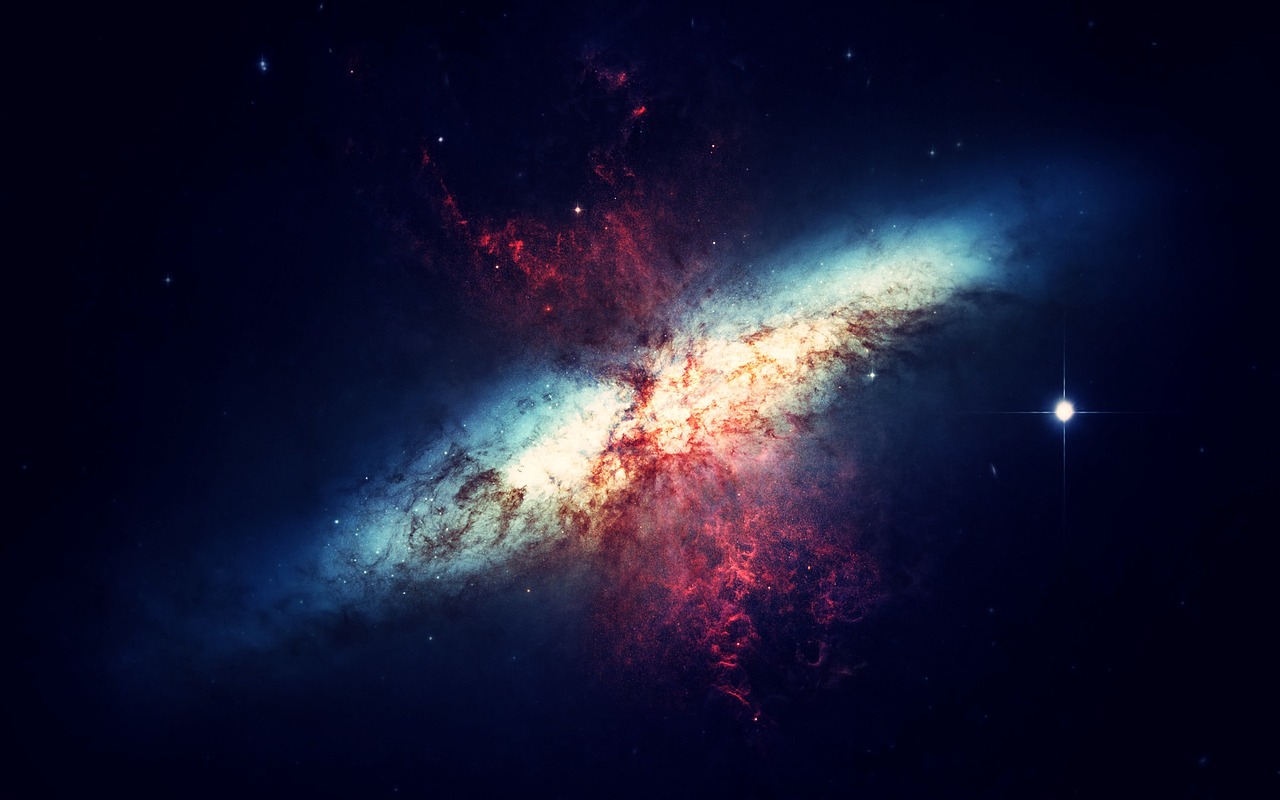
Stars are not eternal. Their lives span millions to billions of years, but every star eventually exhausts its nuclear fuel. The process by which a star ends its life depends almost entirely on its initial mass. This article explains how stars die, from the peaceful fading of low-mass stars to the explosive collapse of massive ones. The question of how do stars die encompasses the physics of core collapse, degeneracy pressure, and the uncertain boundary between neutron stars and black holes.
How do stars die after their nuclear engine runs out
A star lives by fusing lighter elements into heavier ones in its core. For most of its life, a star fuses hydrogen into helium. This reaction releases enormous energy, which creates an outward pressure that balances the inward pull of gravity. This balance, called hydrostatic equilibrium, prevents the star from collapsing under its own weight.
When the hydrogen in the core runs out, the star begins to die. The core contracts, heats up, and ignites helium fusion. For low-mass stars, this process stops at carbon and oxygen. For massive stars, fusion proceeds through silicon, magnesium, and ultimately iron. Iron is the end of the line: fusing iron absorbs energy instead of releasing it. At that point, the star has no more fuel to resist gravity.
How do stars die? From red giants to white dwarfs
A low-mass star, defined as a star with less than about 8 solar masses, follows a relatively gentle death path. Our Sun, at 1 solar mass, is a classic example. When hydrogen in the core is exhausted, the core contracts and heats up. The outer layers expand and cool, turning the star into a red giant. In this phase, the star swells to tens of times its original diameter. For the Sun, this will happen in approximately 5 billion years .
The core eventually becomes hot enough to fuse helium into carbon and oxygen. This helium burning lasts for a relatively short time, perhaps 100 million years for a Sun-like star. When helium runs out, the core consists mostly of carbon and oxygen. It is not hot enough to fuse these elements. Gravity compresses the core into a dense ball of electrons and nuclei.
At this point, a quantum mechanical effect called electron degeneracy pressure takes over. Electrons are fermions and obey the Pauli exclusion principle: two electrons cannot occupy the same quantum state. As the core is squeezed, electrons are forced into higher energy states, generating a pressure that opposes further compression. This pressure is independent of temperature and can support a stellar core up to about 1.4 solar masses, the Chandrasekhar limit.
The outer layers of the red giant are gently blown off into space. This expanding shell of gas forms a planetary nebula, a glowing cloud of ionized gas. The leftover core, now about the size of Earth but with a mass comparable to the Sun, is a white dwarf. A white dwarf is extremely dense: a teaspoon of its material would weigh several tons. It shines only from residual heat and will slowly cool and fade over billions of years.
How do stars die: intermediate-mass stars face a similar fate, different path
Stars between roughly 8 and 10 solar masses follow a path similar to low-mass stars. They also form red giants and later shed their outer layers as a planetary nebula. The core becomes a white dwarf composed of oxygen, neon, and magnesium. The exact mass boundary between white dwarf formation and core-collapse supernova is not precisely known. Observations suggest that stars above about 8 solar masses may experience a form of electron capture in the core, which can trigger collapse .
The key point is that intermediate-mass stars do not produce iron cores. Their cores never reach the temperature required to fuse carbon or oxygen. Instead, the core is supported by electron degeneracy pressure. If the core mass exceeds the Chandrasekhar limit, even this pressure cannot hold it. The core collapses, and the star becomes a supernova. However, for stars in this mass range, the exact outcome remains an active area of research.

High-Mass Stars: Red Supergiants to Supernovae
A high-mass star, with an initial mass above roughly 8 to 10 solar masses, dies in a far more dramatic way. These stars are much hotter and brighter than the Sun. They burn through their fuel quickly, often in just a few million years. After exhausting hydrogen, they expand into red supergiants, giants far larger than red giants. For example, the star Betelgeuse in the constellation Orion is a red supergiant with a diameter large enough to engulf the orbit of Mars.
The core of a high-mass star undergoes a series of fusion stages: helium to carbon, carbon to neon, neon to oxygen, oxygen to silicon, and silicon to iron. Each stage is shorter than the last. Silicon burning lasts only a few days. The core becomes an onion-like structure, with an iron core at the center surrounded by layers of progressively lighter elements. Once the core exceeds about 1.4 solar masses, electron degeneracy pressure can no longer support it.
The core collapses. This collapse is catastrophic. In a fraction of a second, a core the size of Earth shrinks to a sphere about 20 kilometers in diameter. The density reaches that of an atomic nucleus. Protons and electrons combine to form neutrons, releasing a flood of neutrinos. The collapse is halted when the core's density becomes so high that neutron degeneracy pressure takes over. Neutrons, like electrons, are fermions and obey the Pauli exclusion principle. This pressure is far stronger than electron degeneracy pressure and can support a core up to about 2 to 3 solar masses.
The collapse also produces a powerful shock wave that blasts the star's outer layers into space. This is a core-collapse supernova, one of the most energetic events in the universe. The supernova can briefly outshine an entire galaxy. The explosion scatters heavy elements like gold, uranium, and lead across space. These elements later form new stars and planets.
The Pair-Instability Supernova Regime
For stars with initial masses above roughly 130 solar masses, an entirely different destruction mechanism operates. In these extremely massive stars, the core reaches such high temperatures that gamma-ray photons spontaneously convert into electron-positron pairs. This process, called pair production, reduces the radiation pressure supporting the core. The core contracts and heats further, triggering a runaway thermonuclear explosion that completely disrupts the star, leaving no remnant. No neutron star or black hole forms. This is known as a pair-instability supernova, and it represents the ultimate endpoint for the most massive stars in the universe.
Neutron Stars and Black Holes: The Remnants of Supernovae
The remnant of a core-collapse supernova depends on the mass of the collapsing core. If the core mass after collapse is below about 2 to 3 solar masses, neutron degeneracy pressure will support it. The remnant is a neutron star, a ball of neutrons with a mass comparable to the Sun but a diameter of only 20 to 30 kilometers. Neutron stars are extremely dense: a teaspoon would weigh about 10 million tons. They often spin rapidly and emit beams of radiation, observed as pulsars.
If the core mass exceeds the maximum mass that neutron degeneracy pressure can support, no known force can stop the collapse. The core continues to shrink until it becomes a black hole. A black hole has a gravitational field so strong that nothing, not even light, can escape from within a certain radius called the event horizon. The mass of a black hole can range from a few solar masses (stellar-mass black holes) to millions or billions of solar masses (supermassive black holes).
The exact mass threshold between neutron star and black hole is uncertain. Current estimates place the maximum mass of a neutron star at roughly 2.2 to 2.5 solar masses, but different models give different numbers. This maximum mass is formally known as the Tolman-Oppenheimer-Volkoff (TOV) limit, named after the physicists who first calculated it in 1939. Observations of neutron star mergers, such as the event GW170817 detected by LIGO and Virgo in 2017, have helped constrain this value. The merger produced a remnant that briefly existed as a neutron star before collapsing into a black hole, providing a natural laboratory for studying the transition.
The uncertainty arises from the complexity of nuclear physics. Neutron star interiors contain not just neutrons but also protons, electrons, and possibly exotic particles like hyperons or quark matter. The equation of state, which describes how matter behaves at these extreme densities, is not fully known. Different equations of state predict different maximum masses. Observing more neutron star mergers and measuring their masses will help refine these models.

The Role of Binary Systems
Not all stars die in isolation. Many stars exist in binary or multiple systems. If two stars are close enough, their evolution can be strongly affected by mass transfer. A binary system can produce phenomena like Type Ia supernovae, where a white dwarf accretes matter from a companion until it reaches the Chandrasekhar limit and explodes. This type of supernova is a key tool for measuring distances in cosmology.
Neutron stars and black holes in binary systems can also merge through gravitational radiation, producing gravitational waves. The LIGO and Virgo collaborations have detected many such mergers since 2015, confirming predictions made decades earlier. These observations provide direct evidence for the existence of stellar-mass black holes and neutron stars. For deeper context, explore our guide to Stars and Planets.
Conclusion
Understanding how do stars die reveals the fundamental physics of gravity, nuclear fusion, and quantum mechanics. Low-mass stars like the Sun fade quietly into white dwarfs. High-mass stars explode as supernovae, leaving behind neutron stars or black holes. The most massive stars, above roughly 130 solar masses, can be entirely disrupted in pair-instability supernovae with no remnant. The mass boundary between neutron stars and black holes, defined by the Tolman-Oppenheimer-Volkoff limit, remains uncertain, but ongoing observations and theoretical work continue to refine our knowledge. Every element heavier than helium in the universe was forged in a star and scattered by its death. We are, quite literally, stardust.
Q1: What is the difference between a red giant and a red supergiant?
A red giant forms from a low-mass star (less than about 8 solar masses). A red supergiant forms from a high-mass star (more than about 8 solar masses). Red supergiants are much larger and more luminous than red giants. Betelgeuse is a famous example of a red supergiant.
Q2: Can a star explode more than once?
Most stars explode only once, as a supernova. However, some binary systems can cause a white dwarf to explode as a Type Ia supernova. The white dwarf itself is destroyed in the explosion. Some neutron stars can also experience X-ray bursts from surface fusion, but these are not explosions of the whole star.
Q3: Why does the mass boundary between neutron stars and black holes remain uncertain?
The uncertainty comes from our incomplete knowledge of the equation of state for matter at nuclear densities. Different models predict different maximum masses for neutron stars. Observing neutron star mergers, like GW170817, helps constrain these models but does not yet uniquely determine the boundary.
Q4: How long does the death of a star take?
The final stages of stellar death are rapid. Core collapse occurs in a fraction of a second. The supernova explosion itself reaches peak brightness in days to weeks. However, the planetary nebula phase for low-mass stars can last tens of thousands of years. The white dwarf then cools over billions of years.
Q5: Do all supernovae produce black holes?
No. Only supernovae from the most massive stars produce black holes. If the collapsing core has a mass below the maximum neutron star mass (roughly 2.2 to 2.5 solar masses), the remnant is a neutron star. If the core mass exceeds that, the remnant is a black hole. Supernovae from low-mass stars do not form black holes.
Sources & References
- Carroll, B. W., & Ostlie, D. A. (2017). An Introduction to Modern Astrophysics (2nd ed.). Cambridge University Press. https://www.cambridge.org/us/academic/subjects/physics/astrophysics/introduction-modern-astrophysics-2nd-edition
- Lattimer, J. M. (2012). The nuclear equation of state and neutron star masses. Annual Review of Nuclear and Particle Science, 62, 485-515. https://doi.org/10.1146/annurev-nucl-102711-095018
- Abbott, B. P., et al. (2017). GW170817: Observation of Gravitational Waves from a Binary Neutron Star Inspiral. Physical Review Letters, 119(16), 161101. https://doi.org/10.1103/PhysRevLett.119.161101
- Heger, A., et al. (2003). How Massive Single Stars End Their Life. The Astrophysical Journal, 591(1), 288-300. https://doi.org/10.1086/375341
Further reading: Stellar evolution on Wikipedia