The Science of Life – From Earth to the Stars

magnetar — Artist illustration of a magnetar — an extremely magnetized neutron star emitting intense X-ray and gamma-ray radiation from magnetic field decay

Magnetars: The Most Magnetic Objects in the Known Universe

Imagine an object the size of a city with the mass of the Sun, spinning several times per second, wrapped in a magnetic field a million billion times stronger than a refrigerator magnet. At the surface, the magnetic field would be strong enough to distort the electron clouds around atoms, fundamentally changing the chemistry of matter. From 1,000 kilometers away (roughly the distance between New York and Chicago), the field would be powerful enough to destroy the iron in your blood. This is a magnetar: the most extreme form of neutron star known, and one of the most powerful objects in the universe. In the 1998 event known as the Read more
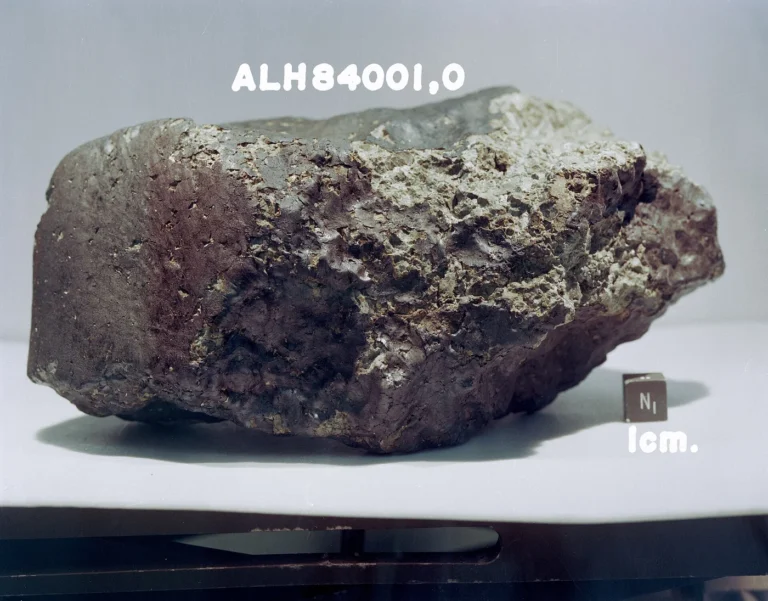
Martian meteorite ALH84001, a rock blasted off Mars and recovered in Antarctica, central to the lithopanspermia debate

Panspermia: Could Life Have Traveled Between the Stars?

Life on Earth arose roughly 3.5 to 4 billion years ago, perhaps within a few hundred million years of the planet becoming habitable. That is fast. Geologically, almost suspiciously fast. And that speed has prompted a persistent and scientifically serious question: did life originate here, or did the seeds of life arrive from somewhere else? Panspermia is the hypothesis that life (or the chemical precursors of life) can travel between worlds, and possibly between star systems, hitching rides on rocks blasted off planetary surfaces, on comets, or even on interstellar dust grains. It does not eliminate the question of how life first arose; it relocates it. But panspermia has genuine Read more

RNA world hypothesis — 3D illustration of an RNA molecule folded into a catalytic structure, representing the RNA World Hypothesis

The RNA World Hypothesis: How Life May Have Started

The origin of life is one of the most profound unsolved problems in science. How did chemistry become biology? How did non-living molecules begin to copy themselves, evolve, and eventually build the complex molecular machinery of even the simplest cell? One of the most compelling current frameworks for answering that question is the RNA World Hypothesis: the idea that life on Earth began not with DNA and proteins working together, but with RNA doing both jobs alone. RNA World does not solve every problem in the origin of life, but it addresses a core paradox that stumped researchers for decades, and it has accumulated significant experimental support since it was Read more

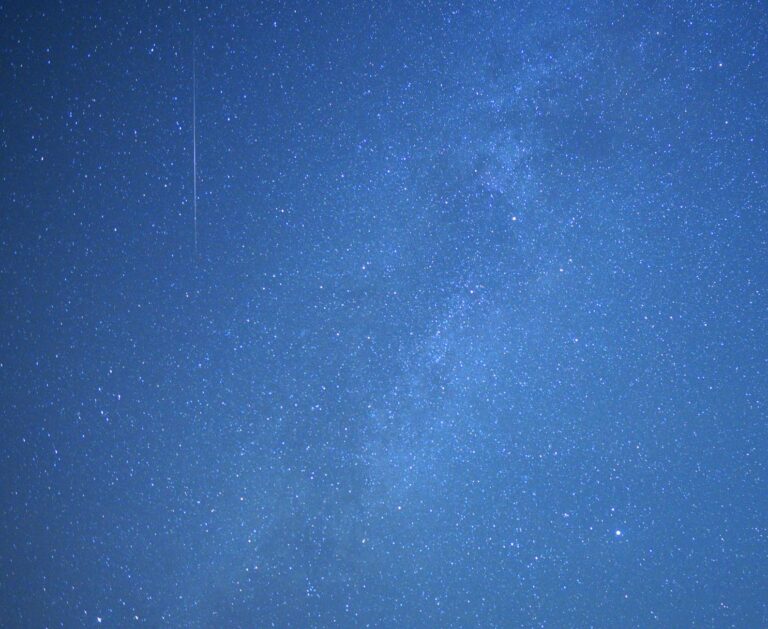
great filter — The Milky Way galaxy — with hundreds of billions of stars, the absence of detectable civilizations is the heart of the Fermi Paradox and Great Filter

The Great Filter: Why the Universe May Be Silent

The universe is roughly 13.8 billion years old. It contains at least 200 billion galaxies, each with hundreds of billions of stars. Many of those stars have planets. Some of those planets orbit in habitable zones. The raw ingredients for life, carbon, hydrogen, oxygen, nitrogen, phosphorus, sulfur, are among the most abundant elements in the cosmos. Amino acids form in interstellar space without biology to guide them. Given all of this, we might expect the universe to be teeming with life, and with civilizations far older and more capable than ours. The Milky Way alone is 10 billion years older than its current estimated habitable-zone window; civilizations that arose early Read more

cosmic microwave background — ESA Planck satellite full-sky map of the cosmic microwave background, showing temperature variations of one part in 100,000

The Cosmic Microwave Background: Light from the Edge of the Observable Universe

Look out into space far enough, and you will hit a wall. Not a physical barrier, but an epoch, a moment in the universe‘s history when it was so hot and dense that it was opaque. But we can detect the glow of that wall itself. The cosmic microwave background (CMB) is the oldest light in the universe, photons released 380,000 years after the Big Bang when the universe first became transparent. It fills the entire sky at a temperature of 2.725 Kelvin (about −270°C), redshifted to microwave wavelengths by 13.8 billion years of cosmic expansion. It is so uniform that the temperature varies by only one part in 100,000 Read more

gravitational waves — Aerial view of the LIGO gravitational wave detector, showing the two perpendicular 4-kilometer arms used to detect spacetime ripples

Gravitational Waves: How Ripples in Spacetime Changed Astronomy

On September 14, 2015, at 5:51 a.m. Eastern time, two black holes collided 1.3 billion light-years away. Seven milliseconds later, a signal arrived at the LIGO detector in Livingston, Louisiana, and then at the Hanford, Washington detector: a pattern of stretching and squeezing in spacetime so tiny that it displaced the detectors’ mirrors by a fraction of a proton’s diameter. It lasted one-fifth of a second. That event, GW150914, was the first direct detection of gravitational waves. It confirmed a prediction of Einstein’s general relativity that had waited a century for experimental verification. It demonstrated that black holes merge. It opened an entirely new window on the universe: a window Read more

super-earth habitable zone — NASA artist concept of the TOI-700 planetary system showing Earth-sized planets orbiting in the habitable zone of a red dwarf star

Super-Earths in the Habitable Zone: Why Kepler-22b Is the Benchmark for a New Class of Worlds

The first Earth-like world we found wasn’t Earth-like at all. It was called a super-Earth, though that classification would later prove contested, and it might not even be solid. Kepler-22b, discovered in 2011, was the first confirmed planet in the habitable zone of a Sun-like star. It has a radius 2.4 times that of Earth, placing it firmly in a category with no analogue in our solar system. That category has since become one of the most populated in exoplanet science. Super-Earths, loosely defined as planets with masses between roughly 1 and 10 Earth masses, are the most common type of planet in the galaxy, a prevalence thought to stem Read more

kepler-22b habitability — NASA artist’s concept of Kepler-22b, a 2.4 Earth-radius planet in the habitable zone of a Sun-like star, depicted as a blue-green world with possible ocean coverage

Kepler-22b Habitability: Why the Unknown Mass Is the Central Question

Of the thousands of exoplanets confirmed since the first detection in 1992, only a handful sit in the right place, around the right star, at the right distance to make the question worth asking seriously: could this world support life? Kepler-22b habitability is the question this article addresses: what do we actually know, and what does the science leave open? Kepler-22b is one of those handful. Discovered in 2011 by NASA’s Kepler Space Telescope, it was the first confirmed planet orbiting within the habitable zone of a Sun-like star. That distinction earned it headlines, scientific papers, and a permanent place in the public imagination of worlds beyond our own. But Read more