The Science of Life – From Earth to the Stars

nuclear fusion — Interior of a tokamak fusion reactor showing the plasma confinement chamber used in nuclear fusion experiments

Nuclear Fusion Explained: The Power of Stars and the Race to Harness It

Every second, the Sun converts about 600 million tons of hydrogen into helium. The mass of the products is slightly less than the mass of the reactants, and that tiny difference, expressed through Einstein’s E = mc², becomes 3.8 × 10²⁶ watts of energy, streaming outward as the sunlight that drives all life on Earth. This process is nuclear fusion. Fusion is the most energy-dense process permitted by ordinary matter. Per kilogram of fuel, it releases roughly four million times more energy than burning coal, and three to four times more energy per kilogram than nuclear fission. Unlike fission, its primary fuel (hydrogen isotopes) is effectively limitless. And its primary Read more

oort cloud — Diagram showing the vast scale of the Oort Cloud surrounding the solar system and the origin of long-period comets

The Oort Cloud: The Solar System’s Distant Frozen Shell

The solar system does not end at Neptune. Beyond the eight known planets, beyond Pluto and the Kuiper Belt, there lies an enormous spherical cloud of icy bodies extending to perhaps a quarter of the way to the nearest star. This is the Oort Cloud, the most distant region of the solar system, the source of the long-period comets that occasionally sweep through the inner solar system, and a structure so vast and sparse that it has never been directly observed. Everything we know about the Oort Cloud is inferred from the comets it sends toward us. Yet the inferences are compelling, and the Oort Cloud plays a central role Read more

cosmic rays — Array of particle detectors at the Pierre Auger Observatory used to detect extensive air showers from cosmic rays

Cosmic Rays Explained: The High-Energy Particles Raining Down from Space

Right now, particles from deep space are passing through your body. Trillions of them hit every square meter of Earth’s surface every second. Most are harmless, absorbed or deflected by the atmosphere and Earth’s magnetic field. But some carry energies so enormous that understanding where they come from and how they achieve such speeds has occupied physicists for more than a century. These are cosmic rays: high-energy charged particles (mostly protons and atomic nuclei) traveling through space at velocities close to the speed of light. They arrive from all directions, bearing energies that range from a few million electronvolts to, in the most extreme cases, more than 10²⁰ electronvolts (energies Read more

speed of light — Beam of light traveling through space illustrating the constant speed of light and its role as the universe's ultimate speed limit

The Speed of Light: Why It’s the Universe’s Ultimate Speed Limit

Light travels through a vacuum at 299,792,458 meters per second. That number, the speed of light, denoted c, is one of the most precisely measured constants in all of physics. It is also the most fundamental speed limit in the universe. Nothing with mass can reach it. Information cannot exceed it. Causality itself depends on it. But why does a speed limit exist at all? Why is it specifically 299,792,458 m/s and not faster? And what exactly goes wrong when you try to exceed it? The answers take you to the heart of special relativity, the geometry of spacetime, and some of the strangest implications in all of science. The Read more

plate tectonics habitability — Diagram of Earth's tectonic plates showing convergent, divergent, and transform boundaries that drive geological activity

Plate Tectonics and Planetary Habitability: Why a Moving Crust May Be Essential for Life

Earth’s outer shell is not one solid piece. It is broken into roughly twenty tectonic plates that are constantly moving, colliding, spreading apart, and sliding past each other. Over millions of years, this movement has rearranged continents, opened ocean basins, built mountain ranges, and driven some of the most dramatic geological events in Earth’s history. But plate tectonics and habitability is more than just geology; it may be a prerequisite for complex life. The connection between plate tectonics and habitability (whether moving tectonic plates are a prerequisite for complex life) is one of the central questions in astrobiology. The movement of plates drives processes that regulate Earth’s climate over geological Read more

stellar nucleosynthesis — Illustration showing how stellar nucleosynthesis builds elements of the periodic table through nuclear fusion in stars and supernovae

How Stars Make Elements: The Story of Stellar Nucleosynthesis

Every atom of carbon in your body was forged inside a star that died before the Sun was born. The calcium in your bones, the iron in your blood, the oxygen in every breath you take: all of it was assembled in stellar interiors and scattered across the galaxy by stellar explosions over billions of years. You are, in a very literal sense, made of star stuff. The process by which stars create the chemical elements is called stellar nucleosynthesis, and it is one of the foundational discoveries of 20th-century astrophysics. Understanding it requires understanding both nuclear physics and the life cycles of stars: from hydrogen-burning main sequence stars to Read more

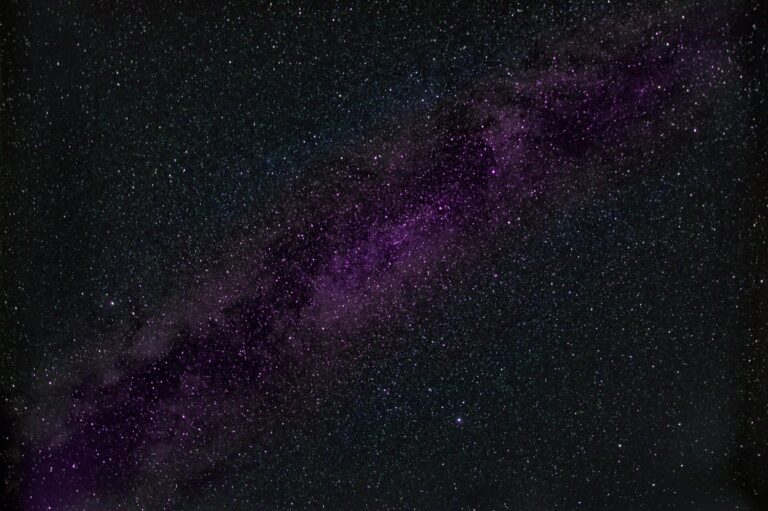
milky way galaxy — Panoramic photograph of the Milky Way galaxy visible as a band of stars across the night sky from Earth

The Milky Way Galaxy Explained: Our Home in the Universe

On a clear night far from city lights, the faint band of light stretching across the sky is our view from inside a spiral galaxy. The Milky Way galaxy, the galaxy that contains our solar system, every star visible to the naked eye, and an estimated 100–400 billion stars in total, is a barred spiral galaxy roughly 100,000 light-years in diameter. Understanding our galactic home means understanding a system of extraordinary scale and complexity that has been assembling itself for over 13 billion years. We have a special challenge in studying the Milky Way galaxy: we are inside it. There is no vantage point from which to photograph it from Read more

white dwarf stars — NASA Hubble image of a planetary nebula surrounding a white dwarf star, the remnant exposed after a solar-mass star died

White Dwarf Stars: The Stellar Remnants That Outlast Everything

When a star like our Sun exhausts its fuel, it does not go out with a bang. It sheds its outer layers as a colorful planetary nebula, and what remains is something extraordinary: a white dwarf star, a stellar corpse the size of Earth but with a mass comparable to the Sun, radiating heat as it slowly cools over billions to trillions of years. These are white dwarf stars, the most common stellar remnant in the universe, the end state of roughly 97% of all stars, and objects whose extreme physics illuminates some of the most important concepts in astrophysics. Understanding white dwarf stars means understanding quantum mechanics, thermodynamics, the Read more