
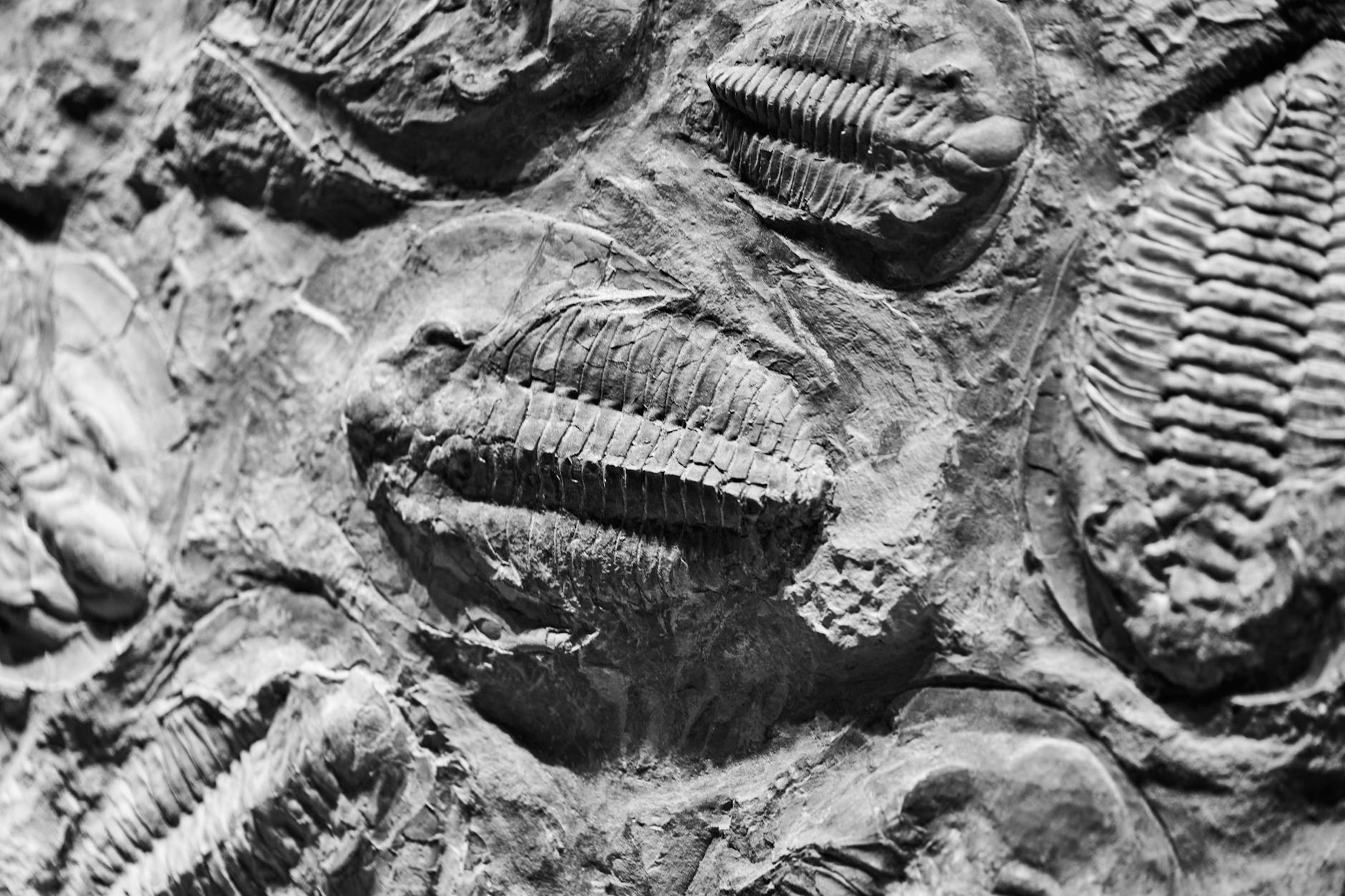
So what triggered the Cambrian explosion? Around 538 million years ago, something extraordinary happened. In the space of perhaps 20 million years, an eye-blink in geological time, the fossil record fills with an astonishing variety of complex animals: trilobites with compound eyes, armored predators up to a meter long, animals with five eyes and a grasping proboscis, creatures so strange that paleontologists spent decades arguing about which end was up.
This sudden burst of diversity is the Cambrian explosion, and the explosion was neither instantaneous nor mythical: it spans roughly 10 to 20 million years, a pace fast by geological standards but still a significant slice of time. Understanding what triggered it requires untangling ecology, genetics, geochemistry, and geology across half a billion years. (This article focuses on the causes. For the story of what emerged, see The Cambrian Explosion: When Life Learned to Draw Edges.)
When scientists ask what triggered the Cambrian explosion, no single cause has achieved consensus. Most researchers believe a cascade of ecological and geochemical changes crossed a threshold simultaneously. Here are the major hypotheses.
What Triggered the Cambrian Explosion? The Leading Hypotheses

1. The Oxygen Hypothesis: Rising O₂ Enabled Active Metabolism
The most ancient explanation: animals could not evolve until atmospheric and oceanic oxygen rose to sufficient levels. Complex animals require oxygen for aerobic metabolism. Moving rapidly, growing hard skeletons, and maintaining active body plans all require energy that only oxygen-fueled respiration can provide.
Evidence for a major oxygen rise comes from geochemical proxies in ancient sediments: sulfur isotopes, trace metal abundances, and molecular biomarkers all suggest that oceanic oxygen levels rose substantially in the period preceding and during the Cambrian explosion. The Great Oxidation Event around 2.4 billion years ago raised atmospheric oxygen to a few percent. But animal life did not follow immediately. A second, less-studied Neoproterozoic Oxygenation Event around 600 to 540 million years ago appears to have raised oxygen further, potentially triggering the ecological revolution that followed.
A related factor: the rise of eukaryotic phytoplankton during the Ediacaran-Cambrian transition dramatically boosted primary productivity, providing both more food and more oxygen to marine ecosystems. This biological pump may have been essential in pushing oxygen past the threshold needed for complex animal life.
2. The Predator-Prey Arms Race
One of the most intuitively compelling explanations: predation drove complexity. The earliest unequivocal large-bodied active predators in the fossil record appear in the Cambrian. Once predators existed, prey faced sudden, intense selective pressure to defend themselves: hard shells, mineralized spines, eyes to detect approaching danger, the ability to burrow in sediment, active escape behaviors. Predators evolved to circumvent these defenses: better eyes, stronger appendages, faster movement.
This predator-prey arms race could have triggered a cascade. Each improvement on one side drove improvements on the other, escalating complexity on both sides simultaneously. This dynamic echoes the principles of Natural Selection: The Engine of Evolution, where environmental pressures drive adaptation.
Paleontologist Andrew Parker proposed the light switch hypothesis: the first eyes appeared early in the Cambrian, making visual predation suddenly possible. Once vision existed, the entire ecosystem reorganized. Animals needed camouflage, eyes of their own, or the ability to hide. The explosion of complexity may have followed the explosion of vision.
3. Snowball Earth: Glacial Melts Flooded Oceans With Nutrients
Earth experienced one or more episodes of near-total glaciation in the Neoproterozoic, commonly called Snowball Earth. These events ended roughly 635 million years ago when volcanic CO₂ built up enough to melt the ice in a runaway greenhouse effect. The aftermath: massive amounts of nutrients and minerals locked up in ice sheets flooded into the oceans simultaneously.
This nutrient pulse may have fueled dramatic ecological expansion. Combined with the warming temperatures and stabilizing oceanic chemistry after deglaciation, Snowball Earth may have created conditions that were uniquely permissive for the evolution of complex multicellular life. The Ediacaran biota, the strange soft-bodied organisms that preceded the Cambrian, appeared shortly after the last Snowball Earth events.
4. The Genetic Toolkit: Developmental Genes That Build Bodies
Perhaps the most surprising insight from modern genomics: all major animal body plans are built using a remarkably conserved set of developmental genes called Hox genes and related transcription factors. These genes control where body segments form, where limbs grow, where eyes develop. They are found in flies, worms, sea urchins, and humans.
The evolution of this genetic toolkit in the Ediacaran and early Cambrian may have been a prerequisite for the Cambrian explosion. Once animals possessed the genetic machinery to build diverse body architectures, environmental changes could rapidly produce new morphological experiments. The toolkit unlocked morphological possibility space: a mutation affecting a Hox gene could shift an entire body segment rather than a single cell.
The genetic evidence suggests the major animal lineages (bilaterian phyla) actually diverged well before the Cambrian, perhaps 600 to 700 million years ago. The Cambrian explosion may represent when these lineages first evolved the capacity to produce hard parts that preserve in the fossil record, not when they first diverged.
5. Ocean Chemistry and Biomineralization
Hard skeletons are not free: they require specific ions (calcium, carbonate, phosphate) in sufficient concentrations in seawater. Evidence suggests that Cambrian ocean chemistry underwent significant changes that made biomineralization more energetically feasible. Calcium carbonate saturation increased, making shell construction less metabolically expensive.
This does not explain why animals began building hard parts, but it may explain why many groups did so nearly simultaneously. Once the ocean chemistry crossed a threshold, the evolution of shells, spines, and skeletons became accessible to many lineages at once, producing the apparent synchrony of the Cambrian explosion in the fossil record.
Why There Is No Single Answer
Each hypothesis above explains some features of the Cambrian explosion but not all. The oxygen hypothesis explains why active animals became possible but not why it happened in a burst. The arms race hypothesis explains escalating complexity but requires predators to appear first, which raises the question of what triggered the first predators. Snowball Earth timing is roughly right but the gap between deglaciation and the explosion is still tens of millions of years.
So what triggered the Cambrian explosion? The most defensible current position is that it was a cascade. Rising oxygen set the energetic conditions. The genetic toolkit set the developmental conditions. Ocean chemistry changes made hard parts affordable. And predator-prey dynamics, once they began, accelerated the whole process through ecological escalation. These factors did not operate independently; they reinforced each other.
The Cambrian explosion was not a miracle or an anomaly: it was what happens when environmental permissiveness, ecological escalation, and developmental possibility synchronize. It was, as the fossil record shows, the moment life learned to build itself in genuinely new ways.
Sources
- Marshall, C.R. (2006). Explaining the Cambrian Explosion of Animals. Annual Review of Earth and Planetary Sciences, 34, 355–384.
- Erwin, D.H. et al. (2011). The Cambrian Conundrum: Early Divergence and Later Ecological Success in the Early History of Animals. Science, 334(6059), 1091–1097.
- Parker, A. (2003). In the Blink of an Eye. Perseus Publishing.
- Shu, D.G. et al. (1999). Lower Cambrian vertebrates from south China. Nature, 402, 42–46.
What caused the Cambrian explosion?
No single cause has achieved consensus. Most researchers support a cascade model: rising oxygen levels set the energetic conditions, the evolution of developmental (Hox) genes expanded morphological possibilities, changes in ocean chemistry made biomineralization more affordable, and predator-prey arms races drove rapid escalation of complexity.
How long did the Cambrian explosion last?
Roughly 10 to 20 million years, from about 538 to 518 million years ago. This is fast by geological standards but far from instantaneous. The term “explosion” refers to the relative speed of diversification compared to the preceding billions of years of simpler life forms.
Did all animal phyla appear in the Cambrian explosion?
Most major animal body plans appear in the Cambrian fossil record, but molecular clock evidence suggests the lineages actually diverged earlier, perhaps 600 to 700 million years ago. The Cambrian may be when these lineages first evolved hard parts that preserve in fossils, not when they first appeared.
What is the light switch hypothesis?
Proposed by paleontologist Andrew Parker, it suggests that the evolution of eyes in the early Cambrian was a pivotal trigger. Once vision existed, predators could hunt visually and prey faced intense selection pressure for protective shells, camouflage, and escape behaviors, driving rapid diversification across many lineages.
Further reading: UC Berkeley Museum of Paleontology, and Cambrian explosion on Wikipedia.