
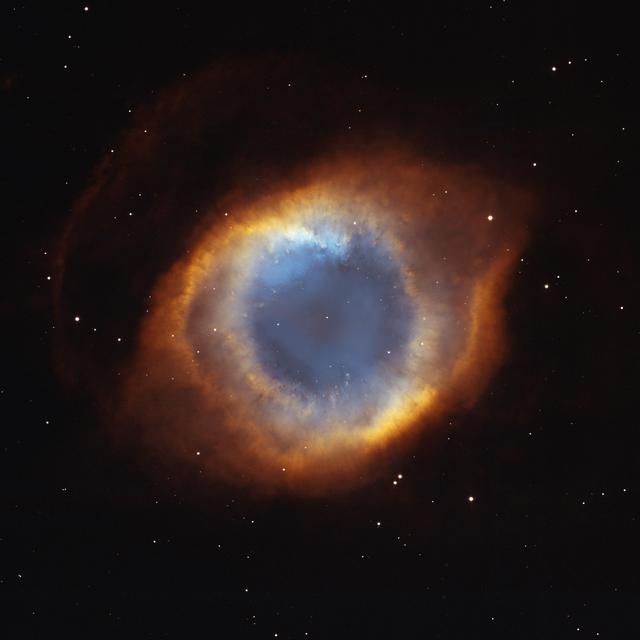
When a star like our Sun exhausts its fuel, it does not go out with a bang. It sheds its outer layers as a colorful planetary nebula, and what remains is something extraordinary: a white dwarf star, a stellar corpse the size of Earth but with a mass comparable to the Sun, radiating heat as it slowly cools over billions to trillions of years.
These are white dwarf stars, the most common stellar remnant in the universe, the end state of roughly 97% of all stars, and objects whose extreme physics illuminates some of the most important concepts in astrophysics. Understanding white dwarf stars means understanding quantum mechanics, thermodynamics, the limits of matter, and the ultimate fate of most solar systems, including our own.
What Are White Dwarf Stars?

A white dwarf is the degenerate core of a low- to intermediate-mass star (roughly 0.08 to 8 solar masses on the main sequence), exposed after the star’s outer layers are expelled. It is primarily composed of carbon and oxygen, the products of helium burning, surrounded by a thin atmosphere of hydrogen or helium.
The defining physical characteristic of a white dwarf is that its internal pressure is not thermal (dependent on temperature) but quantum mechanical: it is supported by electron degeneracy pressure, arising from the Pauli exclusion principle, which forbids two electrons from occupying the same quantum state. In an ordinary gas, pressure increases with temperature. In a degenerate electron gas, the pressure depends primarily on density, not temperature. This makes white dwarf stars remarkably stable: they do not undergo the cycles of expansion and contraction that main-sequence stars do in response to temperature changes.
The typical white dwarf is extraordinarily dense. A teaspoon of white dwarf material would weigh approximately 15 tons. The surface gravity is roughly 100,000 to 350,000 times that of Earth’s surface, high enough to stratify atomic species by mass within the thin atmosphere almost immediately on astronomical timescales.
The Chandrasekhar Limit
In 1930, a 19-year-old Indian physicist named Subrahmanyan Chandrasekhar, traveling by ship from India to England, derived one of the most profound results in astrophysics: there is a maximum mass for a white dwarf above which electron degeneracy pressure cannot support the star against gravitational collapse. This is the Chandrasekhar limit, approximately 1.4 solar masses.
Chandrasekhar’s derivation used special relativistic corrections to the equation of state of a degenerate electron gas. As a white dwarf’s mass increases toward 1.4 M☉, the electrons at its center must move faster and faster to maintain their exclusion. When their velocities approach the speed of light, the relativistic increase in effective mass reduces the efficiency of degeneracy pressure. Above 1.4 M☉, no electron pressure can halt collapse.
The Chandrasekhar limit has two enormously important consequences:
1. Type Ia supernovaeIf a white dwarf in a binary system accretes mass from a companion star and approaches 1.4 M☉, it explodes as a Type Ia supernova, one of the most powerful explosions in the universe, producing a brilliant flash visible across billions of light-years. Because the triggering mass is nearly the same for all Type Ia events (though the exact mechanism is debated), they have nearly consistent peak luminosities. This makes them “standard candles” for measuring cosmic distances, the tool used to discover the accelerating expansion of the universe in 1998.
2. Neutron starsIf a massive star’s iron core at collapse exceeds the Chandrasekhar mass, electron degeneracy cannot halt the collapse. The core compresses further until nuclear forces stop the collapse, producing a neutron star, supported by neutron degeneracy pressure.
Formation: From Red Giant to Planetary Nebula to White Dwarf

A star like the Sun will reach the end of its main-sequence hydrogen burning in roughly 5 billion years. As it transitions off the main sequence, it expands into a subgiant and then a red giant, fusing hydrogen in a shell surrounding the helium core. When core temperatures reach ~100 million K, helium fusion ignites (the triple-alpha process), producing carbon and oxygen.
In the subsequent asymptotic giant branch (AGB) phase, the star expels enormous quantities of gas in stellar winds, enriching the surrounding interstellar medium with processed material. Near the end of the AGB phase, the rate of mass loss dramatically increases. The entire envelope, all but the central core, is expelled over a few tens of thousands of years.
The expelled envelope becomes a planetary nebula, a beautiful, glowing shell of ionized gas illuminated by the UV radiation from the hot central white dwarf. Famous planetary nebulae include the Ring Nebula (M57), the Helix Nebula, and the Butterfly Nebula. Despite their name, planetary nebulae have nothing to do with planets; they were named by early observers who thought they resembled the disk of a planet through small telescopes.
The exposed core, the white dwarf, begins with a surface temperature of roughly 100,000–200,000 Kelvin. With no ongoing fusion, it has no source of heat and gradually radiates away its thermal energy over billions of years.
Cooling and the Ultimate Fate: Black Dwarfs
White dwarf stars cool over time, transitioning from hot, blue-white objects to yellow, orange, and eventually red. The cooling timescale is extraordinarily long. The oldest white dwarf stars known, found in globular clusters, have surface temperatures of about 3,500–4,000 K; they have been cooling for roughly 10–12 billion years and are among the oldest objects in the galaxy.
Eventually, over a timescale estimated at roughly 10¹⁵ years (a million billion years), a white dwarf will cool to the temperature of the cosmic microwave background and become a black dwarfa cold, dark, inert sphere of crystallized carbon and oxygen. Black dwarfs do not yet exist because the universe is only about 13.8 billion years old, far too young for any white dwarf to have cooled to this state. Black dwarfs are a theoretical endpoint, not an observed object.
Before that distant fate, something interesting happens at intermediate temperatures: the electrons and ions in the white dwarf’s interior may crystallize into a rigid lattice, similar to how a liquid freezes into a solid. Observations by the Gaia space telescope in 2019 found compelling evidence for this crystallization process in white dwarfs of specific masses and temperatures, confirming theoretical predictions made decades earlier.
Polluted White Dwarfs and Planetary Science

A surprising and scientifically valuable discovery in recent decades has been the existence of “polluted” white dwarfs, white dwarfs whose hydrogen or helium atmospheres are contaminated with heavier elements (calcium, silicon, iron, magnesium, and others) that should have settled out under the intense surface gravity in thousands to millions of years.
The only explanation for heavy-element pollution in old white dwarfs is accretion of rocky material from a surrounding debris disk, the remnants of the star’s original planetary system, disrupted by tidal forces as the star expanded and died. By analyzing the trace elements in polluted white dwarf atmospheres, astronomers can determine the bulk composition of the accreted rocky material, essentially reading the chemistry of destroyed exoplanets. Studies of polluted white dwarfs have found evidence for rocky bodies with compositions similar to Earth’s mantle, water-bearing asteroids, and fragments with compositions inconsistent with solar system rocky bodies, suggesting diverse planetary chemistry across the galaxy.
White Dwarfs as Astrophysical Laboratories
White dwarfs serve as laboratories for testing physics under extreme conditions:
Testing electron degeneracy: The equation of state of a degenerate electron gas predicts specific relationships between a white dwarf’s mass and radius (counterintuitively, more massive white dwarf stars are smaller). These mass-radius relations have been tested and confirmed by observations, validating quantum mechanics under conditions utterly unlike any terrestrial laboratory.
Gravitational redshift: Light escaping from a white dwarf’s deep gravitational well is shifted to longer wavelengths (redshifted) by the Pound-Rebka effect. Measuring this shift tests general relativity in strong gravitational fields.
Stellar age dating: White dwarfs in star clusters cool along predictable cooling sequences. The faintest, coolest white dwarf stars in a cluster set a lower limit on the cluster’s age. This technique has been used to measure the ages of globular clusters, providing independent constraints on the age of the universe.
Magnetism: Roughly 20% of white dwarfs have strong magnetic fields, ranging from about 10⁴ to 10⁹ Gauss. These magnetic white dwarf stars are thought to be the remnants of main-sequence stars with strong fields, compressed by the core collapse of the giant phase. They provide insight into magnetic field evolution over stellar lifetimes.
What is a white dwarf?
A white dwarf is the remnant core of a low- to intermediate-mass star after it has shed its outer layers through stellar winds and a planetary nebula. About the size of Earth but with roughly the mass of the Sun, a white dwarf is supported against gravity by electron degeneracy pressure, a quantum mechanical effect, rather than fusion. It gradually radiates away its heat over billions of years. About 97% of all stars will end their lives as white dwarfs, including our Sun in approximately 5–6 billion years.
What is the Chandrasekhar limit?
The Chandrasekhar limit is the maximum mass of a white dwarf, approximately 1.4 solar masses. Above this mass, electron degeneracy pressure cannot support the star against gravitational collapse. It was derived in 1930 by Subrahmanyan Chandrasekhar using relativistic quantum mechanics. The Chandrasekhar limit is fundamental to two major phenomena: Type Ia supernovae (which occur when a white dwarf exceeds this mass by accreting from a companion) and neutron star formation (which occurs when a collapsing stellar core exceeds this limit during a supernova).
What happens when the Sun dies?
In approximately 5 billion years, the Sun will exhaust its hydrogen fuel, expand into a red giant, likely engulfing Mercury and Venus and possibly Earth, and eventually shed its outer layers as a planetary nebula. The remaining core, a white dwarf of roughly 0.6 solar masses, will slowly cool over billions of years. In the far future (after roughly 10¹⁵ years), it will crystallize into a black dwarf, a cold, dark sphere of carbon and oxygen no longer radiating significant energy.
How do white dwarfs produce Type Ia supernovae?
When a white dwarf in a binary system accretes mass from a companion star, it can approach the Chandrasekhar limit (~1.4 solar masses). As the white dwarf nears this mass, its core temperature rises until carbon fusion ignites explosively, a process called a thermonuclear runaway. The entire white dwarf is incinerated in a few seconds, producing a Type Ia supernova: a catastrophic explosion releasing ~10⁴⁴ joules. Because the triggering mass is roughly constant, Type Ia supernovae reach similar peak luminosities, making them useful “standard candles” for measuring cosmic distances.
What are polluted white dwarfs?
Polluted white dwarfs are white dwarfs whose atmospheres contain heavy elements (calcium, silicon, iron, magnesium) that should have settled out of the atmosphere in thousands to millions of years due to intense surface gravity. The only explanation is recent accretion of rocky material from a debris disk, the remnants of the star’s original planetary system. By measuring the trace element abundances in polluted white dwarf atmospheres, astronomers can determine the chemical composition of accreted rocky bodies and probe the geology of exoplanetary material.
What is a black dwarf?
A black dwarf is the theoretical final state of a white dwarf after it has cooled to the temperature of the cosmic microwave background, a cold, dark, inert sphere of carbon and oxygen that emits no significant radiation. Black dwarfs do not yet exist: the cooling timescale is approximately 10¹⁵ years (one million billion years), far longer than the current age of the universe (13.8 billion years). When the universe eventually reaches this age, if entropy allows, the space between galaxies will be populated by these cold, dark remnants of the stars that once lit it.
Sources
Chandrasekhar, S. (1931). The maximum mass of ideal white dwarfs. The Astrophysical Journal, 74, 81–82. doi:10.1086/143324
Koester, D. (2010). White dwarf spectra and atmosphere models. Memorie della Società Astronomica Italiana, 81, 921–931.
Tremblay, P.-E. et al. (2019). Core crystallization and pile-up in the cooling sequence of evolving white dwarfs. Nature, 565(7738), 202–205. doi:10.1038/s41586-018-0791-x
Zuckerman, B. et al. (2003). Metal lines in DA white dwarfs. The Astrophysical Journal, 596(1), 477–495. doi:10.1086/377492
Perlmutter, S. et al. (1999). Measurements of Omega and Lambda from 42 high-redshift supernovae. The Astrophysical Journal, 517(2), 565–586. doi:10.1086/307221
Hansen, B.M.S. et al. (2013). Cool white dwarfs: a new age indicator for old stellar populations. The Astrophysical Journal, 775(2), L1. doi:10.1088/2041-8205/775/1/L1
Further reading: White dwarf stars on Wikipedia