
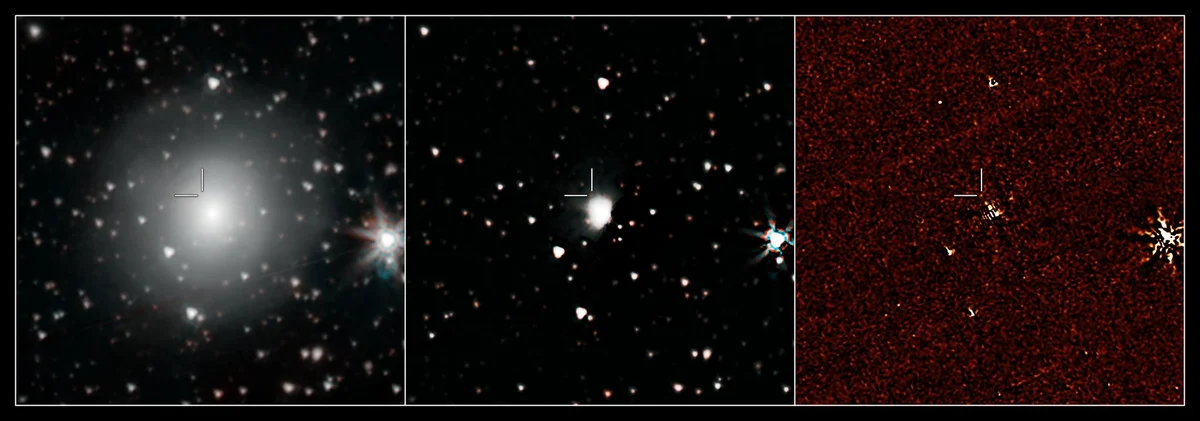
The gravitational wave event GW170817 represents a watershed moment in modern astrophysics, marking the first time humanity observed a neutron star merger through both gravitational waves and electromagnetic radiation. Detected on August 17, 2017, by the Laser Interferometer Gravitational-Wave Observatory (LIGO) and the Virgo interferometer, this cataclysmic collision of two neutron stars not only confirmed a long-standing theoretical prediction but also provided direct evidence for the formation of heavy elements like gold and platinum through a process called rapid neutron capture, or the r-process. By combining data from gravitational wave detectors, gamma-ray telescopes, X-ray observatories, and optical and infrared instruments, astronomers pieced together a complete narrative of a cosmic event occurring approximately 130 million light-years away in the galaxy NGC 4993. This article explores the multi-messenger observations of GW170817, explains how they confirmed heavy element nucleosynthesis, and examines the enduring scientific legacy of this singular event.
The Detection and Multi-Messenger Follow-Up of Gravitational Wave Event GW170817
The discovery of GW170817 began with a gravitational wave signal detected by LIGO’s two observatories in Hanford, Washington, and Livingston, Louisiana, along with the Virgo detector in Italy. Unlike earlier gravitational wave events from black hole mergers, this signal lasted nearly 100 seconds, a relatively long duration for such detectors, and had a characteristic “chirp” pattern that indicated the inspiral and merger of two compact objects. The masses of the merging objects, approximately 1.1 to 1.6 times the mass of the Sun, fell squarely within the range expected for neutron stars, not black holes. Crucially, the three-detector network allowed for precise localization of the event to a region of sky roughly 31 square degrees in size – enough to enable electromagnetic follow-up.
Within 1.7 seconds of the gravitational wave signal, NASA’s Fermi Gamma-ray Burst Monitor detected a short burst of gamma rays, designated GRB 170817A, from the same patch of sky. This near-simultaneous detection confirmed the theoretical link between neutron star mergers and short gamma-ray bursts – a connection first proposed decades earlier but never observationally verified. The rapid timing also ruled out many alternative models, such as those involving neutron star–black hole mergers, which typically produce delayed gamma-ray emissions. As reported by the LIGO–Virgo collaboration and the Fermi team, this coincidence provided the first direct observational evidence that neutron star mergers are viable progenitors of short gamma-ray bursts (LIGO Scientific Collaboration and Virgo Collaboration, “GW170817: Observation of Gravitational Waves from a Binary Neutron Star Inspiral,” Physical Review Letters 119, 161101 (2017)).
Over the following hours and days, a global network of telescopes, including the Hubble Space Telescope, the Chandra X-ray Observatory, and ground-based facilities like the Swope Telescope in Chile, scanned the localized region. The Swope Telescope was the first to identify an optical counterpart: a bright, fast-fading source in the galaxy NGC 4993. This transient, designated AT 2017gfo, exhibited a unique spectral signature. Its light was dominated by the absorption lines of elements produced in neutron-rich environments, such as strontium and lanthanides, which gave the afterglow a distinctive blue then red color as it evolved. This phenomenon is known as a kilonova – a term coined to describe the optical and infrared emission powered by the radioactive decay of heavy elements synthesized in the merger. The detection of this kilonova provided the most direct evidence yet that neutron star mergers are primary sites for the production of elements heavier than iron, including gold, platinum, and uranium.

The Role of the Kilonova in Confirming Heavy Element Nucleosynthesis
The kilonova associated with GW170817 was not merely a byproduct of the merger, it was the key that unlocked the mystery of heavy element production. The r-process, or rapid neutron capture process, requires an environment with an extremely high density of free neutrons, which can be captured by atomic nuclei to build up heavy elements in seconds. This environment exists in the debris ejected from a neutron star merger, where neutron-rich material is flung outward at speeds approaching one-third the speed of light. As this material expands and cools, neutrons are captured by atomic nuclei, forming unstable isotopes that then beta-decay into stable heavy elements. The energy released by these decays heats the ejecta, causing it to glow in the optical and infrared, a kilonova.
The spectra of AT 2017gfo showed clear signatures of this process. In the first few days, the kilonova appeared blue, dominated by lighter r-process elements like strontium and yttrium, which have fewer neutrons and produce relatively transparent ejecta. As the days passed, the emission shifted to redder wavelengths as heavier, more neutron-rich elements (like lanthanides) emerged. These elements absorb blue light strongly, making the ejecta opaque and shifting the emitted light to the infrared. This color transition was predicted earlier by theoretical models of kilonovae, but GW170817 provided the first observational confirmation. According to a study published in Nature, the total mass of r-process material ejected in GW170817 was estimated to be between 0.03 and 0.05 times the mass of the Sun – enough to produce several Earth masses of gold and platinum alone (Tanvir et al., “The Emergence of a Lanthanide-rich Kilonova Following the Merger of Two Neutron Stars,” Nature 551, 80–84 (2017)).
This finding has profound implications. For decades, scientists debated whether supernovae or neutron star mergers were the primary source of r-process elements in the universe. While supernovae can produce some heavy elements, simulations suggest that the conditions in core-collapse supernovae, rapid expansion and moderate neutron densities, are less favorable for the r-process than the extreme neutron richness of neutron star mergers. GW170817 demonstrated that a single neutron star merger can produce a quantity of r-process material comparable to the entire mass of such elements in the Milky Way galaxy. Combined with estimates of neutron star merger rates in the local universe (approximately once every 10,000 to 100,000 years per galaxy), it appears that mergers of this type can account for most of the r-process abundances observed in the solar system and beyond.
Observational Techniques and Collaborative Science
The success of GW170817 was a triumph of collaborative, multi-wavelength astronomy. The detection chain began with gravitational wave observatories, which provided the trigger and rough location. Within minutes, the gamma-ray burst detection from Fermi narrowed the location further. Optical telescopes then followed up, pinpointing the exact host galaxy. Over the subsequent weeks, X-ray and radio observations tracked the expanding debris and the interaction of the relativistic jet launched from the merger with the surrounding interstellar medium.
The X-ray afterglow, detected by NASA’s Chandra X-ray Observatory nine days after the merger, and the radio afterglow, detected by the Very Large Array soon after, told a different story from the kilonova. These emissions came from a relativistic jet, a narrow beam of particles accelerated to near-light speed, that punched through the merger ejecta and produced a short gamma-ray burst. The jet’s structure and angle relative to Earth were inferred from the afterglow’s slow rise and eventual brightening, which matched predictions of a jet viewed slightly off-axis. This offset viewing angle explained why the gamma-ray burst was relatively faint compared to typical short bursts: Earth was not directly in the jet’s path. As later described in a study in The Astrophysical Journal Letters, the combined gravitational wave and electromagnetic data allowed astronomers to measure the equation of state of nuclear matter, the relationship between pressure and density inside neutron stars, with unprecedented precision (Abbott et al., “Multi-messenger Observations of a Binary Neutron Star Merger,” ApJ Letters 848, L12 (2017)).

These coordinated observations required immense logistical effort. LIGO and Virgo sent out alerts to a network of dozens of telescopes within minutes of detection, using a standardized protocol known as the Gravitational Wave Candidate Event Database (GraceDB). Astronomers around the world dropped their projects to point instruments at the same patch of sky, sharing data in real time. This model of open, rapid collaboration has since become the standard for multi-messenger astronomy, with GW170817 serving as the blueprint for future events.
The Legacy and Continued Impact
The implications of GW170817 extend far beyond the confirmation of r-process nucleosynthesis. The event also provided the first direct measurement of the Hubble constant, the rate of expansion of the universe, using gravitational waves. By combining the gravitational wave luminosity distance with the redshift of the host galaxy (measured from electromagnetic data), astronomers obtained a value of the Hubble constant that is independent of the cosmic distance ladder. This measurement, while not yet as precise as those from the cosmic microwave background or supernovae, offers a complementary method that can help resolve the current tension between different Hubble constant values.
Furthermore, GW170817 placed strong constraints on the speed of gravity. The near-simultaneous arrival of gravitational waves and gamma rays, a difference of less than two seconds over a travel distance of 130 million light-years, demonstrated that gravitational waves propagate at the speed of light to within a part in 10^15. This test of general relativity, consistent with Einstein’s theory, rules out many modified gravity theories that predicted a different propagation speed. The event also refined our understanding of neutron star interiors; the tidal deformation observed during the inspiral set limits on how compact and dense these objects can be, suggesting that many neutron stars have radii in the range of 10 to 13 kilometers.

Since 2017, no other neutron star merger has been detected with both gravitational waves and electromagnetic radiation, though LIGO and Virgo have observed several additional neutron star candidates. The upcoming upgrade of LIGO to its Advanced LIGO Plus configuration, expected in the mid-2020s, should increase detection rates to several per year. Each new event will add to the statistical sample, allowing astronomers to measure the frequency of these mergers, the distribution of heavy elements they produce, and the properties of neutron stars across different masses. GW170817 thus serves as both a culmination of decades of theoretical work and a foundation for a new era of discovery.
1. What exactly was GW170817?
GW170817 was a gravitational wave signal detected on August 17, 2017, from the merger of two neutron stars located about 130 million light-years away in the galaxy NGC 4993. It was the first gravitational wave event observed in both gravitational waves and electromagnetic radiation (light), making it a landmark multi-messenger detection.
2. How did GW170817 confirm that heavy elements like gold are made in neutron star mergers?
The event produced a kilonova – a short-lived afterglow powered by the radioactive decay of heavy elements synthesized in the merger. The spectra of this kilonova showed absorption lines from elements like strontium and lanthanides, and its color evolved from blue to red exactly as predicted for r-process nucleosynthesis. The total mass of heavy elements ejected was enough to explain the cosmic abundance of gold, platinum, and other r-process elements.
3. Why is the timing between the gravitational wave and gamma-ray burst so important?
The gamma-ray burst was detected only 1.7 seconds after the gravitational wave. This near-simultaneous arrival confirmed that gravitational waves travel at the speed of light, placing tight constraints on modified gravity theories. It also proved that neutron star mergers are indeed the progenitors of short gamma-ray bursts.
4. What is a kilonova, and how does it differ from a supernova?
A kilonova is an optical and infrared transient powered by the radioactive decay of r-process elements ejected from a neutron star merger. A supernova, by contrast, is produced by the explosion of a dying massive star and is powered by fusion and radioactive decay of lighter elements (like nickel-56). Kilonovae are typically much fainter and evolve more quickly (days to weeks) than supernovae (weeks to months).
5. How often do neutron star mergers occur?
Based on the detection rate of GW170817 and subsequent LIGO/Virgo observations, neutron star mergers are estimated to occur at a rate of roughly once every 10,000 to 100,000 years per Milky Way-like galaxy. Upcoming detector upgrades are expected to increase detection rates to several per year.
Sources & References
- Abbott, B. P., et al. (LIGO Scientific Collaboration and Virgo Collaboration). “GW170817: Observation of Gravitational Waves from a Binary Neutron Star Inspiral.” Physical Review Letters 119, 161101 (2017). https://journals.aps.org/prl/abstract/10.1103/PhysRevLett.119.161101
- Abbott, B. P., et al. “Multi-messenger Observations of a Binary Neutron Star Merger.” The Astrophysical Journal Letters 848, L12 (2017). https://iopscience.iop.org/article/10.3847/2041-8213/aa91c9
- Tanvir, N. R., et al. “The Emergence of a Lanthanide-rich Kilonova Following the Merger of Two Neutron Stars.” Nature 551, 80–84 (2017). https://www.nature.com/articles/nature24468
- National Aeronautics and Space Administration (NASA). “GW170817: The First Multi-Messenger Observation of a Neutron Star Merger.” https://science.nasa.gov/universe/nasa-missions-catch-first-light-from-a-gravitational-wave-event/
- European Space Agency (ESA). “Hubble Observes the Afterglow of Gravitational Wave Event GW170817.” https://sci.esa.int/web/hubble/-/59672-hubble-observes-source-of-gravitational-waves-for-the-first-time-heic1717
Further reading: GW170817 on Wikipedia