
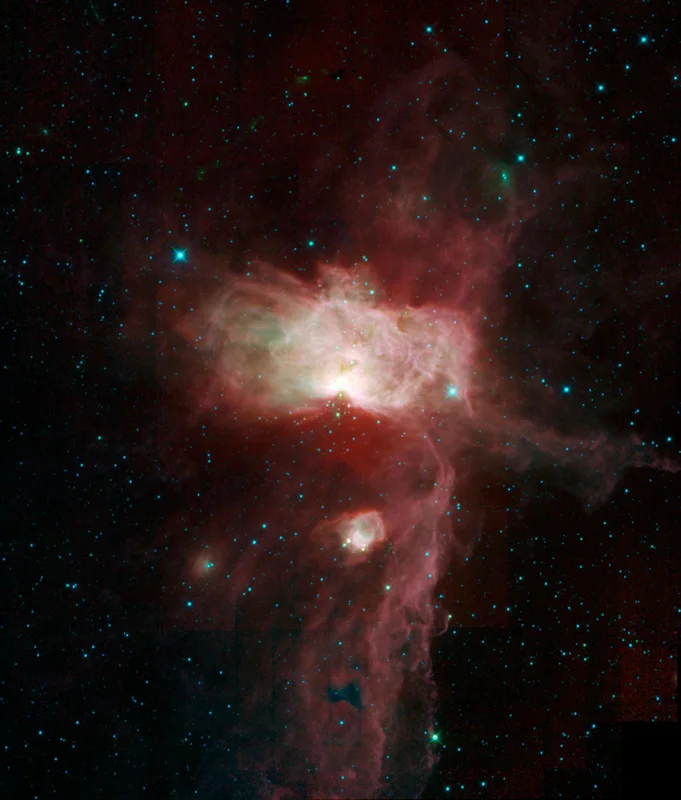
The discovery of complex organic molecules in space has revolutionised our understanding of where life’s chemical precursors originate, challenging the long-held assumption that organic chemistry was primarily a terrestrial phenomenon. Over the past two decades, astronomers and astrochemists have identified hundreds of carbon-based compounds, including polycyclic aromatic hydrocarbons (PAHs), amino acids, and even sugars, in interstellar clouds, protoplanetary disks, and cometary environments. These findings suggest that the raw materials for life are not rare accidents but are instead a natural consequence of cosmic chemistry, forged in the cold vacuum of space and later delivered to planetary surfaces like early Earth.
The Astrochemical Laboratory: Interstellar Clouds as Molecular Factories
Interstellar clouds, vast regions of gas and dust that permeate the Milky Way, are the primary nurseries for complex organic molecules. These clouds come in two main types: diffuse clouds, which are relatively sparse, and dense molecular clouds, where star and planet formation occurs. Dense molecular clouds, such as the Taurus Molecular Cloud or the Orion Nebula, contain temperatures as low as 10–50 Kelvin and densities of roughly 1,000 to 100,000 particles per cubic centimetre. Despite these forbidding conditions, these environments host a surprisingly rich inventory of organic chemistry.
The formation of complex organic molecules in space begins with simple atoms and molecules, hydrogen, carbon, nitrogen, oxygen, and sulfur, that are abundant in the interstellar medium. Through a series of gas-phase reactions and, more critically, reactions on the surfaces of dust grains, these building blocks assemble into progressively larger species. Dust grains, composed primarily of silicates and carbonaceous material, act as microscopic catalysts. Atoms and small molecules stick to these grains in the cold environment, migrating across the surface until they encounter another reactant, facilitating bond formation. This process, known as grain-surface chemistry, is essential for forming molecules like methanol (CH₃OH), which would be difficult to produce efficiently in the gas phase alone. Once formed, some of these molecules can be ejected back into the gas phase by cosmic ray impacts or by the heat from nearby forming stars, where they can then be detected by telescopes.
The Role of Ultraviolet Radiation and Cosmic Rays
Ultraviolet (UV) radiation from nearby stars and cosmic rays, high-energy particles, play a dual role in interstellar chemistry. On one hand, they can break apart molecules through photodissociation, limiting the size and complexity of organic species. On the other hand, they also drive chemical reactions by creating reactive radicals and ions. For example, cosmic rays can ionise molecular hydrogen (H₂), initiating a cascade of reactions that produce more complex species like acetylene (C₂H₂) and hydrogen cyanide (HCN), both of which are precursors to amino acids and other biomolecules. In the dense interiors of molecular clouds, where UV radiation is attenuated by dust, this cosmic-ray-driven chemistry becomes a dominant pathway.
Polycyclic Aromatic Hydrocarbons: The Cosmic Soot
Among the most ubiquitous and fascinating complex organic molecules in space are polycyclic aromatic hydrocarbons, or PAHs. These are planar molecules composed of fused benzene rings, resembling the soot produced by burning coal or wood on Earth. Astronomers estimate that PAHs contain about 10–20% of the carbon in the interstellar medium, making them one of the most abundant classes of carbon-bearing compounds in the galaxy.
PAHs were first identified in space in the 1980s through their characteristic infrared emission features, observed in a wide variety of astrophysical environments – from the diffuse interstellar medium to the surfaces of protoplanetary disks. These emission bands, often called the “unidentified infrared bands,” match the vibrational modes of specific carbon–hydrogen bonds in PAHs. The most commonly detected PAHs include naphthalene (C₁₀H₈), phenanthrene (C₁₄H₁₀), and pyrene (C₁₆H₁₀), though larger species with up to 50 or more carbon atoms are also thought to be present.
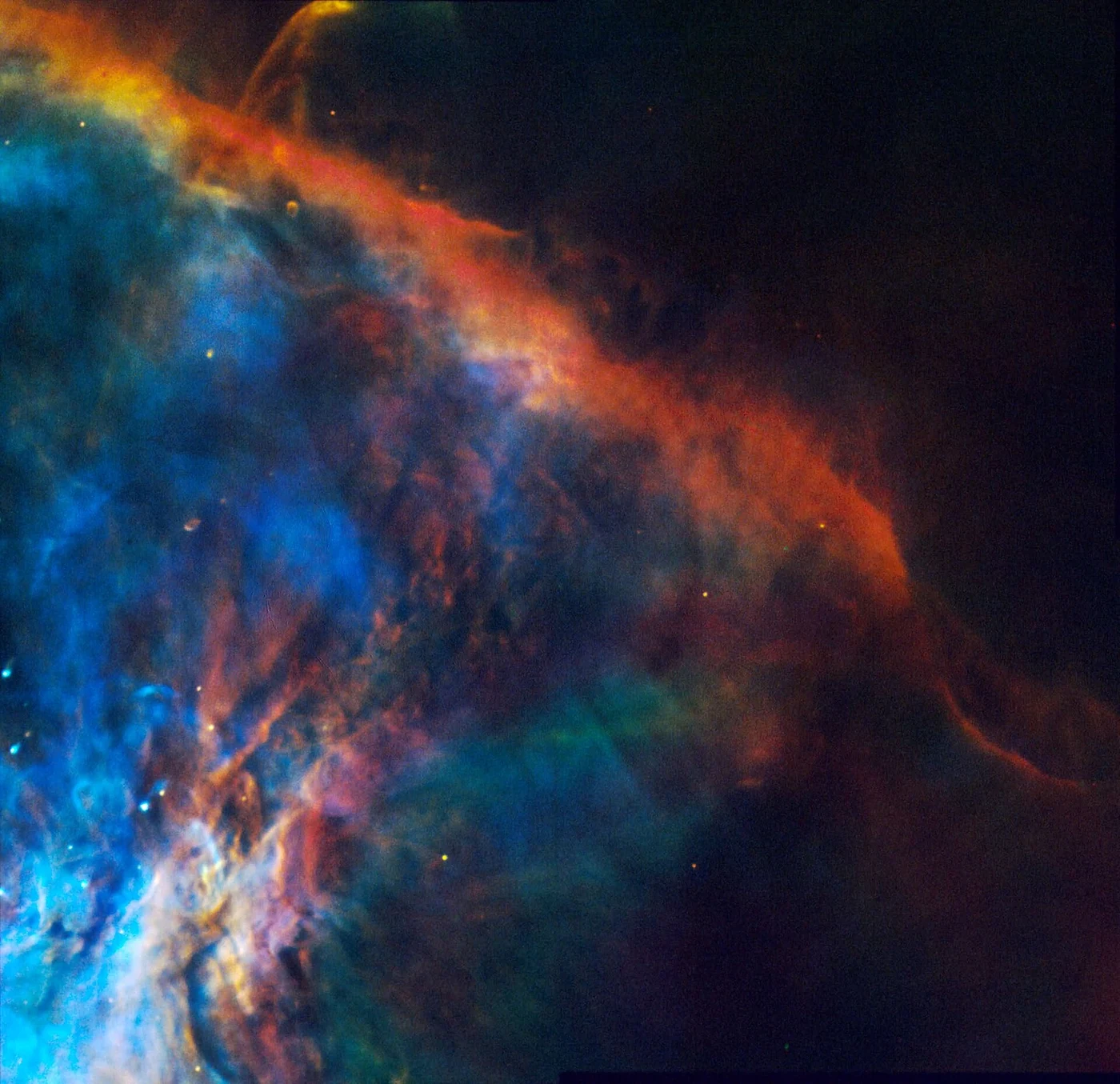
How do PAHs form in space? The leading model involves the build-up of carbon chains in the outflows of carbon-rich stars, such as asymptotic giant branch (AGB) stars. In these hot, low-pressure environments, acetylene (C₂H₂) molecules undergo a series of reactions, forming larger carbon clusters. When these clusters cool, they can cyclise into ring structures, eventually growing into the characteristic fused-ring architecture of PAHs. Once formed, PAHs are resistant to photodissociation, allowing them to survive in the interstellar medium for millions of years. However, they are not inert; UV radiation can ionise them, and they can also react with atomic hydrogen and other species to form more complex derivatives, including PAHs with oxygen or nitrogen atoms incorporated into their rings – molecules that are of particular interest for prebiotic chemistry.
PAHs as Precursors to Prebiotic Molecules
Recent research has suggested that PAHs may serve as precursors to some of the building blocks of life. In laboratory simulations mimicking interstellar conditions, PAHs exposed to UV radiation have been shown to produce amino acids and other nitrogen-containing organics when frozen in water-ice mixtures. For example, a 2019 study published in Nature Astronomy demonstrated that irradiation of PAHs in icy environments yields glycine, alanine, and other simple amino acids. This connection underscores the potential role of PAHs as a molecular stepping stone between simple cosmic carbon and the complex molecules required for life.
Amino Acids and the Road to Prebiotic Chemistry
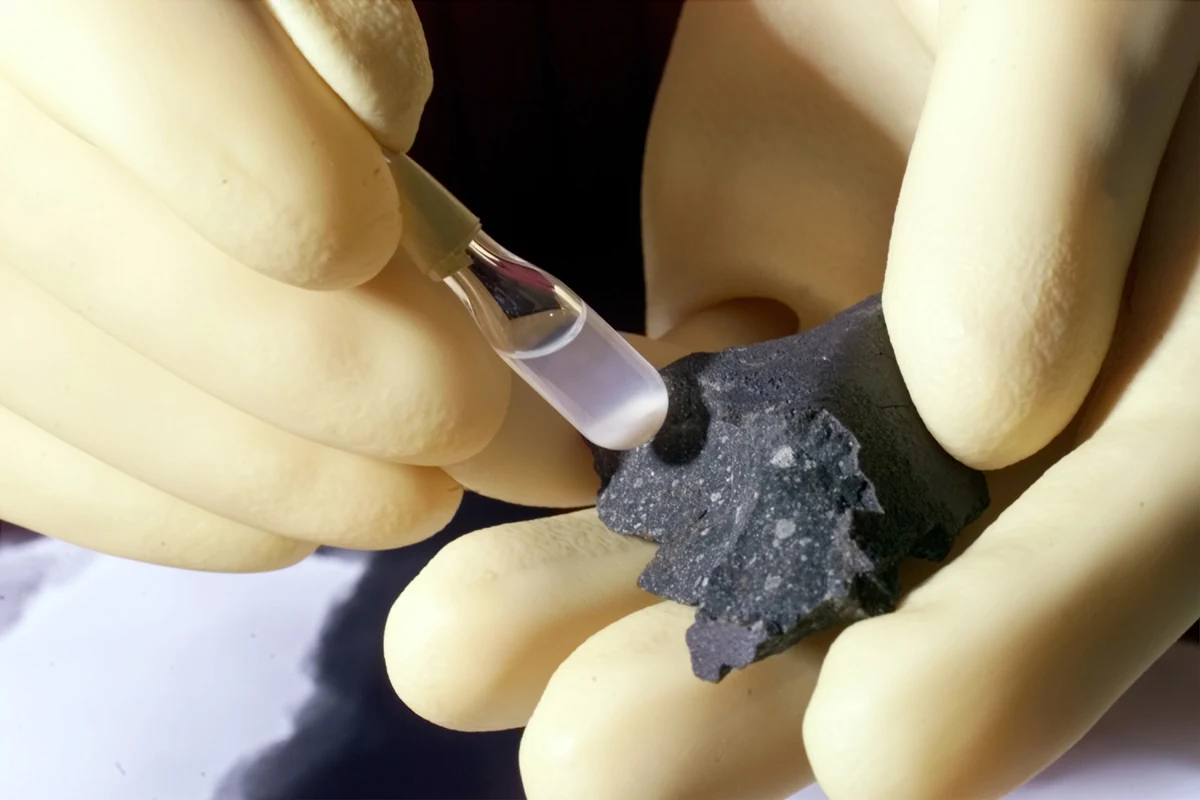
Amino acids, the monomers of proteins, are perhaps the most iconic of prebiotic molecules. While the famous Miller-Urey experiment of 1953 demonstrated that amino acids could form on early Earth from simple gases and an electrical discharge, we now know that these compounds are also produced in the cosmos. More than 80 amino acids have been identified in carbonaceous chondrite meteorites, such as the Murchison meteorite that fell in Australia in 1969. Among them are glycine, alanine, and valine, all common in terrestrial proteins, as well as many non-proteinogenic amino acids that are rare on Earth.
The formation of amino acids in space is believed to occur largely in icy grain mantles within dense molecular clouds. These mantles are composed of water ice, along with carbon dioxide, methane, ammonia, and methanol – a mixture known as “dirty ice.” When these ices are exposed to UV radiation or cosmic rays, the energy breaks bonds, creating radicals that can recombine to form more complex molecules. For example, the combination of a carboxylic acid radical (•COOH) with an amine radical (•NH₂) can yield an amino acid structure. Laboratory experiments simulating these conditions have produced glycine, alanine, and serine, confirming the plausibility of this pathway.
Delivery to Planetary Surfaces
Once formed in space, these organic molecules are not permanently trapped. They can be incorporated into comets and asteroids as these bodies form during the collapse of a molecular cloud. When comets and asteroids later impact a young planetary surface, like Earth during the Late Heavy Bombardment around 4.1 to 3.8 billion years ago, they deliver their organic cargo intact, at least partially. The Murchison meteorite, for instance, delivered an estimated 2–3% of its mass as organic carbon, including amino acids, sugars, and even nucleobases (the building blocks of DNA). This delivery mechanism provided early Earth with a rich supply of organic molecules that could have been further processed in hydrothermal vents, shallow ponds, or tidal flats to yield the first self-replicating systems.
Protoplanetary Disks: The Chemical Cradle of Planets
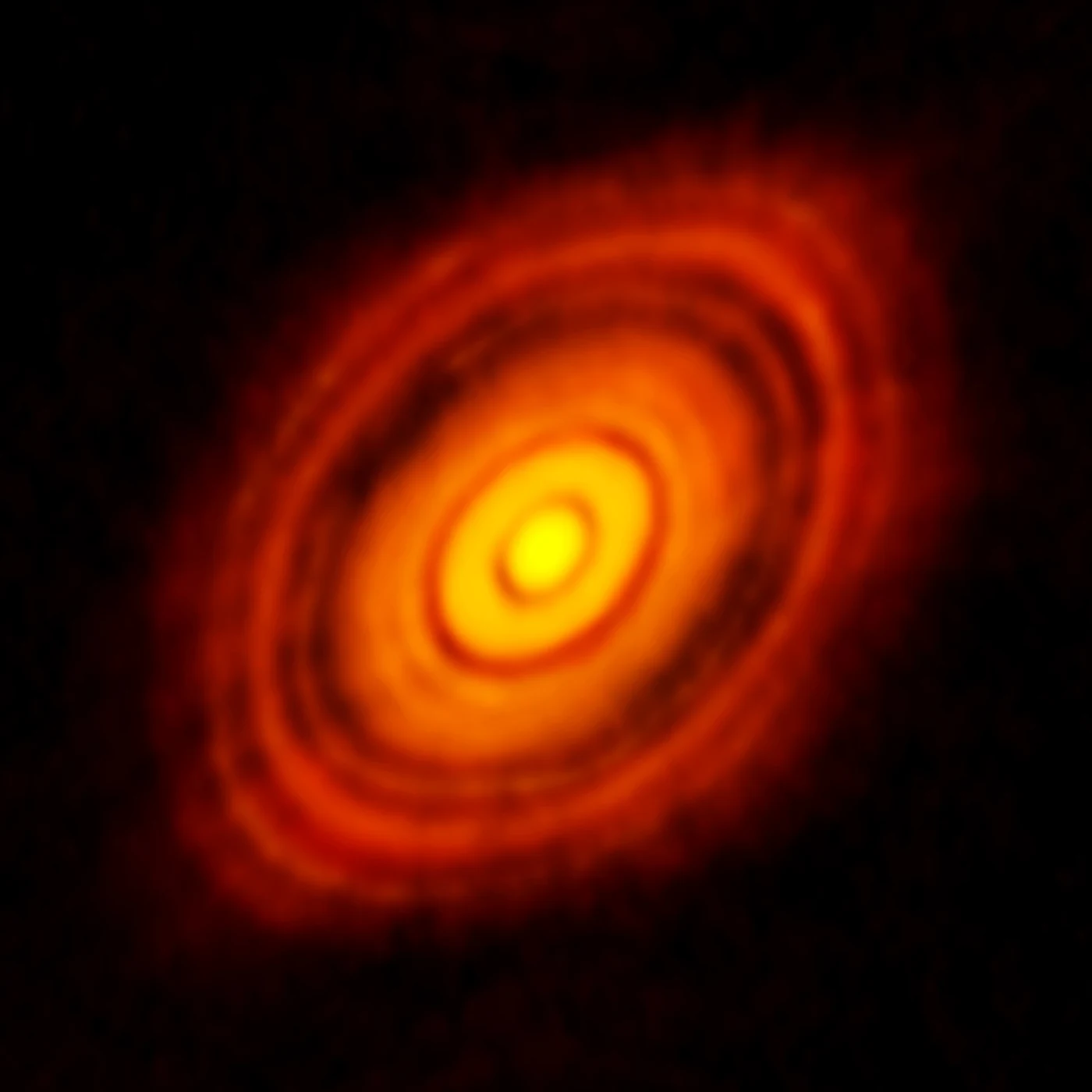
As a molecular cloud collapses to form a new star, it flattens into a rotating disk of gas and dust, a protoplanetary disk. These disks, such as those observed by the Atacama Large Millimeter/submillimeter Array (ALMA) in the HL Tauri system, are the birthplaces of planets. The chemistry within these disks is dynamic and layered. Near the central star, temperatures can exceed 1,000 Kelvin, where most organic molecules are destroyed. Further out, in the cold midplane (temperatures around 20–100 Kelvin), ices and organic molecules can survive and even be incorporated into planetesimals, the building blocks of planets.
Protoplanetary disks are particularly rich in complex organic molecules in space because they offer a range of chemical environments. For example, ALMA has detected methanol, dimethyl ether, and methyl formate in the disks around young stars. These molecules are not only interesting for their own sake but are also precursors to more complex species, including amino acids. The disk also serves as a conveyor belt, transporting organic-rich material from the outer, colder regions inward to the terrestrial planet zone, where it can be delivered to growing planets.
The Role of Water Ice
Water ice is critical to this chemistry. In protoplanetary disks, water ice forms an “snow line” at a certain distance from the star, inside which ice sublimates (turns to gas) and outside which it remains solid. Organic molecules are often trapped within this ice, protected from UV radiation and available for grain-surface chemistry. When the disk warms, as during planet formation, these ices can sublimate, releasing their organic payload into the gas phase or onto the surfaces of planetesimals. This process is thought to have been central to the delivery of organics to Earth and other rocky planets.
Implications for the Origin of Life on Earth and Beyond
The detection of complex organic molecules in space has profound implications for understanding the origin of life. It suggests that the chemical evolution from simple atoms to complex biomolecules is a spontaneous, ubiquitous process that occurs under cosmic conditions. This means that the building blocks of life were likely present on the early Earth not as a rare gift, but as a common product of the planet’s formation and subsequent bombardment.
Furthermore, this universality raises the exciting possibility that similar chemistry occurs in other planetary systems throughout the galaxy. If organic molecules are abundant in protoplanetary disks, then any Earth-like planet forming in such a system would receive a similar chemical endowment. This does not guarantee life, but it does eliminate the need for a highly improbable chemical event. As NASA’s Astrobiology Institute notes, the convergence of cosmic and terrestrial organic chemistry makes life a plausible, perhaps even likely, outcome of planetary evolution.
Sources & References
- Ehrenfreund, P., & Charnley, S. B. (2000). “Organic Molecules in the Interstellar Medium, Comets, and Meteorites: A Voyage from Dark Clouds to the Early Earth.” Annual Review of Astronomy and Astrophysics, 38, 427-483.
- Herbst, E., & van Dishoeck, E. F. (2009). “Complex Organic Interstellar Molecules.” Annual Review of Astronomy and Astrophysics, 47, 427-480.
- NASA Astrobiology Institute – Overview of astrochemistry and prebiotic evolution.
- Tielens, A. G. G. M. (2008). “Interstellar Polycyclic Aromatic Hydrocarbon Molecules.” Annual Review of Astronomy and Astrophysics, 46, 289-337.
- James Webb Space Telescope – Organic Molecules in Space – Observations of organic chemistry in the cosmos.
- Cleeves, L. I., et al. (2014). “The Organic Composition of Protoplanetary Disks.” The Astrophysical Journal, 783(1), 49.
Frequently Asked Questions
What organic molecules have been found in space?
Astronomers have detected amino acids, sugars, formaldehyde, ethanol, and polycyclic aromatic hydrocarbons (PAHs) in interstellar clouds, comets, and meteorites, including the Murchison meteorite, which contains over 70 amino acids.
How do organic molecules form in interstellar space?
Most form through surface chemistry on cold dust grains, where simple molecules like CO, N2, and H2O undergo UV-driven or cosmic-ray-driven reactions. Gas-phase ion-molecule reactions in dense clouds also produce complex organics.
Why does finding organic molecules in space matter for the origin of life?
It demonstrates that the chemical ingredients for life are widespread across the galaxy, raising the possibility that Earth received a prebiotic chemical boost from space, a central argument in panspermia and abiogenesis research.
Have amino acids been confirmed in meteorites?
Yes. Carbonaceous chondrite meteorites like Murchison (1969) and Tagish Lake (2000) contain dozens of amino acids, many not found in biology, confirming their extraterrestrial origin rather than terrestrial contamination.
Can organic molecules survive delivery from space to a planet surface?
Many can. Amino acids inside meteorites are shielded from UV radiation. Laboratory simulations show that simple amino acids like glycine can survive the shock and heating of atmospheric entry when embedded in porous rocky material.
Further reading: Astrochemistry on Wikipedia