
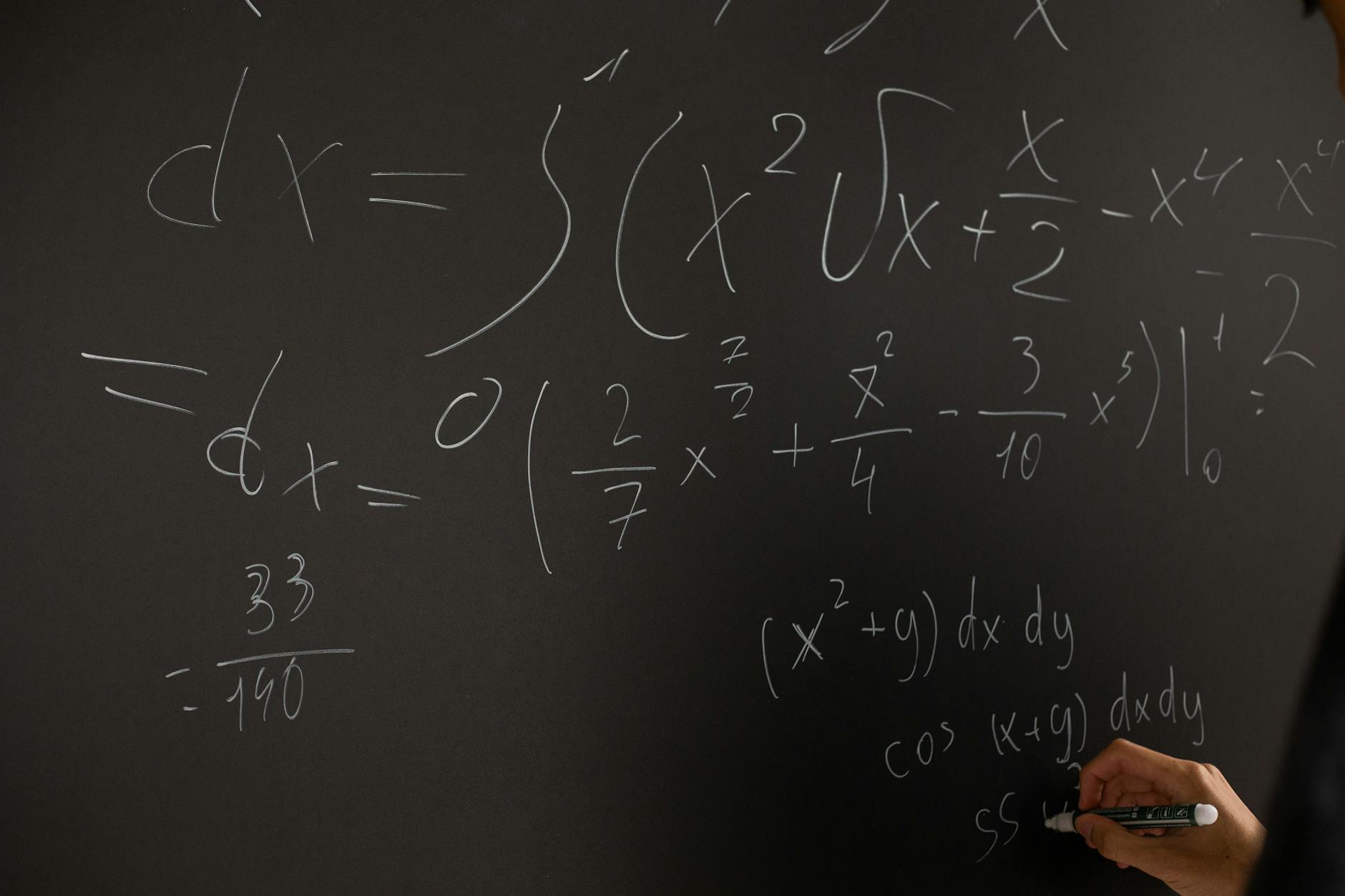
In 1960, physicist Eugene Wigner published a short essay with a remarkable title: “The Unreasonable Effectiveness of Mathematics in the Natural Sciences.” It captured a genuine mystery: why mathematics describes nature at all.
Wigner’s puzzle was simple but deep. Mathematics is a purely human intellectual creation, invented (or discovered, depending on your philosophy) without any reference to the physical world. Mathematicians prove theorems because they are logically consistent, not because they describe anything real. And yet, over and over again, the most abstract mathematical structures, developed with no physical application in mind, turn out to describe nature with uncanny precision.
Why should this be? It is, as Wigner wrote, “a wonderful gift which we neither understand nor deserve.”
Mathematics describes nature because physical laws are inherently mathematical. The universe appears to operate according to precise, logical rules that mirror the structures mathematicians discover through pure thought. This alignment, between abstract reasoning and physical reality, is the core of the mystery Wigner identified.
Why Mathematics Describes Nature: An Unlikely Partnership

Consider the following progression:
Complex numbers: Mathematicians in the 16th century developed these numbers while solving cubic equations (for example, using Cardano’s formula for `x^3 + px + q = 0`), where square roots of negative numbers appeared as intermediate steps that later yielded real solutions. They were abstract curiosities. Today, complex numbers are the fundamental mathematical language of quantum mechanics: the deepest theory of physical reality. The wave function is a complex-valued function. Without complex numbers, quantum mechanics cannot be formulated. This follows the same pattern as many discoveries in What Is Spacetime? Einstein’s Unified View of Space and Time, where abstract mathematical frameworks later found physical realization.
Non-Euclidean geometry: For 2,000 years, Euclid’s geometry (flat space, parallel lines never meet, angles of triangles sum to 180°) was the geometry of space. In the 19th century, Riemann, Lobachevsky, and Bolyai developed geometries where space is curved: purely as abstract mathematical exercises. When Einstein formulated general relativity in 1915, he needed exactly Riemannian geometry to describe the curvature of spacetime. The mathematics had been waiting for the physics.
Group theory: Developed by Évariste Galois (who died in a duel at 20) to study the symmetries of polynomial equations, pure algebra with no physical motivation. Group theory turned out to be the exact mathematical language needed to classify fundamental particles and forces. The Standard Model of particle physics is formulated as a gauge theory with the symmetry group SU(3) × SU(2) × U(1), abstract mathematical objects that describe the symmetries of the fundamental interactions.
Differential equations: Newton developed calculus partly to describe planetary motion. But differential equations have since been found to govern electromagnetism (Maxwell’s equations), quantum mechanics (Schrödinger’s equation), spacetime (Einstein’s field equations), fluid dynamics, heat flow, population dynamics, and virtually every other quantitative description of nature.
Matrices: Developed as pure algebra in the 19th century, they turned out to be the natural language for quantum mechanics (Heisenberg formulated his version of quantum mechanics as matrix mechanics before Schrödinger formulated it as wave equations).
The pattern is consistent: mathematics developed for purely internal mathematical reasons turns out to describe the physical world, often decades or centuries later.
Two Mysteries in One
Wigner actually identified two connected puzzles:
Why is mathematics so useful for describing nature? This is the effectiveness question.
Why is such a small subset of mathematics useful? Of all the mathematical structures that can be conceived, only a tiny fraction describes actual physics. Why these, and not others?
These are different questions. The first asks why nature is mathematical at all. The second asks why nature is this specific kind of mathematical.
Proposed Explanations
Mathematics Is Discovered, Not Invented (Platonism)
Mathematical Platonists argue that mathematical objects, numbers, geometric forms, relationships, have objective existence independent of human minds. Mathematicians discover these pre-existing structures rather than inventing them.
If mathematical structures genuinely exist independent of human thought, their effectiveness in describing physical reality is less mysterious: the physical world and the mathematical world are both aspects of the same underlying reality, or the physical world is itself a mathematical structure. We discover mathematics and we discover physics, no wonder they coincide.
Mathematical universe hypothesis: Max Tegmark takes Platonism further, arguing that the universe is not merely described by mathematics: it is a mathematical structure. Physical reality is a particular mathematical structure, and we exist as mathematical objects within it. The “unreasonable” effectiveness of mathematics in physics is then completely natural: mathematics describes the universe because the universe is mathematics.
This is philosophically bold but essentially unfalsifiable. For more on how scientists distinguish testable ideas from untestable ones, see Falsifiability Explained: How Karl Popper Defined the Boundary of Science.
Mathematics Is Invented, And Effective Because We Select It
An opposing view: mathematics is a human invention, and its effectiveness is not mysterious because we only use mathematical tools that work.
Nature provides the raw material; mathematics is the language we develop to describe it. Of course mathematics describes nature, we built mathematics specifically to describe what we observe. The cases where mathematics works are salient; the vast territory of mathematics that has no physical application is ignored.
This explanation has merit but seems incomplete. The specific cases Wigner highlighted, where highly abstract mathematics developed with no physical motivation was later found to exactly describe physical reality, are not explained by this selection effect.
The Physical Universe Embeds Mathematical Structure
Perhaps the universe contains only phenomena that are, by their nature, mathematically describable. The deep structure of physical law, symmetry, conservation, causality, is intrinsically mathematical. Anything consistent with the laws of logic and mathematics could potentially be physical; the physical world is one consistent mathematical structure.
We Are Mathematical Creatures
Philosopher Hilary Putnam suggested the effectiveness might not be unreasonable at all: we are mathematical animals, evolved in a world where mathematical structure exists. Our cognitive capacities for abstraction, pattern recognition, and quantitative reasoning were selected precisely because they help us navigate a world with mathematical regularities. We should expect to be good at mathematics for the same reason we’re good at tracking prey, it was adaptive.
But this explanation seems to explain our mathematical ability more than it explains why the universe is mathematical at all.
Examples That Deepen the Mystery
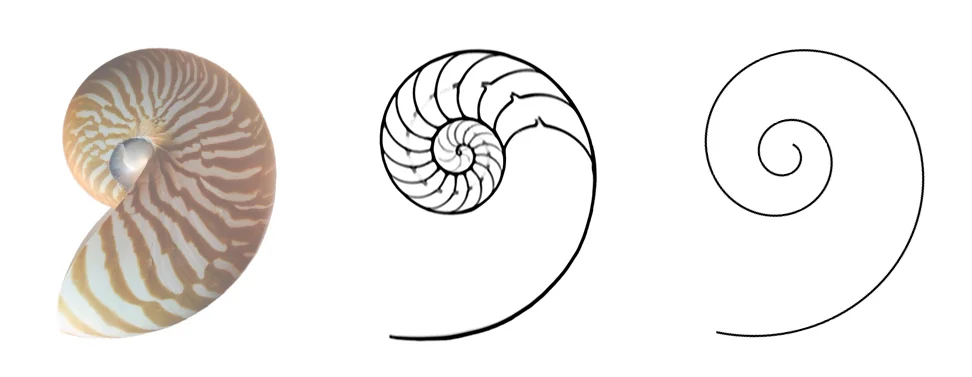
Some cases of mathematical effectiveness are especially striking.
Dirac’s equation and antimatter: When Paul Dirac wrote his relativistic quantum equation for the electron in 1928, it had two solutions, one for the electron and one for a particle with opposite charge. Dirac initially dismissed the second solution as mathematical artifact. It turned out to be the positron, antimatter, discovered experimentally by Carl Anderson in 1932. The mathematics predicted antimatter before physics found it. For more on how such phenomena reshape our understanding of reality, see Antimatter Explained: The Mirror Image of Matter and Why the Universe Exists.
Maxwell’s equations and the speed of light: James Clerk Maxwell unified electricity and magnetism in 1865 with a set of equations that predicted electromagnetic waves. The predicted speed of propagation, calculated from measurable constants of electricity and magnetism, was 3 × 10⁸ m/s. Maxwell recognized this as the speed of light. Light is an electromagnetic wave. This was pure mathematics leading to a profound physical insight.
The Higgs boson: Predicted in 1964 by Peter Higgs and others purely on mathematical grounds: the theory required a field to give mass to W and Z bosons. The Higgs boson was discovered in 2012, 48 years later, exactly as predicted. The mathematics waited nearly half a century for experimental confirmation.
Gravitational waves: In 2017, the LIGO and Virgo collaborations detected gravitational waves from the neutron star merger GW170817. The signal matched the predictions of general relativity, a mathematical theory formulated exactly a century earlier – with precision better than one part in a trillion. This modern example shows that the pattern of mathematical predating physical discovery continues today.
The Limits: Mathematics That Doesn’t (Yet) Describe Physics
One response to Wigner is to note how much mathematics does not describe any known physical phenomenon.
Most number theory (prime numbers, integer solutions to equations) has no known application in fundamental physics, though it is used in cryptography and information theory. Most of abstract algebra, category theory, and higher-dimensional topology is not connected to known physics. Most conceivable geometries and topologies are not the geometry of our universe.
So the mystery might be restated: within the vast space of all conceivable mathematical structures, why does a remarkably small subset describe our universe? What selected these mathematical structures as the laws of physics?
This brings us back to fine-tuning. The laws of physics are not just mathematical: they are specific mathematics, with specific symmetries and specific free parameters. One possible resolution is the anthropic principle: we live in a universe where these particular mathematical structures hold because only such a universe can produce conscious observers. Another is the multiverse hypothesis: many universes exist with different mathematical laws, and we naturally find ourselves in one where complex life is possible. Understanding why these particular mathematical structures govern reality remains one of the deepest open questions at the intersection of physics and philosophy. For more on this line of thought, see The Great Filter: Why the Universe May Be Silent.
Living the Mystery
The unreasonable effectiveness of mathematics is one of those problems that doesn’t quite get solved: it gets clarified, reformulated, and approached from different angles, but the central puzzle remains.
What we can say with confidence: the universe has deep mathematical structure. Symmetry, conservation laws, quantization, these are not accidents but features of reality. Mathematics is the language in which that structure is most precisely expressed.
Whether mathematics is discovered or invented, whether reality is mathematical or merely describable by mathematics, whether future physics will be even more mathematical or will require tools beyond mathematics, these remain open questions.
But Wigner’s gift, the extraordinary tool of mathematics applied to the extraordinary regularity of nature, is what has built our civilization’s understanding of the cosmos, from the largest superclusters to the smallest quarks.
Sources
- Wigner, E.P. (1960). The unreasonable effectiveness of mathematics in the natural sciences. Communications on Pure and Applied Mathematics, 13(1), 1–14.
- Tegmark, M. (2014). Our Mathematical Universe: My Quest for the Ultimate Nature of Reality. Knopf.
- Colyvan, M. (2001). The Indispensability of Mathematics. Oxford University Press.
- Hamming, R.W. (1980). The unreasonable effectiveness of mathematics. The American Mathematical Monthly, 87(2), 81–90.
- LIGO Scientific Collaboration. (2017). GW170817: Observation of Gravitational Waves from a Binary Neutron Star Inspiral. Physical Review Letters, 119, 161101.
What is the ‘unreasonable effectiveness of mathematics’?
It is the surprising observation, famously articulated by physicist Eugene Wigner in 1960, that abstract mathematical concepts, developed purely for logical consistency, often describe physical reality with remarkable precision.
Why does mathematics describe nature so well?
Mathematics describes nature because the universe appears to operate according to precise, logical rules that mirror the structures mathematicians discover through pure thought, though the reason for this alignment remains a deep mystery.
What did Eugene Wigner say about mathematics in nature?
Wigner called the effectiveness of mathematics in the natural sciences ‘a wonderful gift which we neither understand nor deserve,’ highlighting the puzzle that human-invented math so accurately models physical laws.
Is mathematics invented or discovered?
This is a philosophical debate; some argue mathematics is a human invention created for logical consistency, while others believe it is discovered as a fundamental structure of reality that exists independently of human thought.
What is an example of abstract math describing nature?
Complex numbers, developed in the 16th century to solve cubic equations, later became essential for describing quantum mechanics and electromagnetic waves, showing how pure math can predict physical phenomena.
Further reading: Unreasonable effectiveness of mathematics on Wikipedia