
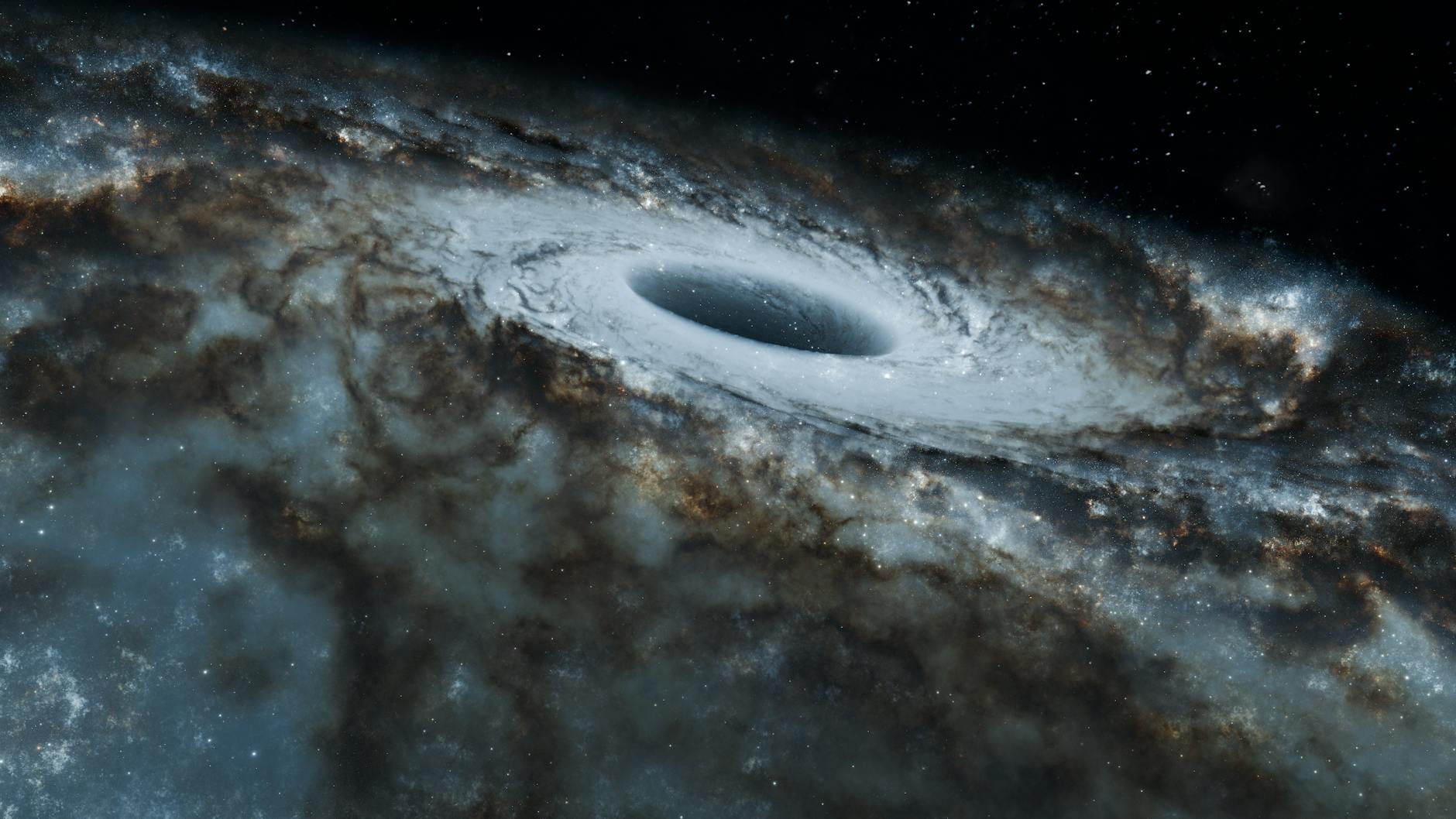
Before Albert Einstein, space and time were considered separate and independent stages on which events took place. Space was the three-dimensional arena (width, height, depth), and time was a universal clock ticking at the same rate for everyone, everywhere. Newton’s physics assumed this. It was so obvious that no one had questioned it seriously. The question of what spacetime is — how space and time could form a single unified fabric — is one of the most profound shifts in the history of physics.
Einstein demolished this assumption. In his 1905 theory of special relativity and his 1915 theory of general relativity, he showed that space and time are not separate entities. They are woven together into a single four-dimensional fabric: spacetime. The consequences of this unification — time dilation, length contraction, the curvature of spacetime by mass, and gravitational waves — have been measured, confirmed, and exploited in technologies that billions of people use every day.
Special Relativity: Space and Time Are Linked

Einstein’s special relativity begins with two postulates. First, the laws of physics are the same for all observers moving at constant velocity relative to each other. Second, the speed of light in a vacuum is the same for all such observers, regardless of the motion of the light source or the observer.
The second postulate sounds innocuous. It is revolutionary. If you are on a train and you throw a ball forward at 30 km/h and the train is moving at 100 km/h, an observer on the ground sees the ball moving at 130 km/h. That is classical velocity addition. But if you shine a flashlight forward, you and the ground observer both measure the light moving at exactly 299,792,458 meters per second, not at c plus the speed of the train.
To make this work mathematically, time and space cannot be absolute. An observer moving relative to you will measure different lengths for the same spatial intervals and different durations for the same time intervals. Moving clocks run slow (time dilation). Moving rulers are shorter (length contraction). Neither is an illusion; both are real, measurable effects that depend on relative motion.
Hermann Minkowski, Einstein’s former mathematics professor, formalized this in 1908. He showed that the apparent disagreements between observers could be unified by treating space and time as dimensions of a single four-dimensional structure: Minkowski spacetime. In this geometry, the quantity that all observers agree on is not the spatial distance or the time interval separately, but the spacetime interval (a combination of both).
The spacetime interval between two events is: s² = −c²(Δt)² + (Δx)² + (Δy)² + (Δz)²
(using the convention where the time component has a negative sign). All observers, regardless of their velocity, will calculate the same value of s² for the same pair of events. Spacetime is more fundamental than either space or time alone.
General Relativity: Spacetime Curves
Special relativity deals with observers moving at constant velocities. But what about gravity? And what about acceleration?
In 1915, Einstein completed general relativity (a theory in which gravity is not a force in the traditional sense but a curvature of spacetime caused by mass and energy). The central equation (Einstein’s field equations) relate the geometry of spacetime to the distribution of matter and energy within it:
Gμν + Λgμν = (8πG/c⁴) Tμν
In plain terms: mass and energy tell spacetime how to curve; the curvature of spacetime tells matter how to move.
A useful (if imperfect) analogy: imagine spacetime as a stretched rubber sheet. Place a heavy ball in the center; it creates a depression. A smaller ball rolling across the sheet will curve toward the heavy ball, following the contour of the depression. That is the gravitational “attraction” (not a force pulling the small ball toward the large one, but the curvature of the sheet guiding its path).
Objects in free fall (including planets in orbit and light rays passing massive objects) are following the straightest possible paths (called geodesics) through curved spacetime. The path is curved not because a force is acting on them but because spacetime itself is curved.
Time Dilation: Two Kinds

Spacetime unification produces two distinct forms of time dilation, both experimentally confirmed.
Velocity-based time dilation: The faster you move through space, the slower your clock ticks relative to a stationary observer. This is special relativistic time dilation. At everyday speeds, the effect is immeasurably small. At 99% the speed of light, a clock ticks about seven times slower. At 99.9999% c, it ticks about 700 times slower. This is not hypothetical; muons created in the upper atmosphere by cosmic rays live long enough to reach Earth’s surface only because their clocks run slow by exactly this factor.
Gravitational time dilation: The stronger the gravitational field (the more curved the spacetime), the slower time passes. Clocks run slow in strong gravity. A clock at sea level ticks slightly slower than a clock on a mountaintop. This is general relativistic time dilation. GPS satellites orbit at high altitude where Earth’s gravity is weaker; their clocks run slightly fast compared to clocks on the ground. Without correcting for both velocity-based and gravitational time dilation (in opposite directions), GPS systems would accumulate errors of about 10 kilometers per day.
Gravitational Waves: Ripples in Spacetime
If spacetime is a fabric, then violent events should produce ripples in that fabric (propagating distortions of the geometry itself). These are gravitational waves. Einstein predicted them in 1916. For a century, no one had the technology to detect them.
On September 14, 2015, the LIGO (Laser Interferometer Gravitational-Wave Observatory) detected gravitational waves for the first time, produced by two merging black holes approximately 1.3 billion light-years away. The signal was a “chirp”: a rising frequency and amplitude as the black holes spiraled together and merged, producing a final ringdown. The distortion of spacetime at LIGO’s location was less than one thousandth the diameter of a proton.
Gravitational wave astronomy has since grown into a field, with dozens of detections of merging black holes and neutron stars. Each detection is a direct confirmation that spacetime is a dynamic, physical entity that can flex, oscillate, and carry energy.
Singularities: Where Spacetime Breaks

General relativity predicts that spacetime can be curved to the point of breakdown. A black hole is a region where spacetime curvature becomes so extreme that nothing (not even light) can escape. At the center of a black hole, the equations of general relativity predict a singularity: a point of infinite density and curvature where the mathematical description breaks down completely.
Similarly, the Big Bang was a spacetime singularity (a point at which the equations of general relativity cease to apply). This does not necessarily mean the universe began from a literal point of zero size; it means current physics cannot describe the extreme conditions of the earliest moment.
Both singularities (inside black holes and at the Big Bang) are generally understood as signals that a more complete theory is needed: one that unifies general relativity with quantum mechanics. This is the goal of quantum gravity research, which remains one of the greatest unsolved problems in fundamental physics.
Spacetime and Everyday Life
Spacetime physics is not just an academic curiosity. It has practical, measurable consequences at human scales:
GPS: The Global Positioning System relies on satellites carrying atomic clocks. Time dilation from both velocity (satellites move fast, so their clocks run slow) and gravity (satellites are at altitude where gravity is weaker, so their clocks run fast) must be corrected continuously. Without relativistic corrections, GPS would accumulate roughly 10 kilometers of error per day.
Particle accelerators: Accelerators routinely accelerate particles to velocities where relativistic effects are significant. The design of accelerators like the LHC must account for length contraction and time dilation to predict particle behavior correctly.
The simplest way to state what is spacetime: it is the single four-dimensional stage on which all physical events happen, where distances in space and intervals in time are aspects of the same underlying geometry. Gravitational lensing: Light follows geodesics in curved spacetime. When light from a distant galaxy passes near a massive intervening object, its path curves. This gravitational lensing is used by astronomers to study dark matter, measure the Hubble constant, and find distant galaxies that would otherwise be invisible. Understanding what is spacetime is essential to understanding gravity, black holes, and the large-scale structure of the universe. The answer to what is spacetime is still being refined: quantum gravity may require an even deeper revision of our picture.
Sources
Einstein, A. (1905). Zur Elektrodynamik bewegter Körper. Annalen der Physik, 17(10), 891–921. doi:10.1002/andp.19053221004
Einstein, A. (1915). Die Feldgleichungen der Gravitation. Sitzungsberichte der Preussischen Akademie der Wissenschaften, 844–847.
Minkowski, H. (1908). Raum und Zeit. Address delivered at the 80th Assembly of German Natural Scientists and Physicians, Cologne. Reprinted in The Principle of Relativity (Dover, 1952).
Abbott, B.P. et al. (LIGO/Virgo Collaboration). (2016). Observation of gravitational waves from a binary black hole merger. Physical Review Letters, 116(6), 061102. doi:10.1103/PhysRevLett.116.061102
Misner, C.W., Thorne, K.S., & Wheeler, J.A. (1973). Gravitation. W.H. Freeman.
Will, C.M. (2014). The confrontation between general relativity and experiment. Living Reviews in Relativity, 17(1), 4. doi:10.12942/lrr-2014-4