
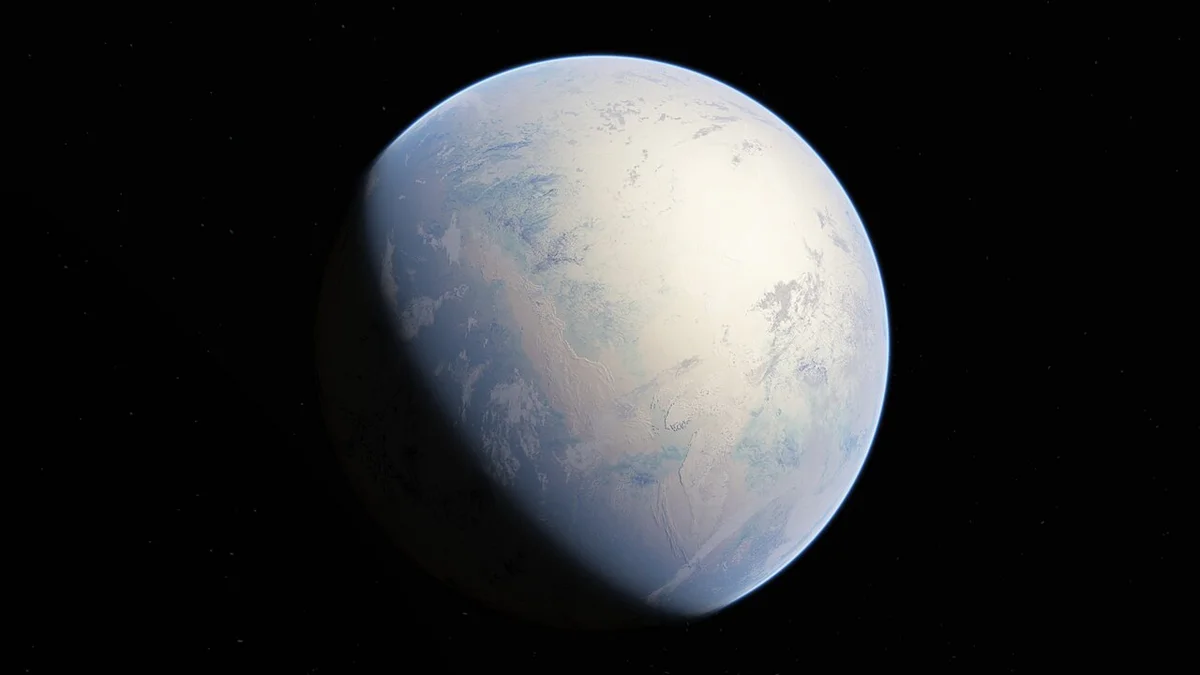
The snowball earth effect on life evolution represents one of the most compelling and counterintuitive narratives in Earth’s deep history: the idea that planetary-scale glaciations, rather than extinguishing life, created the ecological crucible that forged the first complex, multicellular organisms. This hypothesis challenges the traditional view that ice ages are purely destructive events, suggesting instead that the Cryogenian Period (approximately 720–635 million years ago) acted as a powerful evolutionary pump, setting the stage for the emergence of the Ediacaran biota and, ultimately, all animal life.
The Cryogenian Glaciations: A Planet Frozen
During the Cryogenian, Earth experienced at least two major glaciations of extraordinary severity: the Sturtian (c. 717–660 million years ago) and the Marinoan (c. 650–635 million years ago). Geological evidence, including glacial deposits found at paleoequatorial latitudes, cap carbonates overlying glacial sediments, and distinctive carbon isotope excursions from the Shuram Formation in Oman, indicates that ice sheets advanced to sea level in the tropics, covering the planet in a frozen shell. The “Snowball Earth” hypothesis, formalized by geoscientist Paul Hoffman and colleagues in 1998, posits that this ice cover was nearly complete, with only scattered refugia of open water near volcanic hotspots or in equatorial seaways.
The implications for life were severe. Photosynthesis would have been drastically reduced under thick ice, starving the marine food web. The planet’s albedo, its reflectivity, would have risen sharply, creating a positive feedback loop that locked the Earth in a deep freeze for millions of years. Yet, life did not vanish. Instead, it was funneled into extreme environments: briny subglacial lakes, hydrothermal vent fields, and thin equatorial marine zones where liquid water persisted. These refugia became the evolutionary testing grounds.
How Extreme Conditions Reshaped Selective Pressures
The snowball earth effect on life evolution can be understood through the lens of ecological refugia and altered nutrient cycles. In the deep, light-starved oceans of a snowball Earth, primary productivity shifted from photosynthesis to chemosynthesis and heterotrophy. Microbes that could scavenge sulfur, iron, or methane, especially in hydrothermal vent systems, thrived. This created a stable, nutrient-recycling ecosystem that selected for organisms capable of surviving on low-energy substrates.
Importantly, the ice cover isolated marine basins, leading to dramatic changes in ocean chemistry. As glaciers scoured continents, they pulverized rock into fine dust, which was deposited into oceans when the ice eventually melted. This delivered vast quantities of bioavailable phosphorus and iron, nutrients that typically limit marine productivity. Geochemical data from ancient sedimentary rocks, including those from the Flinders Ranges in South Australia, record a spike in phosphorus concentrations immediately following deglaciation. This nutrient pulse would have fueled massive algal blooms, creating a surplus of organic matter that could support larger, more energy-hungry organisms.
The isolation of marine basins also allowed for the buildup of dissolved oxygen. Oxygen levels in the cryogenian oceans were likely low (the “Canfield Ocean” hypothesis), but in shallow, ice-free equatorial waters, photosynthesis from benthic algae could have produced localized oxygen oases. These conditions selected for organisms with higher metabolic demands, a prerequisite for the evolution of complex, multicellular body plans.
From Microbial Mats to Macroscopic Life

The immediate post-glacial world, the late Cryogenian and early Ediacaran Period, saw a biological revolution. Fossil evidence from the Doushantuo Formation (China, ~635–551 million years ago) reveals a burst of diversity: spheroidal fossils interpreted as early animal embryos, macroscopic algae, and the first traces of motile organisms. This radiation did not occur in a vacuum. The snowball earth effect on life evolution is most visible in the transition from microbial mats to the Ediacaran biota, soft-bodied, morphologically complex organisms that appeared around 575 million years ago.
One hypothesis, proposed by paleontologist Shuhai Xiao and colleagues, suggests that the selection pressures of the Cryogenian glaciations favored the evolution of larger cell sizes and cellular adhesion mechanisms. These traits are the building blocks of multicellularity. In the low-temperature, high-viscosity waters of a snowball Earth, larger cells could better regulate internal chemistry and resist osmotic stress. Additionally, the ability to form simple colonies or filaments would have improved survival by buffering against environmental fluctuations.
The Ediacaran biota itself, organisms such as Dickinsonia, Charnia, and Tribrachidium, displayed a range of body plans that were novel in the fossil record. Many were frond-like, sessile, and had a fractal or quilt-like architecture, which may have maximized surface area for nutrient absorption in low-oxygen environments. Their sudden appearance after a prolonged period of evolutionary stasis argues strongly that the Snowball Earth glaciations had broken the ecological mold, creating vacant niches that explosive evolution could fill.
The Role of Oxygen and Phosphorus in the Post-Glacial World
The link between deglaciation and the rise of complex life is reinforced by geochemical data. After the Marinoan glaciation, sedimentary records show a dramatic increase in atmospheric oxygen, rising from perhaps <1% to near 10% of modern levels (the “Great Oxidation Event 2”). This rise was driven by increased organic carbon burial in oxygen-poor ocean basins, a process that removes reduced carbon from the biosphere and leaves oxygen as a byproduct. The nutrient phosphorus, delivered by glacial meltwater, fueled primary productivity, which in turn accelerated this burial.
A study published in Nature Geoscience analyzed barium isotope ratios in Cryogenian carbonates and concluded that the marine phosphorus reservoir increased significantly following the glaciations. This nutrient injection was temporally correlated with the first appearance of macroscopic Ediacaran fossils, strongly implying a causal link. The snowball earth effect on life evolution thus operated through a geochemical mechanism: the glaciations reset the global nutrient cycle, enabling the trophic expansions that complex life required.
Were There Glacial Refugia That Preserved Complex Life?
A critical question is whether any complex life existed during the glaciations. While most Ediacaran fossils appear after the ice melted, there are tantalizing hints of pre-glacial complexity. The Lantian Formation in China (ca. 635 million years ago) contains frond-like fossils that predate or are contemporaneous with the late Cryogenian. However, these fossils are controversial; some researchers argue they are microbial colonies or algae rather than animals.
Genetic evidence from modern organisms provides a complementary approach. Molecular clocks, which estimate divergence times from DNA sequence data, suggest that major animal lineages (sponges, cnidarians, and bilaterians) diverged during the Cryogenian, between 700 and 600 million years ago. For example, a 2021 study in Science Advances placed the divergence of sponges and other animals at around 650 million years ago, squarely within the Marinoan glaciation. If correct, this implies that the ancestors of all modern animals survived the Snowball Earth in isolated refugia, perhaps in shallow equatorial waters, hydrothermal vent fields, or even in ice-embedded brine veins.

These refugia would have been hotspots of adaptive evolution. In the absence of large predators (which did not yet exist), selection would have favored increasing body size, cellular specialization, and the ability to exploit patchy food resources. The snowball earth effect on life evolution thus may have been not merely a reset but a catalyst: the glaciations created a “red queen” environment where the race to survive drove innovation.
From Snowball to Garden: The Ediacaran Revolution
The end of the Cryogenian, around 635 million years ago, ushered in the Ediacaran Period, Earth’s first golden age of complex life. The fossil record shows a clear diversification event, with over 100 genera of soft-bodied organisms appearing worldwide by 560 million years ago. These organisms were not modern animals, they lacked guts, appendages, and hard parts, but they were truly multicellular, with tissues and body plans that foreshadowed later Phanerozoic life.
The connection between Snowball Earth and the Ediacaran revolution is not universally accepted, some paleontologists argue that the apparent correlation is an artifact of a patchy fossil record, but the accumulated evidence is persuasive. The glaciations altered ocean circulation, nutrient chemistry, and redox state in ways that were durable for tens of millions of years. Moreover, the Ediacaran biota itself appears to have adapted to low-oxygen conditions, with many fossils found in sediments that today would be anoxic. This ecophysiological match between the Ediacaran organisms and the post-glacial world strongly suggests that the snowball earth effect on life evolution was a key driver of this biological event.
Conclusion: A Frozen Pivot Point
The Snowball Earth glaciations of the Cryogenian were not a roadblock to evolution but a detour that led to a vastly more complex biosphere. By isolating marine basins, delivering nutrients, and raising oxygen levels, these planetary-scale ice ages created the conditions under which multicellular life could arise and diversify. The snowball earth effect on life evolution is a testament to the resilience of life and the creative power of environmental stress. The lesson from this deep time episode is clear: the most profound evolutionary advances often come not from stable, benevolent worlds, but from the crucible of extreme change.
1. What exactly is the “Snowball Earth” hypothesis?
The Snowball Earth hypothesis proposes that during the Cryogenian Period (720–635 million years ago), Earth was almost entirely covered by ice, with ice sheets reaching the equator. This occurred during at least two major glaciations, the Sturtian and Marinoan, and was driven by a runaway albedo feedback. Evidence includes glacial deposits at low paleolatitudes and cap carbonates.
2. How did the snowball earth effect on life evolution actually work?
The glaciations created extreme environments that funneled life into ecological refugia: hydrothermal vents, subglacial lakes, and thin equatorial seaways. These conditions selected for larger cell sizes, cellular adhesion, and efficient nutrient scavenging. When the ice melted, a deluge of nutrients (especially phosphorus) fueled primary productivity and oxygen rise, enabling the evolution of complex multicellular organisms like the Ediacaran fauna.
3. Did any animals live during Snowball Earth?
No direct fossil evidence of animals exists from Snowball Earth deposits, but molecular clock studies suggest that the ancestors of major animal groups (sponges, cnidarians, bilaterians) diverged during the Cryogenian. It is plausible that simple, soft-bodied ancestors of animals survived in isolated refugia, though they left no fossil record.
4. What evidence links Snowball Earth to the Ediacaran fauna?
Key lines of evidence include: (a) a spike in marine phosphorus and oxygen levels immediately after deglaciation, (b) the timing of the Ediacaran fossil appearance (575–541 million years ago) shortly after the glaciations ended, and (c) the ecology of Ediacaran organisms, which appear adapted to low-oxygen, nutrient-rich environments typical of post-glacial oceans.
5. Could a Snowball Earth happen again?
Theoretically, yes, but the conditions are different today. The modern Earth has a much higher atmospheric oxygen level and a more complex biosphere that can influence climate. However, the Sun was fainter in the Cryogenian (~6% less luminous), which contributed to glaciation. A modern Snowball Earth would require a massive reduction in greenhouse gases or a catastrophic event (e.g., a large volcanic eruption or asteroid impact), but it is unlikely without extraordinary forcing.
Sources & References
- Hoffman, P. F., Kaufman, A. J., Halverson, G. P., & Schrag, D. P. (1998). A Neoproterozoic snowball Earth. Science, 281(5381), 1342-1346.
- Xiao, S., & Narbonne, G. M. (2020). The Ediacaran Period: A new window on the dawn of animal life. Journal of the Geological Society, 177(3), 417-432.
- Planavsky, N. J., et al. (2010). The evolution of the marine phosphate reservoir. Nature, 467, 1088-1090.
- Brocks, J. J., et al. (2017). The rise of algae in Cryogenian oceans and the emergence of animals. Nature, 548, 578-581.
- Erwin, D. H., et al. (2011). The Cambrian conundrum: Early divergence and later ecological success in the early history of animals. Science, 334(6059), 1091-1097.
- NASA’s page on Snowball Earth
- University of California Museum of Paleontology – Snowball Earth
- Nature Geoscience study on Cryogenian phosphorus (2019)
Further reading: Snowball Earth on Wikipedia