
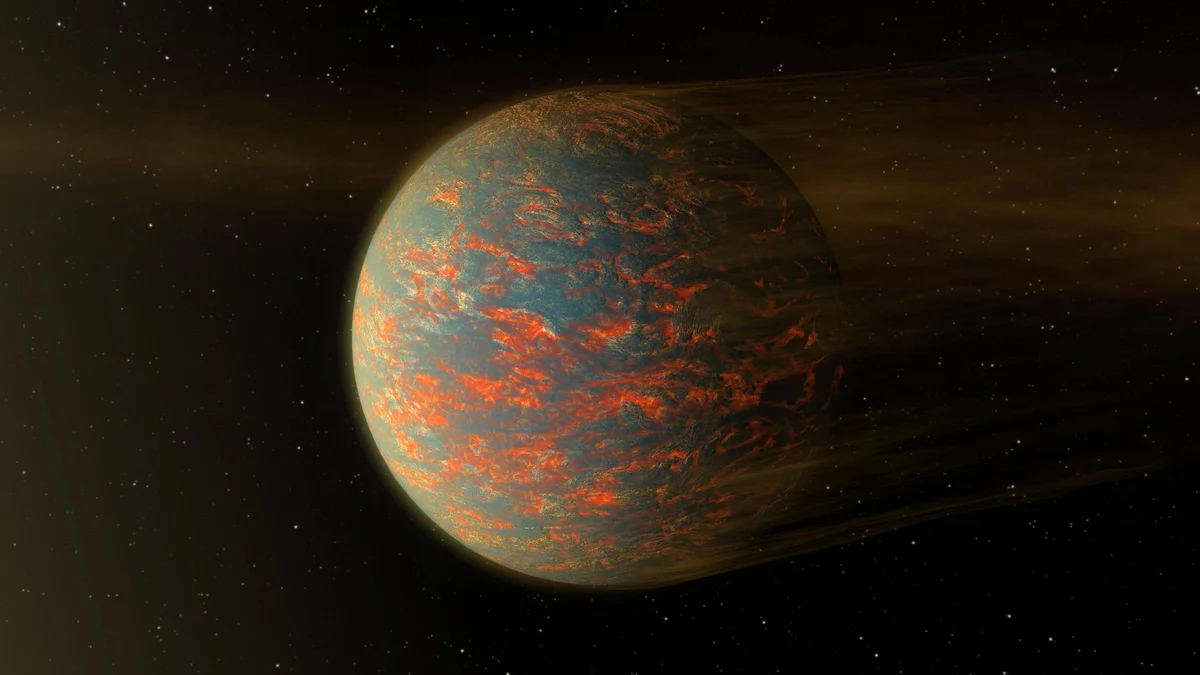
In the search for worlds beyond our solar system, astronomers have identified a class of exoplanets that challenge everything we understand about planetary formation, geology, and habitability. These are carbon planets diamond worlds, planets where carbon dominates the chemistry instead of oxygen. Instead of silicate rocks, water oceans, and iron cores like Earth, these exotic planets may have mountains of graphite, lakes of tar, and interiors rich in diamond. This article explores the peer-reviewed science behind high carbon-to-oxygen ratio planets, their geological implications, and what they mean for the possibility of life.
What Are Carbon Planets?
A carbon planet is a theoretical type of terrestrial exoplanet where the carbon-to-oxygen ratio (C/O) in the stellar system exceeds approximately 0.8. In the Sun, the C/O ratio is about 0.55, meaning oxygen atoms outnumber carbon atoms. Earth’s crust and mantle are dominated by oxygen: silicates (silicon-oxygen compounds), carbonates, and oxides. If the C/O ratio in the planet-forming disk is high enough, carbon becomes the primary chemical driver, leading to a radically different planetary composition.
The concept was first formally outlined in a 2005 paper by Marc Kuchner and Sara Seager titled “Extrasolar Carbon Planets” published in the Astrophysical Journal. Kuchner and Seager proposed that planets forming in carbon-rich disks would accumulate materials like graphite, silicon carbide, and metal carbides instead of silicates and oxides. Later models by researchers like Nikku Madhusudhan and colleagues have refined these predictions using data from exoplanet atmospheres.
The key to identifying candidate carbon planets diamond worlds lies in measuring the atmospheric C/O ratio through transmission spectroscopy. When a planet transits its star, starlight filters through the atmosphere, revealing absorption features of molecules like water, methane, carbon dioxide, and carbon monoxide. A C/O ratio above 0.8 in the atmosphere suggests a carbon-rich bulk composition. Several hot Jupiters, gas giants, have shown elevated C/O ratios, but no confirmed carbon-dominated rocky planet has yet been found.
The Geology of Carbon Planets
Imagine a world where mountains are made of graphite. Diamond could form in the high-pressure mantle. The surface might be covered in graphite and silicon carbide (moissanite), with rivers of liquid hydrocarbons or even cryogenic lava. This is the geological picture painted by theoretical models for carbon planets diamond worlds.
Crust and Surface
On a carbon planet, the crust would be composed largely of graphite and carbides. Instead of feldspar and quartz, the surface minerals would include:
- Graphite: A stable form of carbon at low pressure.
- Silicon carbide (SiC): A hard, ceramic material found naturally on Earth in rare meteorites.
- Titanium carbide and other metal carbides: Formed during planetary accretion.
Weathering on such a world would differ dramatically from Earth. Without abundant free oxygen and water, chemical erosion proceeds by reactions with carbon monoxide or hydrogen. Carbon planets in their star’s habitable zone could theoretically have liquid water on the surface, but the water would likely be acidic and rich in organic compounds from chemical interactions with the crust.
Mantle and Core
Beneath the graphite crust, increasing pressure would transform carbon into diamond. At depths of around 150–200 kilometers, diamond becomes the stable form. If the planet is large enough (about 2–3 Earth masses), a thick diamond layer could extend hundreds of kilometers downward. Below that, the core would be iron-rich, but instead of iron oxide, it may contain iron carbide (Fe₃C) or nickel carbide.
A 2014 study in The Astrophysical Journal by Cayman Unterborn and colleagues modeled the geodynamics of carbon-rich planets. They found that a diamond-rich mantle (above roughly 3 atomic percent carbon) would have little to no convection, which could dampen tectonic activity and magnetic field generation. The team reported that carbon planets diamond worlds would lack plate tectonics as we know it, because the diamond layer acts as an insulating barrier that prevents mantle convection.
Volcanism and Cryovolcanism
Instead of molten rock, volcanic activity on a carbon planet would involve molten carbonate, carbide, or even carbonatite magmas. Carbonatite volcanoes exist on Earth (such as Ol Doinyo Lengai in Tanzania), but they are rare. On a carbon planet, carbonate lavas would be the norm. At lower temperatures, cryovolcanoes might erupt liquid methane or other hydrocarbons.
Formation and Occurrence
Carbon planets form in protoplanetary disks with high C/O ratios. Truly carbon-dominated systems (a C/O ratio above 1) are uncommon, on the order of a few percent of stars, and early claims of higher fractions have been revised downward as stellar-abundance measurements improved (see Fortney 2012). However, carbon enrichment can occur through several mechanisms:

- Accretion of carbon-rich material: Young stars may incorporate carbon grains from previous generations of dying stars.
- Migration of planetesimals: Carbon-rich planetesimals formed in outer regions could drift inward and accumulate.
- Late-stage delivery: Carbon-rich comets or asteroids could deliver carbon to a planet that started with a lower ratio.
Stars like our Sun have C/O ratios near 0.55. But around white dwarfs, the C/O ratio can be very high due to internal nucleosynthesis. Some exoplanet surveys have identified candidate systems where the host star has a super-solar C/O ratio, such as WASP-12, which has a C/O of approximately 1.0. The hot Jupiter WASP-12b has an atmospheric C/O ratio close to 1, making it a prime candidate for a carbon-rich gas giant. However, no confirmed carbon-dominated rocky planet exists yet.
Could Carbon Planets Be Habitable?
The term “habitable zone” for carbon planets diamond worlds is more complicated than for Earth-like worlds. Liquid water might exist, but the surface chemistry would be hostile to life as we know it.
Atmosphere
A carbon planet’s atmosphere would be rich in carbon monoxide (CO), methane (CH₄), and hydrogen cyanide (HCN). Oxygen would be scarce. The absence of free oxygen means that aerobic respiration, the basis of most complex life on Earth, would be impossible. However, anaerobic organisms, including certain bacteria and archaea on Earth, thrive in oxygen-free environments.
A 2019 study in Astrobiology by Kaustubh Hakim and colleagues examined the mineralogy, structure, and habitability of carbon-enriched rocky planets. They concluded that while the chemistry is challenging, life is not impossible. Potential biosignatures on a carbon planet might include anomalous levels of phosphine or dimethyl sulfide, but detecting them would require extraordinarily sensitive instruments.
Surface Conditions
On a carbon planet in the habitable zone, surface pressures and temperatures could allow liquid water. But the water would be contaminated with organic compounds like tar and polycyclic aromatic hydrocarbons (PAHs). The surface would be dark, because graphite absorbs most visible light, leading to low albedo and potentially runaway greenhouse effects.
Magnetic Field and Climate Stability
Without active plate tectonics, a carbon planet may lack a robust magnetic field. The diamond layer impedes heat flow, so the core cools slowly, which reduces the dynamo effect. A weak magnetosphere would expose the surface to stellar wind and cosmic radiation, further challenging habitability.
Observational Signs and Search Strategies

How can astronomers confirm the existence of a carbon planet? The most promising method is through atmospheric characterization using the James Webb Space Telescope (JWST) or future missions like the ARIEL space telescope (planned for 2029). A carbon-rich rocky planet would show strong absorption features of carbon monoxide and methane, with little or no water vapour.
Transmission spectroscopy requires large transiting planets. For smaller, Earth-sized worlds, the signal is much weaker. Another approach is to look for planets around stars with known high C/O ratios. The upcoming PLATO mission will survey millions of stars and could find nearby carbon planet candidates.
Modeling of the observable spectra of carbon planets suggests that the 4.6-micron absorption band of carbon monoxide is a strong diagnostic. If JWST detects this band in a rocky exoplanet atmosphere, it would be a compelling signature.
Implications for Planetary Science and Astrobiology
Carbon planets expand the range of possible planetary outcomes. They show that our solar system is not necessarily typical. They also force astrobiologists to reconsider the definition of habitability. If life can arise in a carbon-dominated chemistry, it would be fundamentally different from Earth’s biology.
The discovery of a carbon planet with signs of life would revolutionize biology. It would demonstrate that life is not a fluke of Earth’s unique oxygen-silicate chemistry but a general phenomenon that adapts to diverse environments. Conversely, finding that carbon planets are sterile would teach us about the narrow constraints for abiogenesis.
Q: Have any carbon planets been confirmed?
A: No confirmed carbon-rich rocky planet exists. However, several gas giants, such as WASP-12b, show atmospheric C/O ratios near 1.0, suggesting carbon-rich formation environments. Rocky carbon planets remain theoretical, but surveys continue.
Q: Could a carbon planet have life similar to Earth’s?
A: Life as we know it requires liquid water and a diverse set of elements including oxygen, phosphorus, and nitrogen. A carbon planet’s oxygen-poor surface would challenge aerobic life, but anaerobic extremophiles might survive. Any life would likely use different biochemistry.
Q: Are diamond worlds real, or just science fiction?
A: Diamond layers inside carbon planets are predicted by high-pressure physics. While no such planet has been confirmed, the models are based on the known phase diagram of carbon. A diamond layer several hundred kilometers thick is mathematically possible.
Q: Could humans ever visit a carbon planet?
A: Visiting any exoplanet is currently impossible with existing technology. Even the closest candidate systems are hundreds of light-years away. However, robotic probes with advanced propulsion could theoretically reach them in future millennia.
Q: What is the difference between a carbon planet and a diamond planet?
A: Both terms often overlap, but “diamond planet” usually refers specifically to a world where internal pressure transforms carbon into diamond. “Carbon planet” is the broader term for any planet with a high carbon-to-oxygen ratio, regardless of internal diamond formation.
Sources & References
- Kuchner, M. J., & Seager, S. (2005). Extrasolar Carbon Planets. The Astrophysical Journal, 626(1). https://arxiv.org/abs/astro-ph/0504214
- Unterborn, C. T., et al. (2014). The Role of Carbon in Extrasolar Planetary Geodynamics and Habitability. The Astrophysical Journal, 793(2), 124. https://doi.org/10.1088/0004-637X/793/2/124
- Hakim, K., et al. (2019). Mineralogy, Structure, and Habitability of Carbon-Enriched Rocky Exoplanets: A Laboratory Approach. Astrobiology, 19(7), 867–884. https://doi.org/10.1089/ast.2018.1930
- Fortney, J. J. (2012). On the Carbon-to-Oxygen Ratio Measurement in Nearby Sun-like Stars. The Astrophysical Journal Letters, 747(2), L27. https://doi.org/10.1088/2041-8205/747/2/L27
- Madhusudhan, N., et al. (2014). Carbon-Rich Atmospheres of Hot Jupiters. The Astrophysical Journal Letters, 791(1), L9. https://doi.org/10.1088/2041-8205/791/1/L9
- NASA Exoplanet Exploration. (2024). Carbon Planets: A Different Kind of Earth. https://exoplanets.nasa.gov/exoplanet-catalog/overview/
- Seager, S. (2013). Exoplanet Atmospheres: Physical Processes. Princeton University Press. ISBN 978-0-691-14145-1
Further reading: Carbon planet on Wikipedia