

The old story of genetics was simple: your DNA sequence is your destiny. You inherit a fixed set of genes from your parents, and those genes determine your traits. Environment might affect you superficially, but the underlying code is immutable.
The new story is far more interesting. Your genes are not on or off in any permanent sense. They respond to your environment, your experiences, your diet, your stress levels, and even your social relationships. And the marks left by these responses, the epigenome, can profoundly shape who you are, sometimes across generations.
This is epigenetics: the study of heritable changes in gene expression that don’t involve changes to the DNA sequence itself. It helps explain what makes a theory scientific by showing how biological frameworks evolve with new evidence.

What Is Gene Expression?
Every cell in your body contains the same DNA: approximately 3.2 billion base pairs encoding roughly 20,000 genes. Yet a neuron and a liver cell look and behave completely differently. A heart muscle cell and an immune cell have radically distinct functions.
How can identical DNA produce such different cells? The answer is gene expression, which genes are switched on and which are switched off.
In any given cell type, only a subset of genes are actively transcribed into RNA and translated into protein. The machinery that controls which genes are expressed and at what level is the gene regulation system, and epigenetics is one of the most important layers of that system.
Beyond environmental responses, epigenetics is essential for turning a fertilized egg into a body with hundreds of cell types, as seen in processes like X-chromosome inactivation and genomic imprinting during embryonic development.
The Main Epigenetic Mechanisms
1. DNA Methylation
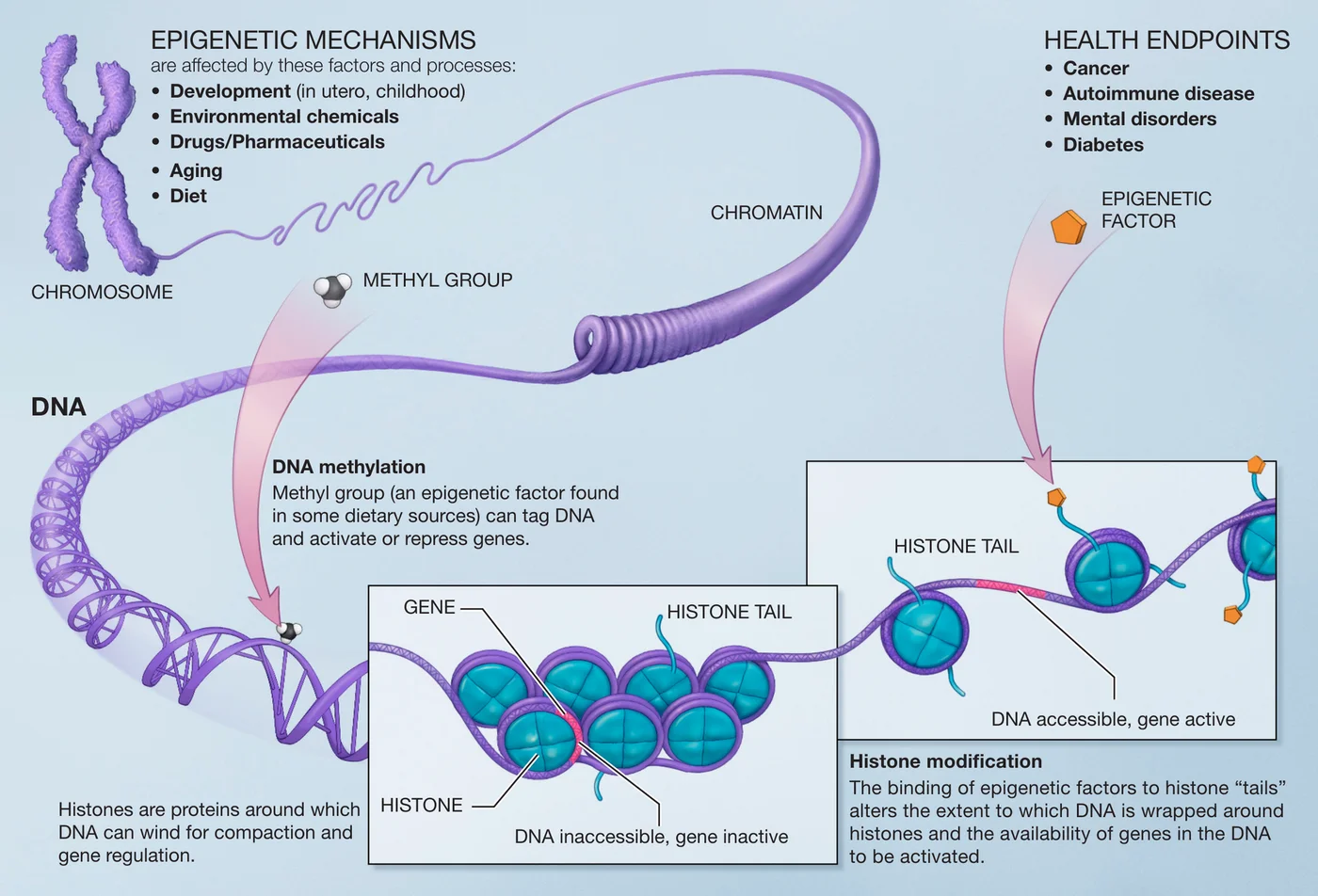
DNA methylation is the attachment of a methyl group (a carbon atom with three hydrogens) to a cytosine nucleotide in the DNA: typically at sites where cytosine is followed by guanine (CpG islands). When methyl groups are added to the DNA near a gene’s promoter region, they generally silence the gene by blocking transcription factors from binding and recruiting proteins that compact the DNA. Methylation acts like a “do not read” flag on stretches of the genome.
DNA methylation is established by enzymes called DNA methyltransferases (DNMTs) and can be removed by TET enzymes (ten-eleven translocation proteins). It is the most studied and best understood epigenetic mechanism.
The pattern of methylation across the genome, the methylome, varies enormously between cell types, developmental stages, and individuals. It is dynamic rather than fixed, changing in response to signals from inside and outside the cell.
2. Histone Modification
DNA doesn’t float free inside the cell nucleus. It is wrapped around proteins called histones, spooled like thread around a bobbin – forming a compact structure called chromatin.
The tightness of this packing controls gene access. When DNA is tightly wound around histones, it’s inaccessible to transcription machinery and genes are silenced. When the chromatin is loose and open, genes can be transcribed.
Histones can be chemically modified at dozens of sites by the addition of tags including acetyl groups (acetylation), methyl groups, phosphate groups, and ubiquitin. These modifications alter the charge and shape of the histone, loosening or tightening its grip on DNA, and recruit other proteins that activate or repress transcription.
Histone acetylation generally loosens chromatin and activates gene expression. Histone methylation can either activate or repress genes depending on which amino acid is methylated and how many methyl groups are added.
The pattern of histone modifications across the genome constitutes a histone code that provides an additional layer of information on top of the DNA sequence.
3. Non-Coding RNAs
A third major epigenetic mechanism involves non-coding RNAs: RNA molecules that are not translated into protein but instead regulate gene expression. MicroRNAs (miRNAs) bind to messenger RNAs to block translation or trigger their degradation. Long non-coding RNAs (lncRNAs) can recruit chromatin-modifying enzymes to specific genomic locations, guiding DNA methylation and histone modifications. These RNAs are particularly important in transgenerational inheritance, where sperm-delivered RNAs have been shown to transmit environmental information to offspring in mammals.
How Environment Alters the Epigenome
The profound insight of epigenetics is that these chemical marks can be written, erased, and rewritten in response to environmental signals.
Diet and Nutrients
Several nutrients are directly involved in epigenetic chemistry. Folate, methionine, B vitamins, and choline provide methyl groups for DNA methylation. A diet deficient in these nutrients can globally reduce DNA methylation levels.
One of the most striking demonstrations came from studies of the Dutch Hunger Winter, a period of famine in the Netherlands in 1944–45. Children conceived during the famine were found, 60 years later, to have distinct patterns of DNA methylation compared to their siblings conceived before or after the famine. These methylation differences were associated with altered metabolism and increased rates of obesity and cardiovascular disease, lasting molecular echoes of a brief period of starvation during early development. This illustrates how natural selection and epigenetic mechanisms interact across generations.
Stress
Chronic stress activates the hypothalamic-pituitary-adrenal (HPA) axis, flooding the body with cortisol. Prolonged cortisol exposure leaves epigenetic marks on genes involved in stress response, particularly the glucocorticoid receptor gene (NR3C1).
Research on early life adversity has shown that childhood abuse, neglect, and trauma can leave lasting methylation marks on the glucocorticoid receptor gene, marks that alter the stress response for life and are detectable in brain tissue. People with high levels of childhood adversity show distinct epigenomic profiles compared to those with less stressful childhoods.
Exercise
Physical exercise has measurable epigenetic effects. Aerobic exercise promotes changes in the methylation and histone modification status of genes involved in mitochondrial biogenesis, energy metabolism, inflammation, and neuroplasticity. Some researchers have proposed that the long-term health benefits of regular exercise are partly mediated by these epigenetic changes.
A striking study by Barrès et al. (2012) found that even a single bout of acute exercise altered the methylation of hundreds to thousands of genomic regions in skeletal muscle, with some changes persisting for days.
Toxins and Pollution
Environmental toxins can disrupt epigenetic programming. Bisphenol A (BPA), a chemical in some plastics – is an endocrine disruptor that alters DNA methylation patterns. Early life exposure to BPA has been linked to altered methylation in genes related to brain development and behavior in animal studies.
Air pollution, cigarette smoke, and heavy metals including arsenic and cadmium all leave epigenetic marks. The epigenome may serve as a molecular record of a lifetime of environmental exposures.
Epigenetics and Cancer
One of the most medically important applications of epigenetics is in cancer biology.
Cancer was long understood purely as a disease of genetic mutations; DNA sequence changes that activate oncogenes or inactivate tumor suppressors. But it became clear that epigenetic changes are equally important.
Cancer cells show characteristic epigenetic abnormalities:
- Global hypomethylation (reduced methylation across the genome), which can activate transposable elements (mobile DNA sequences) and destabilize chromosomes
- Focal hypermethylation of CpG islands in the promoters of tumor suppressor genes, silencing them without mutation
- Widespread histone modification changes
These epigenetic alterations can drive cancer progression as powerfully as mutations: and in some cases, they precede mutations.
The practical implication is significant: unlike DNA mutations, epigenetic changes are potentially reversible. Several drugs that inhibit DNA methyltransferases or histone deacetylases (the enzymes that remove acetyl groups from histones) are already approved for treating certain cancers, particularly blood cancers. Azacitidine and decitabine are DNA demethylating agents used for myelodysplastic syndrome. Vorinostat is a histone deacetylase inhibitor approved for cutaneous T-cell lymphoma.
Transgenerational Epigenetic Inheritance: The Most Controversial Claim
The most contentious claim in epigenetics is that some environmentally induced epigenetic changes can be transmitted across generations: not just from mother to offspring (which is well established for some marks in the mother’s germ cells), but potentially for multiple generations.
This would mean that what your grandparents experienced could affect your biology. It would represent a form of inheritance that Lamarck envisioned but that the Modern Synthesis seemed to rule out.
The evidence in mammals is provocative but disputed.
The Överkalix studies: Analysis of historical records in a remote Swedish community showed that the nutritional status of grandfathers during a critical childhood window was statistically associated with the cardiovascular health and mortality of their grandsons. Statistically, the strongest association was with paternal grandfather’s diet: though some effects were observed through paternal grandmothers for other health outcomes, a pattern difficult to explain by social transmission alone.
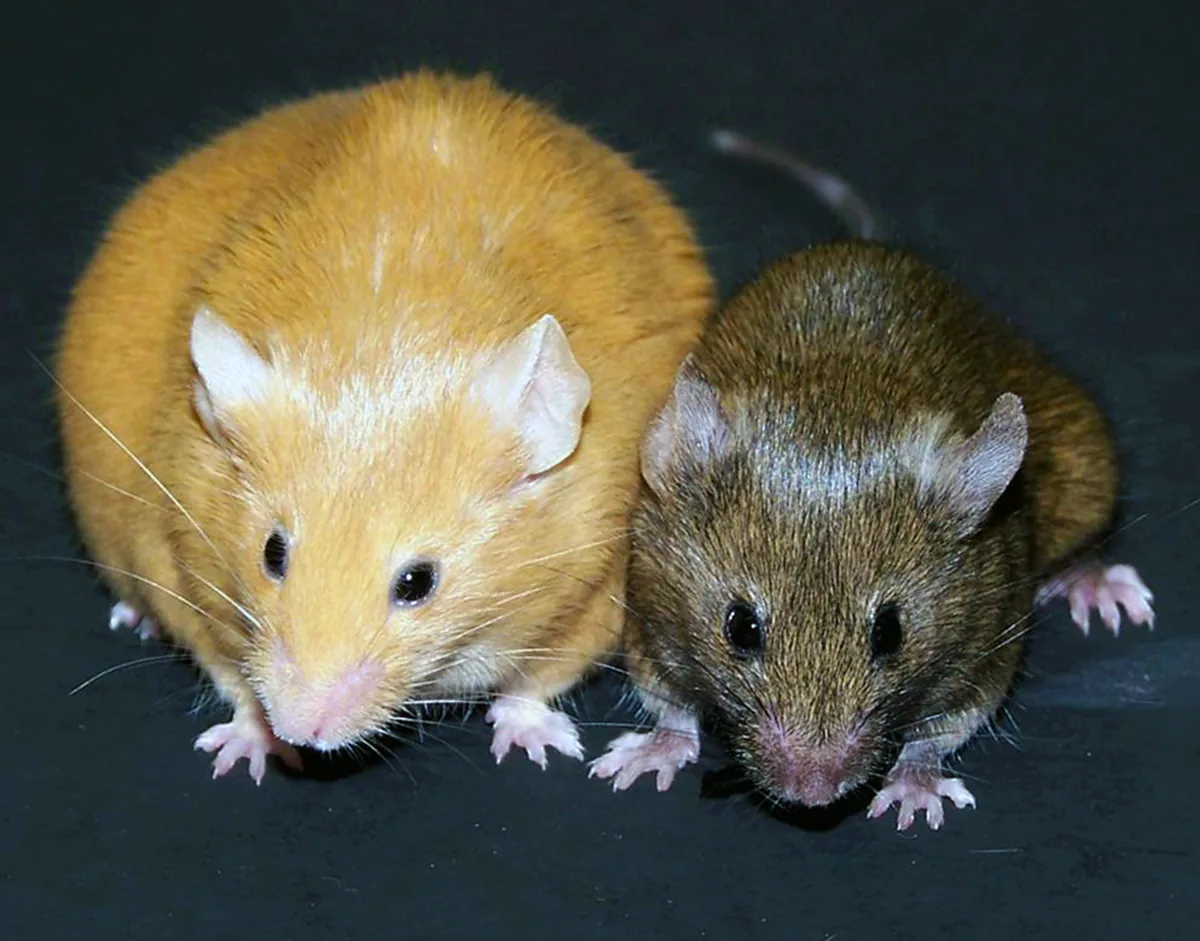
The Agouti mouse: The agouti mouse carries a transposable element inserted near the agouti gene. When this element is active, mice are yellow, obese, and prone to diabetes. When it’s silenced by methylation, mice are brown and healthy. Feeding pregnant agouti mice a methyl-rich diet (with folate and B12) produces brown, healthy offspring because the extra methyl groups silence the transposable element. This epigenetic silencing can be transmitted across generations.
Paternal stress: Several rodent studies have found that stress, poor diet, or toxin exposure in fathers alters behavior and physiology in their offspring: changes that persist into the F2 generation (grandchildren). Because sperm carries very little in the way of protein or cytoplasm, these effects must be mediated by epigenetic marks on sperm DNA or by non-coding RNAs in sperm.
The mechanism for transgenerational inheritance is controversial because the mammalian germline undergoes two major rounds of epigenetic reprogramming, at fertilization and in primordial germ cell development, that should erase most acquired marks. The existence of “escapers”: genomic regions that resist this reprogramming – is documented, and some acquired marks may persist at these sites.
In plants and nematode worms, transgenerational epigenetic inheritance is well established and mechanistically better understood. In mammals, the jury is still out.
Epigenetics and Evolution
Epigenetics has reignited debate about whether acquired characteristics can be inherited: an idea associated with Jean-Baptiste Lamarck, long thought to have been definitively disproven by Mendelian genetics and the Modern Synthesis.
Most evolutionary biologists argue that even if some transgenerational epigenetic inheritance occurs, it doesn’t challenge the core of neo-Darwinism. Natural selection still operates primarily on heritable genetic variation. Epigenetic variation adds another layer of heritable phenotypic variation: but because the epigenome ultimately responds to environmental signals, the pattern of inheritance is more complex and context-dependent than genetic inheritance.
Some researchers argue for an Extended Evolutionary Synthesis that explicitly incorporates epigenetic inheritance, developmental plasticity, and niche construction alongside genetic variation. The debate is ongoing and productive.
The Aging Epigenome
One of the most striking discoveries in epigenetics is that the epigenome changes in a remarkably consistent, clock-like manner as organisms age. DNA methylation levels at specific CpG sites across the genome shift predictably with age: a pattern captured by epigenetic clocks like the Horvath clock, which can estimate biological age from blood or tissue samples.
Epigenetic age can diverge from chronological age. People with accelerated epigenetic aging (older biological age than calendar age) have higher risks of disease and mortality. Caloric restriction, the most robust intervention to extend lifespan in model organisms, slows epigenetic aging. Some interventions, including certain drugs and lifestyle changes, have been associated with modest reductions in epigenetic age, though large-scale clinical validation is still lacking.
This has led some researchers to frame aging itself as partly an epigenetic phenomenon, a progressive loss of appropriate gene regulation rather than simply the accumulation of molecular damage.
Can I Change My Epigenome?
A common question is whether epigenetic marks are reversible in response to lifestyle changes. The answer is nuanced but hopeful. Many diet- and exercise-induced epigenetic changes are dynamic, they can be established, maintained, or erased as environments shift. For example, a switch to a healthier diet can alter methylation patterns at metabolic genes, and regular exercise can reverse some of the detrimental epigenetic marks associated with sedentary aging. However, marks established during critical developmental windows (like fetal development or early childhood) tend to be more stable and harder to reverse. The practical takeaway is that consistent healthy habits, a balanced diet rich in methyl donors (leafy greens, legumes, eggs), regular aerobic exercise, stress management through mindfulness or sleep, and avoidance of tobacco and environmental toxins, may support an epigenome that promotes long-term health.
What Epigenetics Is Not
Epigenetics has attracted enormous popular attention and an unfortunately large amount of hype and misrepresentation.
Epigenetics is not Lamarck vindicated. The inheritance of acquired characteristics via epigenetics, if it occurs, is limited in scope, reversible, and subject to genetic buffering. It does not mean that giraffes stretching their necks can pass longer necks to their offspring.
Epigenetics does not mean your genes don’t matter. Most heritable variation in human traits is still attributable to DNA sequence differences (genetic variants), not epigenetic differences. The genome is still the primary information carrier.
Epigenetic changes are not always bad. Normal development, immunity, and tissue differentiation depend entirely on precisely controlled epigenetic programming.
“Epigenetic” is not a synonym for “environmental.” Not all environmental effects on biology are mediated by epigenetics.
Sources
- Allis, C.D. et al. (2015). Epigenetics (2nd ed.). Cold Spring Harbor Laboratory Press.
- Jirtle, R.L. & Skinner, M.K. (2007). Environmental epigenomics and disease susceptibility. Nature Reviews Genetics, 8, 253–262.
- Heijmans, B.T. et al. (2008). Persistent epigenetic differences associated with prenatal exposure to famine in humans. PNAS, 105(44), 17046–17049.
- Horvath, S. (2013). DNA methylation age of human tissues and cell types. Genome Biology, 14, R115.
- NIH National Human Genome Research Institute. (2020). Epigenomics. NHGRI.
- Nature Scitable. Epigenetics and Gene Expression. Nature Publishing Group.
What is epigenetics in simple terms?
Epigenetics is the study of how your behaviors and environment can cause changes that affect the way your genes work, without altering the DNA sequence itself.
Can epigenetics be passed down to children?
Yes, some epigenetic marks can be inherited across generations, meaning a parent’s experiences like diet or stress could influence gene expression in their offspring.
How does your environment change your genes?
Your environment doesn’t change your DNA sequence, but it can trigger chemical modifications, like DNA methylation, that turn genes on or off, altering how your cells function.
What is the difference between genetics and epigenetics?
Genetics refers to the study of genes and DNA sequence, while epigenetics studies heritable changes in gene activity that do not involve changes to the DNA sequence itself.
Can epigenetic changes be reversed?
Yes, unlike DNA mutations, many epigenetic modifications are reversible through changes in diet, exercise, stress management, or other environmental factors.
Further reading: Epigenetics on Wikipedia