
Sixty-six million years ago, a chunk of rock roughly 10 to 15 kilometers across struck what is now Mexico’s Yucatán Peninsula at roughly 20 kilometers per second. The impact released energy estimated at 100 trillion tons of TNT, more than a billion times the power of the atomic bombs dropped on Hiroshima and Nagasaki, combined. Within hours, the planet’s surface was transformed. Within years, roughly three-quarters of all species on Earth were extinct.
This was the Cretaceous-Paleogene (K-Pg) extinction event, the most well-documented mass extinction in Earth’s history, and the one that cleared the stage for the rise of mammals, and eventually, human beings.
The Evidence: Iridium and the Alvarez Hypothesis

The story of how science came to understand the K-Pg extinction is a remarkable example of interdisciplinary discovery. In the late 1970s, geologist Walter Alvarez was studying a thin clay layer in the rock record near Gubbio, Italy. This layer, found worldwide at the exact geological boundary between the Cretaceous and Paleogene periods, marked the point where dinosaur fossils disappeared and modern animal groups began.
Alvarez and his father, physicist asteroid-that-killed-the-dinosaurs-180958688/” target=”_blank” rel=”noopener”>Luis Alvarez, had the clay analyzed for rare earth elements. They found that the boundary layer was enriched in iridium, a platinum-group metal extremely rare on Earth’s surface but relatively abundant in certain types of asteroids and comets. The iridium anomaly was the same magnitude at sites all over the world. In 1980, they published a paper in Science proposing that a large asteroid impact had killed the dinosaurs. The hypothesis was initially controversial, but evidence mounted rapidly.
The “smoking gun” came in 1991, when Alan Hildebrand identified the Chicxulub crater , buried under the Yucatán Peninsula and the Gulf of Mexico, as the impact site. The crater is approximately 180 kilometers in diameter and 20 kilometers deep, consistent with an impactor of 10–15 kilometers. Drilling into the crater floor in subsequent decades has produced shocked quartz, melt glass (tektites), and other impact signatures confirming its origin.
The Impact and Its Immediate Effects
The Chicxulub impactor struck a shallow carbonate and sulfate-rich seafloor, vaporizing rock and seawater. The immediate effects were catastrophic on multiple scales:
Thermal pulse: The impact ejected a vast quantity of material into the atmosphere. Much of this material re-entered at high velocity, creating a global “fireball” as superheated particles rained down. Surface temperatures may have briefly spiked high enough to ignite wildfires worldwide and cook exposed organisms. This thermal pulse lasted minutes to hours but was globally lethal for surface life.
Impact winter: The more sustained killer was the impact winter. Vast quantities of soot from wildfires, sulfate aerosols vaporized from the sulfur-rich target rock, and pulverized dust blocked sunlight for months to years. Global temperatures dropped. Photosynthesis nearly stopped. Without photosynthesis, plant ecosystems collapsed, and with them the food chains that depended on plants.
Tsunamis: The impact in the shallow Gulf of Mexico triggered massive tsunamis that reached coasts thousands of kilometers away. Geological evidence of the resulting deposits has been found throughout North America, the Caribbean, and beyond.
Acid rain: The vaporization of the sulfate-rich Yucatán limestone produced sulfur dioxide, which combined with atmospheric water to form sulfuric acid aerosols. As these returned to Earth, they acidified rainfall and ocean surface waters, stressing marine organisms with calcium carbonate shells.
What Died and What Survived

The K-Pg extinction was severe but selective. Understanding the pattern of survivors tells us as much as the pattern of victims.
What perished: All non-avian dinosaurs (every theropod, sauropod, ornithopod, ceratopsian, and ankylosaur) vanished. The marine reptiles (mosasaurs, plesiosaurs) went extinct. The flying pterosaurs disappeared. Many marine invertebrates were devastated, particularly the ammonites (which went completely extinct) and many groups of foraminifera (microscopic marine protists with shells). About 75% of all species on Earth disappeared.
What survived: The extinction was not random. Small body size was strongly advantageous. Burrowing behavior helped, as did the ability to survive on stored energy or resistant seeds and spores. Freshwater ecosystems were less affected because they are less dependent on direct sunlight and have detritus-based food chains that can persist through long periods of darkness.
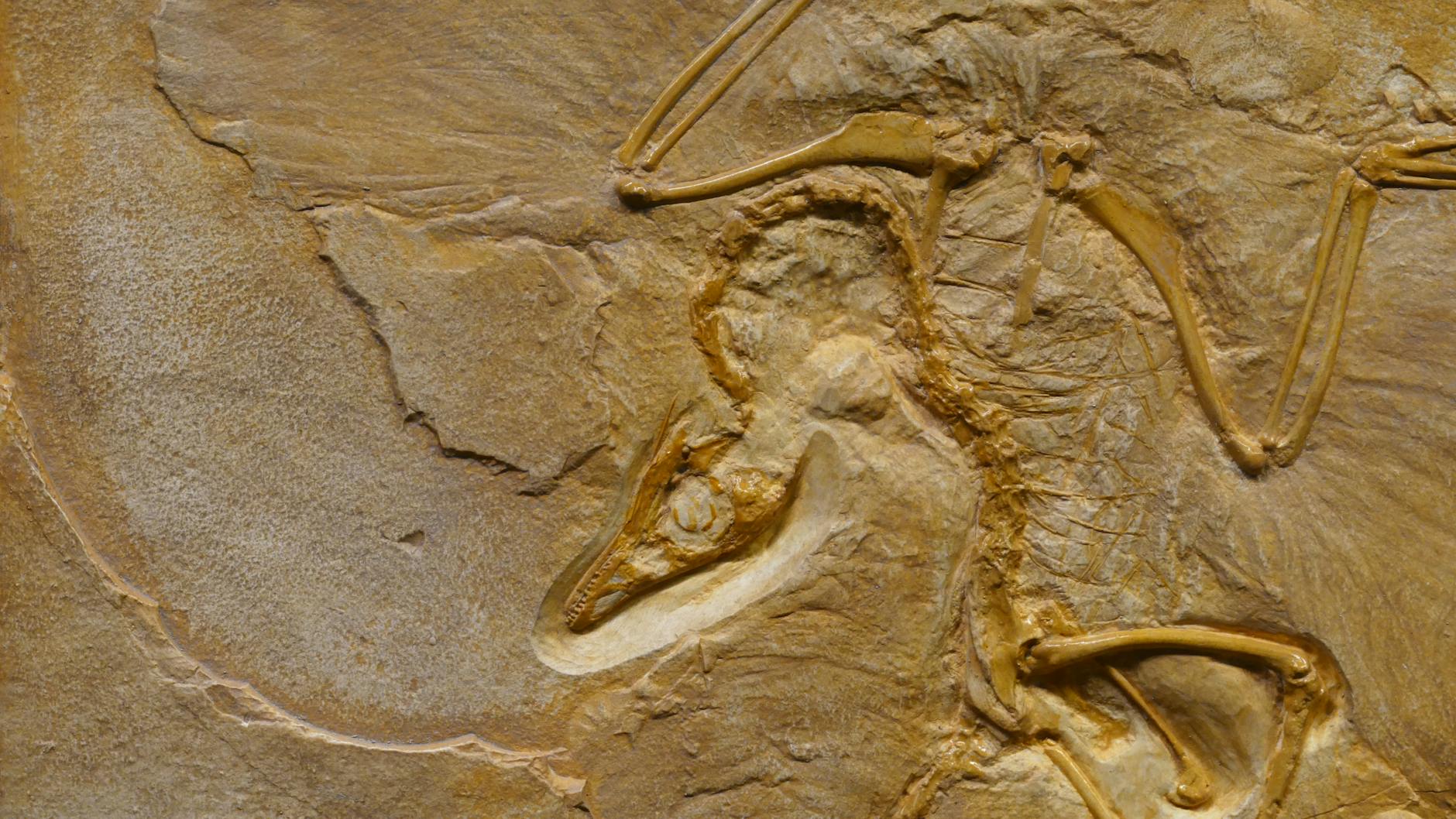
Birds (the avian dinosaurs) survived. Their small size, ability to fly, and opportunistic feeding habits likely helped. After the extinction, they diversified rapidly. Mammals also survived, likely because the earliest mammals were small, burrowing, and omnivorous. With the megafauna gone, mammalian evolution entered one of its most explosive phases.
Crocodilians, turtles, many lizards, sharks, and ray-finned fish also came through. The selectivity of survivors strongly argues against a purely indiscriminate global sterilization; some ecosystems recovered more quickly than others.
The Deccan Traps Controversy
The K-Pg extinction did not occur in a peaceful geological period. At the same time as the Chicxulub impact, one of the largest volcanic events in Earth’s history was underway: the Deccan Traps eruptions in what is now India. Over a period of roughly one million years, volcanic activity erupted enough lava to cover an area the size of France to a depth of 2 kilometers. The eruptions released enormous quantities of CO₂ and SO₂ into the atmosphere.
The relationship between the Deccan Traps and the K-Pg extinction is actively debated. Some researchers argue that the volcanic eruptions were already stressing ecosystems before the impact, making the biosphere more vulnerable. Others argue that the impact itself may have intensified Deccan volcanism by triggering seismic activity on the other side of the planet (the antipode of Chicxulub is in the Indian Ocean, near the Deccan Traps region). A third position holds that the impact was dominant and the Deccan volcanism was secondary.
Current consensus is that the impact was the primary cause of the mass extinction: the timing is too precise and the iridium anomaly too global and consistent to attribute the extinction to volcanism alone. But the Deccan Traps may have contributed to the ecological stress that preceded and followed the impact.
Recovery: The Rise of Mammals

The aftermath of the K-Pg event was not uniform. Some regions recovered faster than others, and the pattern of recovery shaped the world we live in today.
In the first thousand years after the impact, much of the planet was barren. But the geological record shows signs of recovery beginning within a few thousand to tens of thousands of years, rapid by geological standards. Ferns, which reproduce through spores and can tolerate harsh conditions, were among the first plants to recolonize landscapes. A “fern spike” is visible in the fossil record immediately above the K-Pg boundary.
Mammal diversification was dramatic. In the Cretaceous, most mammals were small, nocturnal, insect-eating creatures no larger than a modern shrew or rat. Within 300,000 years of the K-Pg boundary, mammals had diversified into many new ecological roles. Within 10 million years, the ancestors of horses, whales, bats, and primates had all appeared. The K-Pg extinction effectively launched the Age of Mammals.
Primates (small, tree-dwelling, insect-eating mammals) were among the early post-extinction radiations. Their descendants, over 66 million years, would eventually give rise to humans.
K-Pg and the Sixth Mass Extinction
The K-Pg event is one of five major mass extinctions in Earth’s history; the others being the End-Ordovician (~443 Ma), Late Devonian (~372 Ma), End-Permian (~252 Ma, the largest), and End-Triassic (~201 Ma). Many scientists argue that Earth is currently entering a sixth mass extinction, driven by habitat destruction, climate change, invasive species, and overexploitation.
The K-Pg extinction is the closest analogy for rapid, globally synchronous species loss. Its study informs modern extinction science: understanding which traits allowed survival (small size, dietary flexibility, rapid reproduction) and which contributed to vulnerability (large body size, specialized diet, slow reproduction) has direct relevance for conservation priorities today.
Sources
Alvarez, L.W., Alvarez, W., Asaro, F., & Michel, H.V. (1980). Extraterrestrial cause for the Cretaceous-Tertiary extinction. Science, 208(4448), 1095–1108. doi:10.1126/science.208.4448.1095
Hildebrand, A.R. et al. (1991). Chicxulub Crater: A possible Cretaceous/Tertiary boundary impact crater on the Yucatán Peninsula, Mexico. Geology, 19(9), 867–871. doi:10.1130/0091-7613(1991)019<0867:CCAPCT>2.3.CO;2
Schulte, P. et al. (2010). The Chicxulub asteroid impact and mass extinction at the Cretaceous-Paleogene boundary. Science, 327(5970), 1214–1218. doi:10.1126/science.1177265
Robertson, D.S. et al. (2013). Survival in the first hours of the Cenozoic. Geological Society of America Bulletin, 125(5-6), 760–768. doi:10.1130/B30794.1
DePalma, R.A. et al. (2019). A seismically induced onshore surge deposit at the KPg boundary, North Dakota. PNAS, 116(17), 8190–8199. doi:10.1073/pnas.1817407116
Brusatte, S.L., O’Connor, J.K., & Jarvis, E.D. (2015). The origin and diversification of birds. Current Biology, 25(19), R888–R898. doi:10.1016/j.cub.2015.08.003