
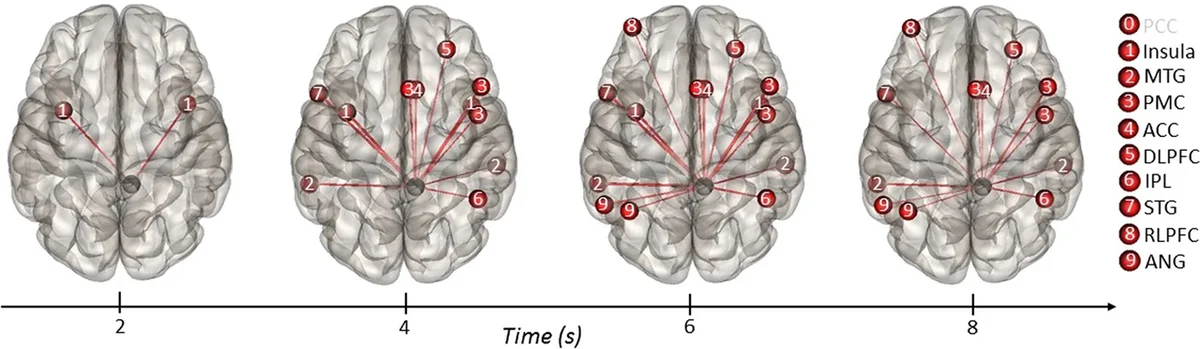
The search for the neural correlates of consciousness represents one of the most profound and experimentally rigorous endeavors in modern neuroscience. This quest aims to identify the specific patterns of brain activity that are both necessary and sufficient for a subjective, conscious experience – what it feels like to see a red rose, hear a melody, or feel a touch. Rather than asking the philosophical question of what consciousness is, scientists ask an empirical one: what brain activity accompanies awareness? By leveraging tools like functional magnetic resonance imaging (fMRI), electroencephalography (EEG), and intracranial recordings, researchers have made striking progress in isolating the minimal neural signatures of conscious perception.
The Experimental Hunt for the Neural Correlates of Consciousness
The core challenge in studying the neural correlates of consciousness is separating brain activity related to a stimulus itself from the activity that specifically correlates with a person’s conscious awareness of that stimulus. Classic experiments achieve this by presenting identical sensory inputs but manipulating whether the participant consciously perceives them. For example, in binocular rivalry, different images are shown to each eye. The participant’s perception alternates between the two images, even though the retinal input remains constant. By comparing brain activity during reported perception of one image versus the other, researchers can isolate the neural activity that changes with conscious awareness.
Functional MRI (fMRI) is a workhorse in this field because it measures blood flow changes, which reflect neural activity with high spatial resolution. By tracking which brain regions “light up” when a person consciously sees versus when they do not, scientists can build maps of the neural correlates of consciousness. However, fMRI has poor temporal resolution – it measures activity over several seconds, missing the rapid dynamics of conscious thought. EEG, on the other hand, records electrical signals from the scalp with millisecond precision, making it ideal for timing the onset of conscious perception. Combining these methods has proven particularly powerful, as seen in studies that use simultaneous EEG-fMRI recordings.
Landmark Studies on Visual Awareness
One of the most influential paradigms in this field is visual masking, pioneered by researchers like Stanislas Dehaene and Jean-Pierre Changeux. In a typical experiment, a target word or image is flashed on a screen for a very brief duration (e.g., 30 milliseconds), followed by a “mask” (a meaningless pattern). If the delay between the target and mask is short (e.g., 50 ms), participants report seeing only the mask; if the delay is longer (e.g., 200 ms), they consciously see the target. This manipulation allows scientists to compare brain activity for seen versus unseen stimuli held to near-identical sensory input.
A landmark 2001 study by Dehaene and colleagues used fMRI to compare brain responses to masked (unseen) and unmasked (seen) words. They found that while both conditions activated early visual areas in the occipital lobe, only seen words elicited a large, sustained surge of activity in a broad frontoparietal network, including the prefrontal cortex, anterior cingulate, and parietal lobes. This finding suggested that conscious perception is not merely about activating sensory regions; it requires a global ignition of high-level association cortex. This concept has been supported by subsequent EEG studies, which show that a conscious percept is accompanied by a late (around 300 ms after stimulus) and widespread electrical potential known as the P3b or “consciousness potential,” which is absent for subliminal stimuli.
Another classic method uses inattentional blindness, such as the famous “invisible gorilla” experiment by Daniel Simons and Christopher Chabris. In fMRI versions, participants focused on a task while an unexpected object appeared. Those who failed to notice it showed robust activity in early visual areas but no sustained frontoparietal activation, reinforcing the idea that consciousness requires top-down amplification.
Theoretical Models: Global Workspace Theory
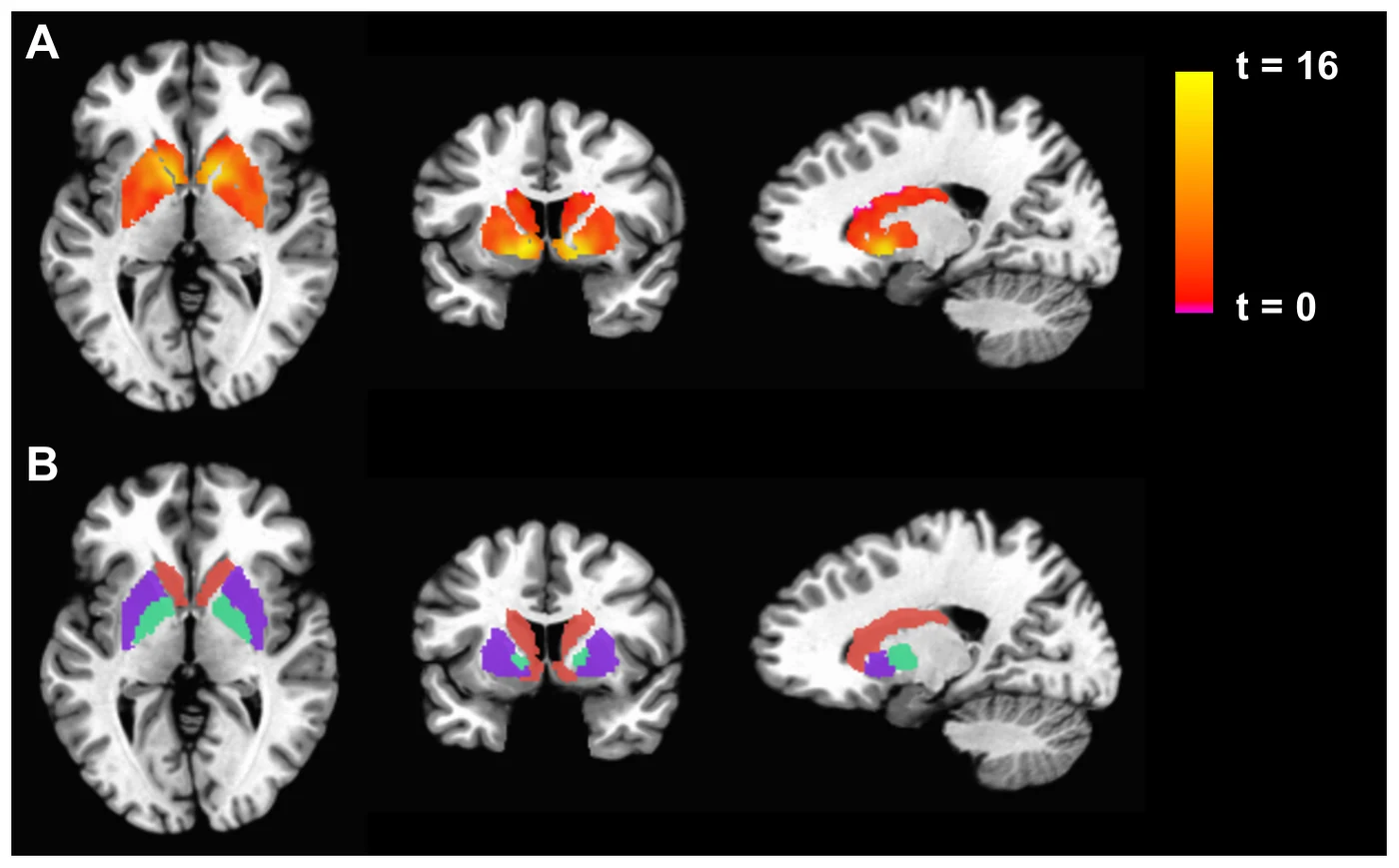
The experimental findings, particularly the late, widespread frontoparietal activation, strongly align with Global Workspace Theory (GWT), proposed by Bernard Baars in the 1980s and later elaborated into a neuroscientific framework by Dehaene and Changeux. GWT posits that consciousness functions like a “global workspace” in the brain. Information becomes conscious when it gains access to this workspace, allowing it to be broadcast widely to many specialized processors (e.g., memory, language, motor planning), enabling flexible behavior and reportability.
In this model, the neural correlates of consciousness are not found in a single brain region but in a dynamic, large-scale network, particularly the frontoparietal network. Crucially, GWT suggests that unconscious processing is local and automatic, while conscious processing is global and integrative. The “ignition” event, a sudden, synchronized burst of activity across multiple high-level regions – is the signature of a conscious percept. This model elegantly explains why conscious experiences are typically unified (the workspace integrates information from multiple senses) and why they often lead to intentional action.
The Global Neuronal Workspace (GNW) Model
The neuroscientific refinement of GWT, the Global Neuronal Workspace (GNW) model, makes specific, testable predictions. It proposes that a conscious stimulus triggers a self-sustained state of activity among neurons in the prefrontal and parietal cortex, which then amplifies and maintains the sensory representation. This ignition is marked by a late (>250 ms) and widespread event-related potential on EEG. The model has been tested in humans and even in non-human primates. For example, a 2003 study by Victor Lamme and colleagues showed that when macaques perceive a stimulus, the neural activity in early visual areas (V1, V2) is similar for seen and unseen stimuli within the first 150 ms – it is only later, when feedback from higher areas reaches the visual cortex, that a neural correlate of consciousness emerges. This dynamic is known as recurrent processing.
Alternative Frameworks: Integrated Information Theory
While GWT dominates the cognitive neuroscience landscape, another major framework is Integrated Information Theory (IIT), developed by Giulio Tononi. IIT takes a different approach: it begins with essential properties of consciousness (e.g., it is integrated and informative) and deduces the neural conditions that can support it, rather than deriving correlates from experiment. IIT’s central measure is Φ (phi), a scalar quantity representing the amount of integrated information in a system. According to IIT, a system’s level of consciousness corresponds to its degree of integrated information, regardless of the physical substrate (brain, silicon chip, or otherwise).
Experimentally, IIT has led to the development of the Perturbational Complexity Index (PCI), a technique using transcranial magnetic stimulation (TMS) to deliver a pulse to the cortex and measure the complexity of the resulting EEG response. High PCI values, indicating rich, differentiated, and integrated patterns, correlate with wakeful consciousness. Low PCI values are seen during deep sleep, anesthesia, or disorders of consciousness like the vegetative state. This metric has been validated as a clinical tool for detecting residual awareness in non-responsive patients, as demonstrated in a 2013 study by Casali et al. published in Science Translational Medicine (DOI: 10.1126/scitranslmed.3008294). IIT remains controversial, especially regarding its claims about phi and the substrate of consciousness, but it has been influential in driving new experimental approaches.
Current Frontiers and Open Debates
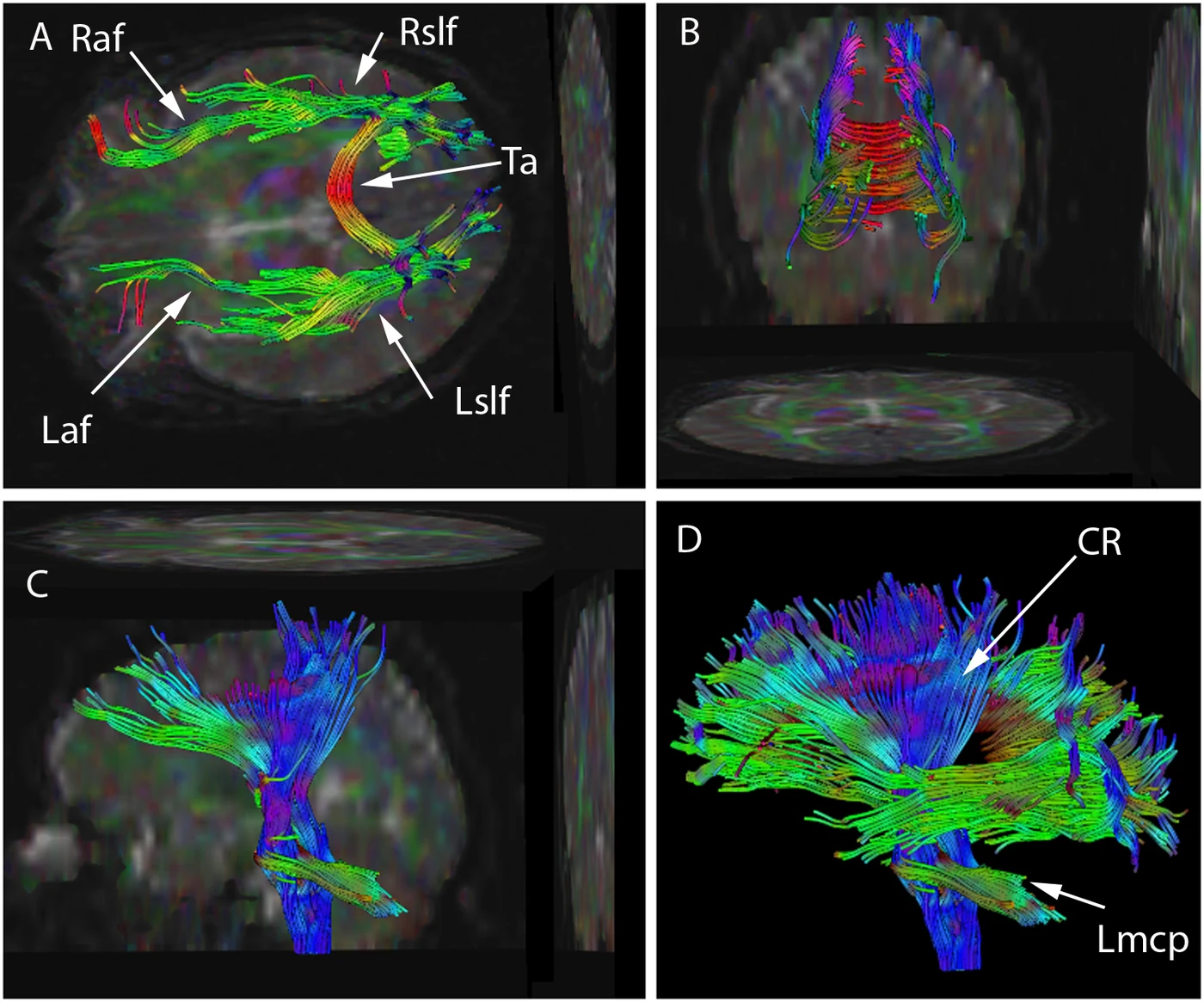
The search for neural correlates of consciousness has not yielded a single, universally accepted signature. One major debate concerns the role of the prefrontal cortex. While GWT argues it is essential for conscious access, some researchers, including Ned Block and David Rosenthal, contend that prefrontal activity reflects reportability or metacognition rather than conscious experience itself. They propose that primary sensory areas, particularly in the visual hierarchy, may be sufficient for phenomenal consciousness, the raw feel of perception, even if prefrontal activity is required for explicit report. This has led to experimental attempts to dissociate conscious perception from reporting, such as “no-report” paradigms. In these paradigms, researchers infer conscious states indirectly from behavioral measures like eye movements or pupil dilation, rather than relying on participants’ explicit button presses or verbal reports, thereby isolating neural correlates of consciousness from those of report. A specific example of this approach is the work by Tsuchiya and colleagues (2015), who used no-report methods to study visual awareness in humans and monkeys, finding that early visual areas show activity correlated with consciousness even without reporting.
Another frontier is the study of disorders of consciousness. Using fMRI and EEG, researchers have found that some patients diagnosed as vegetative nonetheless show brain activity consistent with conscious awareness – for instance, being able to imagine playing tennis or navigating a house, producing fMRI patterns like healthy controls (the website of the Medical Research Council Cognition and Brain Sciences Unit has covered these studies). This work demonstrates that neural correlates of consciousness can have profound clinical implications, helping to detect hidden awareness and guide treatment decisions.
Ethical questions also arise: if we can reliably isolate neural correlates of consciousness, could we create artificial systems that possess them? This is debated by philosophers like David Chalmers, who asks whether a sufficiently complex computer simulation of a conscious brain would itself be conscious. The answer remains open, but the experimental work on neural correlates is the foundation upon which such discussions rest.
Sources & References
- Baars, B. J. (1988). A cognitive theory of consciousness. Cambridge University Press.; Foundational work on Global Workspace Theory.
- Dehaene, S., & Changeux, J. P. (2011). Experimental and theoretical approaches to conscious processing. Neuron, 70(2), 200–227.; A comprehensive review of the Global Neuronal Workspace model.
- Tononi, G. (2008). Consciousness as integrated information: a provisional manifesto. The Biological Bulletin, 215(3), 216–242.; A key paper on Integrated Information Theory.
- Casali, A. G., et al. (2013). A theoretically based index of consciousness independent of sensory processing and behavior. Science Translational Medicine, 5(198), 198ra105. Describes the Perturbational Complexity Index (PCI).
- Lamme, V. A. F., & Roelfsema, P. R. (2000). The distinct modes of vision offered by feedforward and recurrent processing. Trends in Neurosciences, 23(11), 571–579.; Discusses recurrent processing as a neural correlate of consciousness.
- Tsuchiya, N., et al. (2015). No-report paradigms: extracting the true neural correlates of consciousness. Trends in Cognitive Sciences, 19(12), 757–770.; Describes no-report methods and their role in isolating NCCs.
Frequently Asked Questions
What are neural correlates of consciousness?
Neural correlates of consciousness (NCCs) are the minimal neural mechanisms jointly sufficient for a specific conscious experience. Identifying them means finding which brain states are both necessary and sufficient for awareness to occur.
How do scientists study neural correlates of consciousness?
Key methods include fMRI and EEG to track brain activity during conscious versus unconscious perception, binocular rivalry paradigms that dissociate the stimulus from what is perceived, and studies of patients with disorders of consciousness such as vegetative state.
Is consciousness localized to a single brain region?
No. Research consistently shows that consciousness requires coordinated activity across distributed networks, particularly the posterior cortical hot zone (visual, parietal, and temporal cortex) combined with frontal-parietal networks. No single region is sufficient alone.
What is global workspace theory and how does it relate to NCCs?
Global workspace theory proposes that consciousness arises when information is broadcast widely across the brain, making it available to multiple cognitive systems simultaneously. NCCs would be the neural implementation: widespread frontal-parietal firing correlated with awareness.
Why is identifying the neural correlates of consciousness so difficult?
The core challenge is separating neural activity that causes experience from activity that merely accompanies it. Experiments try to hold behavior constant while varying awareness, but many confounds remain, including attention, task engagement, and reporting mechanisms.
Further reading: Neural correlates of consciousness on Wikipedia