
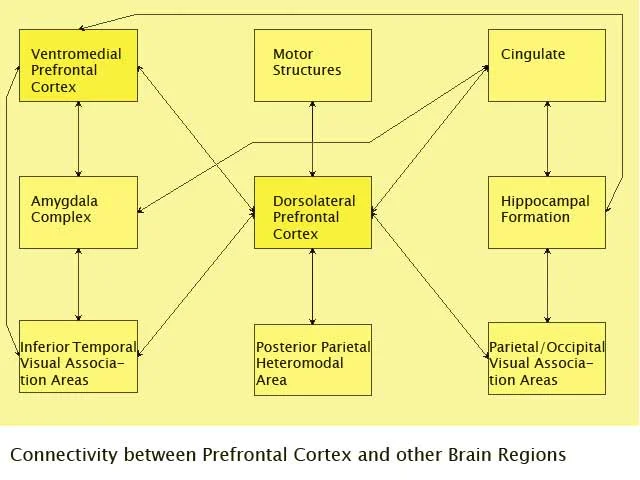
Most animals respond to the world. Self-awareness, the capacity to know that there is a self doing the responding, marks one of the deepest divides in biology. The gap between these two things, between processing and knowing that you are the one processing, is a central mystery. Neuroscience has begun to map the brain systems behind it. What it has found complicates simple stories about what makes humans unique. The neuroscience of self-awareness tries to explain how.
The Neuroscience of Self-Awareness: The Mirror Test

In 1970, psychologist Gordon Gallup Jr. put a chimpanzee in front of a mirror. After a period of familiarization, he anesthetized the animal and painted a red dot on its forehead: somewhere it could not see directly. When the chimp woke and saw itself in the mirror, it reached toward its own forehead, touching the mark. It recognized the reflection as itself.
This is the mirror self-recognition test, and it has become the standard behavioral gateway to self-awareness. The logic is clean: to use a mirror to inspect a mark on your own body, you must represent the reflection as you rather than another individual.
Chimpanzees pass reliably. So do bonobos, orangutans, and gorillas: with more variability among gorillas. This may stem from less eye contact in gorilla social behavior, making mirrors less salient to them. Dolphins pass. Asian elephants pass. Eurasian magpies, surprisingly, pass. Human children pass at around 18 months.
Dogs do not pass the mirror test, but this may reflect the test’s bias toward visual species. Dogs show sophisticated responses to their own scent, a dog will investigate a scent sample modified from its own far more than an unmodified sample, which some researchers view as preliminary evidence of an olfactory analog of self-recognition. This finding, first explored by cognitive scientist Alexandra Horowitz, offers a compelling example of how self-recognition might manifest in non-visual modes (Horowitz, 2017).
The mirror test measures one specific capacity. Whether it captures self-awareness fully is contested. Some researchers argue it tests only visual self-recognition, not the richer sense of being a self with a past and a future. Others argue that even visual self-recognition requires a genuine self-model.
The Default Mode Network
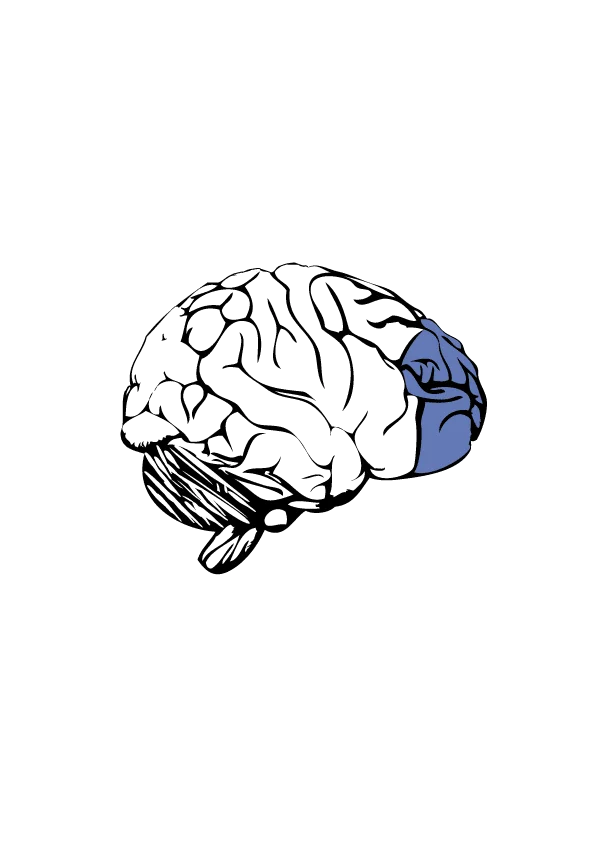
When the brain is not engaged in a specific task, when you are lying still with your eyes closed and your mind wandering, a particular network of regions becomes more active, not less. This is the default mode network (DMN), the brain’s idle hum, like a car engine running in neutral, and its discovery overturned assumptions about how the brain uses energy.
The DMN includes the medial prefrontal cortex, the posterior cingulate cortex, the precuneus, and the angular gyrus. Its activation is associated with self-referential thought: thinking about yourself, imagining your future, remembering your personal past, considering what others think of you, and moral reasoning.
When subjects in brain scanners are asked to think about their own personality traits, the DMN activates. When they are asked to think about a stranger’s traits, it is less active. When they are asked to think about a celebrity they know about but have not met, it falls between the two. The medial prefrontal cortex appears to be especially involved in self-referential judgment, the sense that something is relevant to me.
The DMN is also where the mind goes when it wanders. Mind-wandering activates self-referential processing, future simulation, and social cognition: all forms of internal modeling. The default state of the brain, it turns out, is a kind of low-grade self-simulation.
Damasio’s Hierarchy of Self
Neuroscientist Antonio Damasio, in The Feeling of What Happens (1999) and subsequent work, proposed that the self is not a single thing but a layered construction, built bottom-up from the body. The insular cortex, or insula, is a key region here, mapping visceral signals from the body’s interior to provide the raw data for this construction.
The proto-self is the most basic level: a moment-to-moment representation of the body’s state: temperature, heart rate, posture, interoception. It is not conscious in the ordinary sense. It is a continuous map of what the organism’s body is doing right now.
The core self arises when the proto-self is modified by an encounter with an object or event. The meeting of organism and world generates a transient sense of something noticing something. This is the pulse of minimal consciousness: brief, present-centered, without narrative.
The autobiographical self is the full self most of us mean when we talk about identity: a continuous narrative built from memories, projected futures, and a stable set of values and relationships. This level requires the hippocampus, the prefrontal cortex, and language. It is what gets disrupted in Alzheimer’s disease, where the autobiographical self erodes as episodic memory fails: often while the core self, the basic sense of being a present body, remains.
Damasio’s framework matters because it breaks the self into components that can fail independently. Patients with damage to specific regions lose specific layers. This gives neuroscience something precise to study: not “the self” as a monolith, but the structures that build each layer.
Anosognosia and the Limits of Self-Knowledge
Among the most striking disorders of self-awareness is anosognosia: unawareness of one’s own illness or deficit. A patient who has suffered a stroke causing paralysis of the left arm may sincerely deny that the arm is paralyzed. When asked to move it, they confabulate: they report having moved it, describe what the movement felt like, explain why they are actually choosing not to move it.
This is not denial in the psychological sense. The patient is not refusing to accept an uncomfortable truth. The brain region responsible for monitoring that limb’s status, typically the right parietal cortex, has been damaged, and the monitoring simply does not happen. The self-model has a hole in it, and the system that would detect the hole is the same system that was destroyed.
Anosognosia reveals that self-awareness is not a single spotlight illuminating experience from above. It is a distributed construction from multiple monitoring systems, each responsible for a different domain. Damage any one of them, and the self-model becomes wrong about a specific thing, without any way to know it is wrong.
A complementary disorder is depersonalization-derealization disorder, where individuals feel a persistent sense of detachment from their own self or mental processes. They may feel like an outside observer of their own life, as if in a dream or movie. This condition highlights a failure not of a specific body map, but of the general sense of “mineness” or ownership over one’s own thoughts and actions.
Capgras syndrome offers yet another dissociation. Patients with Capgras recognize the faces of loved ones, the visual representation is intact, but do not feel the emotional familiarity that normally accompanies that recognition. The result is a delusional belief that the familiar person has been replaced by an impostor. The self-model is intact; the emotional tagging system that anchors relationships to the sense of self has been disconnected.
Theory of Mind
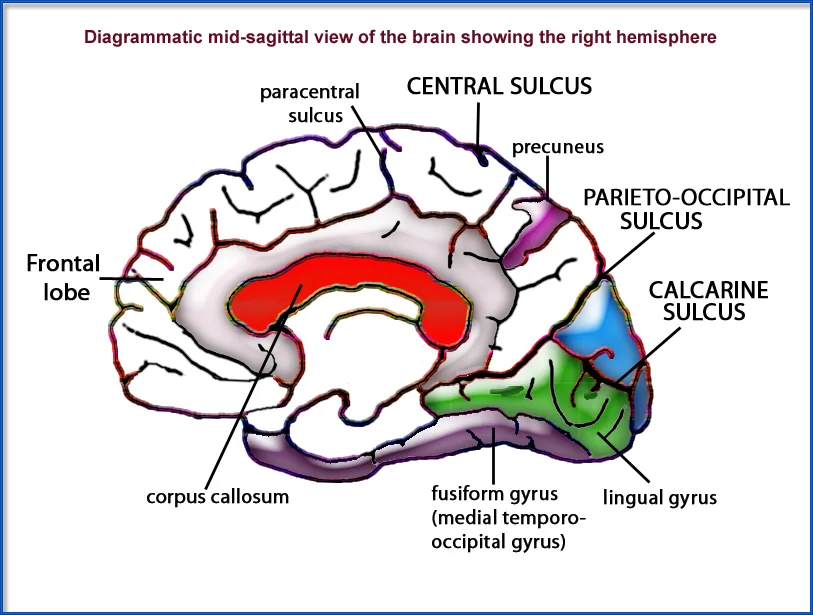
Closely linked to self-awareness is theory of mind (ToM): the capacity to model other minds: to understand that others have beliefs, desires, intentions, and knowledge that may differ from your own.
Theory of mind requires, as a minimum, the kind of self-model that allows you to distinguish your own mental states from those of another person. Without a self to anchor the perspective, there is no contrast against which another’s perspective can be distinguished.
The key test of ToM is the false-belief task. A child watches a character hide an object. The character leaves. While the character is absent, the object is moved. The character returns. Where will the character look for the object?
Children under about four years old consistently say the character will look where the object is now. They cannot represent the character as having a false belief, a belief that differs from reality. By around four to five years, most children pass, and the capacity develops rapidly. This developmental window aligns with the emergence of a more robust autobiographical self. The brain regions involved, particularly the temporo-parietal junction and medial prefrontal cortex: are well-documented, with classic fMRI studies (e.g., Saxe & Kanwisher, 2003) linking these areas to the representation of others’ mental states.
Chimpanzees show limited but real theory of mind. They understand what others can and cannot see. They can follow gaze. Whether they represent the full richness of others’ mental states, including false beliefs, remains debated.
The Rubber Hand Illusion
Self-awareness is not only cognitive. The sense of owning a body, of being a body rather than merely having one, is itself constructed and can be disrupted.
In the rubber hand illusion, a person’s real hand is hidden behind a screen while a realistic rubber hand is placed where they can see it. An experimenter strokes both hands simultaneously with a brush. Within about 60 seconds, most subjects begin to feel that the rubber hand is their own. When the experimenter strikes the rubber hand with a hammer, subjects flinch, and their real hand shows a stress response.
The brain is integrating visual and tactile information, and when they synchronize, it defaults to the simpler hypothesis: the hand I can see being touched is my hand. This multisensory integration is carried out by areas like the premotor cortex and intraparietal sulcus, which reconcile what is seen with what is felt. Proprioception, the sense of body position – yields to the multi-sensory model.
This shows that bodily self-awareness is a real-time inference, not a fixed given. The brain continuously builds a model of what is and is not part of the self, using all available sensory input. That model can be fooled, extended, or disrupted. This principle powers modern haptic research in virtual reality, where engineers use similar cues to create the feeling of “presence” inside an avatar.
What Makes Human Self-Awareness Different
Many animals with complex nervous systems maintain some model of their own body and its relationship to the environment. What appears to be distinctive in humans, and possibly in great apes and cetaceans to a lesser degree, is the degree to which the self-model becomes an object of its own reflection.
Humans not only have a self. They think about their self. They evaluate their self against standards, imagine alternative selves, feel shame and pride, build a narrative identity that extends backward decades and forward to death. This reflexive capacity, self-awareness aware of itself, appears to depend heavily on language, prefrontal development, and the extended autobiographical memory the hippocampus enables.
Whether this is a difference in degree or in kind from what other animals have is a genuine question. The neuroscience suggests degree: the same systems, more fully developed, more tightly integrated with language and memory. Philosophy has sometimes argued for kind. The evidence does not yet settle it.
Interestingly, self-awareness is not solely a universal neurological phenomenon; it is also shaped by culture. For instance, individuals from independent (e.g., Western) cultures often emphasize a stable, personal self-concept, while those from interdependent (e.g., East Asian) cultures tend to define the self more relationally. These differences influence how the brain processes self-referential thought, reminding us that even our most personal sense of self is partly a social construction.
The Cosmic Question
These findings open a deeper, still-unanswered question: If self-awareness requires a distributed set of neural monitoring systems, recurrent connectivity, and an autobiographical memory structure, it may be relatively rare. It may require a specific evolutionary history: social pressure, theory of mind demands, language co-evolution – just as natural selection shaped a system like the human eye over deep time, rather than appearing fully formed.
Or it may be that self-awareness is a convergent solution to a common computational problem: any sufficiently complex organism embedded in a complex social environment benefits from modeling itself as an agent in the world. If that is true, self-awareness may arise wherever complexity and social context do: and the universe may be full of creatures who know that they exist. Current artificial intelligence, however, lacks the embodied, biological monitoring systems described here, making machine self-awareness a purely theoretical prospect at present.
We do not yet know which of these is true. Neuroscience has mapped the architecture of self-awareness in one species. Whether that architecture generalizes is a question no telescope has yet answered: though the search for life, and the conditions needed to produce a self-aware mind, is one of the most profound scientific endeavors of our time.
A Layered Conclusion
Pulling these threads together, self-awareness emerges not as a singular gift but as a layered phenomenon. At its base is the bodily self, built from interoceptive maps and multisensory integration (the proto-self and rubber hand illusions). Above that sits the core self, a transient pulse of awareness tied to the present moment. At the top is the autobiographical self, a narrative woven from memory, emotion, and social context. These layers are supported by a distributed neural architecture, the DMN for self-referential thought, the insula for body mapping, the TPJ for mentalizing, each of which can fail independently, revealing the self as a constructed, fragile, and deeply biological process. Understanding this architecture not only demystifies what it means to know oneself but also prepares us for the profound question of how common such knowledge might be in the universe.
Sources
- Gallup, G. G. Jr. (1970). Chimpanzees: Self-recognition. Science, 167(3914), 86–87.
- Horowitz, A. (2017). Smelling themselves: Dogs investigate their own odours longer when modified in an “olfactory mirror” test. Behavioural Processes, 143, 17–24.
- Raichle, M. E., et al. (2001). A default mode of brain function. PNAS, 98(2), 676–682.
- Kelley, W. M., et al. (2002). Finding the self? An event-related fMRI study. Journal of Cognitive Neuroscience, 14(5), 785–794.
- Damasio, A. (1999). The Feeling of What Happens: Body and Emotion in the Making of Consciousness. Harcourt Brace.
- Botvinick, M., & Cohen, J. (1998). Rubber hands ‘feel’ touch that eyes see. Nature, 391, 756.
- Wimmer, H., & Perner, J. (1983). Beliefs about beliefs: Representation and constraining function of wrong beliefs in young children’s understanding of deception. Cognition, 13(1), 103–128.
- Saxe, R., & Kanwisher, N. (2003). People thinking about thinking people: The role of the temporo-parietal junction in “theory of mind”. NeuroImage, 19(4), 1835–1842.
- Ellis, H. D., & Young, A. W. (1990). Accounting for delusional misidentifications. British Journal of Psychiatry, 157, 239–248.
- Vuilleumier, P. (2004). Anosognosia: The neurology of beliefs and uncertainties. Cortex, 40(1), 9–17.
- Zhu, Y., Zhang, L., Fan, J., & Han, S. (2007). Neural basis of cultural influence on self-representation. NeuroImage, 34(3), 1310–1316.
What is the mirror self-recognition test?
The mirror self-recognition test, developed by Gordon Gallup Jr. in 1970, involves placing a mark on an animal’s forehead and observing if it touches the mark while looking in a mirror, indicating it recognizes the reflection as itself.
Which animals pass the mirror test for self-awareness?
Great apes such as chimpanzees, bonobos, orangutans, and gorillas (with some variability) pass the mirror test, along with dolphins and elephants.
How does the brain support self-awareness?
Neuroscience has identified brain systems, including the prefrontal cortex and default mode network, that integrate sensory and internal signals to construct a sense of self, though the exact mechanisms are still being studied.
Is self-awareness unique to humans?
No, self-awareness is not unique to humans; it is shared with several other species, such as great apes, dolphins, and elephants, as demonstrated by the mirror test.
What is the difference between processing and self-awareness?
Processing refers to responding to stimuli, while self-awareness involves knowing that you are the one processing, representing a deeper cognitive divide that neuroscience is working to map.