
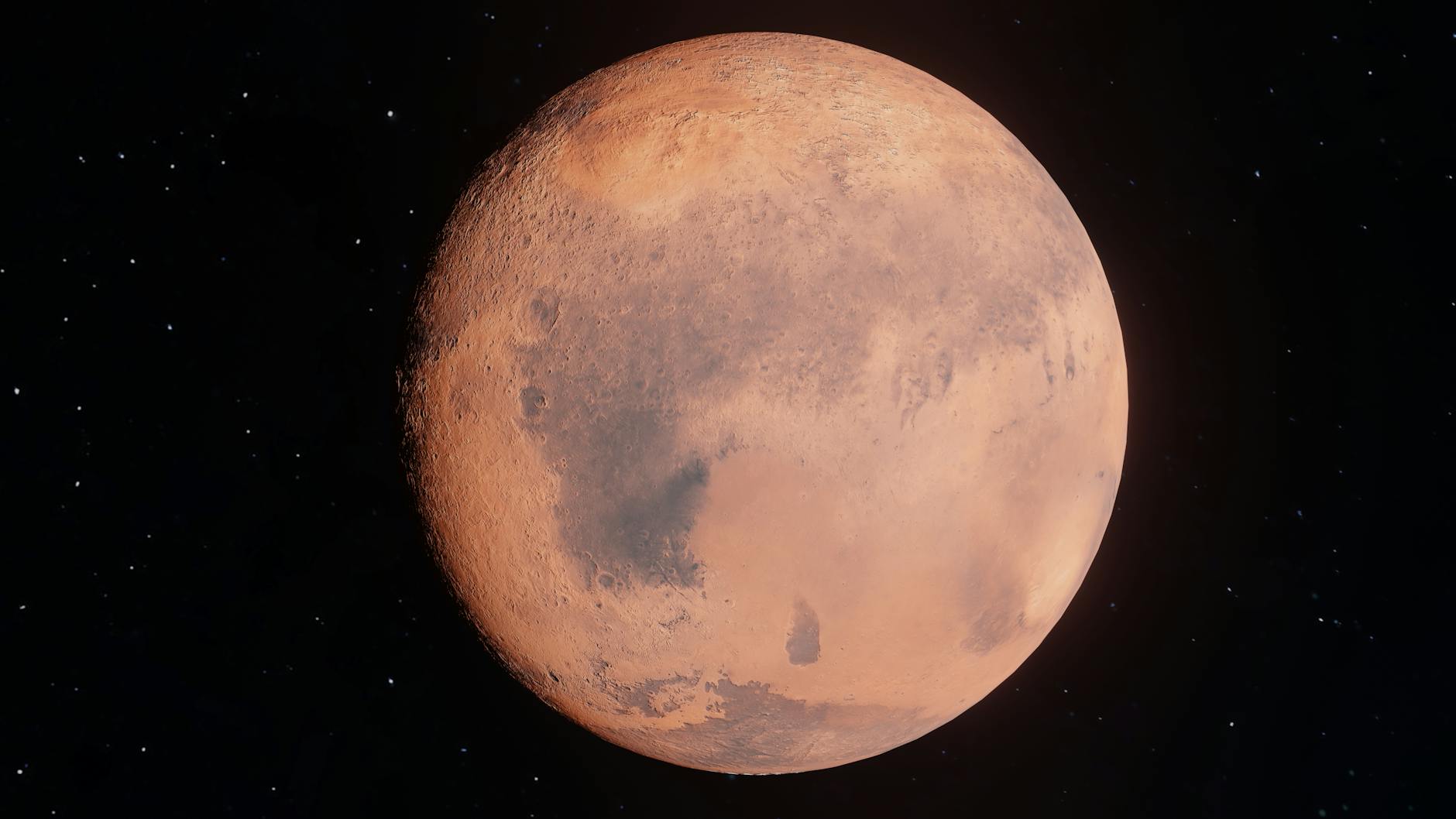
The definitive answer to what causes the red color of Mars is a pervasive layer of iron oxide dust, essentially rust, coating the planet’s surface. This dust is rich in nanophase ferric oxides, particularly hematite, goethite, and maghemite. While the fundamental explanation has been known for decades, recent data from rovers like NASA’s Perseverance and Curiosity have refined our understanding, linking this reddish hue directly to ancient aqueous environments and the planet’s long-dormant water cycle.
The Mineralogical Origin of Martian Rust
At its core, what causes the red color of Mars is a chemical reaction between iron-rich rocks and oxygen – the same process that rusts a car left in the rain. However, on Mars, this rusting occurred on a planetary scale, driven by interactions with water and atmosphere over billions of years.
The Key Players: Nanophase Ferric Oxides
Mars’ regolith is covered in a fine-grained dust that contains nanophase ferric oxides – particles less than 100 nanometers in diameter. These tiny crystals scatter and absorb light differently than larger grains. Specifically, they strongly absorb blue and green wavelengths of sunlight while reflecting red and near-infrared light. The result: the distinctive reddish hue seen from Earth.
The most common ferric minerals identified by rovers include:
- Hematite (α-Fe₂O₃): The primary iron oxide responsible for the red color. Its crystalline structure gives Mars its characteristic ochre hue. The Mars Exploration Rovers (Spirit and Opportunity) discovered extensive hematite concretions at Meridiani Planum, often called “blueberries” due to their spherical shape.
- Maghemite (γ-Fe₂O₃): Another ferric oxide that forms under oxidizing conditions. It is magnetic and commonly found in Martian dust, contributing to the planet’s global magnetic signature.
- Goethite (α-FeOOH): A hydrated iron oxide that forms in the presence of water. Its presence strongly indicates past wet environments. The Opportunity rover detected goethite at Eagle Crater, providing direct evidence that water once flowed on the surface.
These nanophase particles are so fine that they become lofted into the atmosphere, forming the planet-wide dust storms that occasionally obscure the entire surface. The even distribution of this dust is why Mars appears red from orbit and through telescopes.
Why Iron and Not Something Else?
Mars’ crust contains abundant iron (approximately 20% by weight in some basalts) – far more than Earth’s average crust. When these iron-rich minerals (e.g., olivine and pyroxene) were exposed to water and oxygen, oxidation occurred readily. On Earth, similar weathering happens but is quickly recycled by plate tectonics and biological activity. On Mars, without plate subduction or life, the oxidized iron accumulated on the surface as a stable residue. The global dust composition has been linked to the aqueous alteration of basaltic rocks by liquid water in Mars’ distant past.
The Iron Cycle: From Ancient Waters to Rusty Dust
Recent evidence from the Perseverance rover at Jezero Crater has dramatically expanded our view of what causes the red color of Mars. While earlier assumptions held that rust formed entirely in the ancient past, newer data suggest that the iron cycle on Mars was more complex and spanned longer timescales.

The Role of Liquid Water
Perseverance has identified veins of hematite and other iron oxides within sedimentary rocks that once sat at the bottom of a lake. These deposits show concretionary structures – rounded nodules formed when iron-rich groundwater percolated through porous rock and precipitated minerals. The process is remarkably similar to how hematite forms in terrestrial hydrothermal systems and lake sediments. A 2023 analysis by the rover’s SHERLOC and PIXL instruments detected organic molecules alongside the iron-bearing minerals. Such organics are not by themselves evidence of life; they can form through ordinary non-biological chemistry, but they show that these rocks preserve a detailed record of the ancient aqueous conditions in which the iron oxidized.
The Dry Season: Oxidation Without Water
However, not all Martian rust requires standing water. Laboratory experiments conducted at the Jet Propulsion Laboratory have shown that nanophase ferric oxides can form through abiotic photochemical reactions – where ultraviolet light from the Sun fractures oxygen molecules in the atmosphere, which then react with iron minerals. This process continues today, albeit extremely slowly, because Mars lacks a protective ozone layer. So while the bulk of the red color dates back to the Noachian period (4.1–3.7 billion years ago), small amounts of new rust are still being created.

The Evolution of the Color Over Time
Interestingly, Mars may not always have been red. Early in its history, when abundant water was present, the surface would have been dominated by ferrous iron (Fe²⁺), which appears dark grey or black – similar to fresh basalt on Earth or the Moon. As water evaporated and the atmosphere thinned, ferrous iron oxidized to ferric iron (Fe³⁺), turning the landscape red. The process accelerated during the Hesperian period (3.7–3.0 billion years ago) when massive volcanic eruptions released sulfur dioxide and water into the atmosphere, creating acidic conditions that enhanced oxidation.
Today, the red iron oxide layer is estimated to be only a few meters thick in most places, but across the entire planet, it represents a total iron oxidation mass equivalent to several Earth-sized rust deposits. The Curiosity rover’s Sample Analysis at Mars (SAM) instrument measured the oxygen isotope ratios in Martian rocks and found that the oxidation process consumed a significant portion of the planet’s early atmospheric oxygen, which may help explain why the atmosphere is now so thin.
Rovers, Spectroscopy, and Seeing Red from Orbit
Our understanding of what causes the red color of Mars has been shaped by both orbital spectroscopy and in-situ rover data. These tools have allowed scientists to map the distribution of iron oxides and trace their origin to specific geological periods.
Orbital Perspectives
The Mars Global Surveyor’s Thermal Emission Spectrometer (TES) and the Mars Reconnaissance Orbiter’s CRISM instrument have mapped ferric oxide abundance across the entire surface. These data show a clear gradient: the southern highlands (older, heavily cratered terrain) have higher concentrations of hematite, while the northern lowlands (younger, smoother plains) have more ferrous minerals. This pattern supports the idea that the red color deepened over time as the oxidation front advanced.
In-Situ Verification

The Opportunity rover’s discovery of hematite “blueberries” at Meridiani Planum was a landmark moment because it proved that the iron oxide formed in a watery environment, not just as dry dust. Later, the Curiosity rover found Jarosite, an iron sulfate mineral that forms only in acidic water, confirming that the oxidation was accompanied by acid sulfate weathering – a process that leaches nutrients from the soil. More recently, Perseverance has sampled rocks that contain both ferric and ferrous iron in close proximity, suggesting that oxidation was not uniform and that some regions may host shallow groundwater that prevents complete rusting.
Why the Color Appears Uniform from Earth
From Earth, even with large telescopes, Mars appears uniformly red because the dust is highly mobile. Global dust storms, which can last for months, stir up fine ferric particles and distribute them across the entire planet. This homogenizes the color, masking the varied mineralogy beneath. The European Space Agency’s Mars Express mission has photographed these storms in action, showing how dust clouds can envelope the whole planet in a matter of weeks.
Implications for Martian Habitability
Understanding what causes the red color of Mars is not merely an academic exercise. The iron cycle is intimately linked to the planet’s past habitability and its potential to host life.
Iron as an Energy Source
On Earth, certain chemosynthetic bacteria use ferrous iron (Fe²⁺) as an energy source, oxidizing it to ferric iron (Fe³⁺) to drive their metabolism. If such microbes ever existed on Mars, they would have thrived in the iron-rich waters that created the red dust. The Curiosity rover has detected methane and organic carbon in sedimentary rocks near Gale Crater, and while these are not definitive biosignatures, they raise the possibility that iron-oxidizing life once played a role in rusting the surface.
The Search for Preserved Organics
The red dust also acts as a preservative. Iron oxides are chemically inert under current Martian conditions and can entomb organic molecules for billions of years. Perseverance’s sample tubes contain rocks that show hematite veins with detectable organic signatures. If these samples are returned to Earth by the planned Mars Sample Return mission, they may provide the clearest evidence yet of whether life ever existed on the red planet.
Did the Red Color Come Before or After Water?
One intriguing question is whether Mars’ red surface existed before water disappeared or emerged afterward. Current evidence suggests both: some hematite formed in aqueous environments (like lakebeds), while other deposits formed through dry oxidation during the transition to an arid climate. The presence of hydrated iron oxides like goethite indicates that water was involved in the rusting process, but later exposure to ultraviolet light may have dehydrated goethite into hematite, meaning the red color we see today is a composite of several oxidation events spanning billions of years.
1. Is it true that Mars is red because of rust?
Yes. The surface is covered in iron oxide dust, which is chemically similar to rust on Earth. This dust contains nanophase ferric oxides like hematite that reflect red light, giving Mars its characteristic color.
2. Why is the red color not seen everywhere on Mars?
From Earth, Mars appears uniformly red because global dust storms spread fine iron oxide particles across the entire surface. However, near ground level, some rocks are blue-grey or tan, especially where fresh basalt is exposed or where ice and salt deposits cover the iron-rich dust.
3. Could Mars have been a different color in the past?
Yes. Early Mars had abundant water and a thicker atmosphere, so the surface would have been dominated by dark ferrous iron minerals. As the planet dried out and oxidized, it turned red. Some researchers believe the planet may have been yellow or brown during transitional periods.
4. How do we know the dust is made of iron oxide without a sample?
Multiple methods confirm this. Orbital spectroscopy identifies the unique absorption bands of iron oxides in reflected sunlight. Rovers like Perseverance and Curiosity use X-ray diffraction and Raman spectroscopy to directly measure the mineral composition of rocks and soil. Thousands of measurements consistently show iron oxides.
5. Does the red color mean Mars is entirely rusted?
No. The oxidation is limited to a thin layer – typically a few meters deep. Deeper rocks remain unoxidized, containing ferrous iron. This is why subsurface samples, such as those drilled by Curiosity, sometimes reveal dark grey material rather than red dust.
Sources & References
- NASA Jet Propulsion Laboratory. “Mars Perseverance Rover: Science Instruments.” Available at: https://www.jpl.nasa.gov/
- European Space Agency. “Mars Express: The Martian atmosphere and dust storms.” Available at: https://www.esa.int/Science_Exploration/Space_Science/Mars_Express
- Journal of Geophysical Research: Planets (2021). “Nanophase ferric oxides in Martian soil: Implications for surface weathering.”
- NASA Mars Exploration Program. “Hematite on Mars: Opportunity Rover Findings.” Available at: https://mars.nasa.gov/
Further reading: Mars on Wikipedia