
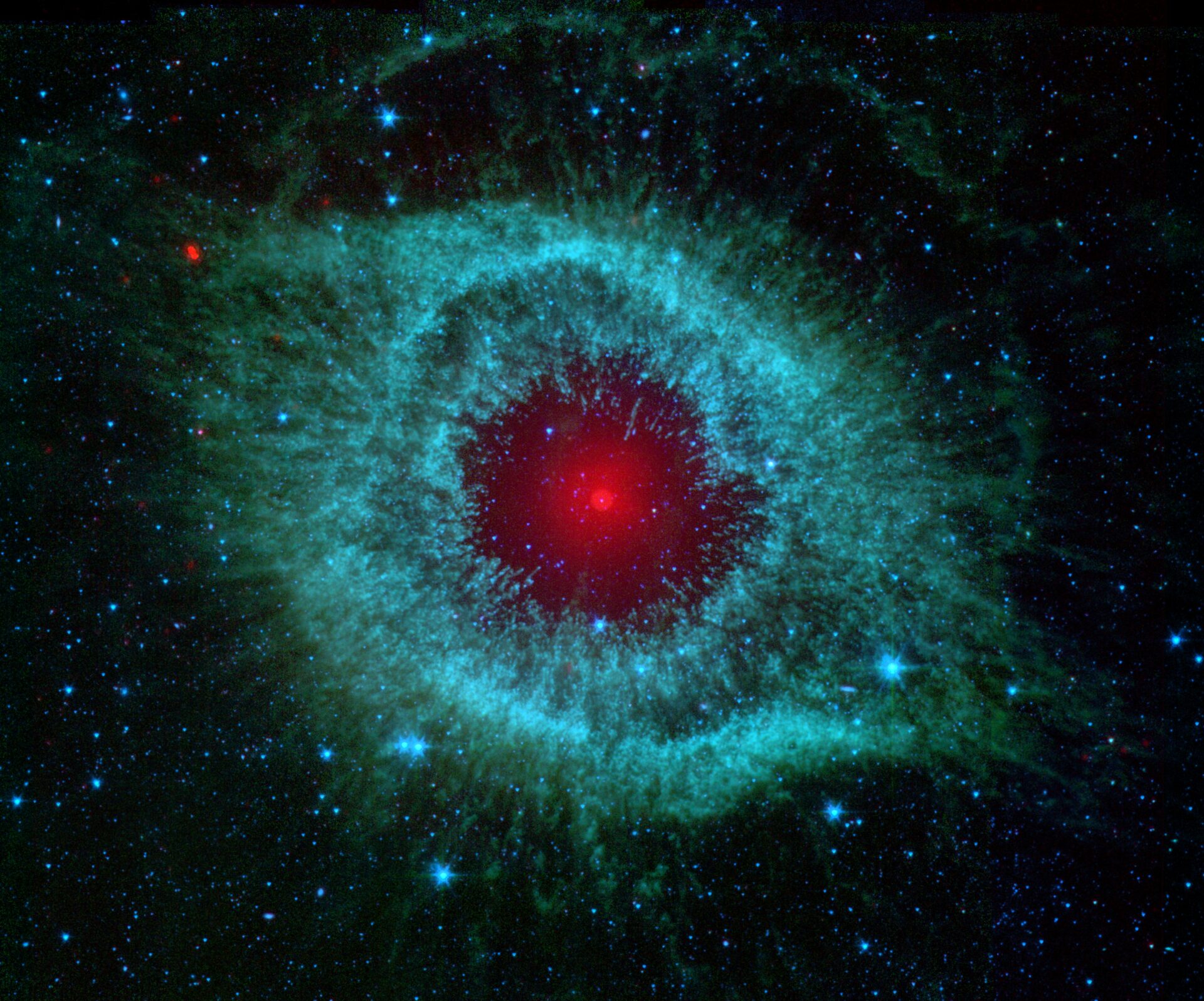
The universe has survived for 13.8 billion years. It has weathered the Big Bang, the formation of the first stars, the death of trillions of suns, and the slow gravitational assembly of a cosmic web spanning hundreds of millions of light-years. It is, by any reasonable measure, robust. The Big Rip is the scenario in which dark energy wins that battle permanently, not just slowing the universe but eventually tearing it apart at every scale.
But there is a scenario in which it all ends, not with a whimper, not with a freeze, but with a literal tearing apart of everything that exists, down to the last subatomic particle. The scenario is called the Big Rip. And the engine behind it is the same force already reshaping the universe right now: dark energy.
What the Big Rip Dark Energy Scenario Actually Is
The Big Rip is a cosmological end-state that occurs if dark energy does not remain constant but instead grows stronger over time. In this scenario, the accelerating expansion of the universe does not merely continue at its current pace; it escalates, eventually overwhelming every force in nature, on every scale, until nothing remains bound to anything else.
It begins with the large and works inward. Galaxy clusters, held together by gravity across millions of light-years, are the first to go. Then individual galaxies. Then solar systems. Then planets. Then, in the final moments of the universe, molecules, atoms, and ultimately the subatomic particles themselves are torn apart by the expansion of space.
The mechanism is the same one already operating between galaxy clusters today: space expands, and if it expands fast enough between two objects, no force can hold them together. In the Big Rip scenario, that threshold is eventually crossed everywhere, at every scale, simultaneously.
The Physics: What Makes Dark Energy Rip Rather Than Merely Push

Whether dark energy causes a Big Rip depends on a single number: the equation-of-state parameter, written as w. This number relates the pressure of dark energy to its density.
For a cosmological constant (the simplest form of dark energy, consistent with Albert Einstein’s original 1917 formulation), w = −1. Dark energy’s density remains fixed as the universe expands. The acceleration continues indefinitely but never escalates. No Big Rip.
If w is less than −1, physicists call it phantom energy. In this case, dark energy’s density does not stay constant; it increases as the universe expands. Every cubic meter of space contains more dark energy than it did yesterday. The expansion accelerates faster. More space means more dark energy means faster expansion means more space. It is a runaway feedback loop with a definite endpoint. This behavior violates the “weak energy condition” in general relativity, which raises profound theoretical questions about causality and stability, making phantom energy theoretically contentious.
Robert Caldwell, Marc Kamionkowski, and Nevin Weinberg first formalized this scenario in a 2003 paper in Physical Review Letters. They named it the Big Rip and calculated the timeline. The math is precise, the physics internally consistent, and the conclusion viscerally final.
The Timeline: How It Unfolds
Assuming w = −1.5 (a moderately phantom value), the Big Rip arrives approximately 22 billion years from now. The sequence of destruction is orderly, governed by the scale at which gravitational binding energy is overcome.
22 billion years from now, minus about 1 billion years: The large-scale structure of the universe dissolves. Galaxy clusters (gravitational systems spanning tens of millions of light-years) can no longer hold themselves together. Galaxies drift apart. The Milky Way and its neighbors, currently bound in the Local Group, begin to separate.
Minus 60 million years: Individual galaxies are torn apart. Stars that have orbited a galactic center for billions of years are flung into intergalactic space. The night sky (if any observers remain) empties of the familiar structures of the Milky Way.
Minus 3 months: Solar systems cease to exist. The expansion of space overcomes the Sun’s gravitational grip on the Earth; the expansion rate locally exceeds the escape velocity of the system. Every planet in every solar system is torn from its star. There is no warning.
Minus 30 minutes: Planets are ripped apart. The internal gravity holding a rocky world together is overcome. Earth (or whatever remains of it) disintegrates. The Moon was already gone.
Minus 10⁻¹⁹ seconds: Atoms are torn apart. The electromagnetic force binding electrons to nuclei is overwhelmed. Then the strong nuclear force holding protons and neutrons together fails. The universe ends not in darkness or cold but in an infinite, instantaneous expansion of elementary particles, each alone in an expanding void where the particle horizon shrinks to zero, causally disconnecting everything.
The universe’s final moment arrives not as an explosion outward but as an expansion that leaves nothing touching anything else.
What Current Data Says
The 2003 Caldwell paper was theoretical. What does the evidence say?
The most precise measurement of w comes from the Planck satellite’s 2018 analysis of the cosmic microwave background, combined with supernova surveys and baryon acoustic oscillation measurements. The combined result: w = −1.03 ± 0.03.
That error bar straddles −1. The data is consistent with a cosmological constant (no Big Rip) but cannot rule out phantom energy. The universe may be riding exactly the edge. It is important to note the full spectrum of possibilities: if w were greater than -1, dark energy would weaken over time, potentially allowing gravity to reassert dominance in a “Big Crunch” scenario, though current data strongly disfavors this.
More recently, the Dark Energy Spectroscopic Instrument (DESI) released its first-year results in 2024, measuring the expansion history of the universe across 11 billion years of cosmic time using 6 million galaxies. Their findings hinted (very tentatively and without strong statistical significance) that w may be slightly time-varying. If true, this means dark energy could evolve, potentially crossing the phantom threshold (w < -1) in the future even if it is exactly -1 today. The consensus remains firmly on a cosmological constant, but if confirmed, it would mean dark energy is not a cosmological constant at all, and the Big Rip calculation would need to be revised entirely.
The honest scientific position: we do not know enough about dark energy to rule the Big Rip in or out. It remains a genuine physical possibility.
Why the Big Rip Is Different from Heat Death

The more commonly discussed end-state of the universe is heat death , the slow fading of all usable energy as the universe reaches maximum entropy over timescales of 10¹⁰⁰ years or more. Stars burn out, black holes evaporate, and the universe becomes a cold, featureless expanse of photons and elementary particles with nowhere to go and nothing to do. This stands in contrast to the now-ruled-out “Big Crunch” scenario of gravitational recollapse.
The Big Rip is different in almost every way. Where heat death is slow (almost infinitely slow), the Big Rip is violent and sudden on a cosmological scale. Where heat death destroys usable energy, the Big Rip destroys structure itself: the atoms, the forces, the geometry of space. Where heat death arrives after an almost incomprehensible stretch of time, the Big Rip arrives in 22 billion years (less than twice the current age of the universe).
If the Big Rip is real, the universe has already lived more than half its life.
The Philosophical Weight
There is something distinctive about the Big Rip that separates it from other cosmological end-states. It is not merely the end of life, or the end of stars, or the end of complexity. It is the end of the possibility of anything touching anything else: the severing of every relationship, every bond, every connection in the physical universe, all the way down to the quarks.
Physicist Lawrence Krauss, writing on dark energy’s long-term implications, described it as the universe becoming not just empty but isolated beyond all possibility of contact. The Big Rip takes that isolation to its absolute limit.
Whether it happens depends on a number, w that our best instruments have so far measured as −1.03. The margin between a universe that expands forever and one that tears itself apart is, at present, 0.03.
What is the Big Rip?
The Big Rip is a hypothetical end-state of the universe in which dark energy grows stronger over time, eventually overcoming every force in nature. It would tear apart galaxy clusters, then galaxies, then solar systems, then planets, then atoms and subatomic particles (in that order), ending the universe in a final, instantaneous expansion that leaves no structure of any kind intact.
When would the Big Rip happen?
If dark energy’s equation-of-state parameter w equals approximately −1.5, the Big Rip arrives roughly 22 billion years from now. The exact timing depends on the value of w; the more negative it is below −1, the sooner the Rip occurs. If w equals exactly −1 (a cosmological constant), the Big Rip never happens.
Is the Big Rip going to happen?
Current measurements of w are consistent with −1 (no Big Rip) but carry enough uncertainty to allow for phantom energy (w < −1). The 2018 Planck results give w = −1.03 ± 0.03. The Big Rip cannot be ruled out by current data. The 2024 DESI results suggest dark energy may be evolving, adding further uncertainty.
What is the difference between the Big Rip and heat death?
Heat death is the slow, cold fading of the universe over timescales of 10¹⁰⁰ years as entropy maximizes. The Big Rip is violent and relatively fast (arriving in tens of billions of years) and destroys not just energy gradients but the physical structure of matter and space itself, including atoms and subatomic particles.
What is phantom energy?
Phantom energy is a hypothetical form of dark energy with an equation-of-state parameter w less than −1. Unlike a cosmological constant, phantom energy’s density increases as the universe expands, producing a runaway acceleration that leads to the Big Rip. It violates the weak energy condition (a fundamental assumption in general relativity), making it theoretically contentious but physically possible.
Sources
- Caldwell, R.R., Kamionkowski, M. & Weinberg, N.N. (2003). Phantom Energy: Dark Energy with w < −1 and the Big Rip. Physical Review Letters, 91(7), 071301.
- Planck Collaboration (2020). Planck 2018 results. VI. Cosmological parameters. Astronomy & Astrophysics, 641, A6.
- DESI Collaboration (2024). DESI 2024 VI: Cosmological Constraints from the Measurements of Baryon Acoustic Oscillations. arXiv, 2404.03002.
- Caldwell, R.R. (2002). A phantom menace? Cosmological consequences of a dark energy component with super-negative equation of state. Physics Letters B, 545(1–2), 23–29.
- Krauss, L.M. & Scherrer, R.J. (2007). The Return of a Static Universe and the End of Cosmology. General Relativity and Gravitation, 39(10), 1545–1550.
- NASA. (2021). Dark Energy, Dark Matter. https://science.nasa.gov/astrophysics/focus-areas/what-is-dark-energy/
- Caldwell, R. R., Kamionkowski, M., & Weinberg, N. N. (2003). Phantom Energy: Dark Energy with w < -1 Causes a Cosmic Doomsday. Physical Review Letters, 91, 071301. https://doi.org/10.1103/PhysRevLett.91.071301
Further reading: Big Rip on Wikipedia